5 Life Hacks for a More Organized Workspace and Increased Productivity

In modern academic and professional settings, establishing a focused, reliable routine often begins with the immediate physical environment. Desks strewn with disorganized paperwork, random office accessories, and redundant items pull attention away from strategic priorities, increasing stress levels and reducing overall output. A disordered surface frequently mirrors and amplifies an unsettled cognitive state, turning everyday assignments into frustrating, friction-laden struggles.
Workplace effectiveness is not merely about exerting brute effort or working longer hours. Real efficiency comes from engineering an intentional working area that protects physical well-being, minimizes environmental friction, and preserves mental energy. By implementing targeted strategies across physical decluttering, ergonomics, paper management, time blocking, and restorative rest, anyone can transform their workstation into an engine of high productivity.
Key takeaways
- Physical clutter overstimulates the mind and steadily siphons away focus from vital tasks.
- Adjusting chair and desk heights protects physical posture and guards against fatigue and pain.
- Systematic paper filing and document scanning eliminate misplaced records and daily clutter.
- Structured scheduling frameworks like the Pomodoro technique sustain concentration and curb distractions.
- Restorative breaks away from screens prevent long-term burnout and preserve cognitive clarity.
Overview of the Five Productivity Pillars
Achieving peak performance at your workstation requires addressing both your external surroundings and your daily working habits. When external disruptions and physical discomfort are resolved together, daily workflows become smoother and far more sustainable.
| Productivity Hack | Primary Objective | Key Focus Area | Recommended Tool or Method |
|---|---|---|---|
| Declutter Workspace | Eliminate mental and visual distraction | Desk surface and nearby perimeter | Sorting trays, file holders, and desk organizers |
| Optimize Desk Space | Prevent physical fatigue and chronic pain | Body mechanics and equipment alignment | Ergonomic seating, monitor risers, and standing desks |
| Systematize Paperwork | Prevent lost records and chaotic document piles | Physical and digital document workflows | Color-coded filing, digital scanners, and planners |
| Manage Work Time | Maintain deep concentration and track deadlines | Daily schedule allocation | Prioritized task lists and the Pomodoro technique |
| Take Regular Breaks | Recharge mental stamina and mitigate burnout | Restorative pauses during work sessions | Light walking, meditation, and structured intervals |
The 5 Core Life Hacks for Workspace Efficiency
True organization goes beyond simple aesthetics; it establishes an intentional framework that supports clear thinking and efficient execution throughout the workday. Each of the following five core life hacks targets a specific bottleneck in typical workspaces, turning points of friction into reliable assets.
Hack 1: Declutter Your Workspace
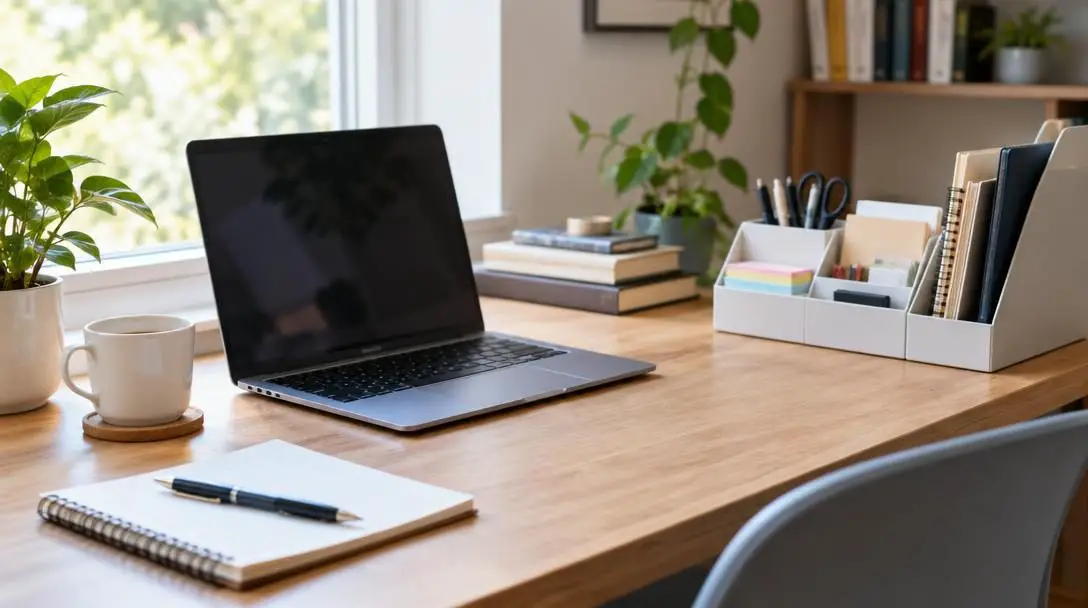
The primary working surface of your desk should be reserved solely for the project directly in front of you. When a desk becomes a holding zone for outdated memos, excess writing utensils, and half-finished projects, visual clutter continually competes for neural resources. Clearing unnecessary items creates a blank slate that naturally guides your focus toward immediate tasks.
Start by identifying what actually qualifies as an essential tool. Items used multiple times an hour—such as your keyboard, mouse, and current project folder—earn a spot on the desktop. Secondary items belong inside labeled drawers, sorting trays, or upright file holders. When every single item possesses an explicit home, you eliminate the mental friction and lost minutes spent rummaging around looking for tools or files.
Hack 2: Optimize Your Desk Space and Ergonomics
Because desk work involves hours of sitting or standing in static positions, poor posture can swiftly degrade your health and cognitive stamina. An improperly arranged chair or screen height creates neck stiffness, lumbar tension, and eye strain. These physical complaints directly sap your endurance and make concentrated effort difficult to sustain.

Position your office chair so your feet rest entirely flat on the floor with your knees bent at a ninety-degree angle, allowing your arms to rest naturally on the desk without elevating your shoulders. If possible, utilize a standing desk or a height-adjustable converter to shift between seated and upright work throughout the day. Standing intervals stimulate healthy blood circulation to the brain, which in turn enhances mental alertness and keeps midday sluggishness at bay.
Workplace effectiveness is not merely about exerting more effort, but creating an environment that minimizes friction, physical discomfort, and unnecessary stress.
Hack 3: Develop a System for Paperwork
Even in increasingly digital workplaces, physical documents continue to accumulate rapidly. Loose invoices, reference sheets, notes, and receipts quickly form precarious stacks that trigger underlying anxiety. A reliable paper management routine removes ambiguity by routing incoming documents through a clear, predictable lifecycle.
Establish a systematic physical filing setup utilizing labeled, color-coded folders to differentiate financial records, active projects, and administrative references. Whenever possible, pass documents through a high-speed scanner to preserve them electronically, allowing you to recycle the physical paper and reclaim drawer space. Alongside paper filing, keep a centralized notebook or daily planner close at hand to immediately register critical dates, follow-ups, and project deadlines before they slip away.
Hack 4: Implement Time Management Techniques
An immaculate desk offers limited benefit if your schedule remains chaotic and reactive. Without a proactive framework for managing hours and minutes, unexpected emails and secondary requests can monopolize your workday, pushing core deadlines into jeopardy and generating immense stress.
Structuring the day begins with clear task prioritization, separating non-negotiable milestones from minor administrative tasks. Pairing this prioritization with interval systems such as the Pomodoro technique establishes high-output work sprints. By committing to uninterrupted focus during timed segments followed by brief resets, you protect your attention span and prevent external distractions from fragmenting your work.
Hack 5: Take Regular, Restorative Breaks
Enduring long stretches of work without stepping away is often mistakenly viewed as a badge of dedication. In reality, continuous, uninterrupted exertion rapidly depletes cognitive bandwidth, degrades decision-making quality, and paves the path toward long-term exhaustion and burnout.
Incorporate deliberate pauses into your daily schedule to allow your nervous system to recuperate. Rather than staying seated to scroll through notifications or read the news, disconnect completely from your workstation. Engaging in a brief brisk walk, practicing focused breathing, or completing light stretches lowers stress markers and resets your mental focus, ensuring you return to your work with renewed clarity.
Step-by-Step Implementation Guide
Attempting to overhaul your entire work environment all at once can quickly become counterproductive. Follow these structured steps to progressively introduce order, optimize body mechanics, and build sustainable working rhythms.
- Clear your desktop entirely: Strip the top of your desk bare, placing everything onto a nearby floor or sorting table. Group items into distinct piles to discard, file away, or keep on the primary work plane, purging outdated paperwork and extraneous supplies.
- Categorize and store essentials: Assign permanent, logical locations to all remaining essentials. Arrange sorting trays and upright holders so that daily supplies remain within arm's reach while secondary materials stay neatly tucked away inside drawers.
- Set up your ergonomic configuration: Calibrate your office chair so your feet sit firmly on the floor and your arms align evenly with the desk surface. Adjust monitor height to eye level to prevent spinal strain, and establish specific times to alternate between sitting and standing if using an adjustable desk.
- Process physical paper: Sift through accumulated papers, filing critical documents into labeled or color-coded folders. Run relevant paperwork through a scanner to store it on your computer, reducing physical bulk, and record upcoming deadlines in a dedicated planner.
- Plan your schedule: Before beginning your daily duties, draft a focused task list arranged strictly by priority. Pinpoint the vital deliverables that must be completed before the end of the day.
- Apply structured work intervals: Set a timer to execute focused work intervals using the Pomodoro technique. Work intensely on your chosen assignment, barring non-essential notifications until the timer sounds.
- Take active rest breaks: When each working interval concludes, leave your chair immediately. Spend these minutes walking, stretching, or meditating so your brain and body fully reset before your next work cycle begins.
Common Organizational Pitfalls to Avoid
Establishing an efficient setup is straightforward, but maintaining it against everyday workplace pressures requires vigilance. Steering clear of these routine mistakes will protect your workspace gains over the long haul:
- Allowing clutter to slowly return: Decluttering once will not keep your desk clean forever. If you fail to discard junk mail and unnecessary papers daily, non-essential items will steadily swallow your open surface area again.
- Ignoring physical ergonomics: Settling for a poorly positioned monitor or an unsupportive chair leads directly to persistent neck and back stiffness, slowly eroding your mental endurance.
- Neglecting your paper filing system: Color-coded folders and desktop trays are useless if papers are tossed into random heaps. Every single document must be processed, digitized, or filed away without delay.
- Skipping prioritization in your schedule: Working through a simple, unranked to-do list allows minor busywork to consume your highest-energy hours, leaving critical assignments rushed or unfinished.
- Powering through scheduled rest intervals: Forcing yourself to work through scheduled breaks under the illusion of saving time drains cognitive energy and accelerates physical fatigue.
- Using breaks for stressful activities: Spending your rest periods checking tense news headlines or answering difficult messages prevents your central nervous system from recuperating.
Long-Term Maintenance and Sustainability
Creating an organized workstation is not a one-time project; it is an ongoing practice that requires periodic recalibration. Over weeks and months of heavy projects, new physical documents, books, and accessories inevitably creep into your space. Scheduling a brief weekly audit to purge obsolete notes, scan pending forms, and tidy storage containers ensures that clutter never regains a foothold.
Similarly, pay attention to the subtle physical signals your body sends during long stretches of focus. If you notice nagging discomfort in your shoulders or lower back, adjust your chair's lumbar support, modify your standing schedule, or shift your keyboard angle. By regularly tuning both your physical setup and your time-management rhythms to match your workload, your workspace will remain a supportive environment throughout your career.
Frequently asked questions
How does physical clutter directly affect mental productivity?
Visual clutter on a desk constantly competes for attention in your field of view. This chaotic sensory input splits focus, increases background stress levels, and requires extra mental effort to filter out, leaving less cognitive energy for complex tasks.
How can a height-adjustable standing desk improve daily work performance?
Alternating between sitting and standing throughout the day helps you maintain correct spinal posture, reduces lumbar strain, and improves blood flow to the brain, which enhances sustained alertness and focus.
What is the best way to handle paperwork if physical storage is limited?
Adopt a digital-first approach by running paper documents through a scanner to store them directly on your computer. Keep only strictly necessary physical records in a compact, color-coded filing box, and recycle or shred remaining sheets.
How does the Pomodoro technique help prevent task fatigue?
By dividing the day into defined blocks of intense concentration followed immediately by designated recovery periods, the Pomodoro technique trains your brain to sustain focus while preventing mental depletion.
What types of activities are best suited for work breaks?
The most effective breaks are restorative and screen-free. Activities such as taking a short outdoor walk, practicing deep breathing or meditation, and engaging in light physical stretches allow your mind and body to reset.
The Bottom Line
A high-performance workspace is far more than an orderly tabletop; it serves as the physical foundation of your daily professional output. By eliminating environmental clutter, investing in bodily ergonomics, formalizing documentation systems, managing working blocks with discipline, and prioritizing restorative breaks, you eliminate recurring points of friction that undermine success. Approached systematically, these five life hacks protect your physical health, sharpen your cognitive clarity, and foster a peaceful, highly productive work environment.