The Impact of Computing on the Music Industry
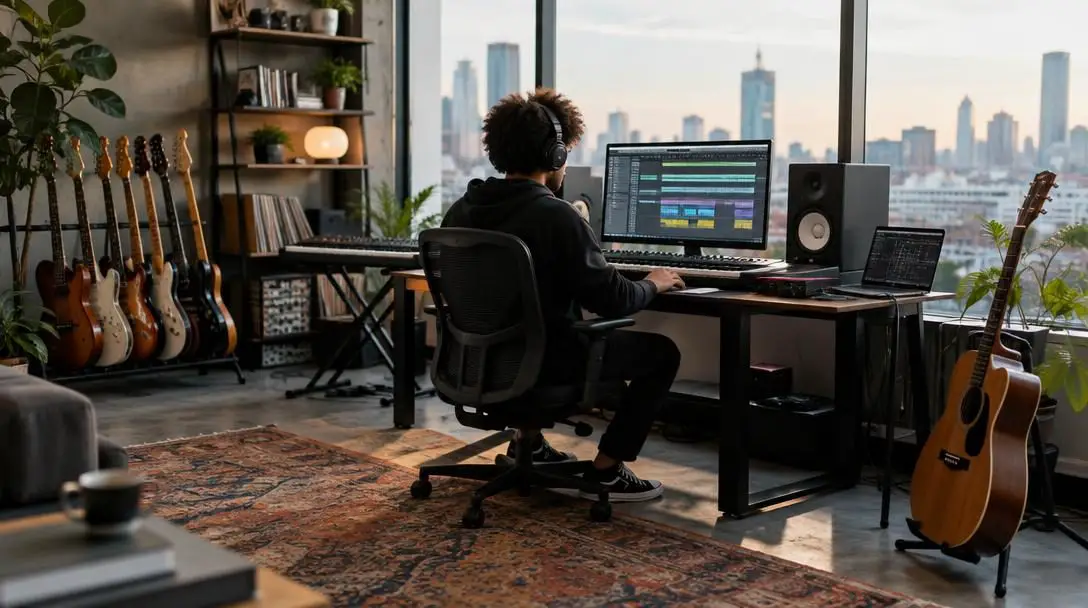
The contemporary music industry operates on an entirely computational foundation. What began as an experimental studio curiosity has expanded into an absolute necessity across every phase of musical composition, tracking, distribution, and consumption. For decades, commercial sound recording was an intensive physical craft where full ensembles gathered in acoustic live rooms to perform together in single takes. If a musician hit a sour note or stumbled on a beat, sound editors faced weeks of painstaking labor, manually slicing magnetic reel-to-reel tape with razor blades and taping fragments together to salvage the recording.
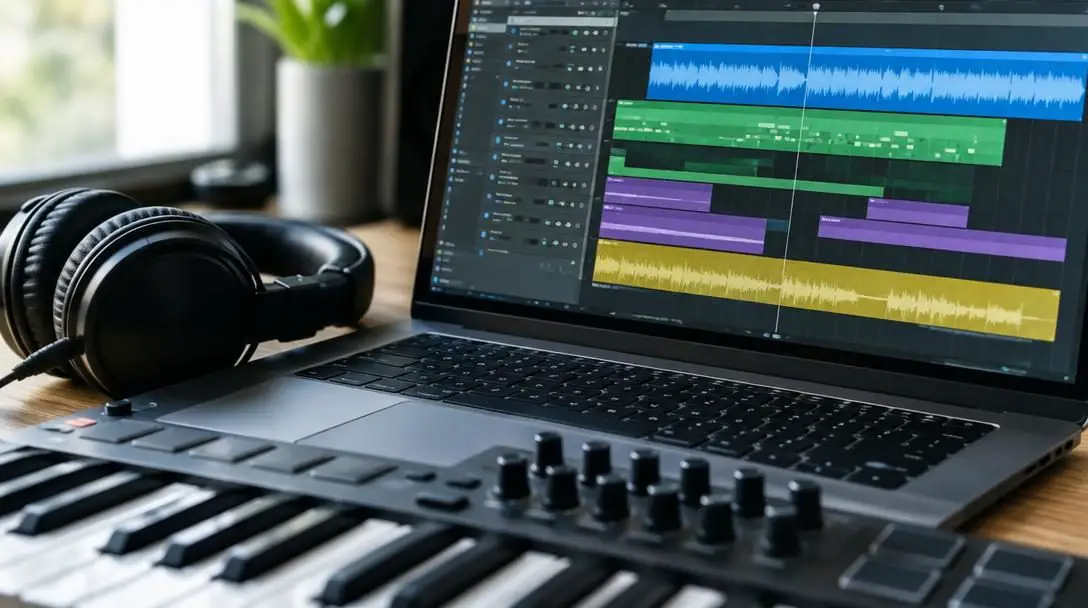
Today, digital audio software enables solo creators to write, engineer, polish, and distribute complete albums from a bedroom laptop within a matter of hours. From experimental mid-century computing mainframes generating primitive square-wave pitches to contemporary workstations hosting hyper-realistic virtual instruments, software has thoroughly remade sonic aesthetics and market economics. While computerization has democratized creative recording tools and opened immediate international distribution channels, it has also fundamentally altered the financial foundations of musicianship, turning recorded music into promotional collateral designed to drive live concert ticket sales.
Key takeaways
- The CSIR Mark 1 became the first computer to play music in the late 1940s, initiating a technological evolution that led to fully digital studios by the 2000s.
- Software platforms like Ableton Live and Pro Tools replaced multimillion-dollar recording facilities with accessible, in-the-box arrangement and non-destructive audio editing.
- Engineered by Dr. Andy Hildebrand in 1997, autotune evolved from an unobtrusive pitch-correction utility into an industry standard used across roughly 99 percent of modern recorded tracks.
- Digital streaming provides instantaneous global reach at the expense of per-play revenue, requiring 125 streams on Apple Music or 500 streams on YouTube Music to generate a single dollar.
- Because streaming payouts remain minimal, modern recording artists treat digital releases as promotional showcases to fuel revenue from live concert touring.
From mainframes to microchips: The evolution of digital audio
While mainstream audiences often identify the digital era with the personal computer boom of the 1980s—which introduced home video game consoles and laid the groundwork for the world wide web—computational audio began decades earlier. In the late 1940s, researchers utilized the CSIR Mark 1 to produce rudimentary melodies, proving that electronic logic boards could generate musical pitches. Despite this historic demonstration, commercial recording studios remained committed to analog gear, acoustic tracking spaces, and magnetic physical tape for the next several decades.
Iconic pre-1980s artists such as Elvis Presley and Led Zeppelin captured their legendary catalogs entirely without computational studio assistance. In those sessions, bands were required to play complete takes in synchrony, balancing their instruments acoustically within the physical room. If an arrangement needed structural adjustments, engineers resorted to manual tape splicing—an arduous, high-risk process where a single misplaced razor slice could ruin an irreplaceable master take.
The transition toward modern workflows began accelerating in the 1980s with the introduction of early digital synthesizers, outboard processors, and samplers. Studios throughout the 1980s and 1990s gradually integrated digital mixing boards and digital storage formats alongside their analog gear. By the 2000s, computers had transitioned from optional mixing utilities into the indispensable operational standard for commercial music creation across the globe.
Flagship computational tools of the modern studio
Modern studio production relies on software programs that emulate, expand, and replace traditional analog recording equipment. By running virtualized instruments and signal processors inside personal computers, developers have eliminated the necessity of renting high-cost commercial facilities to capture professional audio.
CSIR Mark 1
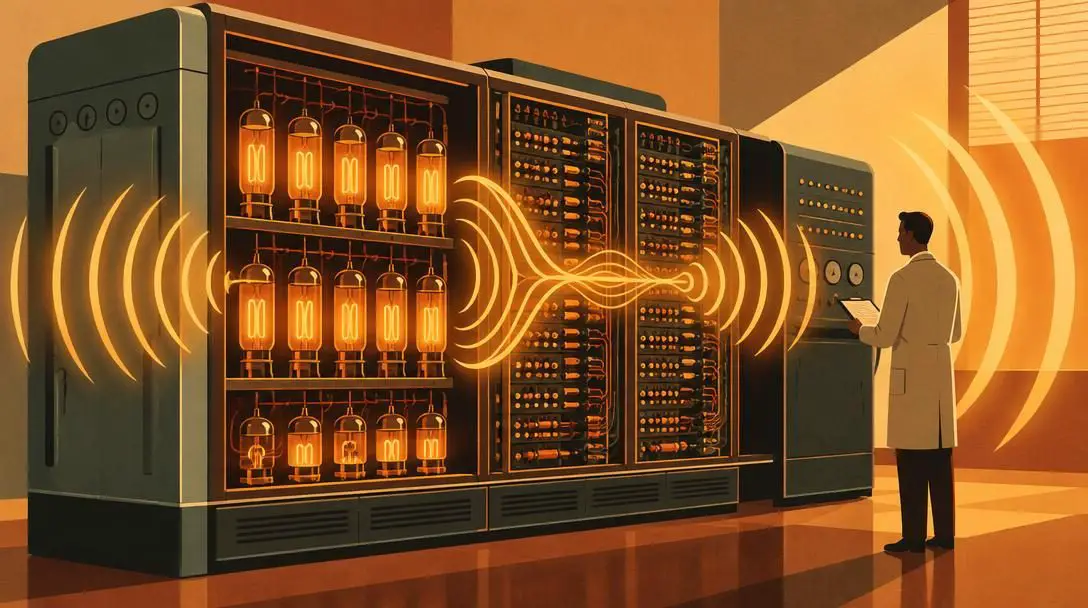
- Milestone: First computer to play music
- Era: Late 1940s
- Architecture: Electronic logic boards generating primitive melodic pitches
The CSIR Mark 1 holds a singular place in audio history as the earliest computational device capable of generating musical tones. Constructed in the late 1940s, it operated decades before personal computing became viable. Rather than processing recorded microphone signals, the mainframe used raw electronic logic circuits to output programmed audio pitches, proving that digital architecture could understand and generate melodic structures.
Pro Tools
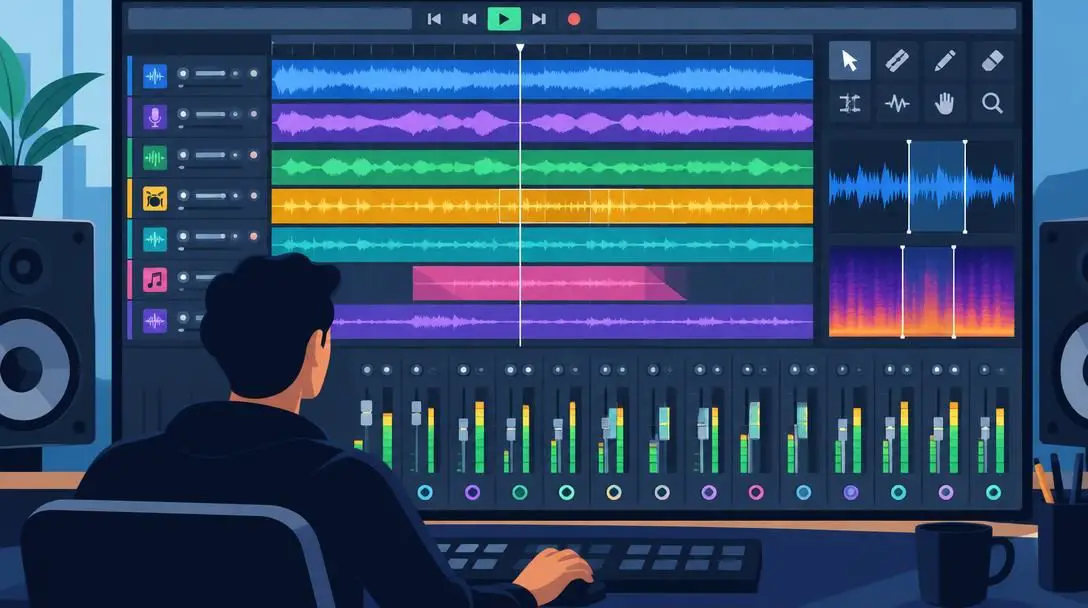
- Core application: Multi-channel acoustic recording and timeline arrangement
- Primary environment: Professional commercial recording facilities
- Key strength: Digital track isolation and non-destructive waveform editing
Pro Tools became an industry benchmark by bringing the functionality of traditional multi-track mixing consoles and analog tape machines onto a computer monitor. The software allows audio engineers to track large acoustic ensembles, record dozens of live microphone feeds simultaneously, and manage complex sessions without physical tape. Its timeline architecture introduced non-destructive editing, giving producers the ability to slice, duplicate, and adjust recorded takes without modifying the original source audio files.
Ableton Live
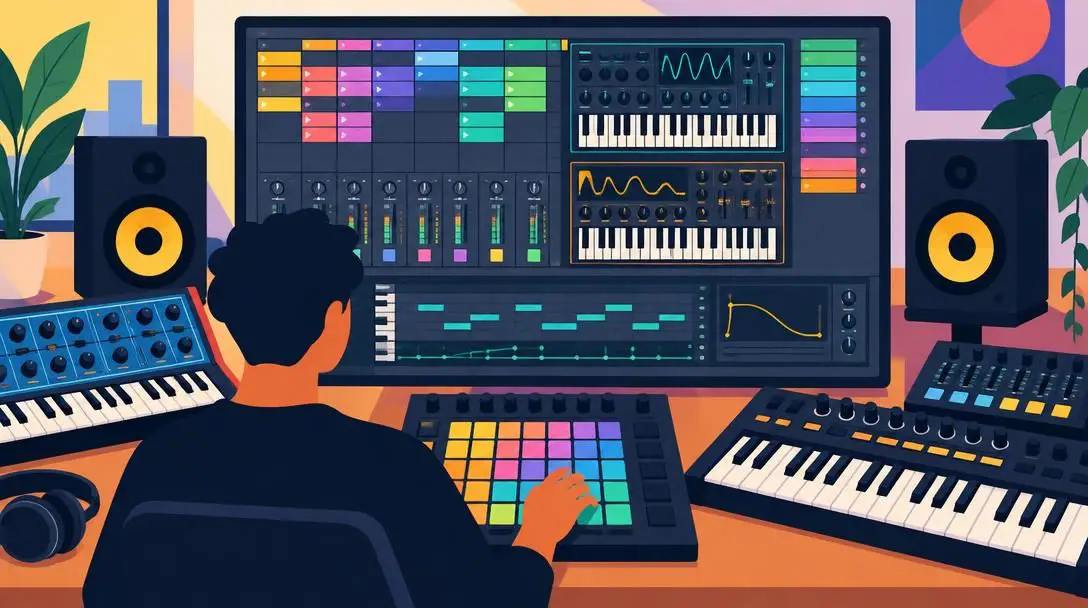
- Core application: Beat production, loop arrangement, and live performance
- Workflow style: In-the-box arrangement and virtual instrument modeling
- Studio impact: Enables complete solo production without acoustic live rooms
Ableton Live altered modern electronic and urban music production by prioritizing real-time arrangement, clip launching, and fluid sample manipulation. While traditional workstations mirrored linear tape machines, Ableton embraced non-linear composition, enabling producers to build entire instrumental arrangements using internal software synthesizers and virtual samplers. This in-the-box workflow eliminated the need for heavy physical amplifiers, large drum isolation booths, and expensive acoustic spaces.
Autotune
- Creator: Dr. Andy Hildebrand
- Release year: 1997
- Breakthrough record: Cher's "Believe" (1998)
- Market adoption: Utilized on roughly 99 percent of recorded music today
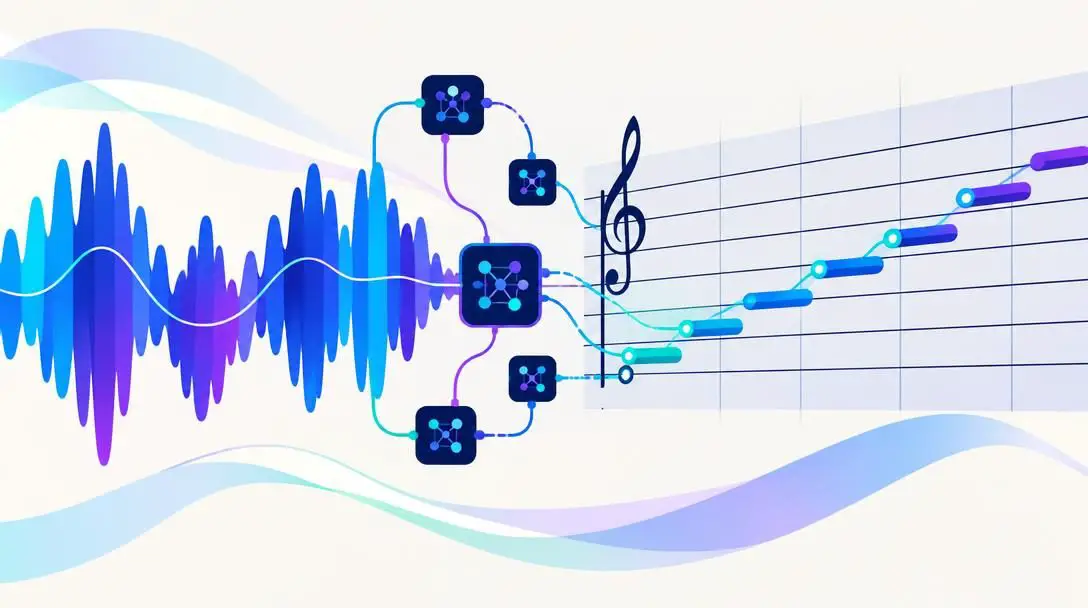
When Dr. Andy Hildebrand launched autotune in 1997, it was conceived as an algorithmic plugin to correct subtle vocal pitch deviations transparently. However, the technology gained instant global notoriety in 1998 when pop icon Cher utilized extreme, zero-speed correction settings on her chart-topping single "Believe," transforming her voice into a distinct, robotic instrument. Although early critics argued that digital pitch correction undermined musical authenticity, the software rapidly established itself as an essential tool across modern genres, utilized by vocalists such as Shania Twain, Justin Bieber, and Lady Gaga.
All the major industry names use autotune due to its ease of access, and roughly 99 percent of recorded music today employs this pitch-correcting utility.
Core engineering capabilities within digital workstations
The digitization of the recording environment replaced physical hardware limitations with algorithmic capabilities. Modern software workflows streamline audio creation through four major technical pillars:
- Digital track isolation: While major recording artists still book commercial facilities to capture live bands playing together, digital routing allows engineers to isolate every microphone feed into independent digital channels. This complete separation prevents room spill and acoustic bleed between adjacent instruments, allowing mixing engineers to filter, balance, and process individual tracks in isolation without degrading the overall ensemble recording.
- Non-destructive sound editing: Splicing physical magnetic tape carried permanent risk, as an inaccurate razor cut could permanently destroy a master performance. Modern digital editing allows producers to manipulate tempo, alter pitch, rearrange verses, and shift dynamic envelopes non-destructively, with every change instantly reversible via software undo commands.
- Algorithmic dynamic balance: Maintaining a uniform volume balance historically required engineers to perform manual console fader rides in real time during mixdown. Digital audio workstations utilize automated dynamic curves to regulate fluctuating signals automatically. If a drum groove feels overly loud during vocal pauses, automation curves adjust channel gain levels automatically to preserve dynamic balance across the track.
- Virtual instrument modeling: Producers can summon the acoustic signatures of rare analog synthesizers, grand pianos, and vintage equalizers directly within software plugins, eliminating the space constraints and maintenance expenses associated with vintage hardware racks.
The economics of digital distribution and streaming platforms
Before personal computers and cloud distribution transformed consumer audio, discovering and buying music required physical legwork. Music enthusiasts learned of upcoming releases through scheduled radio programming, television broadcasts, or retail displays. Fans routinely gathered outside physical retail stores for midnight album drops to buy records on vinyl, magnetic cassette, or compact disc.
In the contemporary market, physical pressing plants fulfill only a minor share of total consumption. Music distribution functions through cloud pipelines that deliver on-demand audio directly to consumer devices. Services such as Apple Music and Spotify provide catalog-wide streaming, while synchronized midnight video launches on YouTube serve as the modern release benchmark for new singles and studio albums. Digital networks also feed audio directly to terrestrial radio antennas and satellite broadcast networks.
While digital networks offer creators instant international reach, compensation per individual stream has declined drastically compared to legacy physical media sales. To generate sustainable livelihoods, musicians now use digital releases as promotional marketing tools designed to drive ticket sales for in-person concert touring.
| Platform / Medium | Distribution Mechanism | Plays Needed to Earn $1.00 | Primary Role in Artist Business |
|---|---|---|---|
| Apple Music | Digital cloud audio stream | 125 streams | Promotional discovery and audience building |
| YouTube Music | Digital video / audio stream | 500 streams | Broad visual reach and viral promotion |
| Physical Retail (Legacy) | Vinyl, cassette, CD purchases | Per-unit purchase | Primary historic direct-recorded income |
| Live Concert Touring | In-person ticketed performances | Per-ticket purchase | Modern primary income driver |
Step-by-step workflow for a computational music project
Executing an audio release in the software era requires balancing technical workstation setup with strategic release coordination. Independent creators can follow this structured workflow to transition an audio concept from an empty software timeline to commercial distribution.
- Select the right digital audio workstation: Determine which software environment aligns with your project goals, choosing multi-channel linear tracking environments like Pro Tools for live acoustic instruments or loop-centric platforms like Ableton Live for beat construction and electronic sound design.
- Capture high-fidelity audio tracks: Connect dedicated microphones and acoustic instruments through professional audio interfaces. Configure input gain stages properly to prevent digital clipping, and route signals to isolated digital channels to eliminate ambient microphone bleed.
- Refine timing and pitch elements: Utilize non-destructive editing tools to clean up room noise, adjust performance timing, and apply pitch-correction software like autotune to ensure vocal precision while retaining emotional expression.
- Balance and automate the mix: Shape the frequency profile using equalization, regulate dynamics with compression, and establish stereo width. Program algorithmic automation curves to balance faders dynamically, allowing rhythm sections to step forward during vocal pauses.
- Prepare master files for streaming ingestion: Export uncompressed, high-resolution audio files that comply with the exact loudness standards and metadata formatting required by modern digital distribution aggregators.
- Align digital drops with live performances: Schedule midnight video premieres and digital streaming rollouts alongside tour announcements and ticket sales, turning digital audio engagement directly into live event revenue.
Critical mistakes to avoid in digital production and distribution
Because software workstations offer near-infinite tracks and processing plugins, creators can easily stumble into common production and business pitfalls. Avoiding these practices helps protect acoustic clarity and financial stability.
- Over-processing and frequency clutter: Stacking dozens of virtual instruments and equalization plugins simply because computational power allows it results in crowded, muddy mixes where instruments fight for the same acoustic space.
- Neglecting dynamic track automation: Setting static channel faders and leaving them unchanged throughout a song produces a lifeless, mechanical mix. Natural productions require dynamic automation curves that breathe alongside the performance.
- Treating pitch correction as a substitute for performance: Forcing an inaccurate or off-key vocal performance into pitch using aggressive autotune settings introduces harsh digital artifacts and drains emotional nuance from the recording.
- Relying on streaming royalties as sole revenue: Expecting fractional-cent streaming payouts to cover equipment and recording costs is financially unviable. Sustainable artist models use streaming tracks as promotional collateral to sell concert tickets and physical merchandise.
Frequently asked questions
What was the first computer to play music?
The CSIR Mark 1, built in the late 1940s, was the first computer to generate synthesized musical pitches, proving that electronic logic boards could output programmed melodies.
How many streams are needed to make one dollar on streaming services?
Streaming compensation varies by platform: it requires approximately 125 streams on Apple Music or roughly 500 streams on YouTube Music to generate $1.00 in gross revenue.
When did autotune enter commercial music?
Dr. Andy Hildebrand introduced autotune in 1997. The software became an international commercial phenomenon the following year when Cher used its exaggerated settings on her 1998 hit single "Believe."
Why did studios stop editing music on physical tape?
Physical tape editing required audio engineers to cut magnetic media manually with razor blades, which took weeks of studio labor and risked permanently ruining master takes. Digital workstations replaced tape with non-destructive, instant sound manipulation.
How do modern musicians make money if streaming payouts are so low?
Because recorded music generates minimal per-play revenue on services like Spotify, Apple Music, and YouTube, artists treat their releases as promotional tools to cultivate an audience and earn their primary income through live concert touring and ticket sales.
The bottom line
Computing has altered music from its foundational acoustics to its overarching commercial economics. The transition from physical tape-splicing tables to non-destructive digital audio workstations democratized track creation, enabling solo producers to achieve sonic results that once demanded multimillion-dollar commercial studios. While streaming distribution pays minimal per-stream royalties, software workflows provide creators with unprecedented artistic autonomy and immediate international reach. Modern musical success relies on mastering computational tools to engineer exceptional tracks while using worldwide streaming platforms as launchpads to fill live concert venues.