The Future of Smart Homes: How IoT and AI Are Changing the Way We Live
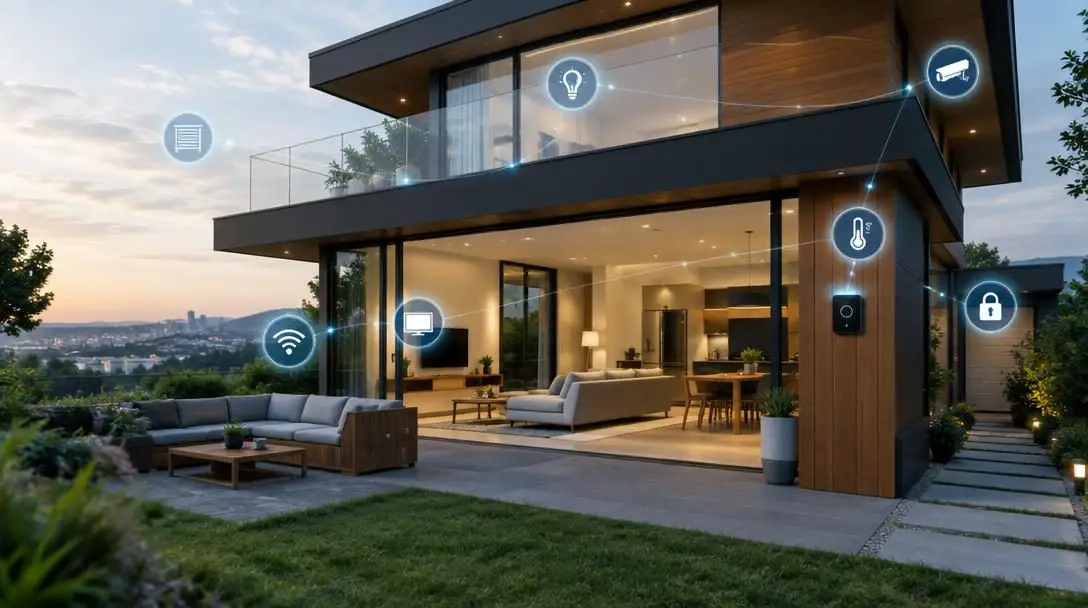
The concept of a smart home was once considered an unattainable, futuristic idea seen only in speculative fiction. For decades, popular culture imagined houses that could anticipate human needs, manage mundane chores independently, and provide effortless domestic comfort. Today, that vision is turning into an everyday reality for homeowners around the world through the rapid advancement and convergence of two primary technologies: the Internet of Things (IoT) and Artificial Intelligence (AI). Together, these modern tools are transforming ordinary residences into intelligent, connected spaces designed to offer unprecedented convenience, operational efficiency, and enhanced personal safety.
Historically, early residential automation consisted of isolated systems operating strictly in silos, such as an analog mechanical timer wired to an outdoor floodlight or an infrared remote dedicated to a single appliance. Modern residences break down these barriers entirely. Rather than functioning as collections of static appliances, contemporary homes operate as living digital networks where appliances, environmental controls, and safety equipment constantly exchange information. By shifting from reactive spaces into proactive environments, modern living quarters intuitively support daily routines across energy conservation, home security, personal health tracking, and customized indoor comfort.
Key takeaways
- The convergence of IoT hardware and AI algorithms transforms static houses into proactive, self-tuning living environments.
- Connected climate controls and energy tracking tools significantly reduce household utility expenses and carbon footprints.
- Next-generation residential security pairs intelligent surveillance cameras with facial recognition and instantaneous hazard detection.
- Successful smart home adoption requires robust local network security, cross-device interoperability, and physical manual overrides.
The dual engines of intelligent living
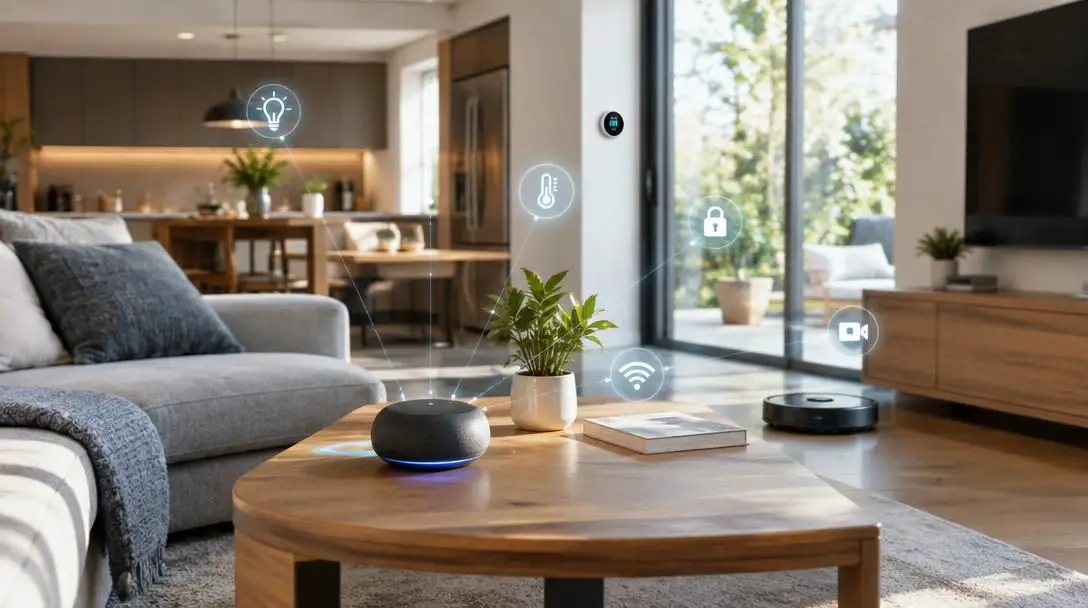
At the center of any modern automation setup is the Internet of Things. The physical foundation of this system rests on a broad network of interconnected, IoT-enabled devices distributed throughout the living space. These physical items include connected thermostats, smart lighting fixtures, surveillance cameras, kitchen appliances, and environmental monitors. Each item is embedded with specialized hardware, such as network communication chips and environmental sensors, allowing it to collect physical data from its surroundings and transmit it across a shared local network. Because these gadgets communicate directly with one another, hardware is no longer limited to standalone, isolated operation.
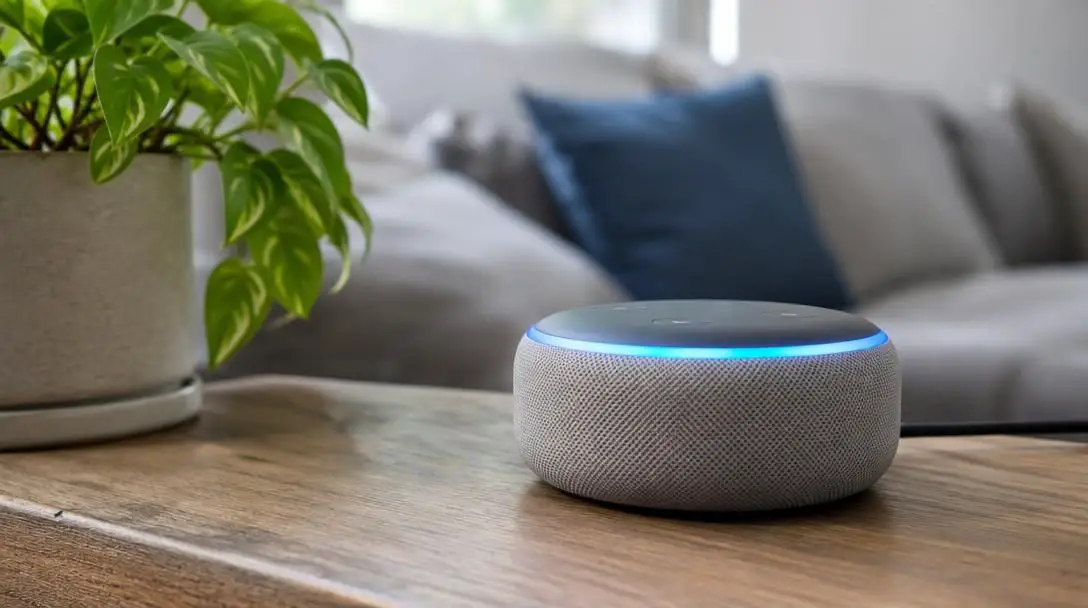
While IoT devices provide the network connectivity, physical sensors, and mechanical controls, artificial intelligence acts as the analytical brain of the ecosystem. Without AI, connected devices can only follow rigid, pre-programmed rules that fail when circumstances deviate from simple schedules. With AI algorithms integrated into the system, the network can process vast amounts of incoming data, spot subtle trends, and make informed choices on its own. For example, an AI-powered voice assistant can interpret natural spoken commands and coordinate complex actions across multiple devices simultaneously, turning complex digital tasks into simple verbal requests.
Pairing sensor-rich hardware networks with adaptive analytical software allows living spaces to cross the threshold from passive shelter into dynamic, self-tuning environments.
This cooperative dynamic between IoT and AI is particularly evident in environmental control and occupancy management. An IoT motion sensor detects physical movement or absence within a room and transmits that data to a central system. An AI-driven smart thermostat interprets this occupancy information in real time, factoring in historical household schedules and ambient outdoor weather to adjust heating or cooling outputs automatically without requiring continuous human micromanagement.
Core benefits of the connected household
The combination of IoT and AI brings substantial practical benefits to modern households. These advantages extend across critical domains of domestic life, fundamentally altering how homes conserve resources, protect residents, and nurture physical well-being.
Energy efficiency and sustainability
Smart homes are deliberately structured to optimize resource consumption, leading to lower operating costs and practical environmental benefits. IoT devices actively track electricity and fuel usage, providing homeowners with real-time data on how power is consumed across the property. Smart thermostats study the specific daily habits and schedules of household members to adjust heating and cooling parameters automatically, eliminating waste when areas are vacant. AI algorithms take this a step further by evaluating sensor streams to suggest energy-saving habits and forecast the best times of day to run power-hungry appliances, supporting a lower household carbon footprint.
Enhanced security and safety
Digital intelligence has significantly upgraded residential security from simple noise-making alarms to proactive defense systems. Smart surveillance cameras work alongside AI algorithms to monitor video feeds, detect potential threats, and dispatch instant alerts to property owners and local authorities. Facial recognition technology provides an additional layer of verification, identifying authorized residents to allow smooth entry while keeping unwanted visitors outside. Inside the walls, smart smoke detectors and carbon monoxide sensors instantly alert homeowners via mobile notifications, facilitating rapid responses to domestic hazards.
Personalized living experience
Modern automation creates an environment tailored to the unique habits of its residents. AI algorithms track daily routines, ambient lighting conditions, and preferred indoor climates to modify room settings dynamically. Smart lighting systems automatically balance output, shifting brightness and color temperatures according to individual preferences or the natural progression of the day. Meanwhile, virtual assistants observe ongoing household habits to deliver tailored recommendations for media consumption, everyday tasks, and home shopping.
Health monitoring and assistance
Smart living spaces are increasingly integrated with personal health management tools. Wearable IoT devices, including fitness bands and smartwatches, feed real-time personal metrics such as physical activity levels, heart rate variations, and sleep cycles into the home ecosystem. AI tools examine these health datasets to deliver customized wellness tips and flag possible health concerns early. In addition, internal environmental sensors keep continuous track of air purity, humidity levels, and ambient temperatures, helping to maintain a comfortable indoor atmosphere that supports overall well-being.
Comparing core smart home benefit areas
Understanding how different technologies map to practical household improvements helps homeowners prioritize their initial automation investments:
| Focus Area | Primary Hardware | Core AI Capability | Primary Household Benefit |
|---|---|---|---|
| Energy Efficiency | Smart thermostats, power monitors | Predictive schedule tracking, load forecasting | Reduced utility costs and smaller carbon footprint |
| Security & Safety | Cameras, smart locks, smoke sensors | Facial recognition, proactive hazard alerting | Rapid response to physical and domestic hazards |
| Personalization | Connected bulbs, voice assistants | Context-aware lighting, dynamic habit learning | Frictionless daily routines and custom comfort |
| Health & Wellness | Wearable bands, air purity monitors | Biometric analysis, environmental regulation | Early wellness warnings and optimized indoor air |
Steps to building a connected household
Transitioning an existing residence into an intelligent, automated household does not have to happen all at once. Homeowners can take a step-by-step approach to build an efficient, secure system that suits their specific needs:
- Evaluate household priorities: Determine the primary reasons for introducing smart automation into the home, whether that means cutting monthly utility bills, upgrading physical security, automating repetitive domestic chores, or tracking health and indoor wellness.
- Establish a reliable home network: Because every IoT component depends on consistent data transmission, verify that the residence has a dependable, strong wireless networking infrastructure capable of supporting dozens of active devices simultaneously.
- Select a preferred management ecosystem: Choose a centralized voice assistant or management platform that will serve as the primary interface for voice commands, smartphone alerts, and system-wide configurations.
- Start with foundational hardware: Begin by installing high-utility, simple hardware that provides immediate value, such as smart thermostats, connected light bulbs, and automated safety alarms like smoke and carbon monoxide detectors.
- Incorporate advanced safety hardware: Introduce smart security cameras, video doorbells, and intelligent entry locks. Ensure that advanced features, such as facial recognition and real-time smartphone alerts, are properly configured and tested.
- Establish cross-device automations: Link disparate devices together so they act in response to one another. For example, configure motion sensors to turn off lighting and adjust thermostat setpoints whenever rooms are vacant.
- Integrate wellness and air quality devices: Add environmental sensors to track indoor humidity, temperature, and airborne contaminants, and pair the home system with personal health wearables to view daily activity metrics and sleep patterns on unified dashboards.
Critical mistakes to avoid in home automation
While building a smart home brings remarkable convenience, homeowners frequently make missteps that diminish the reliability, convenience, and security of their setups. Avoiding these typical errors will ensure a much smoother experience:
- Overlooking device interoperability: Purchasing devices from multiple manufacturers without checking whether they can communicate with one another creates a fragmented ecosystem. A home filled with incompatible gadgets forces the user to juggle dozens of separate smartphone applications, destroying seamless automation.
- Neglecting network and data security: Smart homes process vast amounts of private data, making them attractive targets for unauthorized intrusion. Common missteps include leaving default passwords unchanged, skipping regular firmware updates, or failing to run devices on secured network segments.
- Ignoring manual backups and traditional overrides: Relying entirely on voice commands or automated routines without maintaining physical fallbacks causes severe operational hurdles. Every smart lock, light, and safety sensor should have a physical backup method—such as a manual key, standard wall switch, or local manual controls—in case the local network drops offline.
- Over-automating simple tasks: Designing overly complex automation rules frequently leads to user frustration. If an automation routine turns lights off while people are quietly reading or alters temperatures unexpectedly, the technology becomes an obstacle rather than an aid.
- Failing to educate all household members: Installing complex smart hardware without teaching family members or guests how to operate it leads to frustration and system errors. Everyone living in the home needs to understand how to control the devices, review alerts, and operate the ecosystem safely.
Frequently asked questions
What is the difference between IoT and AI in a smart home?
IoT refers to the physical network of connected devices, sensors, and appliances that collect and transmit environmental data. AI serves as the analytical brain of the system, interpreting that sensor data, recognizing user patterns, and coordinating automated responses across devices without manual programming.
Can a smart home function if the internet goes down?
While cloud-based services and remote phone alerts may become unavailable during an outage, a properly designed smart home retains local control. Essential hardware like intelligent door locks, wall switches, and safety sensors should always include manual physical overrides or local network control options.
How do smart homes help lower energy bills?
Smart thermostats analyze occupancy patterns to avoid heating or cooling empty spaces, while smart energy monitors track power draw across appliances. AI algorithms can forecast ideal times to run energy-intensive devices, minimizing electricity waste throughout the billing cycle.
What should I do first when starting a smart home?
Start by evaluating your household goals, such as saving energy or improving security, and ensure your home Wi-Fi network can support multiple connected devices. From there, select a centralized management ecosystem and begin with foundational hardware like smart thermostats or smart light bulbs.
How can I protect my smart home from cybersecurity risks?
Protect your smart home by replacing all default factory passwords with strong credentials, applying firmware updates promptly, selecting devices from reputable manufacturers, and placing smart home devices onto an isolated or secured network segment.
The bottom line
As smart home technology accelerates, property owners must stay forward-thinking to keep their living spaces safe, functional, and up to date. The rapid pace of development means that hardware capabilities and software features will continue to evolve, requiring homeowners to remain informed about newly emerging IoT tools and AI applications. Education and awareness programs will play a vital role in helping consumers understand both the practical advantages and the operational responsibilities of maintaining connected domestic environments.
Ultimately, the objective of modern home automation is not simply to fill living spaces with novel gadgets, but to construct a cohesive ecosystem that enriches daily life. By thoughtfully pairing sensor-driven IoT hardware with analytical AI intelligence, homeowners can establish residences that actively protect personal safety, optimize energy use, and support individual wellness. With a clear installation roadmap, sensible security protocols, and an emphasis on interoperability, the intelligent living environment becomes a dependable foundation for modern life.