5 Ways To Make Your Cat Less Clingy
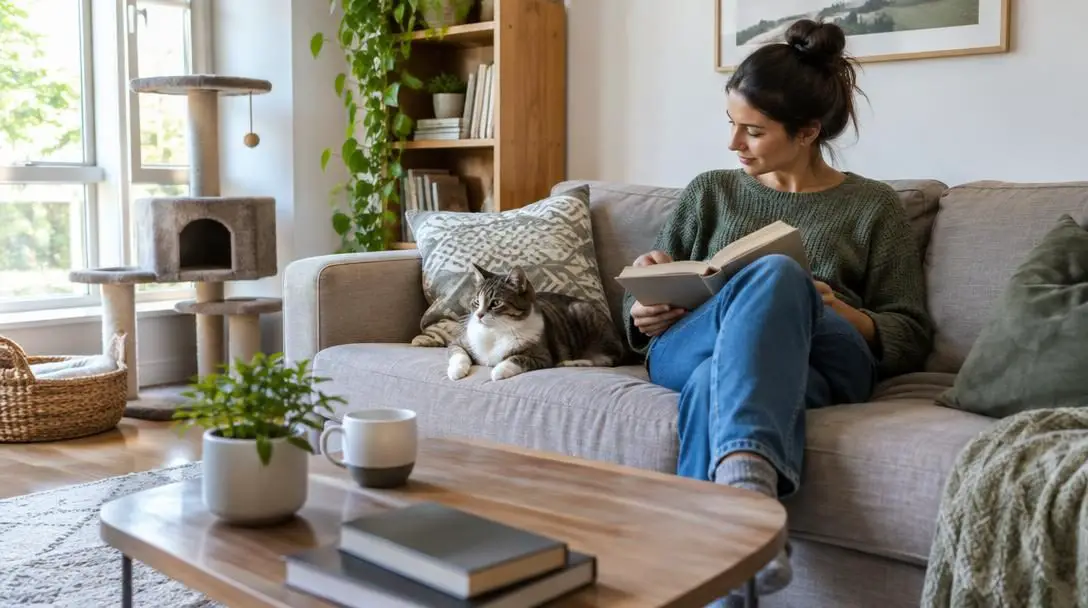
Domestic cats are often stereotyped as fiercely aloof, solitary animals that prefer to keep their distance from human family members. Yet many pet owners experience the exact opposite reality: a shadow-like companion that weaves between ankles, vocalizes persistently for affection, and refuses to spend even a few moments in an adjoining room. While affectionate companionship is deeply rewarding, an extreme degree of feline dependence can quickly become overwhelming when you need uninterrupted focus, deep rest, or simply physical room to move.
Excessive clinginess in domestic cats rarely stems from pure stubbornness. Instead, it is an understandable reaction to an indoor environment that lacks adequate stimulation, quiet retreat zones, or consistent behavioral boundaries. By understanding the underlying drivers of feline attachment and thoughtfully reshaping your household routine, you can guide an over-attached pet toward healthy confidence, balanced self-reliance, and peaceful independence.
Key takeaways
- Feline clinginess is frequently driven by daytime boredom and nocturnal sleep disruptions in under-stimulating indoor environments.
- True feline independence reflects a pet's emotional security and confidence rather than emotional detachment from its owner.
- Establishing dedicated, quiet resting areas away from busy household hubs encourages sustained sleep and spatial autonomy.
- Reinforcing quiet moments and solitary exploration with treats builds a strong, positive association with alone time.
- Introducing a second feline companion can provide natural distraction and play, provided the transition is conducted slowly.
Understanding Why Indoor Cats Become Clingy
To address needy behavior, owners must first look at how indoor living reshapes a cat's daily world. Wild and feral ancestors roamed vast territories, spending substantial portions of their waking hours hunting, scouting boundaries, and defending resources. In contrast, modern companion cats live in confined quarters where food, safety, and novel stimulation are provided almost entirely by their owners. When an apartment or house lacks compelling sensory outlets, the resident human becomes the single focal point of the cat's day.
Boredom is one of the most prominent catalysts for excessive attachment. An under-stimulated cat quickly discovers that trailing a walking human provides movement, visual variety, and the possibility of interaction. If left without engaging activities, the animal chooses proximity simply because there is nothing better to do in the immediate environment.
Disruptions in resting patterns also exacerbate clinginess. Cats possess naturally nocturnal or crepuscular rhythms, meaning their internal biology inclines them to be active at dawn, dusk, or during the night. If a cat experiences poor, fractured rest or lacks a secure resting sanctuary, it may wander exhaustedly throughout daylight hours. A tired, unsettled cat will frequently shadow its owner for reassurance, seeking stability from a human presence instead of obtaining deep, restorative rest on its own.
Rethinking Feline Independence and Solitary Confidence
Many pet owners mistakenly conflate independence with emotional distance. However, a genuinely independent cat is not aloof, cold, or uncaring; rather, the animal possesses the self-assurance required to manage its own time and personal space without constant human intervention. In a secure household, an independent feline feels safe exploring, resting, grooming, and playing without needing the immediate visual confirmation of an owner nearby.
Feline behavioral choices are fundamentally dictated by available environmental resources and learned outcomes. When a cat is provided with diverse perches, stimulating objects, and quiet alcoves, it has genuine incentives to venture away from human ankles. By redesigning indoor spaces to satisfy natural predatory and climbing instincts, owners shift the animal's mental focus from human interaction to its broader surroundings.
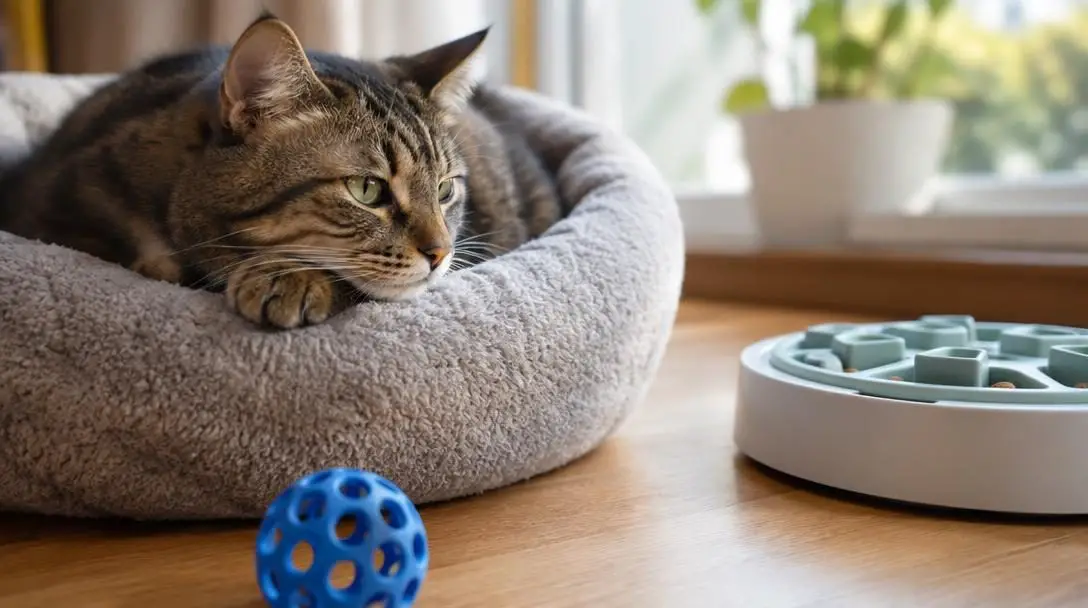
True feline independence does not mean emotional detachment; it reflects a cat's comfort and confidence in managing its own time and activities.
Furthermore, behavioral learning strongly influences how comfortable a cat feels when left to its own devices. Like most animals, cats repeat actions that result in favorable outcomes. If solitary exploration and calm resting consistently yield quiet praise, peace, or palatable rewards, the animal builds a positive mental connection with solitude. Solitary moments cease to represent a deprivation of attention and instead become an intrinsically rewarding experience.
Five Core Strategies to Encourage Feline Self-Reliance
Transforming a shadow cat into a self-assured companion requires a steady, structured routine. The following comparison outlines the five core approaches to reshaping feline behavior before delving into each technique individually.
| Strategy | Primary Benefit | Target Need | Implementation Effort |
|---|---|---|---|
| Toys & Entertainment | Eliminates idle boredom | Mental & physical drive | Moderate (requires rotation) |
| Comfortable Sleeping Area | Promotes uninterrupted rest | Biological sleep cycles | Low (one-time setup) |
| Designated Alone Time | Builds spatial autonomy | Emotional self-regulation | Low to moderate |
| Positive Reinforcement | Rewards independent choices | Learned behavior | High (requires consistency) |
| Adopting a Second Cat | Provides natural companionship | Social interaction | High (long-term transition) |
Provide Plenty of Toys and Entertainment
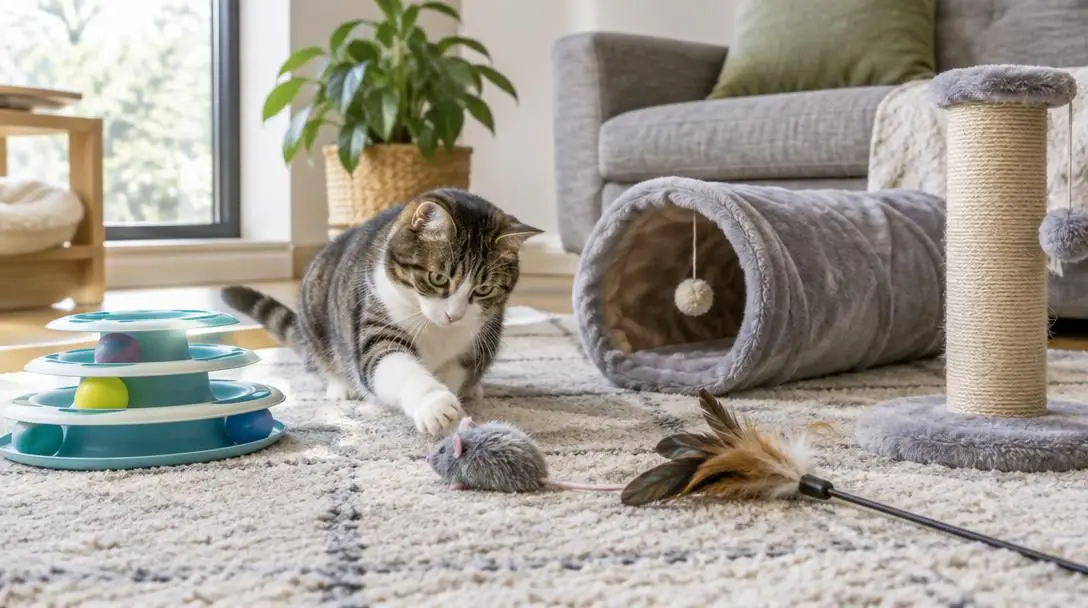
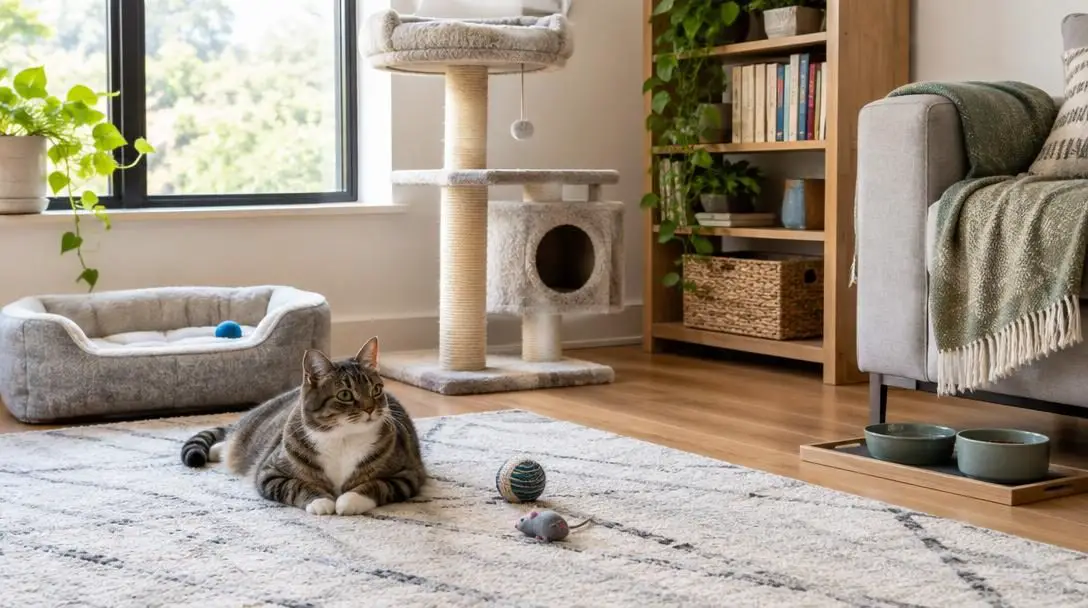
Because boredom is a leading driver of clingy habits, giving your pet an engaging array of self-directed activities is paramount. Ensure your home contains an abundant variety of toys, climbing structures, and dedicated scratching surfaces. High-quality scratching posts satisfy the primal need to mark territory, stretch spinal muscles, and condition claws. When cats have dynamic items that tap into their innate prey drive, they burn off excess energy independently rather than following you from room to room hoping for casual stimulation.
Set Up a Comfortable Sleeping Area
Sustained, peaceful sleep is essential for stabilizing a cat's daytime mood. Because cats naturally follow nocturnal and crepuscular sleep cycles, an under-rested pet is prone to daytime agitation, frequent vocalizing, and constant shadowing. Establish a cozy, dedicated sleeping spot in a quiet part of your home, intentionally positioned away from busy foot traffic. Whether this sanctuary is a cushioned cat bed or a simple cardboard box tucked into a peaceful corner, a secure retreat allows your cat to achieve deep, restorative rest without feeling obliged to monitor your activities.
Give Them Designated Alone Time
Just like humans, companion animals need dedicated periods of solitude to decompress and reset their nervous systems. Create a quiet retreat room or secluded household corner where your cat can retreat undisturbed whenever the living space feels chaotic. Providing an undisturbed sanctuary breaks the habitual pattern of non-stop proximity. Over time, having access to an exclusive space teaches your pet that being physically separated from you is completely safe and relaxing.
Use Positive Reinforcement Training
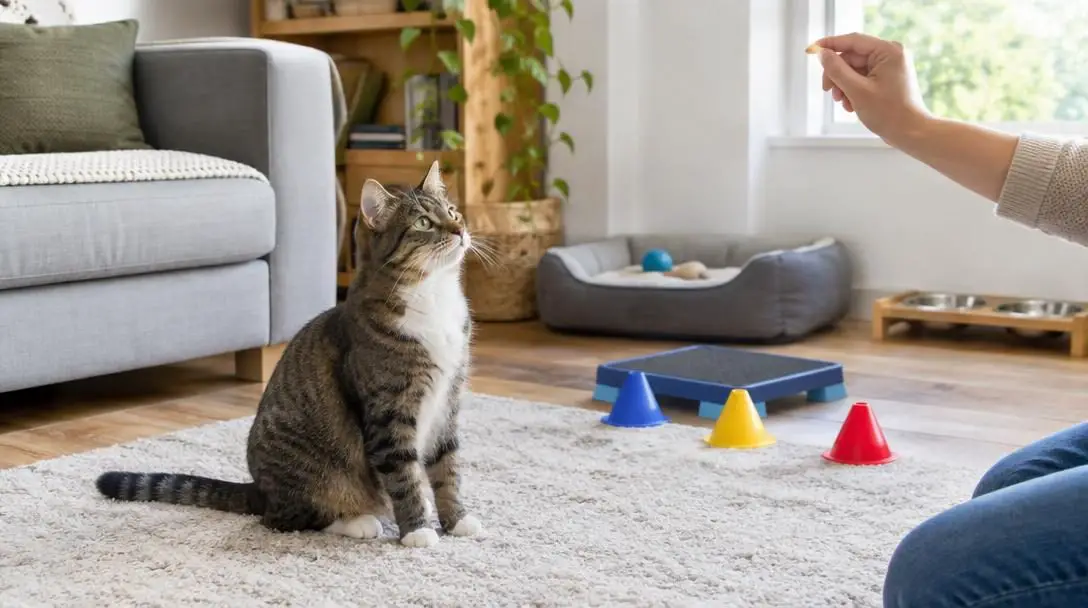
Proactive behavioral training helps your cat understand that independent activity brings exceptional benefits. Keep a supply of high-value treats on hand and quietly reward your pet whenever you observe them resting peacefully in their own bed, examining a toy, or quietly exploring another room. Pairing solitary behaviors with gentle praise and tasty rewards directly counteracts the idea that satisfaction only occurs when sitting in your lap or pacing at your feet.
Consider Getting Another Cat
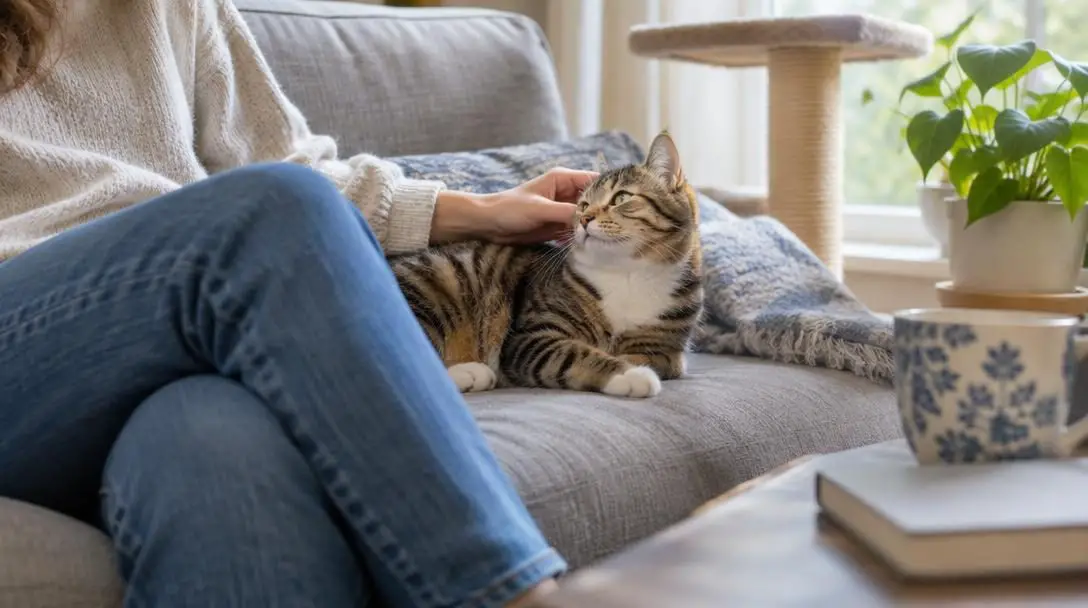
If environmental enrichment and consistent training do not fully ease your cat's separation difficulties, introducing a second feline can offer meaningful social companionship. A compatible feline companion provides natural play, mutual grooming, and constant diversion, pulling your resident cat's focus away from your every footstep. However, bringing a new pet home requires careful, gradual introductions over several days or weeks to ensure territorial safety and long-term harmony.
Critical Mistakes That Reinforce Clingy Behavior
When coping with an overly dependent pet, well-meaning owners often react in ways that unintentionally worsen the behavior. Recognizing these standard behavioral missteps will help you maintain steady progress without confusing or distressing your pet.
- Accidentally rewarding demand behavior: Scooping up, petting, or talking softly to a cat the second it weaves through your legs or meows persistently teaches the animal that intrusive actions immediately earn attention.
- Neglecting active mental stimulation: Leaving a couple of motionless plastic balls on the carpet does not fulfill hunting or problem-solving instincts; cats require diverse textures, heights, and scratching surfaces to stay genuinely occupied.
- Placing beds in high-traffic hubs: Positioning a pet bed directly beside your desk, dining table, or television makes physical separation difficult and continuously disrupts your cat's resting cycles.
- Rushing multi-cat introductions: Forcing an unfamiliar animal into your resident cat's personal territory causes intense stress and defensive hostility, aggravating clinginess rather than solving it.
- Expecting instant behavioral transformation: Breaking deeply ingrained habits takes consistent effort over weeks; abandoning boundaries prematurely will reset your cat's progress back to baseline.
Tracking Progress and Refining the Home Layout
Encouraging self-reliance is an ongoing process that demands careful observation and periodic environmental fine-tuning. By paying attention to minor behavioral shifts, you can determine which interventions are yielding results and where your living space may still fall short.
- Monitor daily behavioral baseline: Track how many hours your cat spends resting, following your movements, or playing alone over a typical three-day span.
- Assess independent engagement: Notice whether your cat begins spending ten to fifteen minutes batting at toys or sitting peacefully in a dedicated box without seeking your eye contact.
- Refresh structural novelty: Periodically rotate cat trees, cardboard boxes, and scratching posts through different rooms to stimulate natural curiosity and keep exploration exciting.
- Evaluate territorial readiness: If planning for a second cat, arrange separate feeding, resting, and litter stations in advance to eliminate resource competition before the animals meet.
Observing small milestones—such as your cat choosing to remain curled up in a quiet corner when you walk into the kitchen—demonstrates that self-assurance is taking root. Celebrate these gradual improvements, as they confirm that your pet feels secure within the home environment and no longer views you as its sole emotional anchor.
Frequently asked questions
Why does my cat follow me everywhere and meow constantly?
Cats frequently shadow owners and vocalize due to a combination of indoor boredom, learned attention-seeking behavior, and inadequate environmental stimulation. When a living space lacks engaging outlets for natural hunting, scratching, and exploring instincts, the human resident becomes the primary source of activity and security.
How does a cat's sleep schedule influence clinginess?
Cats are naturally nocturnal or crepuscular creatures that require sustained, restful sleep during biological downtimes. If daytime noise or poor bedding locations prevent sound rest, an under-rested cat may become anxious and restless, compensating by continuously trailing its owner for reassurance rather than sleeping.
Where should I set up my cat's primary bed?
Cat beds and sleeping sanctuaries should be placed in quiet, low-traffic areas away from busy household hubs like the kitchen, home office desk, or entryway. Positioning resting spots in undisturbed corners allows cats to achieve deep rest and practice spatial independence.
Will adopting a second cat always solve clinginess?
While a second feline can provide natural companionship and an outlet for play, it is not a guaranteed remedy. Success depends on compatibility and requires a gradual, careful introduction process. If introduced too rapidly, a new pet can increase territorial stress and worsen clingy behavior.
What should I do when my cat weaves between my legs demanding attention?
Avoid immediately picking up, talking to, or petting your cat when it exhibits intrusive, demand-driven actions, as this reinforces the habit. Instead, wait for a moment of quiet, independent behavior before offering affection, praise, or treats.
The bottom line
Fostering feline independence is not about distancing yourself from your pet or extinguishing affection; it is about creating a well-balanced living environment where your cat feels thoroughly secure, enriched, and rested. By providing dedicated sleeping zones away from daily household commotion, stocking the home with varied toys and scratching posts, and consistently rewarding solitary choices, you remove the boredom and uncertainty that drive needy behavior. With patience, steady routines, and thoughtful boundary setting, your cat will gain the confidence to explore its surroundings comfortably, allowing you both to enjoy a more harmonious, mutually respectful relationship.