A Tiny Course In Cognitive Behavioural Therapy: 5 Facts and Insights to Get a Sense of This Fascinating Subject

Cognitive Behavioural Therapy, widely known as CBT, has transformed modern mental health care by offering a structured, practical, and empirically validated approach to emotional well-being. Unlike therapeutic styles that treat psychological distress as an uncontrollable or mysterious force, CBT breaks down everyday struggles into distinct, observable components. By illuminating the mechanics of human thought, feeling, and behavior, it equips people with reliable strategies to interrupt distress and enact meaningful daily change.
At its heart, CBT operates on the core understanding that our internal interpretations of circumstances, rather than the circumstances themselves, govern how we feel and respond. By examining our internal dialogue and testing our automatic assumptions against real-world evidence, we can dismantle unhelpful patterns. The result is a resilient, problem-solving mindset capable of navigating stress, sadness, anxiety, and interpersonal conflict.
Key takeaways
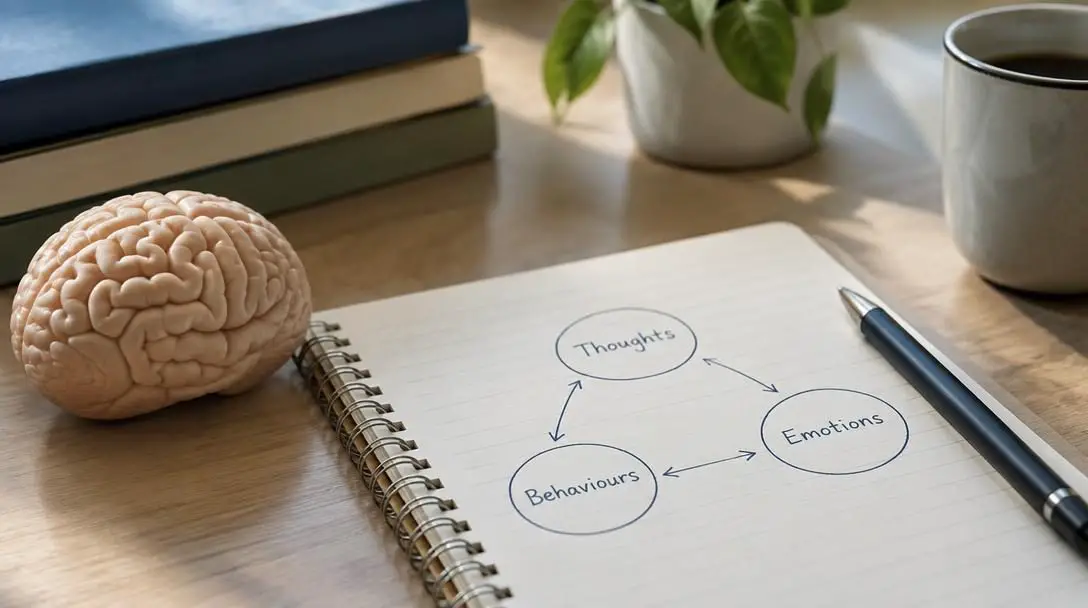
- Cognitive Behavioural Therapy shows that our thoughts, emotions, and behaviors exist in an ongoing, interconnected feedback loop.
- Unlike traditional psychoanalysis, CBT focuses primarily on resolving current challenges rather than cataloging past history.
- Treatment operates as an egalitarian, collaborative partnership between client and practitioner involving active practice and homework.
- Extensive clinical research demonstrates that CBT matches medication in treating major conditions such as depression, anxiety, PTSD, and OCD.
- CBT principles extend far beyond clinical clinics, allowing individuals to learn and apply self-guided techniques using workbooks, apps, and digital courses.
The Evolution and Foundations of Cognitive Therapy
To understand why Cognitive Behavioural Therapy is so widely practiced today, it helps to examine the historical divide it originally resolved. Before the development of cognitive therapies, clinical psychology was largely split between two dominant paradigms: psychoanalysis and radical behaviorism. Psychoanalytic traditions spent extensive time probing the unconscious mind, childhood memories, and repressed desires, often requiring years of open-ended exploration. In stark contrast, strict behavioral traditions dismissed internal experiences altogether, choosing to concentrate strictly on external environmental conditioning and visible actions.
While both traditions yielded important psychological discoveries, neither provided individuals with an immediate way to understand their conscious thoughts. Everyday human life is defined by a running inner commentary—a stream of evaluations, judgments, and predictions. When difficult events arise, people do not merely react as passive recipients of external conditioning. Instead, we react to our subjective interpretations of those events. If an ambiguous email from a colleague is interpreted as impending termination, the nervous system activates an acute stress response. If the same message is interpreted as a routine administrative request, emotional equilibrium remains undisturbed.
By bridging cognition and behavior, CBT treats psychological distress as a collection of learned cognitive habits and behavioral routines. It adopts an encouraging, pragmatic framework: emotional struggles are not viewed as permanent personality defects or insurmountable flaws. Rather, they are unhelpful habits of mind that can be systematically upgraded through intentional effort, rigorous reality-testing, and purposeful action.
CBT treats emotional distress not as an immutable character flaw, but as a system of learned cognitive habits and behavioral patterns that can be methodically examined and updated.
Five Core Facts and Insights About CBT
Gaining an accurate understanding of Cognitive Behavioural Therapy requires exploring its defining clinical facts and practical insights. These five principles illustrate how the modality conceptualizes mental distress, structures treatment, and creates durable psychological change.
Fact 1: Interconnection of Thoughts, Feelings, and Behaviors
The foundational architecture of CBT rests upon the cognitive triangle, a model illustrating the continuous, reciprocal relationship between thoughts, emotions, and behaviors. No single component operates in isolation. When an individual adopts an overly critical thought—such as believing they are fundamentally inadequate—that belief immediately triggers heavy emotions like shame, despair, or anxiety. In response to those painful feelings, the person often alters their behavior by avoiding responsibilities, canceling social plans, or procrastinating on important projects.
Unfortunately, avoidance behaviors reinforce the initial negative thought. When an individual isolates themselves or retreats from challenges, they miss out on opportunities for positive experiences, mastery, and social validation. This lack of positive reinforcement confirms the original belief that they are incapable, locking the person into a downward spiral. CBT intervenes directly in this feedback cycle by teaching individuals how to recognize distorted cognitive habits, challenge negative interpretations, and adopt behaviors that foster resilience and confidence.
Fact 2: Present-Focused Orientation
While CBT fully acknowledges that historical events, upbringing, and past traumas shape how people view the world, it remains distinctively present-focused in clinical practice. The primary goal of therapy is not to analyze unchangeable historical events, but to help individuals understand how their past conditioning is operating in their life today. Dwelling excessively on previous decades often leaves people feeling stuck, exhausted, and powerless over events they cannot alter.
By focusing attention on current routines, modern stressors, and real-time triggers, CBT redirects cognitive energy toward what is genuinely controllable. Therapists collaborate with clients to set achievable, practical goals that can be applied immediately. For people wrestling with clinical depression or chronic worry, this real-time focus offers immediate relief, shifting attention away from past regret or future dread and anchoring it in today's tangible choices.
Fact 3: Collaborative Partnership
Traditional therapy models historically placed the clinician in the role of an all-knowing expert who diagnosed, interpreted, and cured a passive patient. Cognitive Behavioural Therapy rejects this hierarchy in favor of an egalitarian, collaborative partnership. In CBT, the therapist brings clinical knowledge of cognitive patterns and behavioral experiments, while the client brings deep expertise regarding their own internal life, personal values, and lived experiences.
Working together as equal team members, the client and clinician establish therapeutic objectives, design experiments, and evaluate progress. A critical element of this partnership is the completion of out-of-session practice exercises, often called homework assignments. These assignments—which may involve tracking automatic thoughts, testing social assumptions, or practicing mindfulness—ensure that the real work of recovery occurs in the client's actual environment rather than remaining confined to a weekly therapy office.
Insight 1: Broad Treatment Efficacy
Few psychotherapeutic frameworks have been subjected to as much rigorous clinical scrutiny as Cognitive Behavioural Therapy. Over decades of clinical trials, CBT has demonstrated remarkable efficacy across a broad spectrum of conditions, including major depressive disorder, generalized anxiety disorder, panic disorder, obsessive-compulsive disorder (OCD), and post-traumatic stress disorder (PTSD). In multiple clinical studies, CBT has proven to be as effective as standard psychiatric medications in reducing symptom severity.
Importantly, research shows that CBT provides long-lasting benefits that endure well after formal treatment has concluded. While medications often manage symptoms only as long as the prescriptions are maintained, CBT teaches people repeatable mental tools, problem-solving skills, and self-monitoring strategies. By equipping individuals to act as their own therapists, CBT substantially lowers the risk of symptom relapse over the long term.
Insight 2: Application Outside of Formal Therapy
Because CBT is built on logical, structured principles rather than esoteric doctrines, its methods can be easily shared and practiced outside the traditional clinical setting. A massive ecosystem of self-directed resources—including evidence-based workbooks, guided online platforms, and mobile apps—allows individuals to learn core cognitive-behavioral tools on their own schedule.
This high accessibility makes CBT uniquely valuable for people facing geographic, scheduling, or financial barriers to licensed therapy. Furthermore, for individuals who have already completed structured clinical therapy, self-help resources serve as an ideal maintenance program, helping them reinforce helpful cognitive habits and preserve therapeutic gains over a lifetime.
| CBT Dimension | Core Mechanism | Primary Clinical Benefit | Everyday Impact |
|---|---|---|---|
| Cognitive Triangle | Feedback loop linking thought, emotion, and action | Identifies precise intervention points in negative cycles | Prevents automated spirals of shame, panic, and withdrawal |
| Present Orientation | Concentrates on current triggers and choices | Reduces unhelpful rumination over unalterable past events | Directs energy toward solvable, actionable challenges today |
| Collaborative Model | Client and therapist work as an active, equal team | Empowers personal accountability through real-world homework | Builds self-efficacy and long-term autonomy |
| Empirical Efficacy | Systematic, evidence-based symptom reduction | Matches medication outcomes with durable post-treatment effects | Equips individuals with lifelong psychological tools |
| Self-Guided Use | Adaptable tools available via books, apps, and courses | Democratizes mental health support beyond clinical offices | Enables accessible relapse prevention and ongoing growth |
Mechanisms of Action: How Change Occurs in Daily Life
To appreciate why CBT creates lasting transformation, one must look at how it alters daily mental processing. The average person generates thousands of automatic thoughts every day. These rapid, involuntary cognitive assessments happen so effortlessly that we rarely pause to evaluate them; instead, we instinctively accept them as objective facts. During periods of depression or intense anxiety, these automatic thoughts become systematically skewed, exaggerating threats, catastrophizing outcomes, and minimizing personal competence.
CBT works by inserting a deliberate pause between an initial thought and the subsequent reaction. By training attention to identify automatic thoughts the moment they surface, individuals learn to view thoughts as cognitive hypotheses rather than absolute truths. Once an unhelpful thought is paused, it can be tested against real-world evidence. When distorted thinking is revised, emotional intensity declines, allowing the individual to respond with constructive, measured action rather than instinctual panic or avoidance.

Equally critical is the behavioral mechanism known as behavioral activation. When emotional distress prompts people to retreat from rewarding activities, their isolation fuels deeper depressive symptoms. CBT interrupts this cycle through planned, values-aligned action. By taking constructive steps even before feeling motivated, individuals generate positive feedback from their environment. This positive momentum lifts mood, rebuilds self-confidence, and disproves defeatist beliefs.
Step-by-Step Implementation of CBT Techniques
Applying Cognitive Behavioural Therapy in everyday life involves learning a repeatable, structured sequence of skills. The following steps show how to dismantle distress and replace unhelpful reactions with balanced alternatives:
- Identify the Triggering Situation: Record the external event or internal sensation that prompted an emotional shift. Document the facts neutrally—specifying what happened, who was present, and where you were—without adding subjective commentary.
- Capture Automatic Thoughts: Pinpoint your internal monologue the moment distress spiked. Ask yourself what you were assuming about yourself, the situation, or the future, and write down the exact words running through your mind.
- Acknowledge and Label Feelings: Clarify the precise emotions that accompanied the thought, such as panic, embarrassment, grief, or frustration. Quantify their intensity on a scale from 1 to 100 to increase emotional literacy.
- Examine the Cognitive Triangle: Chart how your automatic thoughts generated your emotional response, and observe what physical urges or behavioral impulses emerged, such as the desire to withdraw, argue, or procrastinate.
- Challenge and Reframe Negative Thoughts: Evaluate the thought as an objective investigator. Look for facts that support the thought, as well as concrete evidence that contradicts it. Ask what you would say to a trusted friend in the same position, and write down a balanced, realistic alternative.
- Take Constructive Action: Select an intentional, healthy behavior aligned with your balanced perspective. Complete a small productive task, engage in mindfulness, or step toward a challenge you previously avoided to reinforce your new mindset.
Common Pitfalls and Misconceptions to Avoid
Because Cognitive Behavioural Therapy is widely discussed in popular culture, its methods are frequently misunderstood. Avoiding common missteps ensures that its exercises yield lasting mental clarity:
- Confusing Realism with Forced Positivity: CBT does not ask people to repeat empty affirmations or deny genuine life hardships. It focuses strictly on accurate, evidence-based assessments that reflect reality.
- Trying to Erase Negative Thoughts: Difficult or uncomfortable thoughts are an inevitable part of human existence. The aim of CBT is not to eliminate thoughts entirely, but to change how you interpret, evaluate, and respond to them.
- Treating Therapy as a Passive Experience: Expecting an instructor or therapist to resolve difficulties without personal effort leads to poor results. Sustainable improvement requires active participation and routine out-of-session practice.
- Neglecting the Behavioral Side: Many people analyze their thoughts endlessly while leaving their destructive behavioral habits untouched. Changing actions is essential, as new behaviors provide the evidence needed to change entrenched beliefs.
- Abandoning Tools Once Relief Arrives: Halting CBT practices as soon as emotional distress subsides makes people vulnerable to setbacks. Continuous application of these coping strategies is necessary to preserve long-term mental resilience.
Pathways to Practice: Therapy vs. Self-Directed Tools
Deciding how to practice Cognitive Behavioural Therapy depends on personal needs, symptom severity, and available resources. Because CBT is inherently structured and skill-oriented, it adapts well across multiple formats.
For individuals managing moderate to severe clinical depression, debilitating panic, PTSD, or OCD, working with a licensed CBT clinician provides essential guidance. Professional therapists tailor cognitive restructuring exercises to complex personal circumstances, pace exposure tasks safely, and provide compassionate accountability. When searching for professional support, look for licensed counselors, psychologists, or clinical social workers with dedicated training in evidence-based cognitive and behavioral therapies.
For individuals navigating everyday stress, situational challenges, or mild low mood, self-directed pathways offer an empowering option. Structured workbooks, digital courses, and evidence-based mental health apps provide clear frameworks for recording automatic thoughts, testing core beliefs, and practicing behavioral experiments. Many individuals combine these pathways, using self-help tools to reinforce lessons learned during formal therapy or to maintain mental clarity years down the road.
Frequently asked questions
Is Cognitive Behavioural Therapy just positive thinking?
No. CBT is explicitly focused on realistic, evidence-based thinking rather than ungrounded optimism. The objective is to identify and correct cognitive distortions, replacing exaggerated or catastrophic assumptions with balanced evaluations grounded in real-world facts.
How long does a course of CBT usually take?
CBT is designed as a short-term, goal-oriented therapy. While open-ended psychoanalysis can span several years, a standard course of CBT typically lasts between 8 and 20 structured sessions, depending on the nature and severity of the issues being addressed.
Why is homework given in Cognitive Behavioural Therapy?
Therapy sessions represent only one hour out of a week. Real cognitive and behavioral change occurs when people apply techniques to their daily routines. Completing thought records, practicing mindfulness, and carrying out behavioral experiments in real-life settings is essential for lasting improvement.
Can CBT be as effective as prescription medication?
Yes. Extensive clinical trials have shown that CBT is as effective as standard medications for treating major depression, anxiety disorders, OCD, and PTSD. Furthermore, CBT often produces more durable outcomes after treatment concludes because it teaches repeatable coping skills that reduce future relapse risk.
Can I practice CBT on my own without a therapist?
Yes. Many people successfully learn and apply CBT principles using reputable workbooks, digital training platforms, and mobile apps. Self-directed CBT is particularly helpful for mild to moderate stress, life transitions, and ongoing maintenance after formal treatment.
The Bottom Line
Cognitive Behavioural Therapy offers a practical, empirically supported framework for demystifying psychological distress. By showing how our thoughts, feelings, and behaviors constantly shape one another, CBT proves that we are not helpless victims of our emotions. Instead, our interpretations of life events can be examined, questioned, and systematically updated.
Whether you choose to collaborate with a licensed professional therapist or explore self-guided exercises through workbooks and digital tools, the foundational philosophy remains the same: mental clarity is a skill built through consistent, purposeful practice. By pausing to catch automatic thoughts, examining the evidence, and taking constructive action, anyone can cultivate lasting emotional resilience.