The Art of Stained Glass: Crafting Beautiful Window Decorations
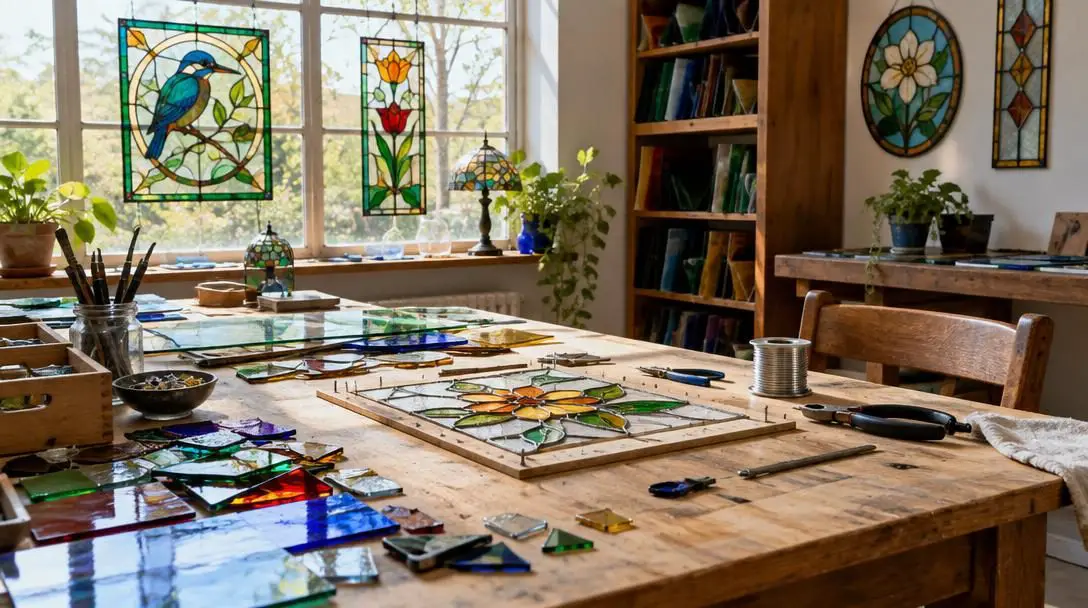
Stained glass stands as one of the most enduring artistic disciplines in human history. By combining raw mineral chemistry, meticulous hand-cutting techniques, and architectural assembly, it transforms basic light into vibrant narrative imagery and atmospheric color. From towering medieval cathedral walls to the delicate decorative accents of modern domestic interiors, stained glass continues to captivate viewers and inspire contemporary makers worldwide.
The craft began as an ancient art form in the Mediterranean region around 2,000 years ago before spreading across Europe, where it became deeply embedded in religious and secular architectural traditions. Today, whether assembled using ancient lead came methods or planned on modern digital drafting software, crafting stained glass remains a disciplined balance between artistic expression and structural engineering.
Key takeaways
- Stained glass originated roughly 2,000 years ago in the Mediterranean and reached its historic peak during the 12th and 13th centuries of the European Gothic era.
- Vibrant glass coloration is achieved at the molecular level by incorporating specific metal oxides into the molten raw material during manufacture.
- Assembling a panel requires an exact sequence of pattern drafting, glass scoring, grozing, painting with vitrifiable enamels, kiln firing, and lead came soldering.
- Long-term structural preservation depends on rigid framing to prevent malleable lead came channels from sagging under the cumulative weight of the glass.
The historical evolution of colored glass
The journey of stained glass spans two millennia of technical innovation and cultural change. Originating in the Mediterranean basin around two thousand years ago, early iterations were relatively small decorative and functional window fillings. As trade routes expanded and building technologies advanced, the craft moved across Europe, adapting to the evolving aesthetic demands of both ecclesiastical authorities and civic institutions.
The discipline reached its historic zenith during the Gothic period in the 12th and 13th centuries. European architecture of this era introduced expansive window openings supported by external buttressing, which allowed builders to replace heavy, solid stone walls with vast glazed screens. In an era when the general public was largely illiterate, these architectural installations transformed natural illumination into brilliant visual narratives. Glass panels functioned as visual scripture, depicting biblical stories, saints, and moral lessons in deep reds and luminous blues.
As artistic movements broadened beyond cathedral walls, the medium found new relevance. During the 20th century, stained glass transitioned steadily into residential settings. Homeowners and modern architects embraced colored glass as decorative accents, using it to modulate interior light, provide privacy, and introduce vibrant hues into private living spaces. Today, the craft bridges monumentality and domestic ornament, honoring historic methods while encouraging modern design adaptations.
Pivotal masterpieces and influential artisans
Throughout the development of stained glass, specific architectural works and visionary creators redefined how light and colored glass interact. The following historical installations and artisans represent the standard of the medium across different centuries.
| Subject | Era or Era Focus | Key Structural or Aesthetic Attribute |
|---|---|---|
| The Rose Window at Notre Dame | Gothic Period | Intricate geometric stone tracery supporting circular light arrangements |
| Chartres Cathedral Windows | 12th and 13th Centuries | Deep blue and red color schemes integrated across monumental expanses |
| The Last Judgement Roundels | Late Medieval | Exceptional narrative enamel painting and figurative drawing preservation |
| Louis Comfort Tiffany | Late 19th to 20th Century | Pioneering use of opalescent glass and fluid, organic decorative designs |
| Judith Schaechter | Contemporary | Provocative figurative narratives combining traditional firing with modern themes |
| Narcissus Quagliata | Contemporary | Monumental, expressive architectural light installations |
The Rose Window at Notre Dame
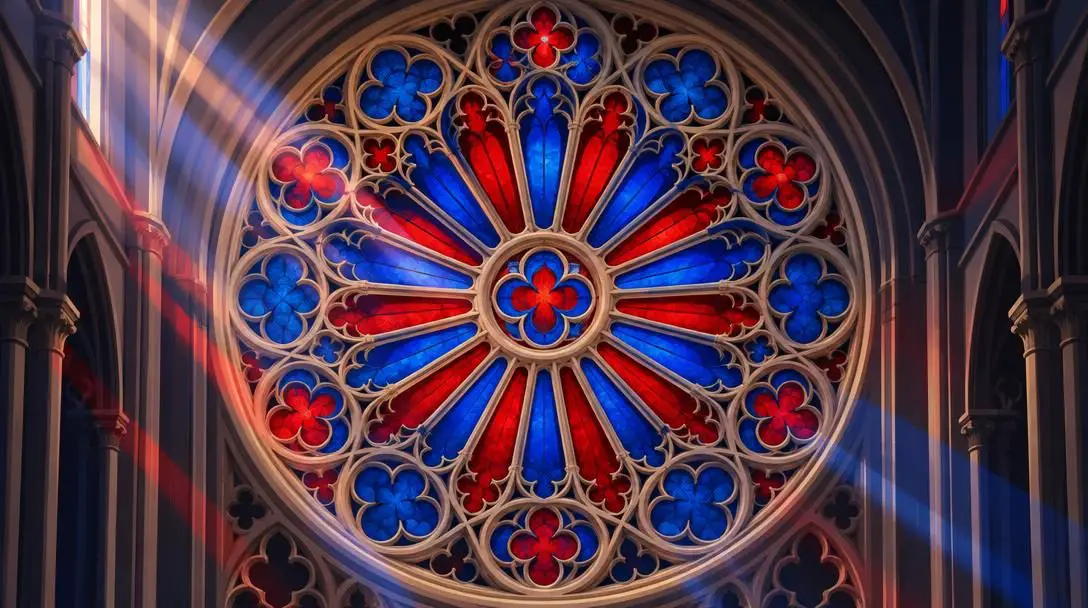
- Location: Notre Dame Cathedral, Paris
- Era: Gothic period
- Distinction: Intricate circular geometric structure balancing stone tracery with colored glass
The Rose Window at Notre Dame remains one of the most recognizable masterworks of the Gothic era. Renowned for its intricate geometric structure and luminous presence, the window represents the height of medieval engineering. Craftsmen balanced delicate stone armatures with radiant segments of stained glass, casting complex, shifting circular patterns across the cathedral floor as the sun moves across the sky.
Chartres Cathedral Windows
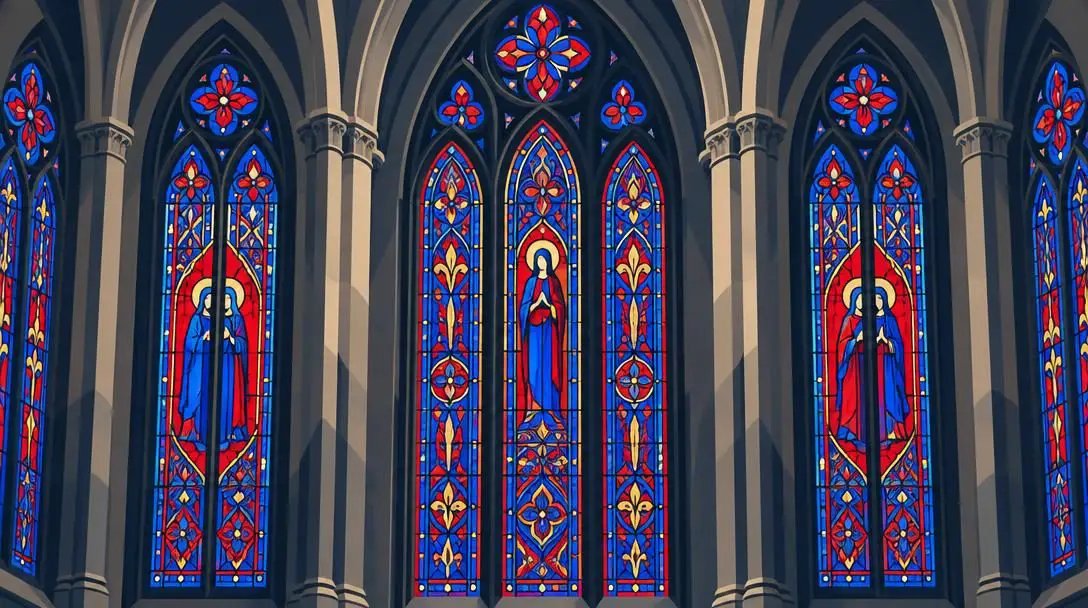
- Location: Chartres Cathedral, France
- Era: 12th and 13th centuries
- Distinction: Monumental narrative programs rendered in saturated blues and reds
The stained glass windows in Chartres Cathedral represent the height of medieval Gothic colored glass and architectural integration. Remarkably preserved across hundreds of years, these expanses demonstrate how craftsmen utilized rich cobalt blues and deep ruby reds to present sweeping theological narratives. The windows effectively turn the cathedral interior into an enclosed sanctuary saturated with atmospheric colored illumination.
The Last Judgement Roundels at St. Mary's Church

- Location: Fairford, England
- Era: Late medieval era
- Distinction: Unusually well-preserved narrative panels featuring delicate enamel painting
Located in Fairford, the Last Judgement Roundels at St. Mary's Church stand as exceptionally detailed examples of narrative glass preservation. These historical panels demonstrate intricate figurative drawing and enamel painting techniques from the late medieval era, illustrating complex spiritual scenes with remarkable expressive precision.
Louis Comfort Tiffany
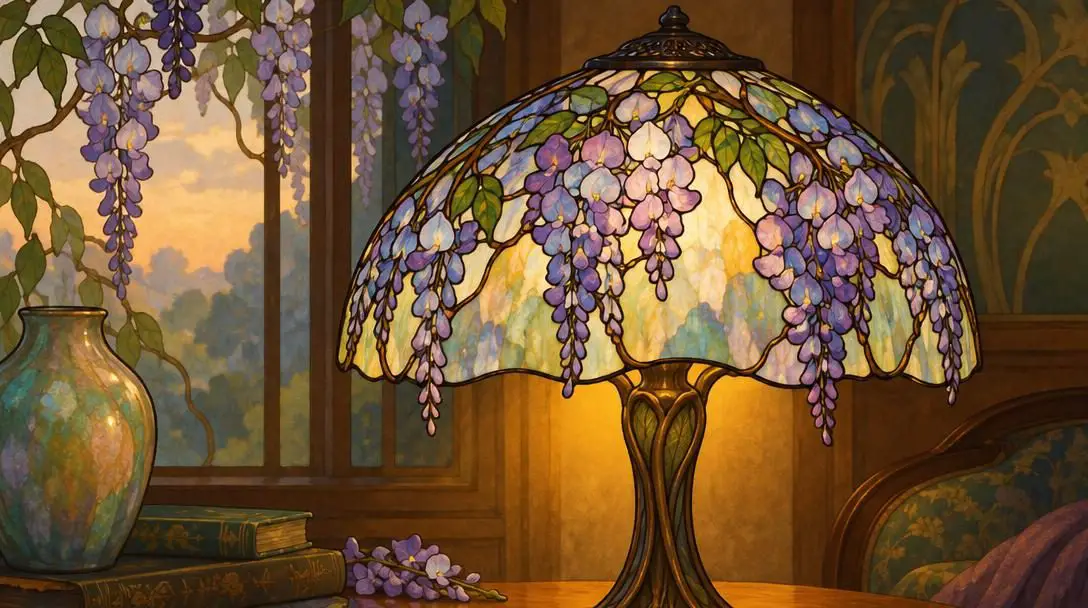
- Significance: Decorative arts innovator and glass designer
- Aesthetic Focus: Organic designs and domestic interior integration
- Material Innovation: Opalescent glass formulation
Louis Comfort Tiffany specialized in stained glass and created numerous artworks that redefined decorative aesthetics in the late 19th and early 20th centuries. His work moved the craft away from strictly ecclesiastical narratives and integrated it into the decorative fabric of private homes. By developing and championing opalescent glass, Tiffany created pieces with swirling natural textures and organic floral motifs that continue to define classic decorative glasswork.
Judith Schaechter

- Significance: Contemporary stained glass visionary
- Artistic Style: Intricate, provocative figurative compositions
- Technical Method: Traditional kiln-fired enamels paired with modern themes
Judith Schaechter is a contemporary visionary who pushes the expressive boundaries of stained glass. Her intricate, provocative work incorporates classical kiln-firing and assembly techniques to explore modern figurative themes. Schaechter's work challenges the historical assumption that stained glass must remain purely decorative or liturgical, demonstrating that the medium can communicate challenging psychological and emotional ideas.
Narcissus Quagliata
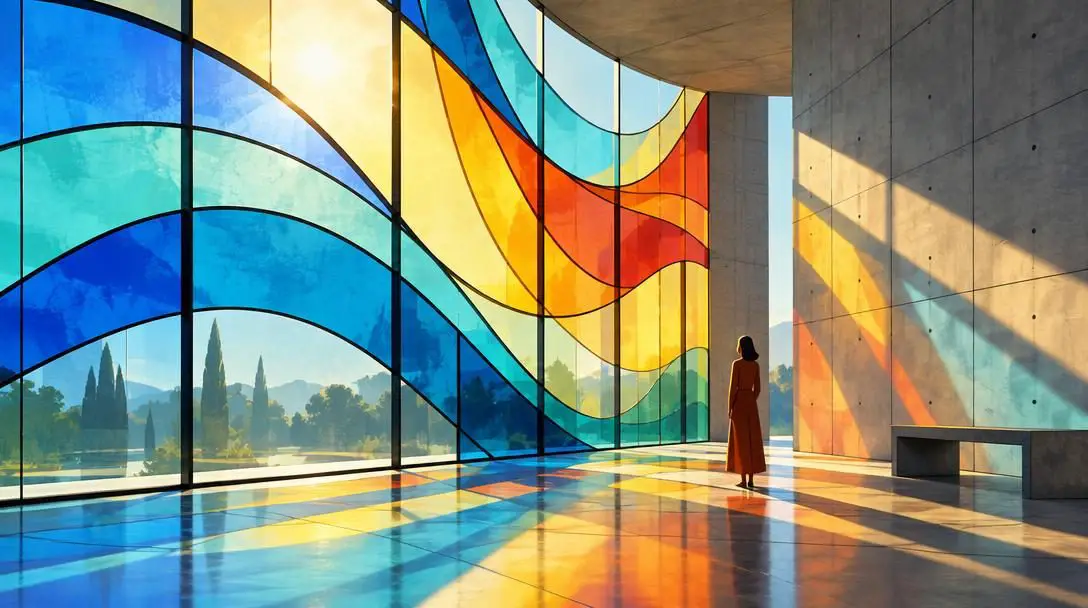
- Significance: Prominent modern architectural glass artist
- Design Focus: Monumental spatial transformations
- Core Concept: Fluid, expressive light interaction in contemporary architecture
Narcissus Quagliata is known for transforming architectural spaces with monumental glass installations. His work explores the fluid, expressive potential of colored light, showing how contemporary stained glass can interact powerfully with modern architectural structures. By treating entire building envelopes as luminous canvases, Quagliata expands the craft into an immersive environmental experience.
Stained glass transforms natural illumination into brilliant visual narratives, turning structural walls into vibrant displays of storytelling.
The chemistry and optical properties of stained glass
The visual impact of stained glass relies entirely on the interplay between incoming light and mineral chemistry. Unlike clear window panes, which allow unaltered light transmission, stained glass is colored during its initial manufacturing phase. Color is introduced into the glass matrix through the precise addition of metal oxides into the molten batch.
The concentration and combination of these metal oxides dictate the final hue and its saturation. Adding greater quantities of oxides yields deeply saturated, moody tones, while smaller additions result in pale, airy tints. Depending on how the molten batch is mixed and cooled, the resulting glass falls into three primary optical categories:
- Transparent glass: Allows raw light and clear visual forms to pass through with minimal distortion, making it ideal for sections where background scenery or direct light projection is desired.
- Translucent glass: Permits light to filter through while diffusing shapes, figures, and shadows behind it, creating a glowing barrier that ensures interior privacy.
- Opaque glass: Blocks light transmission almost completely, reflecting incoming illumination off its exterior surface to highlight textural variations and surface lusters.
To join these varied glass components into a cohesive panel, artisans traditionally use lead came. Lead came consists of flexible, channel-shaped strips designed to hold the glass firmly in place along each seam. Because lead is soft and malleable, it can bend around intricate curves, providing structural channels that house the glass edges before the intersections are secured with fusible metal solder.
Essential tools for the modern glass studio
Modern stained glass studios blend traditional manual implements with modern precision instruments. While historical artisans drafted templates entirely by hand on paper or parchment, modern designers frequently sketch layouts using specialized stained glass software. These computer programs make it simple to calculate lead allowances, test color combinations, and produce dimensionally stable templates before cutting begins.
Beyond design software, executing a physical panel requires dedicated tools engineered specifically for manipulating rigid glass and malleable lead channels:
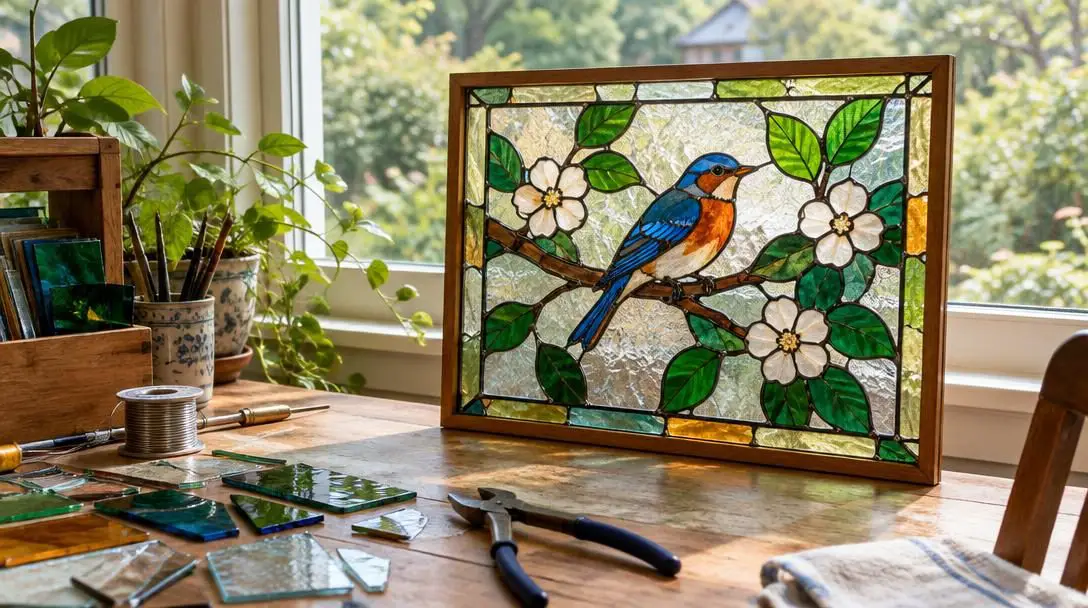
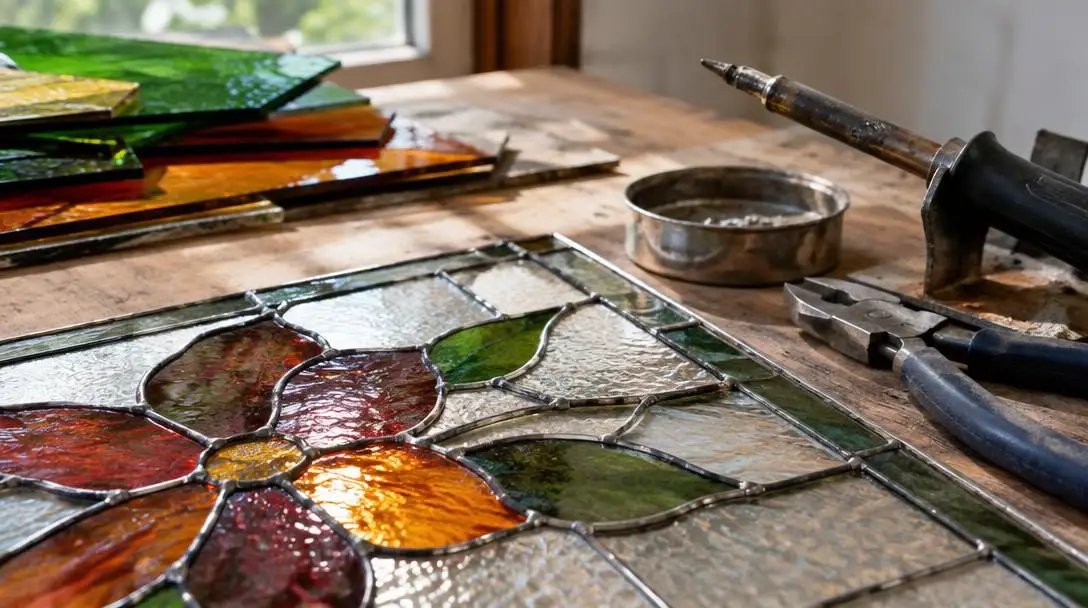
- Glass cutters: Equipped with hardened carbide wheels, these tools score continuous, precise lines across the surface of the sheet glass to produce controlled stress fractures.
- Pliers: Specialized running and breaker pliers utilized to grip, manipulate, and cleanly snap the glass along the scored cut lines without shattering the surrounding sheet.
- Grozing pliers: Serrated-jaw pliers shaped specifically to nibble away jagged glass edges, clean up irregular cuts, and refine shapes that need minor corrections.
- Grinder: An electric tool fitted with a water-cooled, diamond-coated abrasive head used to smooth sharp, uneven edges and grind cut glass pieces to the exact dimensions of the template.
- Soldering iron: A high-wattage thermal tool providing the sustained heat required to melt solder across the structural junctions of the lead came.
- Soldering supplies: Fusible metal alloy wire combined with chemical flux to chemically clean the lead and bond metal joints securely together.
- Lead came: The channeled lead strips that form the structural framework, holding individual glass segments together in a cohesive grid.
- Kiln: A high-temperature heating chamber required to permanently fire painted mineral details into the glass surface.
- Colored enamels: Mineral-based vitreous pigments painted directly onto cut glass surfaces to add shadows, lines, and textures prior to firing.
Step-by-step guide to crafting a stained glass panel
Constructing a stained glass panel is a meticulous sequence that balances artistic planning with disciplined manual craftsmanship. Because lead came adds thickness between individual glass components, absolute precision is required at every phase so that final components interlock without mechanical stress.
- Gathering materials and supplies: The process begins by collecting all the required components. The artisan must have the approved pattern, the chosen glass sheets, lead came strips, and soldering supplies ready for use.
- Developing the pattern: The pattern is drawn by hand or imported into a stained glass software program. This blueprint serves as the structural guide for cutting every piece of glass and sizing the lead network accurately.
- Cutting the glass: Using the pattern as an exact template, the glass is cut with the pattern in mind. Each segment must be scored with a glass cutter and snapped carefully to make sure that all pieces fit together perfectly within the design without leaving unintended gaps.
- Painting with colored enamels: Once the pieces of glass are cut to shape, artistic details are added. The glass pieces are painted with colored enamels to create patterns, shadows, or facial features that cannot be achieved through glass cutting alone.
- Firing in the kiln: After painting, the glass pieces are placed into a kiln. The high temperatures of the kiln fire the colored enamels directly into the surface of the glass, making the painted details permanent.
- Assembling with lead came: After firing, the pieces are assembled using lead came. The artisan slides each glass segment into the channels of the lead strips, building the composition outward piece by piece according to the master pattern.
- Soldering the joints: Once the glass pieces and lead came are completely assembled, a soldering iron is heated. The craftsman applies solder across all the contact joints where the lead came strips intersect, fusing the framework into a single rigid structure.
- Cleaning and polishing: Finally, the finished stained glass piece is cleaned and polished to remove residual soldering fluxes, oils, and grinding dust, leaving the glass surface clear and the metal lines finished.
Common pitfalls to avoid in glass fabrication
Because glass is inherently brittle and lead came is exceptionally soft, slight inaccuracies during the production process can compound quickly. Avoiding these frequent fabrication errors ensures structural integrity and an attractive final finish:
- Inaccurate glass cutting: Failing to cut strictly to the pattern lines causes cumulative errors. Because lead came adds thickness between pieces, cutting pieces too large will prevent the outer edges from fitting together, while cutting them too small creates loose joints.
- Neglecting grinder maintenance: Skipping the grinding step or using a worn grinder leaves sharp, irregular edges that do not sit flush inside the lead channels, leading to uneven tension and potential glass cracking.
- Improper soldering temperature: Using a soldering iron that is not hot enough results in weak, lumpy solder joints. Conversely, leaving a hot iron on the lead came for too long can melt through the lead channel itself.
- Skipping surface cleaning: Leaving flux, kiln residues, or polishing compounds on the panel can cause corrosion on the lead came and dull the glass over time. The cleaning step must be performed thoroughly on both sides of the assembled piece.
- Careless handling during assembly: Moving an un-soldered or partially soldered panel can easily bend the soft lead came or crack fragile glass pieces before the joints have been structurally unified.
Protection, display, and long-term care
Caring for stained glass is essential, especially if it is installed in a building or displayed in a home window. Over decades of display, ambient vibrations, gravity, and thermal expansion can strain soft lead channels. Proper long-term preservation combines gentle maintenance with protective framing.
Stained glass should be periodically cleaned using a damp cloth. Abrasive materials or harsh scrubbing should be avoided, and the piece should always be handled with care to avoid breakage. Periodic gentle cleaning prevents atmospheric dust, grease, and soot from obscuring the natural transparency and translucency of the colored glass.
Preventive measures must also be taken during display to ensure that the panel remains structurally stable over decades of use. Craftsmen and owners must ensure that the stained glass is securely mounted and framed. A solid outer frame protects the soft lead came from sagging under the weight of the glass, while secure mounting hardware keeps the piece safe from accidental impacts or falls, whether it is hung in a window or permanently built into an architectural opening.
What to consider when deepening your practice
For those interested in exploring stained glass further, several next steps can help deepen your understanding and practice of this historic craft:
- Evaluate workspace safety: Working with cut glass, high-temperature soldering irons, kilns, and lead came requires a dedicated, well-ventilated space equipped with proper eye protection, heat-resistant surfaces, and safe disposal methods for glass scraps.
- Explore design complexity: Transitioning from simple geometric forms to complex curves or modern abstract designs requires increased mastery over glass cutters, grozing pliers, and design software.
- Study historic and modern works: Observing the differences between medieval masterworks—such as the Rose Window at Notre Dame or the Chartres Cathedral windows—and modern creations by artists like Judith Schaechter and Narcissus Quagliata offers valuable insight into how artistic techniques continue to evolve.
- Select proper mounting hardware: Before starting a project, determine how the finished work will be displayed. Planning the framing and mounting system early ensures that the finished panel can be safely supported and exhibited to capture optimal natural light.
Frequently asked questions
How does stained glass get its color?
Color is added to the glass during the manufacturing process by introducing metal oxides into the molten raw material. Adding varying amounts of these metal oxides alters the intensity and hue of the finished glass sheet, creating transparent, translucent, or opaque glass.
What is lead came and why is it used?
Lead came consists of flexible, channeled lead strips used to hold individual pieces of glass firmly in place along their edges. Because lead is soft and malleable, it bends easily around curves and secures the glass joints before they are soldered together.
Why must painted details be fired in a kiln?
When intricate details like facial features or decorative shading are painted onto glass using colored mineral enamels, the pieces must be heated in a kiln. The high kiln temperatures fuse the enamels directly into the surface of the glass, making the artwork permanent.
How should an older stained glass window be cleaned?
Stained glass should be periodically cleaned using a soft, damp cloth. Abrasive materials, scrubbers, and harsh chemical cleaners must be avoided, as they can scratch the glass surface or damage the delicate lead came framework.
What causes a stained glass panel to sag or bow over time?
Because lead is an exceptionally soft and pliable metal, large panels will sag under the weight of the glass if they are not housed in a rigid frame or reinforced with adequate structural support bars across the surface.
The bottom line
Stained glass remains a vital and luminous medium that unites historical tradition with modern decorative design. From its 2,000-year-old Mediterranean roots and monumental Gothic expressions to modern architectural installations and residential decor, the medium relies on precise material knowledge. By respecting the foundational chemistry of colored glass, mastering the manual techniques of cutting and soldering lead came, and planning secure framing systems, artisans ensure that their illuminated creations endure for generations to come.