5 Best Atlanta Rappers
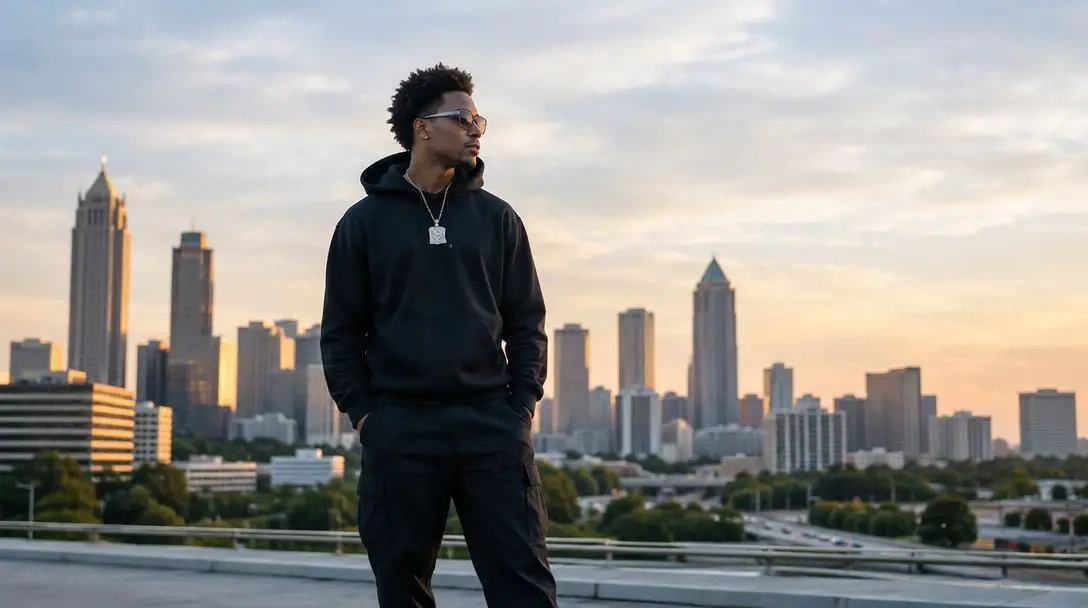
When chronicling the cities that have decisively transformed the sonic architecture and global trajectory of hip-hop, Atlanta, Georgia stands in a category of its own. Although the city did not command widespread national airwaves until the late 1990s, it rapidly transformed into a creative juggernaut, steadily pulling hip-hop's traditional center of gravity away from its foundational coastal poles in New York and Los Angeles. Driven by independent recording imprints, dedicated community radio, a hyper-responsive nightclub circuit, and legendary communal incubators, Atlanta developed a fertile environment where southern lyricism, funk-infused rhythms, and boundary-pushing vocal delivery could thrive.
The ascendancy of Atlanta rap was not a historical accident, but the direct result of collaborative creative families, grassroots promotional networks, and singular talents who redefined popular music. From the trailblazing storytelling of the Dungeon Family to the explosive birth of trap music and the modern dominance of melodic street anthems, the city has maintained an unparalleled track record of commercial triumph and creative reinvention. Evaluating the very best artists to emerge from this vibrant metropolitan scene requires weighing deep catalog impact, subgenre innovation, and timeless cultural significance.
Key takeaways
- Atlanta shifted hip-hop's commercial and artistic epicenter away from coastal strongholds through tightly knit creative collectives and grassroots infrastructure.
- Outkast members Andre 3000 and Big Boi set the gold standard for southern rap by fusing eclectic influences, from art pop to southern soul, into groundbreaking lyricism.
- Key regional pioneers like T.I. and Ludacris established the commercial viability of trap music and high-energy southern anthems on national charts.
- Modern innovators like Future carried forward the collaborative tradition of the Dungeon Family while redefining melodic rap for the digital streaming era.
At a glance: The top Atlanta hip-hop artists
The artists who define Atlanta's musical legacy range from lyrical visionaries to the commercial architects of modern subgenres. The following table provides an overview of how these foundational figures compare across their beginnings, historic releases, and career highlights.
| Rank | Artist | Origin | Breakthrough Project | Signature Anthems & Hits |
|---|---|---|---|---|
| 1 | Andre 3000 | Atlanta, GA | Outkast Debut Album (1994) | "Life of the Party", "Look Ma No Hands" |
| 2 | Big Boi | Savannah, GA | Outkast Debut Album (1994) | "The Way You Move", "Hey Ya", "All Night" |
| 3 | Ludacris | Champaign, IL | Word of Mouf (2001) | "Rollout", "Move B****", "Stand Up" |
| 4 | T.I. | Atlanta, GA | Trap Muzik (2003) | "Whatever You Like", "Bring 'Em Out", "Live Your Life" |
| 5 | Future | Atlanta, GA | Pluto (2012) | "Mask Off", "Life Is Good" |
Ranking the 5 best Atlanta rappers
Selecting the greatest voices from an epicenter as musically fertile as Atlanta involves balancing technical precision, regional authenticity, and enduring mainstream influence. Each of the following five artists contributed a foundational layer to the city's musical identity, establishing creative models that continue to guide contemporary hip-hop.
Future
- Birth Name: Nayvadius DeMun Wilburn
- Early Association: The Dungeon Family / A1 Recordings
- Key Milestone: Debut album Pluto certified platinum
- Signature Hits: "Mask Off", "Life Is Good"
Born in Atlanta as Nayvadius DeMun Wilburn, Future forged his creative identity through early connections with the iconic Dungeon Family collective. During the late 2000s, he aligned with A1 Recordings, steadily refining an idiosyncratic vocal approach that married vulnerable, heartfelt lyricism with cutting-edge studio production. As his mixtape releases garnered fervent regional acclaim, his records found a powerful testing ground in local gentlemen's clubs, generating an organic street momentum that promptly commanded major-label interest and culminated in a contract with Epic Records.
Future made an immediate commercial splash with his debut studio effort, Pluto, which climbed into the top 10 of the album charts and earned a platinum certification. Rather than resting on initial achievements, he embarked on one of the most prolific output streaks in rap history, securing more than a half-dozen number-one albums, including modern masterworks such as DS2 and Evol. Driven by ubiquitous multi-platinum singles like "Mask Off" and the collaborative smash "Life Is Good," Future transformed southern street rap into a global, melodic powerhouse and solidified his seat among Atlanta royalty.
T.I.
- Birth Name: Clifford Harris
- Early Labels: Arista Records / LaFace
- Breakthrough Release: Trap Muzik
- Signature Hits: "Whatever You Like", "Bring 'Em Out", "Live Your Life"
Clifford Harris was raised by his grandparents in Atlanta and began rapping during his elementary school years, exhibiting a natural gift for cadence and narrative delivery. As a youth, he went by the street moniker "Tip," which was subsequently shortened to T.I. upon signing with Arista Records—an imprint closely linked with Atlanta's foundational powerhouse, LaFace Records. The moniker alteration was a practical business necessity, as his initial label was reluctant to promote him under the name Tip or T.I.P. to avoid confusion with existing industry personalities.
While his initial studio offering, I'm Serious, registered only modest commercial reception, his sophomore release, Trap Muzik, changed the trajectory of southern hip-hop forever. The project served as a definitive sonic blueprint, formalizing trap music into an internationally recognized subgenre centered on cinematic synthesizers, crisp 808 percussion, and raw, street-level accounts. Over a sustained commercial prime, T.I. generated massive crossover anthems such as "Whatever You Like," "Bring 'Em Out," and "Live Your Life," ensuring that Atlanta maintained an iron grip on mainstream charts throughout the 2000s.
Ludacris
- Birth Name: Christopher Bridges
- Birthplace: Champaign, Illinois
- Breakthrough Album: Word of Mouf (2001)
- Signature Hits: "Rollout", "Move B****", "Stand Up"
Although born in Champaign, Illinois, Christopher Bridges relocated to Atlanta toward the close of his high school years, subsequently completing his college studies in the area and fully immersing himself in the local music community. Long before topping national sales charts, Bridges developed his voice and audience rapport on the airwaves, working in commercial radio under the on-air handle Chris Lova Lova. After joining forces with renowned producer Timbaland to record his inaugural material, he adopted the moniker Ludacris and released two successful independent projects that generated immense regional excitement.
Ludacris achieved astronomical national fame with his 2001 multi-platinum major-label release, Word of Mouf. Characterized by booming vocal projection, athletic rhyme patterns, and colorful, larger-than-life music videos, his style yielded an uninterrupted barrage of anthems, including "Rollout," "Move B****," and the chart-topping "Stand Up." Although he gradually pivoted his creative energies toward outside business ventures and acting endeavors during the 2010s, Ludacris remains one of the most culturally vital figures in the history of southern hip-hop, proving that technical lyricism and commercial humor could dominate mainstream airwaves.
Big Boi
- Musical Roots: Savannah, Georgia to Tri-Cities High School
- Group Affiliation: Outkast (formed in 1992)
- Debut Solo Album: Sir Lucious Left Foot: The Son of Chico Dusty (2010)
- Signature Solo Hit: "All Night" (2017)
Antwan Patton, known universally as Big Boi, took an indirect route to the cultural capital of Georgia. Originally hailing from Savannah, he moved to Atlanta during his high school years, enrolling at East Point's Tri-Cities High School. In his formative years, his sonic preferences stood out sharply from those of his peers; rather than focusing exclusively on standard hip-hop, he harbored a profound affinity for art pop. This broad musical appreciation enriched his lyrical approach when he joined forces with a classmate in 1992 to establish the revolutionary hip-hop duo Outkast.
As the grounded, rhythmically intricate foil in Outkast, Big Boi helped steer the duo to unprecedented critical acclaim and global commercial dominance, anchoring immortal hits such as "The Way You Move" and "Hey Ya." When the duo eventually paused collaborative work, Big Boi proved his artistic self-sufficiency by launching an accomplished solo career. In 2010, he released the critically revered solo debut Sir Lucious Left Foot: The Son of Chico Dusty, later expanding his catalog with two additional solo albums and securing a massive solo streaming hit with 2017's "All Night."
Andre 3000
- Birth Name: Andre Benjamin
- Formative Hub: Tri-Cities High School / LaFace Records
- Key Solo Works: "Look Ma No Hands" EP (2018), "Life of the Party" (2021)
- Major Group Debut: Outkast Debut Album (1994)
Standing at the very summit of Atlanta's rap hierarchy is Andre Benjamin, celebrated worldwide as Andre 3000. A true native son of the city, Benjamin attended multiple Atlanta high schools before transferring to Tri-Cities High School, where he forged his historic musical partnership with Big Boi. The pair rapidly attracted industry attention, signing with LaFace Records and delivering their groundbreaking debut album in 1994, an effort that challenged regional stereotypes and firmly asserted that the American South had something profound to contribute to lyrical hip-hop.
Following the conclusion of Outkast's historic group run, Andre 3000 stepped back from the relentless machinery of standard album campaigns. Upon returning to recording in 2007, he pursued an unorthodox, highly curated artistic path, turning guest features into era-defining musical events. Rather than releasing conventional commercial rap projects, he surprised the music world in 2018 with Look Ma No Hands, an instrumental, introspective extended play. In 2021, he returned as a lead artist on the collaborative masterpiece "Life of the Party" alongside Kanye West, reinforcing his enduring reputation as rap music's most daring, singular visionary.
Atlanta's creative ecosystem turned local gentlemen's clubs, high school hallways, and basement studios into the primary engine of modern popular music.
How Atlanta hip-hop works: Industry structure and culture
The remarkable trajectory of these five legendary figures illustrates the robust ecosystem that set Atlanta apart from other music capitals. Rather than relying on traditional corporate gatekeepers, the city engineered its own self-sustaining pipeline that turned neighborhood talent into international icons through distinct cultural phases:
- School and Neighborhood Networks: Formative educational environments, most notably Tri-Cities High School, served as natural cultural crossroads where differing creative temperaments—such as Andre 3000's eccentric lyricism and Big Boi's street-level funk sensibilities—could merge organically.
- The Dungeon and Creative Camps: Communal artist collectives, anchored by the iconic Dungeon Family, provided safe, collaborative havens where emerging lyricists refined their vocal delivery, studied instrumentation, and received mentorship outside the pressures of major-label boardrooms.
- Radio and Media Integration: Personalities embedded directly within community media, illustrated by Christopher Bridges broadcasting as Chris Lova Lova on Atlanta airwaves, leveraged internal knowledge of audience trends to build devoted local followings before launching official album campaigns.
- Nightclub Validation: Atlanta uniquely utilized local venues and gentlemen's clubs as primary barometers for musical appeal. Regional disc jockeys wielded the authority to test unreleased tracks in real-time, functioning as vital gatekeepers capable of turning underground mixtape cuts into major-label recording contracts.
- Local Label Incubators: The establishment of foundational regional imprints like LaFace Records, paired with agile independent labels such as A1 Recordings, offered local musicians direct distribution through national conglomerates like Arista and Epic without forcing them to abandon their regional roots.
A step-by-step guide to exploring the Atlanta rap catalog
For listeners, collectors, and historians seeking to explore the vast musical output of Atlanta's greatest rap icons, approaching their discographies chronologically reveals the direct sonic evolution of modern southern hip-hop. Follow these sequential steps to experience this transformative musical lineage:
- Immerse Yourself in the Foundational Outkast Era: Begin with Outkast's landmark 1994 debut album to understand how Andre 3000 and Big Boi introduced southern lyricism to the mainstream, tracing their collaborative trajectory through historic crossover smashes like "The Way You Move" and "Hey Ya."
- Trace the Genesis of Trap Music: Transition to the early 2000s by exploring T.I.'s seminal 2003 release, Trap Muzik, followed by his mainstream radio staples such as "Bring 'Em Out," "Whatever You Like," and "Live Your Life."
- Discover High-Energy Southern Anthems: Experience the vibrant, charismatic sound that dominated early-2000s commercial airwaves by studying Ludacris's multi-platinum 2001 breakthrough, Word of Mouf, home to undeniable hits like "Rollout," "Move B****", and "Stand Up."
- Track the Emergence of Modern Melodic Trap: Move into the 2010s to examine how Future adapted the Dungeon Family's collaborative blueprint into digital-era dominance, starting with his platinum debut Pluto and advancing through defining albums like DS2 and Evol, anchored by "Mask Off" and "Life Is Good."
- Examine the Post-Group Solo Horizons: Complete your historical survey by evaluating the distinct paths chosen by Outkast's members, spanning Big Boi's acclaimed 2010 solo debut Sir Lucious Left Foot: The Son of Chico Dusty and 2017 hit "All Night" alongside Andre 3000's introspective 2018 EP Look Ma No Hands and his 2021 lead single "Life of the Party."
Common misconceptions when assessing Atlanta rap legends
Because Atlanta has dominated the music landscape for multiple decades, retrospective accounts often condense or simplify historical facts. When evaluating the history of southern hip-hop pioneers, avoid these recurring analytical errors:
- Assuming Every Icon Is a Native Resident: A widespread misunderstanding is that every signature Atlanta artist was born inside city limits. In reality, Ludacris spent his formative childhood in Champaign, Illinois, while Big Boi was born and raised in Savannah, Georgia, before both migrated to Atlanta during their high school years.
- Overlooking Post-Duo Individual Catalogs: When legendary partnerships conclude, casual listeners often discount the solo accomplishments that follow. Big Boi maintained an exceptionally strong catalog with three solo albums after Outkast split, while Andre 3000 built an enduring mystique via selective guest features and experimental solo recordings.
- Conflating Mixtape Buzz with Major Studio Debuts: Modern analyses frequently fail to distinguish between regional grassroots buzz and formal commercial rollouts. Artists like Future spent years developing their lyrical style across the independent mixtape circuit before formalizing their industry standing with platinum major-label debuts like Pluto.
- Ignoring the Influence of Label Branding: Major industry imprints frequently modified artist identities to suit commercial marketing. T.I. was forced to alter his childhood nickname "Tip" solely because his label was unwilling to market him under his original moniker.
Frequently asked questions
Why did T.I. change his performance name from Tip?
Clifford Harris grew up using the childhood nickname "Tip," but when he signed with Arista Records—which was closely affiliated with LaFace Records—the label was unwilling to market him as Tip or T.I.P. to prevent commercial confusion, leading him to permanently adopt T.I.
Were all the top Atlanta rappers born in the city?
No. While Andre 3000 and Future were born directly in Atlanta, Ludacris was born in Champaign, Illinois, and Big Boi was born in Savannah, Georgia. Both Ludacris and Big Boi moved to the Atlanta area during their teenage years, where they developed their signature styles.
What role did gentlemen's clubs play in Atlanta's rap dominance?
Gentlemen's clubs functioned as essential grassroots testing grounds where influential disc jockeys tested unreleased music in front of live audiences. A positive reception in these venues often created an undeniable buzz that translated into major-label interest, as seen in Future's early career.
Did Big Boi release solo albums after Outkast separated?
Yes. Following the split of Outkast, Big Boi established a prolific solo career, debuting with Sir Lucious Left Foot: The Son of Chico Dusty in 2010. He subsequently released two more solo albums and earned a major hit with 2017's "All Night."
What was Andre 3000's first official single as a lead artist after Outkast?
After focusing heavily on guest features and an instrumental EP titled Look Ma No Hands in 2018, Andre 3000 officially released his first single as a lead artist in 2021 with the collaborative track "Life of the Party" alongside Kanye West.
The bottom line
Atlanta's ascension to the pinnacle of rap music was neither an accident nor an overnight trend. By establishing a creative environment grounded in mutual artistic support, local business infrastructure, and innovative musical production, the city systematically reshaped the global hip-hop landscape. The collective achievements of Andre 3000, Big Boi, Ludacris, T.I., and Future reflect decades of creative resilience, technical mastery, and sonic reinvention that continue to set the standard for the entire music industry.