5 Best Pitchers in Seattle Mariners History
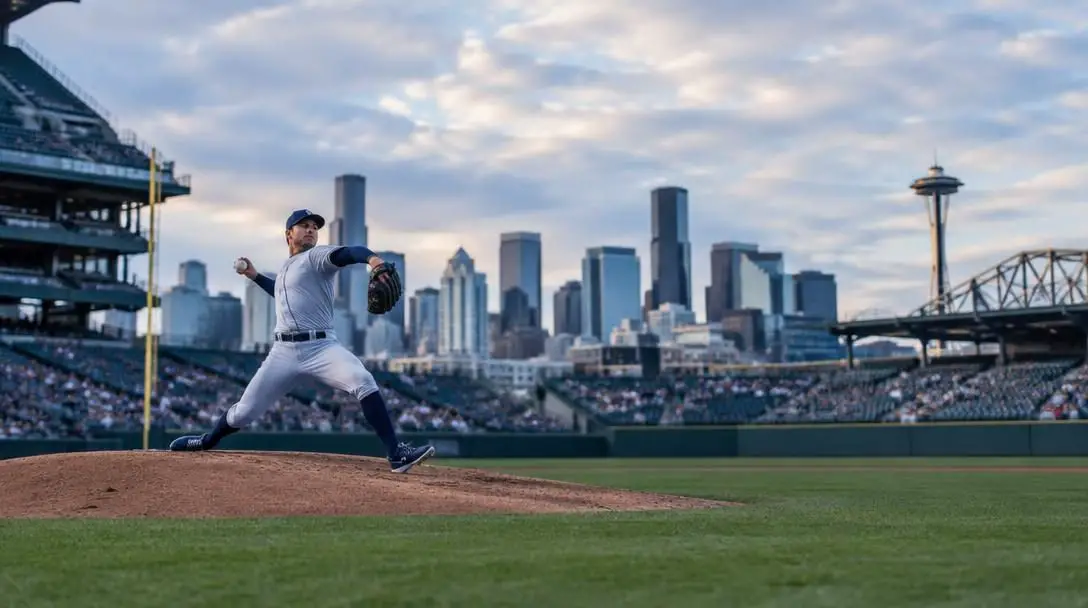
The Seattle Mariners do not possess the longest operating history in Major League Baseball, but their timeline remains one of the sport's most captivating. While casual sports fans often associate the Pacific Northwest franchise with legendary hitters such as Ken Griffey Jr., Edgar Martinez, and Alex Rodriguez, the club has repeatedly built its foundation from the pitching rubber. Across decades of shifting team fortunes, Seattle has developed a reputation for fielding an elite arm capable of shutting down opposing lineups regardless of where the club stood in the division race.
Pitching has long functioned as the franchise's stabilizing backbone. Through historic division titles, deep postseason pushes, and multi-year rebuilding campaigns, having an ace on the mound gave the Mariners a fighting chance every fifth day. Selecting the five finest starters to ever wear the uniform involves examining peak dominance, durability, individual accolades, and the lasting impressions left during defining moments in club history.
Key takeaways
- Randy Johnson headlines franchise history as the premier strikeout artist and intimidating mound presence in Seattle.
- Felix Hernandez spent his entire 15-year career in Seattle, earning a Cy Young Award and two earned run average crowns.
- Jamie Moyer provided historic longevity, winning 145 games for the Mariners after arriving in his thirties.
- Freddy Garcia and Mark Langston both delivered immediate, high-impact rookie campaigns before compiling stellar multi-year tenures.
The legacy of elite pitching in Seattle
Every era of Mariners baseball has been anchored by a signature presence on the mound. When the team debuted in the late 1970s and worked through its formative years, reliable pitching kept crowds engaged in the Kingdome. By the mid-1990s, high-octane starting pitching helped transform Seattle from an overlooked expansion franchise into a cultural baseball powerhouse. Even during subsequent playoff droughts, individual excellence continued to draw national attention to the Pacific Northwest.
Before diving into the top five starting pitchers, several notable arms deserve recognition for their valuable contributions. Starters such as Mike Moore, Gil Meche, Joel Pineiro, and Paul Abbott each delivered memorable seasons, ate crucial innings, and helped stabilize rotations across different eras of Mariners baseball. While those arms just missed the cut, the five pitchers who lead the franchise record books achieved unprecedented heights.
At a glance: Seattle's greatest starting pitchers
The following table outlines how the top five starting pitchers in Mariners history compare across key franchise metrics, including win-loss records, earned run averages, and total strikeouts accumulated in a Seattle uniform.
| Pitcher | Seattle tenure | Win-loss record | Earned run average (ERA) | Strikeouts |
|---|---|---|---|---|
| Randy Johnson | 10 seasons | 130-74 | 3.42 | 2,162 |
| Felix Hernandez | 15 seasons | 169-136 | 3.42 | 2,524 |
| Jamie Moyer | 11 seasons | 145-87 | 3.97 | 1,239 |
| Freddy Garcia | 6 seasons | 76-50 | 3.89 | 819 |
| Mark Langston | 6 seasons | 74-67 | 4.01 | 1,078 |
Ranking the 5 best pitchers in Seattle Mariners history
Evaluating the premier arms in team lore requires balancing raw strikeout dominance against sustained longevity. The following five starters set the gold standard for what it means to lead a rotation in Seattle.
Mark Langston
- Mariners record: 74-67
- Seattle ERA: 4.01
- Draft selection: 1981 second round by Seattle
- All-Star honors: 1 selection with Seattle
Mark Langston launched his major league journey with the Mariners in 1984 at 23 years old. While originally drafted by the Chicago Cubs in 1978, Langston opted not to sign and was subsequently chosen by Seattle three years later in the second round of the 1981 draft. His arrival brought an immediate jolt of electricity to the franchise's rotation.
During his rookie campaign, Langston put together an eye-opening performance, compiling a 17-10 record alongside a 3.40 earned run average. He quickly established himself as a durable strikeout machine who could carry a heavy workload every time he took the ball. Over more than five seasons in Seattle, Langston accumulated a 74-67 record and a 4.01 ERA, securing an All-Star appearance during his time with the club. He was ultimately traded to Montreal in 1989, later enjoying a long tenure with the California Angels before concluding his career with the Cleveland Indians in 1999.
Freddy Garcia

- Mariners record: 76-50
- Seattle ERA: 3.89
- Total Seattle strikeouts: 819
- Rookie honors: Second in Rookie of the Year voting (1999)
Regarded as one of the finest baseball talents to emerge from Venezuela, Freddy Garcia made an immediate splash upon arriving in North America. Garcia signed with the Mariners and broke into the major leagues in 1999 at the age of 22. From the moment he debuted, Garcia displayed poise far beyond his years, quickly assuming a frontline role in the starting rotation.
His 1999 debut campaign proved sensational, as he posted a 17-8 record with 170 strikeouts, finishing second in American League Rookie of the Year voting. Garcia served as an essential pillar of the rotation during the historic 116-win campaign in 2001 and remained a model of consistency throughout his early twenties. Over his five-plus seasons in Seattle before being traded during the 2004 campaign, Garcia generated a 76-50 record, an ERA of 3.89, and 819 strikeouts. Garcia went on to pitch for seven total franchises across his career before retiring after the 2013 season.
Jamie Moyer
- Mariners record: 145-87
- Win percentage in Seattle: .625
- Career win total: 269
- Best season record: 20-6 (2001)
Very few pitchers in baseball history can claim a career spanning 25 or more seasons, but Jamie Moyer accomplished that rare feat. Prior to arriving in the Pacific Northwest, Moyer spent time bouncing between the Chicago Cubs, Texas Rangers, St. Louis Cardinals, Baltimore Orioles, and Boston Red Sox. Acquired via trade in 1996 when he was already 33 years old, Moyer found a true baseball home in Seattle.
Relying on immaculate control, clever deception, and changing speeds rather than overwhelming velocity, Moyer spent 11 seasons with the Mariners. During this stretch, he captured 145 of his 269 career victories, compiling an extraordinary .625 winning percentage with an earned run average under 4.00. Moyer served as the veteran anchor during Seattle's record-tying 2001 regular season, producing a stellar 20-6 mark. Although he pitched for eight different organizations throughout his quarter-century in the majors, Moyer's finest chapters unfolded in a Mariners uniform.
Relying on surgical precision and pitch movement, Jamie Moyer proved that veteran craftiness could dominate the American League just as effectively as sheer velocity.
Felix Hernandez
- Mariners record: 169-136
- Strikeouts: 2,524
- Accolades: 2009 Cy Young Award, 6 All-Star selections
- Titles: Two-time American League ERA leader
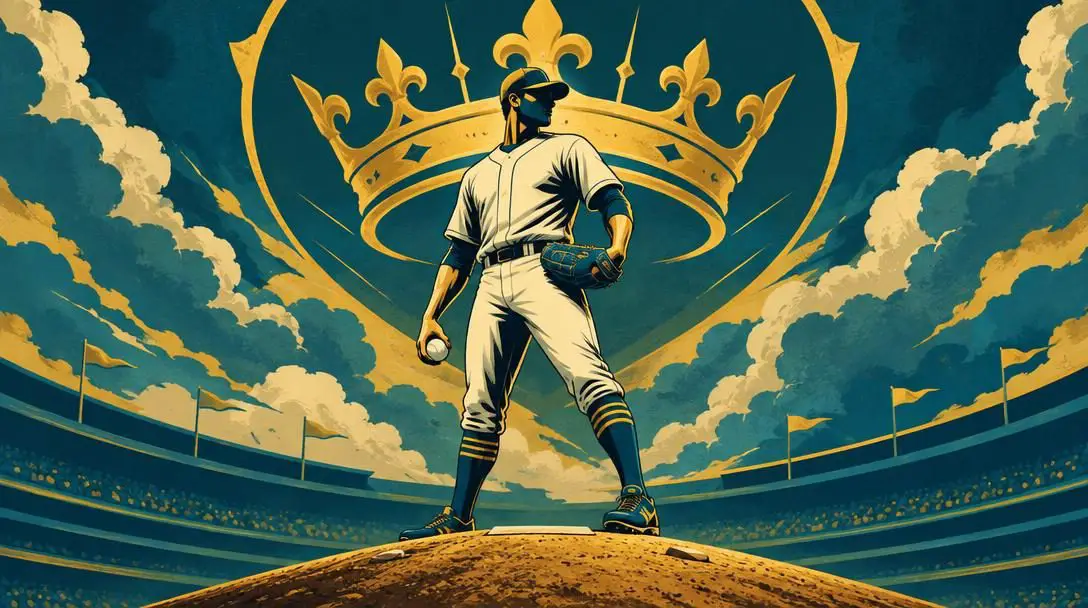
Known affectionately across the baseball world as "King Felix," Felix Hernandez stands as the second Venezuelan ace on this list and arguably the most beloved figure in modern franchise history. Hernandez signed with Seattle as a teenager and made his big league debut in 2005 at just 19 years old. Even in his limited rookie showing, his sinker-changeup combination and poise signaled the arrival of a generational superstar.
Hernandez served as the unquestioned ace of the Mariners rotation across all 15 of his major league seasons. He routinely dominated opposing batters despite pitching during an era where run support was often scarce. Hernandez earned the American League Cy Young Award in 2009 after going 19-5 with a 2.49 earned run average. Over his 15-year stay in Seattle, Hernandez amassed 169 victories, 2,524 strikeouts, six All-Star selections, and two league ERA titles, forever cementing his royalty in Mariners lore.
Randy Johnson
- Mariners record: 130-74
- Seattle ERA: 3.42
- Strikeouts: 2,162
- Tenure length: 10 seasons
Standing an intimidating 6-foot-10 from the left side, Randy Johnson became the definitive face of dominant pitching during his decade in Seattle. Originally breaking into Major League Baseball with the Montreal Expos, Johnson arrived in the Pacific Northwest via a franchise-altering trade during the 1989 season. Under the guidance of the Mariners coaching staff, "The Big Unit" learned to harness his triple-digit fastball and sweeping slider, evolving from an erratic thrower into the most feared strikeout artist in the sport.
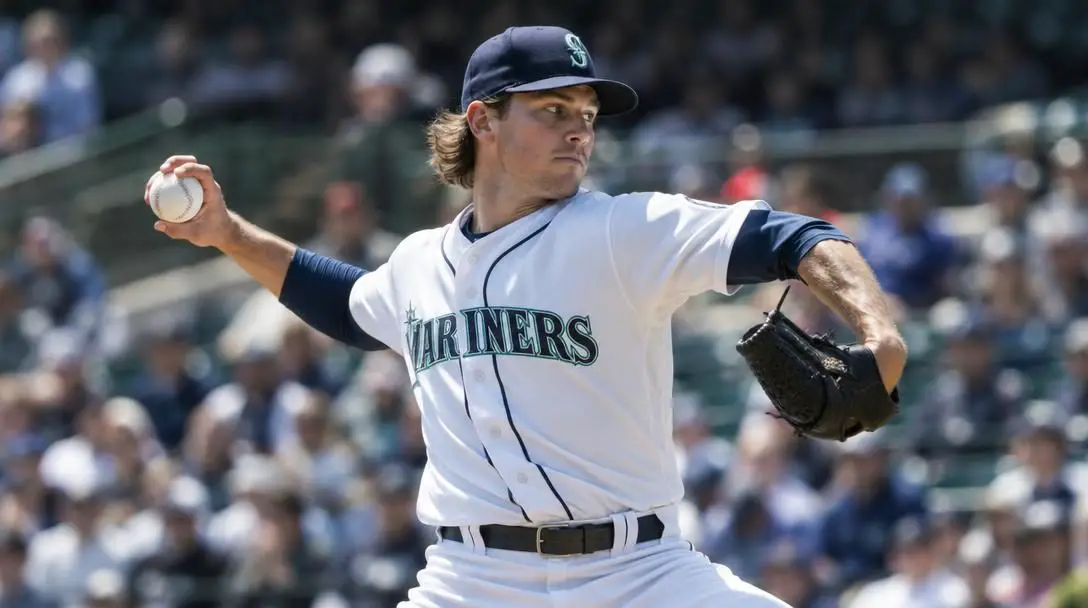
Johnson spent 10 seasons with the Mariners—longer than he spent with any other franchise during his Hall of Fame journey. Over that decade, he compiled a 130-74 record, a 3.42 earned run average, and a staggering 2,162 strikeouts in under ten full seasons. His heroics during the 1995 American League West tiebreaker game helped spark the famous "Refuse to Lose" campaign, saving baseball in Seattle. While Johnson later captured a World Series title with the Arizona Diamondbacks, his rise to legendary status occurred on the Kingdome mound.
How to evaluate historical starting pitchers
Assessing starting pitchers across different eras requires an understanding of how pitching metrics function and how player workloads have changed over the decades. Modern baseball analysis uses several foundational indicators to measure a pitcher's true impact on the field.
- Earned Run Average (ERA): Measures the average number of earned runs allowed across nine innings, providing a clean baseline for run prevention independent of unearned fielding miscues.
- Win-Loss Record: Reflects how frequently the starter was credited with the outcome of a contest, offering insight into workload and the ability to pitch deep into winning efforts.
- Strikeout Totals: Illustrates pure dominance and the ability to eliminate opposing baserunners without relying on defensive assistance in the field.
- Innings Pitched and Durability: Captures whether a pitcher possessed the physical stamina to answer the bell every fifth day over several months.
- Era Adjustments: Accounts for historical factors such as the offensive explosion of the late 1990s or the pitcher-friendly ballparks of earlier generations.
Practical steps for researching franchise pitching records
If you want to construct your own historical rankings or compare arms across different baseball franchises, applying a methodical research framework ensures balanced results.
- Isolate franchise-specific statistics: Separate the numbers a pitcher recorded with the specific club from their broader career milestones achieved with other teams.
- Catalog peak hardware and league recognition: Tally All-Star selections, Cy Young Award finishes, and seasonal league-leading figures in categories like ERA or strikeouts.
- Identify watershed career seasons: Examine the specific campaigns where the pitcher carried the team to the postseason or posted historically significant personal statistics.
- Contextualize roster support: Check how much run support the pitcher received per start to determine whether low win totals were the result of poor offensive backing.
- Weigh peak brilliance against cumulative longevity: Balance whether a five-year burst of sheer dominance outweighs a decade of steady, above-average durability.
Common mistakes when ranking historical starters
Comparing baseball players who competed across separate generations can be tricky. When reviewing historical rotations, be sure to avoid these frequent analytical traps:
- Judging pitchers solely by wins: Win-loss records are heavily influenced by run support and bullpen performance, making them an incomplete measurement of an individual starter's talent.
- Crediting milestones from other uniforms: Great players often move between multiple teams; evaluations must focus exclusively on their production within the franchise being analyzed.
- Overlooking era scoring environments: Allowing a 3.80 ERA during a league-wide offensive boom to look inferior to a 3.50 ERA during a pitching-dominant dead-ball era skews context.
- Ignoring rookie contributions: Overlooking early-career impact ignores how quickly a pitcher established high-leverage stability for their team.
- Penalizing mid-season trade arrivals: Pitchers who joined or left a franchise mid-season should be assessed on their per-inning dominance rather than raw cumulative games.
Looking ahead at Seattle's pitching future
Studying the top five pitchers in Mariners history highlights how pitching depth shapes franchise identity. Whether acquiring Randy Johnson through a timely trade, drafting Mark Langston, signing Freddy Garcia and Felix Hernandez internationally, or identifying late-career magic in Jamie Moyer, Seattle has utilized diverse avenues to secure elite arms.
Today, the Mariners continue to prioritize pitching development, frequently cultivating high-strikeout starters capable of anchoring competitive playoff rosters. As modern starters log innings and chase milestone achievements in T-Mobile Park, baseball fans have an exciting opportunity to watch whether the next all-time franchise great is already on the mound.
Frequently asked questions
Who holds the franchise record for strikeouts in Seattle Mariners history?
Felix Hernandez holds the Mariners franchise record with 2,524 strikeouts across his 15 seasons in Seattle, followed by Randy Johnson, who racked up 2,162 strikeouts during his 10 seasons with the club.
Did Randy Johnson win a World Series title with the Seattle Mariners?
No, Randy Johnson did not win a World Series title with the Mariners. He captured his World Series championship later in his career while pitching for the Arizona Diamondbacks.
How old was Jamie Moyer when he was acquired by the Mariners?
Jamie Moyer was 33 years old when the Mariners acquired him via trade in 1996. He went on to pitch 11 seasons for the organization and won 145 games in a Seattle uniform.
Which Mariners pitchers on this list were born in Venezuela?
Both Freddy Garcia and Felix Hernandez were born in Venezuela before signing professional contracts and reaching the major leagues with the Seattle Mariners.
Did Mark Langston spend his entire major league career in Seattle?
No, Mark Langston spent more than five seasons with the Mariners before being traded to Montreal in 1989. He later pitched for the California Angels and finished his career with the Cleveland Indians.
The bottom line
The Seattle Mariners boast a proud tradition of exceptional pitching, defined by aces who combined overpowering strikeout stuff with remarkable durability. From the terrifying velocity of Randy Johnson and the lifelong devotion of King Felix Hernandez to the veteran finesse of Jamie Moyer and the immediate brilliance of Mark Langston and Freddy Garcia, these five starters set the benchmark for pitching greatness in the Pacific Northwest.