5 Celebrities Who Were Homeschooled

Homeschooling has evolved from a niche alternative into an established educational path chosen by millions of families worldwide. While some households turn to home education to align with specific family principles or step away from mainstream culture, others seek tailored environments that standardized classrooms cannot replicate. Because every student possesses distinct needs, motivations for learning outside the classroom remain as varied as the families who embrace it.
Skeptics often wonder whether non-traditional learning can properly prepare young people for elite achievement, competitive industries, or public careers. Yet the trajectories of world-class performers in athletics, music, and cinema prove that home education can foster extraordinary accomplishment. By pairing flexible schedules with individualized instruction, these environments provide an adaptable launchpad for both academic foundation and creative mastery.
Key takeaways
- Prominent figures across pop music, the NBA, and Grand Slam tennis built their early foundations through tailored home education.
- Personalized schedules allow young performers and athletes to balance intensive training and travel without falling behind academically.
- Homeschooling can directly resolve severe classroom obstacles, including intense peer bullying, dyslexia, ADHD, and auditory processing challenges.
- Education outside traditional schools does not have to be permanent; students can successfully transition into conventional high schools or elite professional leagues.
- Long-term success requires careful planning around legal requirements, instructional models, and structured peer socialization.
High achievers who learned outside the classroom
The following performers and sports stars completed formative chapters of their education at home. Their individual experiences illustrate how personalized study routines can accommodate rigorous travel schedules, neurodivergent learning profiles, and intense professional pursuits.
Christina Aguilera
- Early schooling: Traditional public school and on-set tutoring on The Mickey Mouse Club
- Reason for homeschooling: Intense peer teasing after returning to public school
- Homeschool timeframe: Teenage years
- Major breakthrough: Multi-award-winning pop vocal career launched shortly after graduation
Long before becoming recognized across the globe as a vocal powerhouse, Christina Aguilera began her academic journey in a conventional public school. When her early entertainment career gained traction, she balanced her workload using private on-set tutors while performing as a cast member on The Mickey Mouse Club. However, once production on the television series concluded, Aguilera returned to standard classroom life.
The transition proved turbulent. Having already experienced early fame, Aguilera faced relentless teasing and hostility from classmates in the public school system. The negative school environment led her to plead with her parents for an alternative, prompting them to reluctantly transition her to home education for her teenage years. Working through her coursework at home provided a secure, focused setting that allowed her to finish her studies and launch her record-breaking music career unencumbered by peer pressure.
Ryan Gosling

- Learning differences: Severe dyslexia and attention deficit hyperactivity disorder (ADHD)
- Academic milestone: Unable to read at age ten in traditional school
- Career catalyst: Cast on The Mickey Mouse Club two years into homeschooling
- Key benefit: Developed a lasting sense of personal autonomy
Academy Award nominee Ryan Gosling struggled profoundly within the rigid structure of traditional elementary schooling. Diagnosed with both ADHD and severe dyslexia, Gosling found it exceptionally difficult to sit still, maintain concentration, and follow standardized instructional methods. By age ten, traditional classroom instruction had stalled to the point where he still could not read.
Recognizing that the conventional model was failing her son, Gosling's mother withdrew him from school to teach him directly at home. The change yielded rapid academic and creative development. Within two years of starting his customized home education, Gosling successfully auditioned for and joined The Mickey Mouse Club. Gosling has since noted that those formative years of home learning instilled in him a foundational sense of personal autonomy that continues to guide his choices as an actor and filmmaker.
Blake Griffin
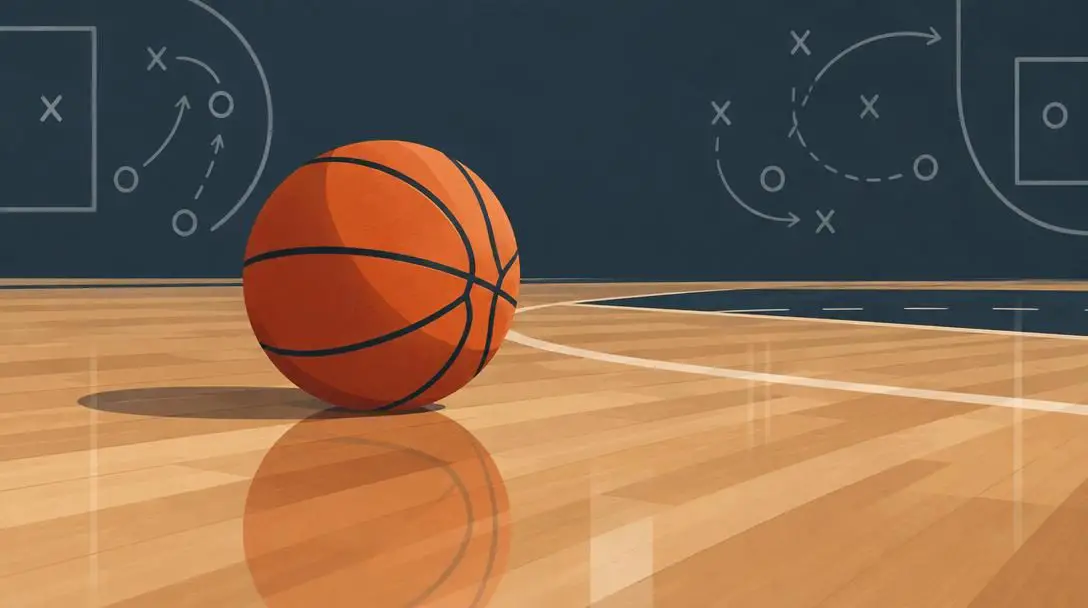
- Educational path: Homeschooled through elementary and middle school
- High school transition: Enrolled in traditional high school to join the basketball team
- Draft status: Number one overall pick in the NBA Draft
- Professional teams: LA Clippers (nine seasons), Detroit Pistons (2018), Brooklyn Nets (2021)
Before establishing himself as an elite presence on professional basketball courts, Blake Griffin received his fundamental education outside traditional school buildings. Griffin was educated at home throughout both his elementary and middle school years, building a strong academic base while maintaining an active focus on athletic development.
When it came time for secondary education, Griffin transitioned into a conventional high school setting for a very specific objective: joining an organized high school basketball program. That deliberate switch laid the groundwork for his collegiate success and his subsequent selection as the number one overall pick in the NBA Draft. Griffin's extensive career—spanning nine seasons with the LA Clippers, followed by stints with the Detroit Pistons in 2018 and the Brooklyn Nets in 2021—shows that an early home education can fully support elite, top-tier athletic ambitions.
Venus and Serena Williams

- Primary educators: Parents
- Primary motivation: Maximizing court practice hours and athletic training
- Schedule advantages: Seamless global travel for competitive tournaments
- Legacy: Multiple Grand Slam titles and historical tennis dominance
The record-breaking careers of tennis icons Venus and Serena Williams were forged through deliberate early decisions made by their parents. As shown in biographical accounts of their upbringing, the sisters were dedicated to competitive tennis from their early childhood. To optimize the hours available for technical drills, conditioning, and court time, their parents elected to educate both girls entirely at home from a very young age.
As the sisters rose through junior circuits and entered elite worldwide competition, their flexible homeschool model became an indispensable advantage. Rather than missing compulsory attendance hours or struggling under rigid classroom assignments, Venus and Serena completed their academic lessons alongside intensive training schedules. This mobile, customizable structure allowed them to travel internationally and dominate professional tennis without sacrificing their educational progress.
Flexible home learning enables emerging talents to pursue high-intensity athletic or creative disciplines without falling behind in core academics.
Billie Eilish
- School history: Never enrolled in a traditional school
- Health conditions: Tourette syndrome and auditory processing disorder
- Educators: Parents (who also homeschooled her older brother)
- Early milestone: Won five Grammy Awards at age eighteen
Singer-songwriter Billie Eilish made music history at eighteen by sweeping five major Grammy Awards in a single evening, signaling the rise of a generation-defining pop artist. Unlike most of her industry peers, Eilish never set foot in a conventional classroom, having been educated entirely at home alongside her older brother by their parents.
The family's decision combined specific medical necessities with a distinct educational philosophy. Navigating both Tourette syndrome and an auditory processing disorder, Eilish faced cognitive hurdles that traditional group classrooms often struggle to support. Educating her at home offered the adaptive pacing she required while leaving spacious blocks of daily time to explore songwriting, vocal recording, and creative expression. The collaborative creative output produced by both siblings confirmed that dedicated home instruction can foster both wellness and world-class artistic innovation.

At a glance: homeschooling profiles and outcomes
The paths taken by these five public figures highlight the variety of reasons families select home education, ranging from health and neurodivergence to sports dominance and protection from bullying.
| Individual | Field | Years Homeschooled | Primary Motivation | Subsequent Milestones |
|---|---|---|---|---|
| Christina Aguilera | Music | Teenage years | Relief from severe school bullying | Multi-platinum pop icon, Grammy winner |
| Ryan Gosling | Film & Television | Ages 10 through 12+ | Dyslexia, ADHD, and reading delays | Cast on Mickey Mouse Club, Oscar nominee |
| Blake Griffin | Professional Basketball | Elementary and middle school | Family-centered foundational learning | #1 NBA Draft pick, multi-team NBA star |
| Venus and Serena Williams | Professional Tennis | Childhood through young adulthood | High-volume athletic training and travel | Multiple Grand Slam titles, Olympic medals |
| Billie Eilish | Music | Entire youth (K–12) | Tourette syndrome, auditory disorder, arts focus | Five Grammy Awards at age 18, global touring |
How modern homeschooling operates
Home-based education is not a monolithic model; it adapts directly to the family's resources and the student's learning profile. While many assume that homeschooling simply recreates a public school classroom at the kitchen table, families generally implement one of several distinct operational styles:
- Parent-led instruction: Parents serve as primary educators, selecting textbooks, assigning reading, presenting daily topics, and evaluating completed work directly.
- Private tutoring: Families hire licensed educators or subject-matter tutors to teach specialized topics or supervise schoolwork on road trips, television sets, or tournament circuits.
- Distance and online academies: Students complete structured, accredited virtual curriculums featuring pre-recorded lessons, digital tests, and independent third-party grading.
- Interest-driven learning: Curriculums are customized to provide substantial daily blocks for intense specialized pursuits, such as fine arts, instrument practice, or athletic conditioning.
How to launch a successful home education program
Transitioning away from standardized educational institutions requires thorough planning and systematic setup. Families weighing this option can follow these practical phases to build a sustainable, productive learning environment:
- Review state and regional laws: Verify local statutory requirements, mandatory notification dates, standardized testing guidelines, and official record-keeping obligations before withdrawing a child.
- Identify your primary educational objective: Determine the central motivation for home learning, whether it involves accommodating learning differences like ADHD, insulating a child from schoolyard hostility, or facilitating athletic travel.
- Select a compatible instructional framework: Match the child's learning temperament with an appropriate curriculum, choosing between rigorous textbook-based systems, flexible unit studies, or self-directed project tracks.
- Establish a daily operating rhythm: Create a consistent, predictable daily routine that designates dedicated hours for academic subjects while protecting time for personal interests and physical movement.
- Build external peer networks: Arrange sustained social engagement through local community athletic leagues, theater groups, academic co-ops, or homeschool clubs to nurture collaborative social skills.
Frequent homeschooling mistakes to avoid
Embarking on non-traditional education can be daunting, and new homeschooling families frequently encounter easily avoidable obstacles. Being mindful of these standard missteps helps maintain academic continuity:
- Replicating traditional school too rigidly: Attempting to force six uninterrupted hours of rigid desk work produces unnecessary fatigue; one-on-one instruction is far more time-efficient than crowded classroom management.
- Overlooking underlying learning challenges: Changing the educational setting without adapting instructional tactics will not solve conditions like dyslexia or auditory processing disorders; families must actively deploy targeted methodologies.
- Overloading the family schedule: Packing everyday routines with excessive extracurricular activities, travel tournaments, and lessons risks chronic burnout for both student and parent.
- Failing to maintain comprehensive documentation: Inadequately tracking instructional hours, course syllabi, and student grades creates unnecessary barriers if the student later re-enters standard schooling or applies for higher education.
Frequently asked questions
Can homeschooled students successfully transition back into traditional high schools?
Yes. As demonstrated by Blake Griffin, who learned at home throughout elementary and middle school before attending a traditional high school to join the basketball team, students can transition smoothly when parents maintain clear transcripts and aligned coursework.
How does homeschooling help children with learning differences like ADHD or dyslexia?
Home education removes the rigid time constraints and sensory distractions common in standard classrooms. Parents can slow down reading instruction, introduce multisensory techniques, and incorporate frequent movement breaks, as seen in Ryan Gosling's turnaround after leaving public school.
Do colleges and professional sports leagues accept homeschooled applicants?
Yes. Major professional leagues, university athletic departments, and collegiate admissions offices regularly accept homeschooled graduates, provided the family fulfills regional graduation criteria and presents verified academic transcripts.
Can homeschooled children maintain strong social development?
Socialization occurs naturally when families deliberately integrate students into community sports teams, regional co-ops, fine arts ensembles, and civic youth organizations, ensuring rich peer interaction outside a formal schoolroom.
Is home education suitable for demanding artistic or athletic careers?
Homeschooling is particularly suited for high-level athletic and creative careers because it eliminates rigid attendance rules, enabling performers like Billie Eilish and the Williams sisters to travel and train without compromising their basic education.
The bottom line
The accomplishments of top performers like Christina Aguilera, Ryan Gosling, Blake Griffin, Billie Eilish, and the Williams sisters debunk the outdated assumption that unconventional schooling diminishes a child's prospects. Whether utilized as a short-term refuge from schoolyard bullying, a deliberate adaptation for learning challenges like ADHD and dyslexia, or a flexible vehicle for elite athletic development, personalized education provides an adaptable framework for individual growth.
Ultimately, home education succeeds when it is matched intentionally to the unique strengths, needs, and aspirations of the student. By pairing tailored instruction with thoughtful social outlets, families can equip young learners to reach the pinnacle of their chosen fields.