5 Entrepreneurs Who Changed The World

When historians analyze the forces that direct the human story, political leaders, monarchs, and military commanders typically command the spotlight. Their decisions are recorded in treaties, legal declarations, and territorial campaigns that alter borders and reorder governments. Yet when looking at how human beings actually spend their hours, provide for their households, and navigate their surroundings, private enterprise and technological innovation have generated shifts just as profound and lasting as state action.
Visionary entrepreneurs identify pervasive points of friction, mobilize capital and labor, and transform conceptual breakthroughs into dependable commercial commodities. In doing so, they lift goods and services that were once reserved for the wealthy into everyday availability. Beyond revolutionizing commerce, the wealth built through these commercial engines has historically flowed back into society, establishing public institutions, educational programs, and healthcare systems that continue to pay dividends centuries later.
Key takeaways
- Entrepreneurship shapes daily human life and societal development as deeply as political policy and military conquest.
- Breakthrough business founders often succeed through process innovation and refinement rather than inventing brand-new products from scratch.
- Sustainable commercial success relies on building organized research laboratories, collaborative technical teams, and standardized production methods.
- Surplus commercial capital frequently creates lasting cultural change when channeled into public infrastructure, universal education, and civic welfare.
At a glance: Five visionary business pioneers
While thousands of commercial founders have built profitable companies, a select few fundamentally altered physical infrastructure, communication networks, and economic mobility across multiple centuries.
| Entrepreneur | Primary Industry | Key Innovation or Focus | Enduring Civic Legacy |
|---|---|---|---|
| Benjamin Franklin | Publishing and Civic Services | Practical consumer devices and municipal protection systems | Organized fire brigades, mutual insurance, and public safety infrastructure |
| Thomas Edison | Industrial Research and Utilities | Systematic laboratory experimentation and commercialization | Collaborative research institutions and scalable electrical systems |
| Henry Ford | Automotive Manufacturing | Standardized mass production and assembly-line logistics | Affordable personal mobility and modern suburban transportation networks |
| Andrew Carnegie | Steel Production | Cost-disciplined vertical manufacturing | Endowment of thousands of free public libraries and educational trusts |
| Bill Gates | Personal Computing and Software | Accessible consumer operating systems and productivity applications | Global philanthropic investments targeting poverty and preventable diseases |
Trailblazing innovators who reshaped global society
Modern economic discourse often fixates on contemporary software founders because their milestones are recent. However, stepping back to analyze figures whose work has already stood the test of time provides a clearer, unclouded understanding of how bold enterprises permanently redefine civilization.
Benjamin Franklin
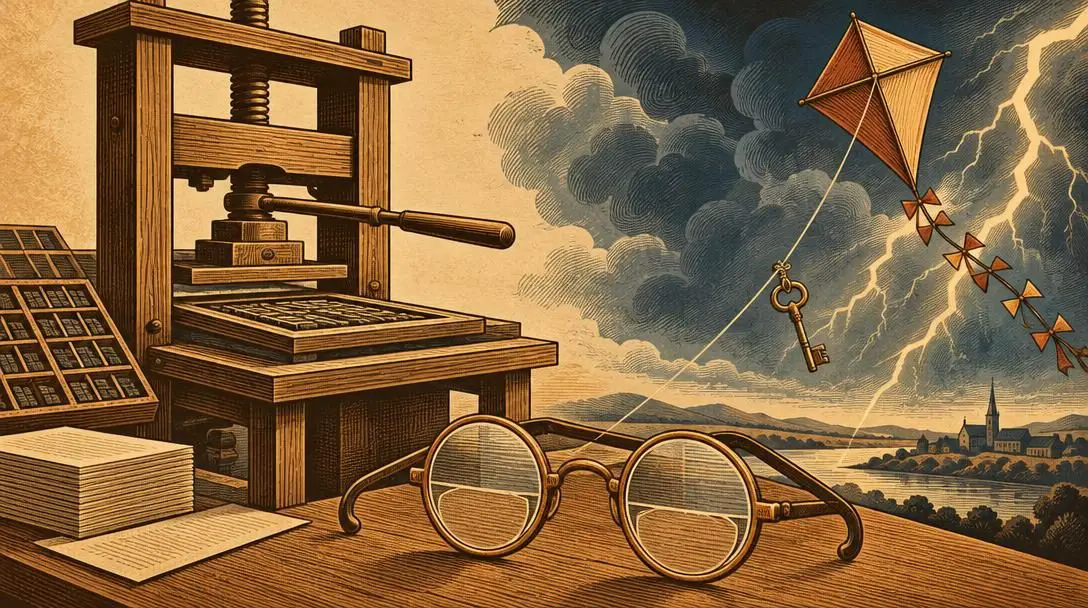
- Core ventures: Printing, newspaper publishing, postal administration
- Key inventions: Lightning rod, bifocal spectacles, fuel-efficient stoves
- Civic creations: Volunteer fire departments, mutual fire insurance associations
Benjamin Franklin lived an expansive, multifaceted life as a diplomat, author, civic organizer, and experimental scientist. Due to his relentless practical curiosity and administrative execution, historians frequently compare him to an early American amalgamation of later titans such as Thomas Edison, Henry Ford, Steve Jobs, Elon Musk, and Mark Zuckerberg. Franklin possessed a distinct commercial instinct: rather than treating discoveries as philosophical curiosities, he consistently organized institutions and commercial frameworks to distribute practical solutions to urban populations.
Franklin addressed fundamental everyday dangers through functional entrepreneurship. His development of the lightning rod safeguarded dense colonial towns from devastating conflagrations, while his design of bifocals resolved the widespread challenge of requiring separate eyewear for close reading and distance navigation. Beyond physical hardware, he launched organized printing houses that distributed essential news and literature, established volunteer fire companies to minimize urban hazard, and created mutual fire insurance programs that spread financial risk across entire communities.
Thomas Edison

- Primary establishment: Industrial research laboratories
- Systemic breakthrough: Collaborative, team-based testing and commercial iteration
- Market improvements: High-efficiency telegraphy, commercial telephone systems
Thomas Edison secured an indelible position in industrial history by uniting inventive engineering with shrewd commercial instincts. Edison recognized early that the rising complexity of modern technology made the isolated inventor obsolete. Instead of laboring alone, he established organized research facilities staffed by talented young technicians, engineers, and machinists whose explicit responsibility was to run hundreds of controlled experiments, stress-test concepts, and refine mechanical prototypes.

A substantial portion of Edison's legacy rests not on originating completely novel devices from thin air, but on iterative refinement. The earliest telegraphs and telephone apparatuses were fragile, unreliable, and difficult to deploy over long distances. Edison systematically overhauled both mechanisms, designing components that made them durable, clear, and commercially viable for high-volume commercial networks. His lasting genius resided equally in his mechanical creativity and his realization that structured collaborative labor was required to transform rough prototypes into viable commercial realities.
Major commercial achievements rarely belong to an isolated creator, but rely on disciplined operational models that make practical tools accessible to ordinary households.
Henry Ford
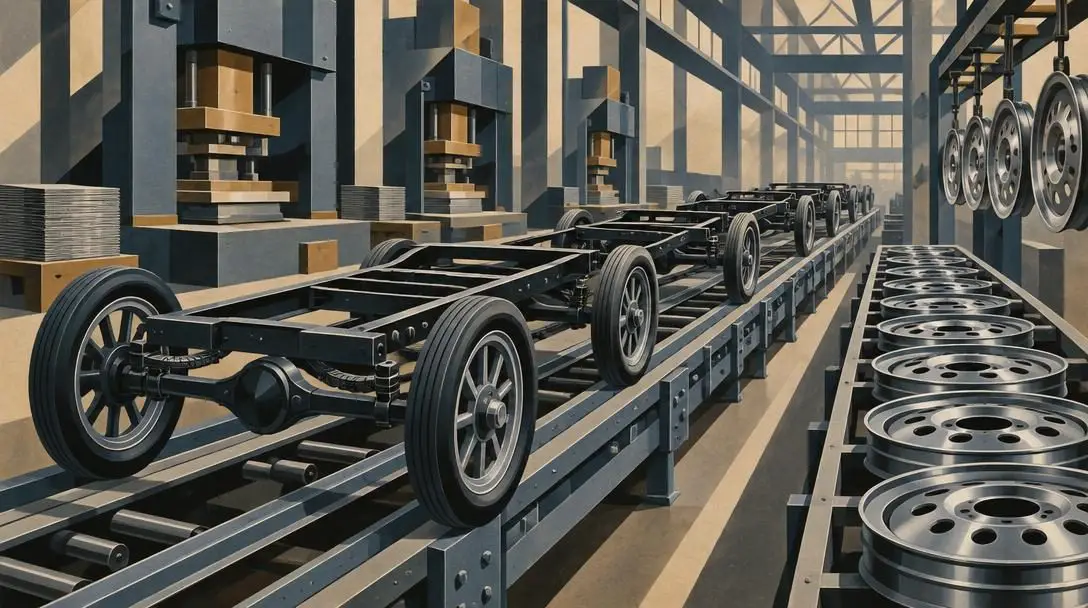
- Manufacturing model: Moving assembly-line mass production
- Core vehicle: Standardized, low-cost passenger cars and utility trucks
- Demographic impact: Bridged rural agricultural communities with urban commercial cores
Henry Ford demonstrates how manufacturing execution and process design can be far more disruptive than original invention. Ford did not invent the motorcar; a diverse group of early mechanics and automotive pioneers across Europe and North America had already built functional motor vehicles. However, those early automobiles were assembled by hand in tiny quantities, making them exorbitant luxury toys that only the wealthiest elites could afford to buy and maintain.
Ford grasped that mechanized transit should not remain a boutique privilege. He re-engineered the factory floor, pioneering standardized mass production techniques that drastically cut the hours, labor, and capital necessary to build a vehicle. By relentlessly eliminating manufacturing waste, Ford drove retail costs downward until everyday working families could purchase a reliable car or truck. This logistical victory fundamentally reshaped global geography, stitching remote farming communities to bustling commercial centers and establishing modern roadway networks.
Andrew Carnegie
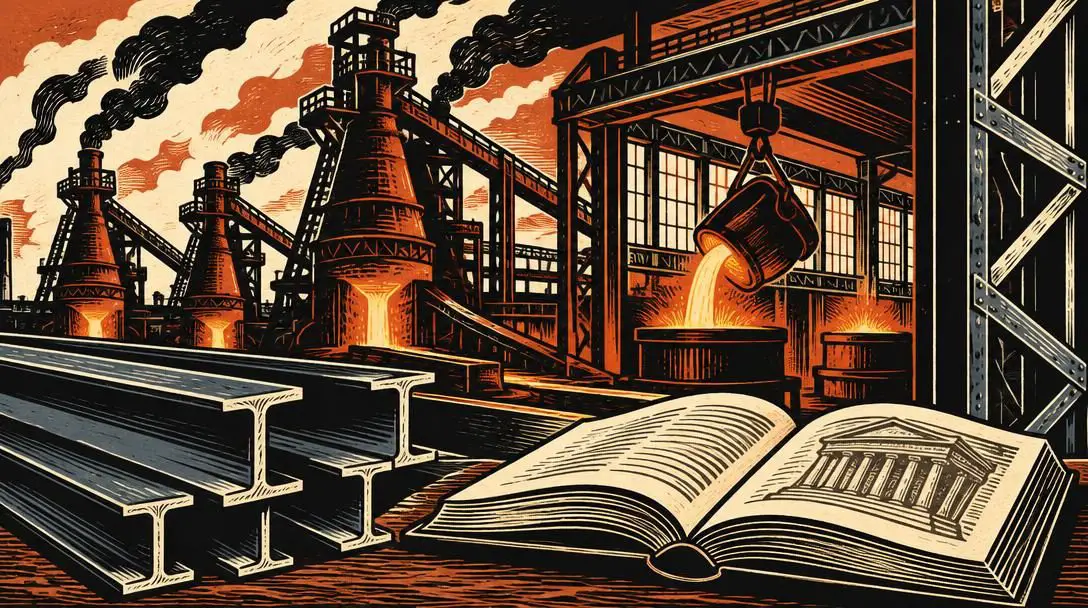
- Foundational sector: Structural steel manufacturing and heavy logistics
- Historical wealth: Evaluated by historians as the wealthiest individual in modern dollar equivalents
- Philanthropic scale: Distributed roughly 90 percent of his fortune to civic and educational trusts
Andrew Carnegie established the modern template for heavy industrial enterprise and large-scale philanthropic reinvestment. Arriving in America as an impoverished immigrant, Carnegie spent decades laboring inside manufacturing facilities, telegraph stations, and railroad networks. These early experiences provided him with an intimate understanding of capital equipment, routing efficiency, and corporate management before he set out to launch his own commercial enterprise.
Through iron-willed administrative discipline and early investments in modern processing technology, Carnegie constructed advanced steel manufacturing plants that produced the physical skeleton of modern industrial society, supplying the beams, rails, and girders required for urban expansion. His operations were so lucrative that economic historians routinely calculate him as the richest individual in history when measured against contemporary currency. In his retirement, Carnegie pioneered large-scale public philanthropy, donating approximately 90 percent of his enormous estate to fund thousands of free community libraries, scientific institutes, and academic funds.
Bill Gates

- Enterprise: Microsoft Corporation
- Technological milestone: Consumer-accessible personal computer operating software
- Global humanitarian focus: Eradication of infectious disease and alleviation of extreme poverty
Bill Gates helped initiate the digital information age through the exponential expansion of Microsoft. While modern commercial dynamics have occasionally elevated other technology founders past him in real-time net-worth rankings, Gates's foundational role in bringing microcomputing to the global population remains unmatched. In an era when computers were room-sized machines confined to academic laboratories and corporate data centers, Gates recognized that processing power belonged on every office desk and in every family home.

Under Gates's operational guidance, Microsoft engineered accessible operating systems and intuitive productivity software that removed complex computational barriers for ordinary people. This widespread technological democratization transformed global office management, personal communication, and commercial logistics. Following his corporate leadership tenure, Gates turned his focus toward an ambitious international philanthropic campaign, committing billions of dollars from his private wealth toward combating stubborn global health crises, malaria, polio, and systemic rural poverty.
The recurring mechanism of transformative entrepreneurship
Analyzing the long trajectories of these historic founders demonstrates that civilization-altering innovation does not occur randomly. Instead, it follows a recognizable sequence of operational steps that turn speculative ideas into enduring civic pillars.
- Identify structural friction or neglected vulnerability: The entrepreneur spots an unresolved hazard, extreme expense, or severe bottleneck in everyday living, such as destructive urban fires, expensive long-distance travel, or slow computational workflows.
- Refine the core mechanism for market conditions: Rather than chasing ungrounded novelty, the builder redesigns existing tools or prototypes to maximize real-world durability, usability, and operational efficiency.
- Recruit specialized technical teams: The founder creates structured working environments where engineers, researchers, and administrators rigorously test, iterate, and improve mechanical concepts.
- Dismantle production and distribution costs: Through manufacturing standardizations, supply-chain controls, and procedural discipline, the business drives delivery expenses down so the product becomes affordable to the masses.
- Build institutional durability: Stable corporate governance, licensing networks, and distribution pipelines are instituted so operations thrive independent of the original creator.
- Rechannel surplus capital into community resilience: The founder allocates industrial gains into educational trusts, medical programs, or municipal safety systems that sustain broad societal health.
Crucial commercial pitfalls to avoid
Studying industrial history reveals the missteps that frequently cause ambitious commercial projects to stall or collapse. Prospective builders must steer clear of several widespread hazards:
- Succumbing to the lone-inventor myth: Assuming a single creator can manage engineering, marketing, accounting, and logistics simultaneously prevents an enterprise from expanding beyond the founder's personal bandwidth.
- Prioritizing technical novelty over tangible utility: Constructing an elaborate device simply because it is technically complex produces commercial dead ends; successful enterprises address pressing human needs like safety, communication, and cost reduction.
- Neglecting scalable manufacturing logistics: A brilliantly engineered prototype is commercially useless if manufacturing and delivery expenses place it permanently beyond the financial reach of its intended audience.
- Operating without civic responsibility: Maximizing short-term financial margins while ignoring employee well-being, community stability, or public safety breeds public hostility and threatens the venture's longevity.
Frequently asked questions
Why are historical entrepreneurs considered as influential as political leaders?
Political leaders direct statecraft, foreign policy, and statutory law, but commercial founders directly reshape daily human habits. Entrepreneurs invent the functional tools people rely on, establish the workplaces where communities earn livelihoods, and develop the infrastructure that connects distant populations.
Did Thomas Edison invent the telegraph and the telephone?
No, Edison did not originate the telegraph or telephone. Instead, he took early, delicate, and functionally restricted designs and heavily improved their mechanical durability, acoustic quality, and long-range operational performance so they could handle heavy commercial use.
How did Henry Ford make the automobile affordable for the general public?
Ford revolutionized manufacturing by deploying continuous moving assembly lines, standardized parts, and extreme operational efficiencies. By reducing the time and manual labor needed to assemble each vehicle, he significantly cut retail costs and shifted the car from a luxury item to an everyday household tool.
Why is Andrew Carnegie considered one of history's wealthiest individuals?
Carnegie built a massive industrial empire producing structural steel during a period of rapid American railroad and urban construction. When his net worth is evaluated against modern monetary baselines and gross domestic output, economic historians routinely rank his personal fortune above modern corporate billionaires.
What role does philanthropy play in an entrepreneur's historical legacy?
Commercial wealth often leaves its most enduring footprint when converted into civic infrastructure. As demonstrated by Carnegie's community libraries and the charitable foundations established by Gates and Franklin, returning industrial earnings to public education and health initiatives creates multi-generational benefits that outlast the companies themselves.
The bottom line
The arc of commercial history proves that lasting entrepreneurial triumph requires far more than speculative market timing or momentary technological breakthroughs. The individuals who permanently transformed human society—from Benjamin Franklin organizing basic civic protection to Bill Gates standardizing personal software—focused relentlessly on practical utility, cost reduction, and organizational scale.
For modern innovators and business leaders, these historical precedents offer a dependable blueprint. Society advances when builders move past superficial novelties to resolve genuine human friction, assemble talented collaborative teams, and design production pipelines that make essential goods universally accessible. When matched with a commitment to reinvesting resources into the public commons, visionary private enterprise remains one of the most effective catalysts for human progress.