5 Financial Secrets of Arnold Schwarzenegger: Spending, Investments, and Net Worth
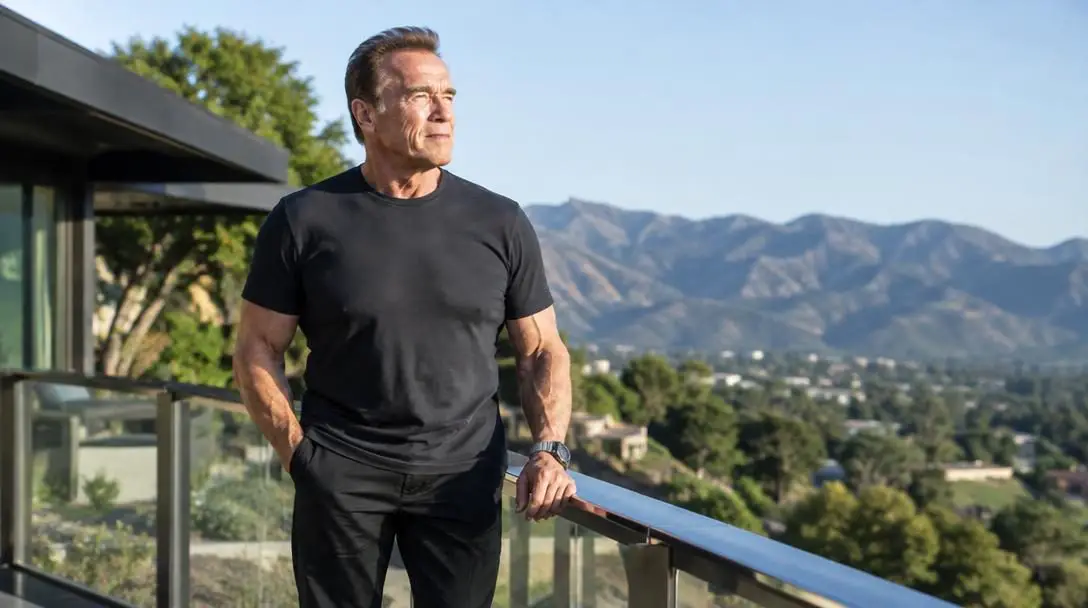
Arnold Schwarzenegger is known across the globe as an athletic powerhouse, box-office titan, and California governor, but his most enduring accomplishment may be the quiet engineering of a self-sustaining financial empire. While the standard trajectory for celebrated performers involves landing major contracts first and navigating wealth management later, Schwarzenegger secured his financial independence long before his name ever appeared above a cinema marquee. By pairing hard-won habits of personal restraint with aggressive capital deployment, he built a fortune estimated by Celebrity Net Worth at roughly $400 million.
This substantial balance sheet was not created overnight through a single fortunate break or a fleeting licensing windfall. Instead, it reflects a continuous, multi-decade methodology centered on tangible real estate, leveraged entertainment compensation, early stage equity positions, and wholly owned commercial ventures. Tracing his economic journey demonstrates how an early focus on cash flow and asset accumulation creates lasting leverage in business, career negotiations, and lifelong wealth preservation.
Key takeaways
- Schwarzenegger achieved self-made millionaire status through California real estate during the 1970s prior to securing major Hollywood fame.
- A strict resistance to lifestyle inflation kept his personal living overhead low relative to his rising income, freeing capital for high-return investments.
- He expanded his entertainment income beyond upfront acting salaries by securing producer roles and equity participation on major motion pictures.
- Early venture capital bets, including a $1 million stake in Lifestyles of Health and Sustainability (LOHAS), produced massive returns upon corporate acquisition.
Early roots and the psychology of capital accumulation
The behavioral foundation of Schwarzenegger's wealth originated during his youth in a modest Austrian household governed by rigid financial boundaries. Resources were strictly limited to essential living expenses, meaning non-essential purchases were simply out of reach. Whenever he sought items outside everyday necessities, such as athletic footwear or a dedicated training suit, his family made it plain that the money did not exist. That environment could have fostered frustration; instead, it prompted an early realization that personal initiative was the only dependable route to economic autonomy.
Rather than treating physical labor or enterprise as an exhausting chore, he viewed earning money as an empowering tool to purchase the exact resources and freedom he wanted. When he emigrated to the United States to pursue competitive bodybuilding and acting, he arrived with a mature financial perspective that insulated him from common newcomer pitfalls. He recognized that earned cash was not a trophy to spend on immediate gratification, but liquid capital to convert into long-term assets.
The five pillars of Arnold Schwarzenegger's financial framework
Schwarzenegger's wealth model rests upon five distinct structural pillars that balance conservative daily spending with calculated, asymmetric investment risk. These pillars transformed temporary athletic and cinematic earnings into permanent, generational capital.
| Pillar | Primary asset category | Key vehicles and holdings | Core financial advantage |
|---|---|---|---|
| 1. Resisting Lifestyle Inflation | Cash conservation and overhead control | Functional vehicle use, reusable goods | Maximizes the percentage of earnings available for reinvestment |
| 2. Tangible Real Estate | Multi-family and commercial properties | Main Street Santa Monica apartments and offices | Provides dependable rental cash flow and strong negotiation leverage |
| 3. Box Office Equity | Entertainment production and profit participation | Producer credits, milestone upfront acting fees | Uncouples overall compensation from strictly billable on-set performance hours |
| 4. Venture Capital Placements | Private equity and emerging startup shares | LOHAS, StubHub, Red Peel Beverages | Delivers rapid equity compounding and broad cross-industry diversification |
| 5. Proprietary Ventures | Wholly owned operating enterprises | Supplement line, Schatzi on Main, prime coastal real estate | Captures full operational profit margins rather than modest licensing fees |
Resisting Lifestyle Inflation
While many high earners rapidly elevate their everyday standard of living to match rising compensation, Schwarzenegger maintained a low baseline of personal overhead. He placed value on long-term utility, practical durability, and functional performance rather than external status symbols. Even after attaining global fame, his consumption patterns reflected conscious minimalism: he famously drove the same hydrogen-fuel-cell-modified Hummer for more than a decade rather than continually entering costly leases on transient luxury vehicles.
His day-to-day routine reinforced this disciplined philosophy. He consistently washed and reused water bottles, wore durable clothing over extended cycles, and kept mechanical and household equipment running rather than replacing items on impulse. By keeping his fixed personal living expenses remarkably low relative to his total earning power, he maintained a vast personal savings rate that continuously fed his investment accounts.
Tangible Real Estate and Main Street Investments
Schwarzenegger became a self-made millionaire through real estate investing long before collecting multi-million-dollar paychecks from major movie studios. Throughout the 1970s, he systematically funneled surplus income generated by his bodybuilding championships, seminars, and mail-order fitness operations into Southern California land and buildings. He focused specifically on multi-family residential apartment complexes and commercial office spaces, establishing a dense portfolio centered along Main Street in Santa Monica.
By purchasing undervalued buildings, renovating them, and trading up his equity through successive property exchanges, he constructed a robust, income-producing real estate foundation. This property portfolio fundamentally altered his entertainment career trajectory. Because his rental holdings covered his living overhead and generated substantial monthly cash flow, he was never under pressure to accept poorly paid, unappealing, or exploitative acting roles simply to satisfy personal living expenses. That independence granted him massive leverage across Hollywood negotiating tables.
Reliable rental income from real estate allowed Schwarzenegger to walk away from bad contracts and negotiate unprecedented film agreements from a position of total financial strength.
Box Office Power and Production Equity
Once his cinematic reputation was established across blockbusters, Schwarzenegger translated his box-office draw into lucrative contract structures. Over a career spanning more than thirty feature films, he commanded landmark compensation packages, culminating in an industry-defining $30 million upfront salary for portraying Mr. Freeze in Batman & Robin.
Crucially, he recognized that long-term entertainment wealth required stepping behind the camera into production roles. He served as a producer on major releases, including The Last Stand and Terminator Genisys. Working in a producer capacity allowed him to secure separate production fees, exert executive creative authority, and negotiate substantial back-end profit participation. This transition ensured that his media earnings were not limited strictly to the hours he spent performing on set.
Venture Capital and Emerging Market Placements
Rather than allowing liquid proceeds from film salaries to languish in low-yielding cash instruments, Schwarzenegger actively deployed venture capital into promising commercial sectors. In 2002, he committed a $1 million early-stage investment to the mail-order health and wellness enterprise Lifestyles of Health and Sustainability (LOHAS). That calculated placement yielded an exceptional payoff when national retail supplement giant GNC bought out LOHAS in an acquisition valued at $160 million.
He continued to broaden his private equity exposure by backing innovative consumer platforms and high-growth services. His portfolio incorporated early equity positions in the digital ticket-resale marketplace StubHub, an investment in the healthy energy drink startup Red Peel Beverages, and an operational equity partnership with fitness enterprise Australian Body Works. These selective placements allowed him to participate in emerging market upside without concentrating balance-sheet risk within a single economic vertical.
Monetizing Expertise Through Proprietary Ventures
Many celebrity athletes restrict their business activities to traditional endorsement deals, earning flat licensing payments while third-party corporations retain the bulk of operational profits. Schwarzenegger rejected this passive model in favor of establishing wholly owned operating companies that fully monetized his personal expertise in health and fitness. He founded a dedicated nutritional supplement brand, capturing direct-to-consumer profit margins rather than settling for standard endorsement royalties.
He applied this same entrepreneurial focus to the hospitality and prime property development sectors. He launched and managed the Santa Monica restaurant Schatzi on Main, transforming the venue into both a functioning business asset and a high-profile brand center. Additionally, he assembled a premier oceanfront residential portfolio in Santa Monica that he maintained, managed, and eventually liquidated for significant capital gains. These ventures turned his personal brand into an independent commercial engine.
Actionable steps for building enduring wealth
While commanding record-setting movie salaries is an uncommon circumstance, the underlying wealth-building principles Schwarzenegger implemented are practical and reproducible. Adopting this structured financial posture requires systematic capital management and consistent execution.
- Establish a hard ceiling on personal lifestyle costs. Keep recurring living expenses fixed even when your income climbs, favoring durable items and long-term utility over frequent luxury updates.
- Build dependable, cash-flowing assets early. Concentrate initial savings into income-generating holdings like rental real estate or diversified funds to cover your living costs independently of your main job.
- Trade up asset values over time. Systematically roll accumulated equity from smaller initial property holdings or modest investments into larger, more stable commercial or residential assets.
- Diversify into separate economic sectors. Spread surplus capital across unrelated asset classes, such as private equity, tangible property, and liquid securities, to insulate your net worth against industry downturns.
- Convert proprietary knowledge into equity. Package your professional skills and specialized background into operating enterprises, joint ventures, or direct-to-consumer services rather than relying solely on hourly wages.
Mistakes to avoid on the path to financial independence
Achieving lasting economic independence is often derailed by predictable behavioral errors. Schwarzenegger avoided the common traps that frequently compromise high-earning professionals throughout their peak working years:
- Succumbing to rapid lifestyle inflation: Elevating fixed living overhead in direct proportion to salary growth leaves zero capital buffer for meaningful asset acquisition.
- Relying on a single income stream: Depending exclusively on one employer, single client, or specific industry leaves your entire household balance sheet vulnerable to market shocks.
- Permitting small consumption leaks: Regularly discarding functional goods, buying status-focused luxury items, and cycling through vehicle leases drains capital over time.
- Trading time solely for flat fees: Neglecting to negotiate back-end participation, profit sharing, or equity stakes limits your earning ceiling to your billable physical hours.
- Investing outside your area of understanding: Deploying money into unvetted, overly complex ventures without rigorous evaluation leads to sudden capital destruction.
Planning your next strategic moves
Transitioning from an earned salary to an independent, multi-asset portfolio requires deliberate planning and regular balance-sheet analysis. Taking control of your financial trajectory involves conducting a methodical audit across your income, expenses, and asset allocations.
Begin by analyzing your recurring monthly statements to eliminate status-driven expenditures, instantly raising your monthly investment rate. Next, examine whether your primary employment compensation is actively funding asset accumulation or merely covering recurring lifestyle bills. If your salary only satisfies living costs, prioritize establishing a side venture or building low-overhead skills that generate pure investment capital.
Simultaneously, evaluate local property opportunities to determine if residential duplexes, small multi-family units, or regional partnerships provide a practical entry point into physical real estate. Finally, review your entire portfolio footprint to ensure that an unexpected decline in your core employment industry will not destabilize your household solvency.
Frequently asked questions
What is Arnold Schwarzenegger's estimated net worth?
Arnold Schwarzenegger holds an estimated net worth of roughly $400 million, according to figures calculated by Celebrity Net Worth. His fortune was built across commercial real estate, major film compensation, production equity, venture capital, and proprietary operating businesses.
How did Arnold Schwarzenegger make his first million dollars?
He achieved self-made millionaire status during the 1970s through California real estate investments, well before landing his major breakout acting roles. He reinvested his bodybuilding earnings and early business profits directly into multi-family residential apartments and commercial properties along Main Street in Santa Monica.
What was Arnold Schwarzenegger's highest upfront film salary?
He commanded a historic upfront acting salary of $30 million for playing the villain Mr. Freeze in the 1997 film Batman & Robin, establishing a record for cinema talent compensation at the time.
Which venture capital investment yielded a major buyout for Schwarzenegger?
In 2002, Schwarzenegger made a $1 million early investment in the mail-order health and wellness enterprise Lifestyles of Health and Sustainability (LOHAS). The investment delivered a massive return when retail supplement corporation GNC acquired LOHAS in an overall buyout valued at $160 million.
What operating businesses and restaurants did Schwarzenegger own?
Schwarzenegger launched his own specialized nutritional supplement line, owned and operated the popular Santa Monica restaurant Schatzi on Main, and developed a high-value oceanfront residential property portfolio in Santa Monica that he later liquidated for substantial capital gains.
The bottom line
Arnold Schwarzenegger's journey from a rural Austrian village to an estimated $400 million net worth stands as a masterclass in disciplined capital accumulation. By achieving self-made millionaire status in California real estate prior to Hollywood stardom, he negotiated film agreements from a foundation of genuine independence rather than economic survival. His commitment to resisting lifestyle creep, coupled with calculated forays into venture capital and proprietary business ownership, ensured that his balance sheet expanded long after his competitive athletic days ended. The central lesson of his economic life remains clear: keep your everyday baseline overhead low, accumulate income-producing assets early, and uncouple your wealth from single-source employment.