5 Financial Secrets of George Lopez: Spending, Investments, and Net Worth
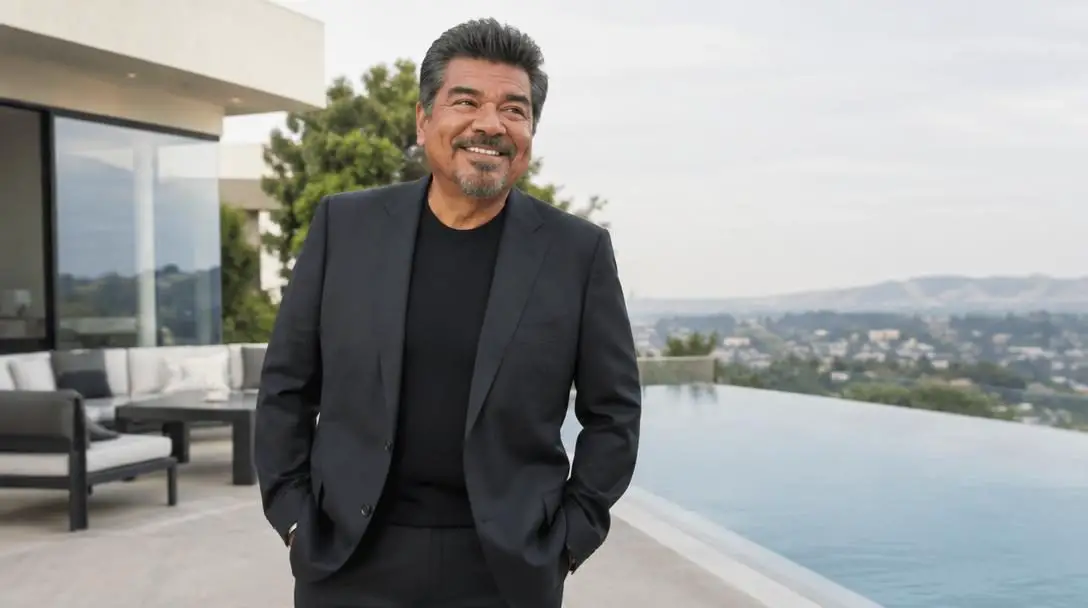
George Lopez stands as one of the most recognizable comedians and actors of his generation, having built an estimated net worth of $45 million over decades of television shows, nationwide stand-up tours, and feature films. Behind his public success lies a calculated, disciplined approach to personal finance that contrasts sharply with the sudden spending spikes, rapid lifestyle inflation, and asset missteps commonly seen among high-earning entertainment figures.
Raised by his grandparents, Lopez learned foundational lessons early in life about manual labor, personal accountability, and the non-negotiable importance of living within one's means. By combining an uncompromising aversion to debt, disciplined asset accumulation across multiple asset classes, enterprise equity ownership, and structured charitable stewardship, he established an enduring blueprint for long-term fiscal stability and continuous asset growth.
Key takeaways
- George Lopez built an estimated $45 million net worth by maintaining strict debt aversion and living well below his earnings.
- Surplus capital was systematically deployed across long-term equities and physical real estate to build balanced, multi-cycle growth.
- Establishing an independent production company transformed Lopez from an hourly wage entertainer into an equity and intellectual property owner.
- Purposeful philanthropy serves as an integral pillar of his financial philosophy, keeping wealth tied to community impact.
The roots of George Lopez's financial mindset
The groundwork for Lopez's financial discipline was laid long before he commanded arena tours or negotiated major television contracts. Raised by his grandparents in California, he witnessed firsthand the physical demands, instability, and economic vulnerabilities associated with blue-collar labor. His grandfather worked as a ditch digger with a shovel, an occupation that gave Lopez a profound appreciation for physical effort and delivered a pivotal life lesson.
During his formative years, his grandfather presented him with a clear and definitive choice: an individual could work with their hands, or they could work with their head. Recognizing the physical toll of manual ditch digging, Lopez made the conscious decision to focus his efforts on comedy, performance, and creative mental pursuits. However, the work ethic of his childhood home remained permanently embedded in his approach to personal business.
At the same time, his household modeled an uncompromising respect for financial obligations. Lopez emphasized that his primary financial goal was to never owe money to anyone and to be recognized as someone who pays bills on time. By internalizing this zero-tolerance approach toward debt and recognizing the necessity of meeting commitments without delay, Lopez carried a strict standard of personal accountability into his adult career. This foundational mindset acted as a protective barrier around his earnings throughout his ascent in Hollywood.
5 financial secrets behind the net worth
A closer look at how George Lopez reached and preserved his fortune reveals five foundational habits that manage downside risk, optimize cash flow, and ensure continuous portfolio expansion across decades in a volatile industry.
Total debt aversion and prompt bill payment
While many high earners lean heavily on financial leverage, private credit lines, and revolving credit facilities to support their lifestyles, Lopez adopted a philosophy centered on complete debt aversion. His guiding premise has always been straightforward: settle every liability immediately and refuse to carry consumer balances.
By treating every obligation as an urgent liability to be settled on time, he systematically eliminates the interest penalties, late fees, and debt-servicing friction that routinely erode accumulated capital. This strict payment discipline protects personal creditworthiness, preserves liquid capital reserves, and ensures that hard-earned entertainment income remains unencumbered by recurring finance fees or bank claims.
Rejection of lifestyle inflation
The entertainment industry is notoriously defined by conspicuous consumption, luxury spending sprees, and massive recurring overhead. Performers frequently increase their personal burn rates to match their highest-earning years, creating severe financial strain whenever project contracts conclude. In contrast, Lopez deliberately maintained a modest baseline cost of living throughout his career.

Rather than inflating his personal expenses in tandem with his growing income, he chose to live comfortably within his means. By controlling overhead costs, Lopez ensures that his baseline cost of living does not demand continuous, peak-level performance checks, effectively safeguarding his core principal and insulating him from unexpected interruptions in entertainment work.
Diversified long-term investments in real estate and equities
To compound his earnings, Lopez avoids concentrating his net worth into a single speculative sector. His investment approach hinges on broad diversification and patient holding horizons that stretch across market cycles. Rather than pursuing short-term trading schemes, he distributes surplus capital across both the stock market and physical real estate.
The equity markets give his balance sheet liquid exposure to corporate growth, compound returns, and dividend yields that outpace consumer inflation over multi-year holding periods. Concurrently, his real estate acquisitions deliver tangible value, long-term capital appreciation, and consistent income streams that remain insulated from daily public equity volatility.
Production company ownership and intellectual property
Early in his career, Lopez realized that relying exclusively on appearance checks, stand-up fees, and actor salaries tied his income directly to his physical presence. If he was not actively performing on stage or standing in front of a camera, his cash flow came to an immediate halt. To overcome this limitation, he expanded into entrepreneurship by establishing his own production company and developing television programming.
Becoming a producer transformed him from an hourly entertainer into an equity owner, building intellectual property and production assets that generate autonomous, recurring cash flows beyond his individual stage performances. Holding ownership stakes in successful television projects allowed him to benefit from syndication royalties, licensing rights, and distribution deals that pay dividends regardless of his daily schedule.
Purposeful philanthropy and community uplift
Lopez views wealth accumulation not simply as an end in itself, but as an engine for community impact. Throughout his career, he has directed financial contributions and personal resources toward charitable organizations, foundations, and programs dedicated to uplifting underprivileged communities.
Making charitable giving a non-negotiable component of his financial life keeps his resources tied to a wider purpose, reinforcing a grounded perspective on money and social responsibility. This deliberate philanthropic commitment prevents wealth from becoming insular and ensures that personal success translates into lasting community empowerment.
At a glance: Core pillars of Lopez's financial strategy
The strategic pillars underpinning Lopez's balance sheet operate as an integrated system, balancing cash flow safety, asset protection, enterprise equity, and social responsibility.
| Strategic pillar | Primary asset or action | Key financial benefit | Risk mitigated |
|---|---|---|---|
| Debt aversion | Immediate settlement of obligations | Eliminates interest drag and late penalties | Credit vulnerability and default risk |
| Controlled overhead | Modest living relative to income | Maintains consistent cash flow surpluses | Lifestyle creep and earnings interruptions |
| Equities allocation | Public market share ownership | Liquid capital appreciation and dividends | Purchasing power erosion from inflation |
| Real estate holdings | Physical property acquisitions | Tangible asset growth and steady income | Paper asset market volatility |
| Enterprise ownership | Production company and TV programming | Autonomous cash flows and equity value | Direct reliance on wage-for-time labor |
| Charitable giving | Community programs and foundations | Purposeful resource allocation | Unchecked materialism and insular focus |
How wealth building and asset management work
The mechanics behind Lopez's financial journey are governed by universal principles of personal finance and portfolio management. These structures operate identically across all income thresholds, whether an individual earns an average wage or commands multimillion-dollar performance fees.
At the center of any durable financial plan is the structural surplus. Living within one's means functions by preserving a deliberate gap between total earnings and living expenses. This surplus cash flow represents the raw fuel for all future investing. When debt service is eliminated, zero capital is wasted on interest charges, enabling 100 percent of surplus funds to be directed toward investments that compound over time.
The second pillar involves strategic asset diversification. Allocating capital across uncorrelated assets limits balance sheet volatility and defends an investor against permanent loss. Physical real estate offers tangible security, tax benefits, inflation hedging, and rental income. Equities provide liquidity, broad business participation, dividend streams, and long-term capital appreciation. Dedicated cash reserves safeguard existing holdings by preventing forced liquidations during economic downturns.
Sustainable wealth requires shifting from trading finite hours for wages to owning income-generating assets and scalable equity.
Finally, long-term balance sheet expansion depends upon enterprise equity. A standard wage earner trades time directly for money; when active work ceases, revenue stops. Creating independent production entities, developing business ventures, or establishing intellectual property constructs an operating system that generates enterprise value and continuous revenue streams independent of daily physical presence.
Practical steps to implement these habits
Emulating the disciplined framework that generated Lopez's $45 million net worth does not require an entertainment contract. Any motivated individual can adopt these habits through systematic execution:
- Audit monthly living costs: Track all spending against net take-home income to identify non-essential expenditures. Keep total overhead well below your monthly income to maintain a predictable investing surplus.
- Eradicate consumer debt: Prioritize the rapid elimination of credit card balances, high-interest personal loans, and store financing. Adopt a zero-debt policy for all depreciating consumer goods.
- Automate broad-market investing: Set up automated transfers into low-cost index funds or broad equity portfolios to consistently capture compound stock market returns over decades.
- Explore real estate exposure: Look for accessible entry points into property, whether through acquiring a primary residence, purchasing multi-family rental units, or allocating funds to real estate investment trusts.
- Build independent income streams: Develop side ventures, freelance services, or digital assets using your specialized skills to diversify your cash flow away from a single employer.
- Formalize charitable giving: Dedicate a specific percentage of your monthly budget toward supporting charitable organizations, non-profits, or community initiatives that assist those in need.
Common financial mistakes to avoid
Many individuals fail to build long-term wealth because they succumb to common behavioral traps that compromise cash flow and deplete assets. Avoiding these missteps is critical for maintaining financial stability:
- Lifestyle inflation: Automatically scaling up living expenses, vehicle purchases, and housing costs as soon as income increases, preventing surplus capital from being invested.
- Carrying high-interest balances: Allowing revolving credit debt to accumulate, which bleeds cash flow through recurring finance charges and compounding fees.
- Asset concentration: Placing all available savings into a single company stock, a solitary property, or volatile speculative assets without downside protection.
- Single-income vulnerability: Depending solely on a single paycheck without developing supplemental business ventures, investments, or side revenue streams.
- Market procrastination: Delaying the start of regular investing while waiting for higher compensation or attempting to time market fluctuations perfectly.
- Ignoring community engagement: Treating accumulated resources exclusively as personal consumption vehicles while neglecting community stewardship and social impact.
Frequently asked questions
What is George Lopez's estimated net worth?
George Lopez has an estimated net worth of $45 million, accumulated through his work as a stand-up comedian, television producer, actor, and private investor.
How did George Lopez's childhood influence his money habits?
Raised by his grandparents, Lopez watched his grandfather dig ditches with a shovel, learning the value of hard work and making a conscious choice to work with his head. His household taught him strict financial accountability, debt aversion, and the rule of paying bills immediately.
What assets make up George Lopez's investment portfolio?
Lopez allocates surplus capital across broad-market equities, physical real estate holdings, and enterprise equity through his own television production company and intellectual property rights.
Why did George Lopez launch his own production company?
Lopez launched his production company to transition from being an hourly entertainer dependent on performance checks to an equity owner with rights to intellectual property, creating recurring cash flows independent of his physical stage time.
How does George Lopez handle personal debt?
Lopez maintains a strict zero-tolerance debt policy, focusing on never owing money to anyone and paying all personal bills on time to prevent interest fees and credit liabilities.
The bottom line
George Lopez's financial journey demonstrates that sustainable wealth is built on consistent behavioral discipline rather than sheer income volume alone. While high earnings from television and touring provided the raw fuel for his net worth, his rigorous debt aversion, controlled personal overhead, patient asset diversification, and pivot toward enterprise equity transformed temporary paychecks into an enduring $45 million fortune.
By treating money as a tool for long-term independence and social responsibility rather than short-term consumption, Lopez established a financial framework that withstands economic downturns and industry fluctuations. Whether applied to entertainment contracts or everyday salaries, these principles of low overhead, disciplined investing, debt elimination, and equity creation provide a dependable path toward financial self-reliance.