5 Financial Secrets of Jackie Chan: Spending, Investments, and Net Worth
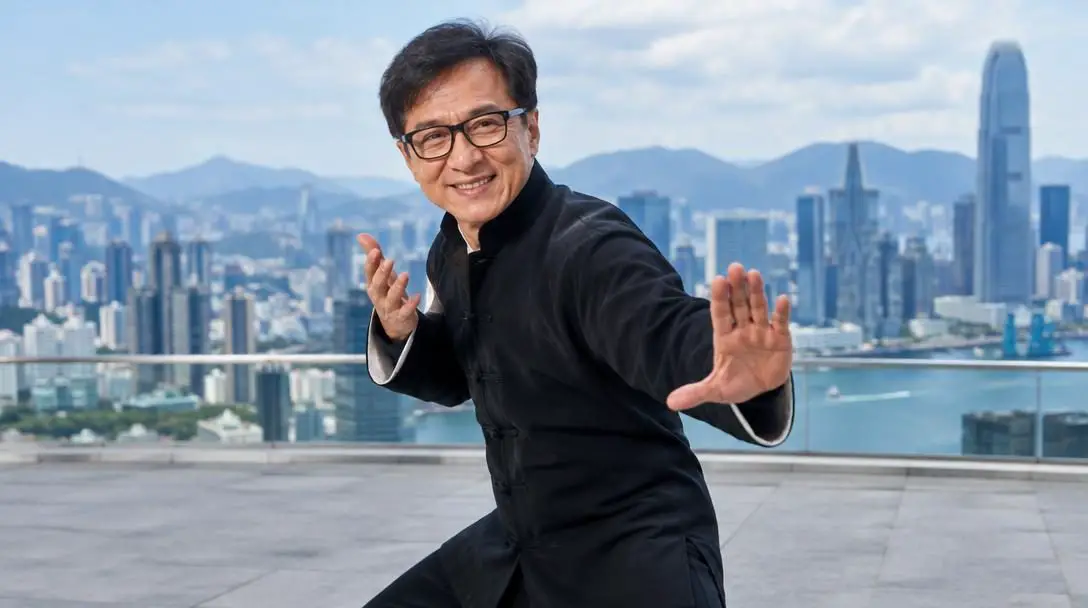
Across decades of death-defying stunts, martial arts mastery, and box office triumphs, Jackie Chan has established an enduring legacy in global cinema. Behind his international reputation as a charismatic action hero lies a financial track record that is equally remarkable. While countless high-earning entertainers fall victim to runaway spending, poor asset management, and devastating bankruptcies, Chan has engineered a fortune that continues to flourish long after his cinematic debut.
Generating wealth requires talent, hard work, and fortunate timing, but preserving and growing that wealth demands an entirely different set of disciplines. Chan's monetary strategy reflects an unconventional blend of relentless labor, intense personal moderation, tactical global real estate acquisitions, and deliberate philanthropy. By examining the principles that underpin his financial empire, investors at any income level can glean practical lessons in fiscal management, asset allocation, and generational stewardship.
Key takeaways
- Jackie Chan built an estimated $400 million net worth by pairing entertainment income with disciplined living and diversified global investments.
- His portfolio anchors heavily on prime real estate across Hong Kong, Beverly Hills, and Singapore alongside equities, businesses, and branded merchandise.
- Chan actively resists lifestyle creep through everyday frugality, frequently opting for public transit and wearing the same shoes for years.
- He intends to donate his entire fortune to charity upon his death rather than passing it down as an inheritance to his son.
Jackie Chan's financial profile at a glance
Unlike celebrities who experience rapid rises followed by swift financial declines due to unchecked lifestyles, Chan has cultivated a multi-decade enterprise that outlived the physical prime required for his stunt work. His financial journey proves that maintaining wealth is an entirely separate skill from generating it. By treating his film earnings as seed capital rather than disposable cash, he constructed a resilient economic foundation designed to weather both market recessions and changes in consumer taste.
Chan achieved his financial stability by structuring his affairs around capital preservation. Where peers frequently overleveraged themselves on private jets, entourage expenses, and high-maintenance luxury toys, Chan directed his capital toward durable holdings that produce cash flow and compound steadily over decades.
Five financial secrets behind Jackie Chan's wealth
The financial playbook of Jackie Chan can be broken down into five distinct behaviors. These practices demonstrate that long-term security is not an accident of income, but the deliberate outcome of consistent daily routines and clear philosophical rules regarding capital.
Frugality and mindful personal consumption
Despite reaching the upper tiers of global wealth, Chan remains renowned for his personal frugality. He consciously avoids the conspicuous consumption that typically entraps high-earning entertainers. Throughout his career, he has been noted for practical choices that surprise outside observers, such as wearing the same pair of shoes for years on end and utilizing public transportation rather than relying constantly on personal drivers or private luxury escorts.
This commitment to everyday modesty shields capital from lifestyle creep, the common process by which an individual expands expenses in direct proportion to expanding earnings. By avoiding frivolous purchases and maintaining a low baseline of personal overhead, Chan preserves a high percentage of his revenue. That preserved cash becomes the engine for future asset generation, demonstrating that spending less than one makes is an essential strategy regardless of the number of digits in one's bank account.
Real estate as a wealth engine
A central foundation of Chan's financial strategy is substantial and recurring capital allocation into real estate markets. Instead of keeping his liquid earnings exclusively in bank accounts where inflation erodes purchasing power, he has acquired premier real estate holdings across multiple continents and major markets, including Hong Kong, Beverly Hills, and Singapore.

Real estate serves a dual purpose in high-level wealth building. First, it offers appreciation over extended holding periods, particularly in high-demand, supply-constrained global cities. Second, it produces reliable, recurring income streams when properly managed. By planting capital into physical property in varied geographical regions, Chan has anchored his overall fortune to tangible assets with real intrinsic value, shielding his portfolio from the volatility of paper assets.
Comprehensive portfolio diversification
While real estate serves as an anchor, Chan has not placed all his resources into a single industry or asset class. Over decades, he actively branched out into traditional equity markets through stock investments, created and operated multiple independent businesses, and leveraged his personal intellectual property by rolling out his own line of branded merchandise.
Diversification protects an individual against the unavoidable downturns of any single economic sector. If a specific business venture underperforms or equity values fall during a market recession, income generated from commercial merchandise or physical real estate can balance the loss. Spreading investments across multiple asset classes mitigates systemic danger and stabilizes the long-term capital trajectory of his enterprise.
Patience and a strategic long-term view
Jackie Chan avoids erratic, impulse-driven investing. Rather than chasing immediate trends, volatile asset bubbles, or get-rich-quick speculative arrangements, he evaluates potential ventures with rigorous patience. He waits for transactions that meet strict, predefined personal benchmarks and is completely comfortable passing up deals that fail to align with his risk preferences or strategic targets.
This willingness to sit out bad deals eliminates the costly mistakes that destroy large fortunes. By taking a long-range stance, Chan allows compounding interest and fundamental growth to do the heavy lifting. His patience mirrors the discipline required in his stunt training, where meticulous planning, rehearsal, and self-control take precedence over hasty, uncalculated risks.
Purposeful philanthropy and perspective
Chan pairs his strict personal frugality with immense philanthropic generosity. Over his lifetime, he has donated millions of dollars to humanitarian causes around the world and established his own dedicated foundation to fund and sustain initiatives he values deeply. Rather than hoarding resources out of fear, his philanthropy reflects an understanding that capital is ultimately a tool for broader human impact.
This generosity serves an important psychological purpose in his overall wealth management. By viewing his wealth through the lens of stewardship and social responsibility, he resists the urge to indulge in unchecked, selfish consumption. Giving substantial sums to social good reinforces his perspective on the real value of money, bringing personal fulfillment while ensuring his vast resources leave an enduring legacy outside of entertainment.
True wealth is rarely defined by how loudly one spends, but by how securely one builds and how thoughtfully one gives back.
Comparing the pillars of Chan's financial strategy
Each component of Chan's financial strategy plays a specific functional role in safeguarding his balance sheet against market downturns, inflation, and behavioral mistakes. Understanding how these elements interact illustrates why his wealth has endured over several decades.
| Strategy Pillar | Primary Asset or Action | Main Financial Benefit | Risk Addressed |
|---|---|---|---|
| Personal Consumption | Everyday frugality, modest travel choices | Maximizes free cash flow for reinvestment | Lifestyle creep and rapid capital depletion |
| Property Holdings | Real estate in Hong Kong, Beverly Hills, Singapore | Long-term capital appreciation and steady income | Inflation and purchasing power erosion |
| Diversification | Public equities, private ventures, branded retail | Multiple uncorrelated income streams | Sector downturns and entertainment industry reliance |
| Deal Selection | Patience, strict criteria, selective refusal | High-probability compounding over decades | Speculative bubbles and impulse losses |
| Capital Purpose | Charitable foundations and global giving | Healthy psychological detachment from consumption | Unchecked materialism and loss of perspective |
Succession and inheritance: Why Chan plans to give away his fortune
Today, Jackie Chan's net worth is estimated at an impressive $400 million. However, his long-term plans for this money challenge conventional expectations regarding inherited family wealth. Chan has openly stated that he will not be passing down this multi-million dollar fortune to his son. Instead, he intends to donate the entirety of his wealth to charity upon his death.
Chan has directly explained his philosophy regarding family inheritance through clear reasoning. Addressing his son, Chan stated: "You have me as a dad but other people don’t. They have to fight their own battles. When you get to sit in first class, because of your own hard work, then that’s success." He further clarified his stance on unearned wealth by remarking: "If he is capable, he can make his own money. If he is not, then he will just be wasting my money."
This perspective views massive inheritances not as an unalloyed blessing, but as a potential hindrance to developing self-reliance, work ethic, and character. By choosing philanthropic organizations as the primary beneficiary of his estate, Chan uses his fortune to solve broader social problems while demanding that the next generation forge their own independent financial pathways through genuine personal merit.
The underlying economics: Why the system works
The mechanics behind Jackie Chan's wealth preservation are anchored in straightforward economic principles that function regardless of the scale of one's income:
- The gap strategy: Chan maintains an enormous gap between his gross earnings and his daily cost of living. Because his lifestyle overhead does not mirror his celebrity income, the excess liquidity is continually routed into balance-sheet assets rather than disposable consumer goods.
- Geographic and asset arbitrage: By investing in Hong Kong, Beverly Hills, and Singapore, Chan creates geographic resilience. Economic disruption or currency adjustments in one region are offset by stability or expansion in another.
- Risk management through operational spread: Combining business enterprises, consumer merchandise, equities, and real estate ensures that his cash inflows are not reliant solely on production studios or ongoing acting work.
- Elimination of deployment bias: By remaining patient and declining suboptimal deals, Chan avoids the classic trap where an investor feels pressured to purchase an asset merely because surplus cash is sitting idle in an account.
Applying Chan's financial principles to everyday life
While the everyday person does not manage hundreds of millions of dollars, the fundamental strategies Chan employs can be adapted to everyday personal finance through structured, methodical steps.
- Audit personal consumption: Identify and eliminate lifestyle creep. Like Chan wearing the same pair of shoes and using public transit, assess which spending choices add true utility and which are driven by status signaling. Keep basic living costs stable as your earnings rise.
- Focus on tangible, proven assets: Look for opportunities to allocate capital toward durable, cash-flowing properties or diversified index funds that reflect real economic output. Avoid unproven or highly speculative mechanisms that lack foundational asset backing.
- Construct multiple income channels: Do not rely solely on a single primary paycheck. Look for opportunities to acquire business equity, create complementary income streams, or earn returns via traditional market investments.
- Define strict criteria for new ventures: Establish clear guidelines before committing your capital to any deal or purchase. Practice saying no to opportunities that fail to meet these criteria, and never rush into investments due to fear of missing out.
- Engage in structured giving: Incorporate charitable contributions or community support into your regular budget. Practicing regular generosity keeps your financial goals grounded in personal values and protects against chronic consumerism.
Costly financial mistakes to avoid
Reviewing Jackie Chan's financial habits reveals several hazardous pitfalls that frequently derail individuals trying to build and maintain wealth over the course of their careers.
- Equating high income with high wealth: Earning substantial wages is meaningless if spending matches or exceeds those earnings. A high income combined with a zero-savings rate leads to immediate financial vulnerability.
- Concentration risk: Committing the majority of personal capital to a single property, a single employer's stock, or a single company leaves an individual exposed to catastrophic market shifts.
- Impatience and FOMO: Allowing market euphoria to bypass due diligence leads to overpaying at market tops and absorbing needless downside risk.
- Using inherited wealth as an unchecked safety net: Relying on future familial windfalls can blunt the development of essential personal financial capabilities, vocational skills, and career self-sufficiency.
- Overspending for social proof: Sacrificing long-term financial stability to purchase depreciating luxury goods exclusively to influence the perception of others remains one of the fastest ways to drain wealth.
Frequently asked questions
What is Jackie Chan's estimated net worth?
Jackie Chan's net worth is estimated at approximately $400 million, built through decades of filmmaking, commercial ventures, diverse equity investments, and prime global real estate.
Where does Jackie Chan own real estate?
Chan has concentrated his core real estate acquisitions in premier, highly competitive markets across the globe, with significant holdings in Hong Kong, Beverly Hills, and Singapore.
Why is Jackie Chan donating his fortune instead of leaving an inheritance?
Chan believes that an unearned multi-million dollar inheritance undermines personal drive and work ethic. He has stated that if his son is capable, he can make his own money, and if he is not, he would only waste an inheritance.
How does Jackie Chan avoid lifestyle creep?
Despite his immense fortune, Chan practices intentional everyday frugality. He regularly takes public transportation, wears the same pairs of shoes for years, and consciously avoids conspicuous consumption.
What businesses does Jackie Chan own outside of film production?
Beyond his entertainment salaries, Chan's diversified portfolio includes traditional equity investments in public stock markets, multiple independent business enterprises, and an extensive line of branded merchandise.
The bottom line
Jackie Chan's multi-decade financial success demonstrates that building lasting wealth has far less to do with the glamour of high earnings than with the unglamorous habits of self-discipline, selective capital allocation, and patience. By separating ego from spending, diversifying across continents and asset classes, and anchoring his choices in a profound philanthropic vision, Chan transformed his physical achievements into a durable, self-sustaining financial legacy.