5 Financial Secrets of Queen Latifah: Spending, Investments, and Net Worth
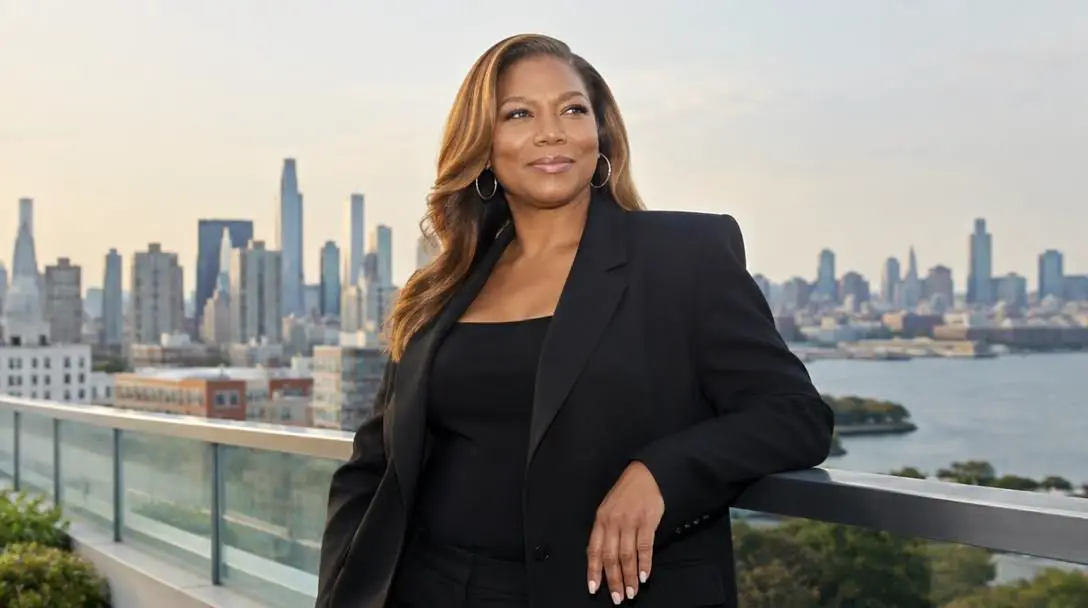
Queen Latifah has built an enduring legacy across the modern entertainment landscape, establishing herself as an iconic rapper, an award-winning actress, and a magnetic television personality. Rising to prominence during the golden age of hip-hop through sharp lyricism and undeniable stage presence, she consistently broke boundaries by transitioning into top-rated sitcoms, major Hollywood films, and daytime television talk shows. Over a multi-decade career, this creative versatility produced critical acclaim and set the groundwork for an enduring commercial empire, culminating in an estimated net worth of approximately $70 million.
In an industry characterized by sudden windfalls and rapid career downturns, lasting stability demands far more than raw artistic ability. While many high-earning entertainers command enormous salaries only to succumb to bankruptcy or severe economic distress, Queen Latifah sidestepped these familiar pitfalls. Guided by the practical financial teachings of her mother, she prioritized early money management, treating capital not as an ornament for personal vanity, but as a vehicle for long-term independence, family protection, and lasting community impact.
Key takeaways
- Queen Latifah built an estimated $70 million net worth by pairing artistic longevity with strict financial discipline.
- Her wealth model relies on the Two-Thirds Rule, saving and investing roughly 66.6% of income while enjoying 33.3% guilt-free.
- She transformed from creative talent into an enterprise owner through ventures like Flavor Unit Entertainment and retail partnerships.
- Her investment foundation combines residential and commercial real estate, equities, cash reserves, and structured philanthropy.
The 5 Core Pillars of Queen Latifah’s Financial Strategy
Sustaining generational wealth across decades of market shifts and entertainment industry evolution requires a repeatable system. Rather than relying on guesswork or leaving decisions to outside managers alone, Queen Latifah organized her assets around five specific pillars designed to protect capital, compound earnings, and mitigate market volatility.
| Financial Pillar | Primary Strategy | Core Wealth Objective |
|---|---|---|
| Smart Spending Habits | Avoiding flash, prioritizing utility and timeless quality | Capital preservation and lifestyle control |
| Real Estate Investments | Acquiring residential properties and commercial developments | Inflation defense and passive rental cash flow |
| Diverse Investment Portfolio | Balancing blue-chip equities, mutual funds, and cash reserves | Market risk mitigation and baseline equity growth |
| Entrepreneurship | Securing equity, production pipelines, and brand partnerships | Scalable income independent of performance contracts |
| Giving Back | Funding educational scholarships and emerging filmmakers | Sustainable community impact and social legacy |
Smart Spending Habits
Celebrity culture constantly promotes ostentatious consumerism, yet Queen Latifah has remained dedicated to mindful, intentional spending. She rejects the urge to purchase luxury items simply to project social status or follow transient fashion cycles, famously noting that she has never been drawn to conspicuous flash or excessive jewelry. Her spending focuses instead on high utility, comfort, and meaningful family milestones, such as memorable vacations that offer restorative downtime away from work.
When purchasing personal items, she deliberately selects well-constructed, timeless apparel and accessories that endure over many seasons. By bypassing short-lived luxury novelties that depreciate the moment they leave a boutique, she ensures that personal outflows remain measured and sustainable regardless of her cash flow volume.
Real Estate Investments
Physical property serves as an essential anchor in Queen Latifah’s balance sheet. Rather than keeping all her liquidity tied up in volatile financial markets, she systematically channels earnings into premium residential and commercial real estate. Her holdings include a private lakeside home in New Jersey featuring direct beach access, as well as an expansive luxury estate located in Beverly Hills, California.
Beyond private residences, she has actively backed commercial developments. These commercial holdings produce recurring, passive rental income while appreciating in overall value over long investment cycles. Investing directly in physical real estate provides an effective shield against inflation, ensuring a steady stream of revenue that continues regardless of whether she is actively on set or touring.

Diverse Investment Portfolio
To insulate her fortune from cyclical economic downturns, Queen Latifah avoids over-concentrating capital in any individual asset class. Her private portfolio balances liquid securities with stable tangible assets to achieve consistent, diversified expansion. This structure includes:
- Blue-chip public equities: Shares in established, highly capitalized companies that provide capital appreciation and regular dividend yields.
- Broad-market mutual funds: Pooled investment products designed to capture systemic economic expansion without single-company downside exposure.
- Direct real estate holdings: Tangible residential and commercial properties that offer downside protection against stock market volatility.
- Cash and liquid equivalents: Strategic defensive reserves kept readily accessible to handle emergency needs or fund sudden investment opportunities.
Entrepreneurship
A transformative shift in Queen Latifah’s financial evolution came when she transitioned from working as talent-for-hire to operating as an equity owner. Recognizing that traditional artist wages terminate the moment filming concludes, she established business enterprises that provide recurring, scalable returns.
Central to this enterprise model is Flavor Unit Entertainment, the production firm she co-founded. Through Flavor Unit, she has produced major theatrical releases, popular cable television series like Single Ladies, and her self-titled daytime project, The Queen Latifah Show. In retail, she partnered directly with Walmart to launch The Queen Collection, an inclusive cosmetics line. Retaining intellectual property rights and back-end profit participation allows her to compound wealth far beyond standard appearance fees.
Giving Back
Philanthropy is an active, structured component of Queen Latifah’s financial architecture rather than an incidental obligation. She provides ongoing financial and strategic backing to the Boys & Girls Clubs of America as well as the Lancelot H. Owens Scholarship Foundation, an organization dedicated to awarding educational grants to promising students.
To address systemic funding disparities within media production, she launched the Queen Collective. This mentorship and distribution platform provides commercial access, production budgets, and career pipelines to women filmmakers of color. By formalizing her community initiatives, she ties capital deployment directly to social empowerment and generational progress.
Mastering the Two-Thirds Rule for Wealth Preservation
The mathematical framework powering Queen Latifah’s asset accumulation is known as the Two-Thirds Rule. This formula enforces systematic asset building while leaving a defined, guilt-free pool of capital for discretionary living expenses, preventing both reckless spending and extreme financial burnout.
True wealth accumulation requires establishing a non-negotiable divide between capital designated for long-term growth and funds set aside for present enjoyment.
Under this system, exactly two-thirds (approximately 66.6 percent) of every paycheck is partitioned immediately for wealth building. This money bypasses standard day-to-day accounts entirely, heading straight into brokerage accounts, index funds, retirement assets, high-yield reserves, or commercial real estate acquisitions. Because the capital is locked into income-producing assets, it compounds quietly without being eroded by impulse buys.
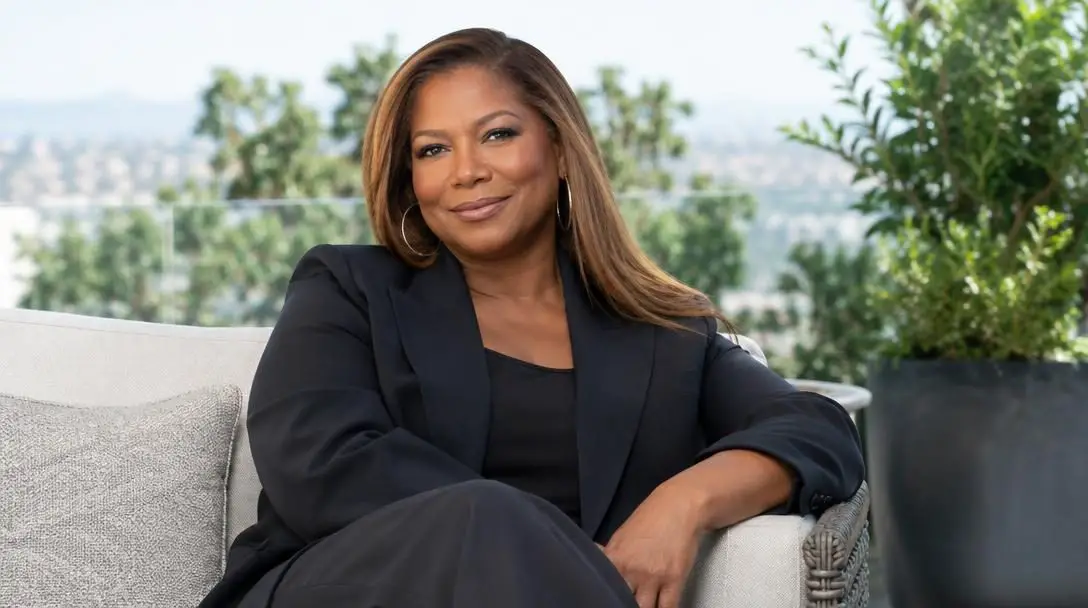
The remaining one-third (approximately 33.3 percent) is allocated to ordinary living costs, family support, personal maintenance, and recreation. Queen Latifah recognized that absolute deprivation often leads to spending fatigue and costly mistakes. By reserving an explicit, guilt-free portion of her earnings, she balances present enjoyment with uncompromising future security.
Practical Steps to Apply Latifah’s Money Blueprint
While few individuals manage multi-million-dollar production houses or sprawling property portfolios, the structural mechanics behind Queen Latifah’s financial system can be adopted at any income level to build durability and accelerate personal net worth.
- Establish a fixed allocation split: Determine a non-negotiable percentage of your incoming pay to redirect into investments before funding monthly living costs. While saving 66.6 percent may be impractical on an entry-level wage, establishing an initial baseline of 15 to 25 percent builds the necessary discipline.
- Automate your wealth transfers: Remove willpower from the equation by configuring direct deposits. Have designated percentages of your income automatically routed into retirement vehicles, index funds, or high-yield savings accounts before discretionary money hits your daily checking balance.
- Audit spending for genuine durability: Review your recent bank statements to eliminate short-lived status purchases. Shift discretionary expenditures away from rapidly depreciating novelties and toward versatile, long-lasting essentials and enriching family experiences.
- Build supplementary income streams: Reduce your dependence on a single corporate paycheck by developing secondary income pipelines. This can include dividend investments, peer-to-peer real estate syndications, freelance consulting, or creating proprietary intellectual assets.
- Diversify across multiple asset classes: Safeguard your balance sheet against localized crashes by spreading holdings across broad index funds, defensive cash instruments, and tangible property rather than speculating in a single hot stock or asset type.
- Incorporate purposeful philanthropy: Set aside a dedicated fraction of your financial resources, time, or professional skills to aid community causes. Purpose-driven giving reinforces disciplined money habits and builds meaningful social capital.
Costly Financial Traps and Mistakes to Avoid
Preserving long-term solvency depends just as much on avoiding structural blunders as it does on generating high earnings. Studying the errors that derail top performers provides valuable guardrails for any individual managing a personal portfolio.
- Succumbing to lifestyle creep: The common habit of increasing discretionary spending to match every income bump prevents high earners from building lasting net worth. When higher earnings immediately translate into costlier car leases and larger housing overhead, savings remain stagnant.
- Tying personal self-worth to consumer goods: Purchasing luxury items to impress colleagues or online peers drains liquid capital quickly. Basing personal validation on visible status markers frequently leads to unsustainable debt loads.
- Over-concentrating in a single asset type: Committing an entire balance sheet to one niche—whether exclusively physical property, speculative equities, or a single company's stock—leaves an investor defenseless during localized market downturns.
- Operating without personal financial literacy: Neglecting to learn foundational tax laws, fee structures, and interest mechanics leaves high earners vulnerable to mismanagement or outright exploitation by dishonest advisers.
- Enforcing unsustainable financial austerity: Attempting to live under harsh, unrealistic budgetary restrictions triggers decision fatigue, which often culminates in destructive spending binges. Sustainable wealth preservation requires a planned allowance for present enjoyment.
Building a Resilient Long-Term Legacy
Generating capital is merely the opening phase of sound personal finance; true success requires ongoing stewardship, asset defense, and strategic vision for future generations. Queen Latifah's journey from an emerging hip-hop artist to a respected entertainment mogul demonstrates how personal values, early education, and structured rules like the Two-Thirds model create durable economic freedom.
To adapt these practices for your personal journey, begin with an unsparing review of your current balance sheet. Tally your liquid reserves, employer retirement holdings, real estate equity, and business ventures against all outstanding debts to determine your baseline net worth. From there, implement automated transfers, eliminate non-essential status expenditures, and redirect your focus toward scalable, durable assets that compound over time.
Frequently asked questions
What is Queen Latifah's estimated net worth?
Queen Latifah holds an estimated net worth of approximately $70 million, built through a multi-decade career across hip-hop, film, television production, business ventures, and strategic investments.
How does Queen Latifah's Two-Thirds Rule work?
The Two-Thirds Rule divides incoming earnings into two distinct allocations: roughly 66.6% is immediately channeled into wealth-building vehicles such as real estate, equities, mutual funds, and retirement accounts, while the remaining 33.3% is used for ordinary living expenses and guilt-free discretionary spending.
What companies and retail brands has Queen Latifah launched?
Queen Latifah co-founded Flavor Unit Entertainment, a production enterprise behind hit motion pictures and series such as Single Ladies and The Queen Latifah Show. She also launched The Queen Collection cosmetics line in an exclusive partnership with Walmart.
What kinds of real estate investments does Queen Latifah hold?
Her real estate portfolio includes high-end private residences, such as a lakeside New Jersey property with private beach access and an estate in Beverly Hills, California, alongside commercial real estate developments that yield steady, passive rental income.
Which charitable organizations does Queen Latifah support?
She actively supports the Boys & Girls Clubs of America, the Lancelot H. Owens Scholarship Foundation, and the Queen Collective, a program she created to mentor, fund, and distribute projects by women filmmakers of color.
The bottom line
Queen Latifah’s rise to an estimated $70 million fortune illustrates that enduring financial success is not an accident of high earnings, but the direct outcome of disciplined systems. By pairing smart spending habits with physical real estate, diversified market assets, equity-driven business ownership, and the structural discipline of the Two-Thirds Rule, she created an enduring model for multi-generational wealth. Applying her core philosophy—treating money as a practical tool for autonomy rather than an ornament for ego—empowers anyone to take command of their personal finances, protect their balance sheet, and build a lasting legacy.