5 Financial Secrets of Robert De Niro: Spending, Investments, and Net Worth
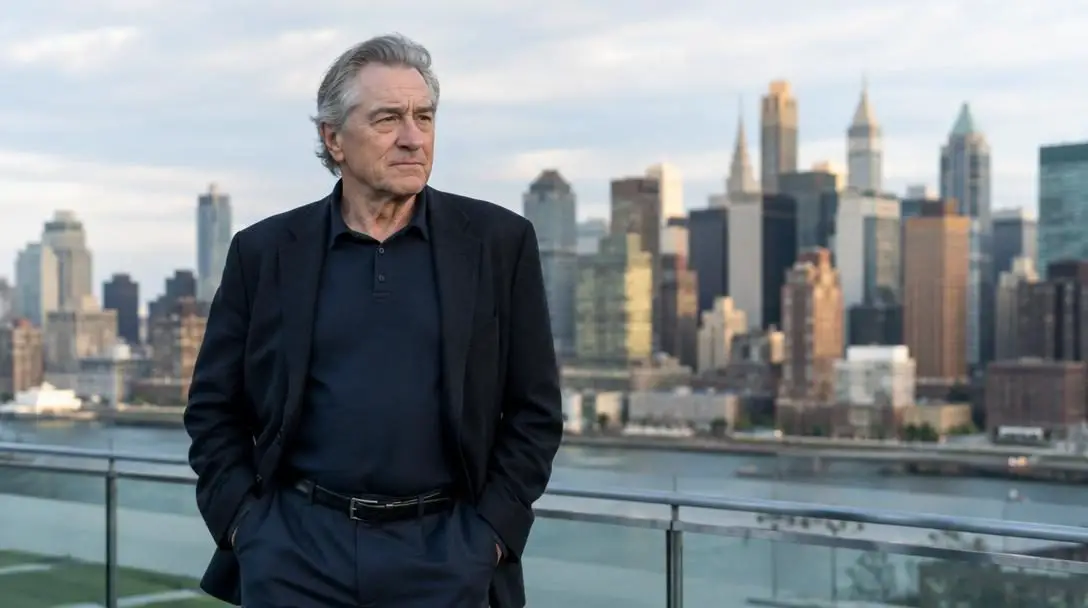
Robert De Niro is universally celebrated as one of cinema's most dedicated, versatile actors, producers, and directors. Beyond his critical acclaim and artistic awards, he has quietly assembled an extraordinary commercial footprint resulting in an estimated net worth exceeding $500 million. While many entertainment icons watch their fortunes evaporate through lavish overspending, predatory management, or speculative ventures, De Niro has methodically preserved and expanded his wealth over several decades.
De Niro’s financial journey illustrates that true financial freedom is not determined solely by primary earnings. Sustained wealth demands calculated capital allocation, lifestyle restraint, multi-sector diversification, and long-range risk mitigation. Raised by parents who stressed the value of hard work and monetary consciousness, he adopted a grounded philosophy early in his career: money serves primarily to provide security and ease life's friction. Rather than relying solely on cyclical Hollywood acting contracts, he established a five-pillar framework built on personal frugality, tangible property assets, diversified business holdings, collaborative partnerships, and structured philanthropy.
Key takeaways
- Robert De Niro built an estimated fortune of more than $500 million by pairing Hollywood acting earnings with global business enterprises.
- Personal frugality and resisting lifestyle inflation allow high earners to protect liquidity and continuously fund productive investments.
- Tangible real estate holdings and global hospitality ventures provide recurring operational cash flow along with structural equity growth.
- Forming strategic alliances with experienced operational experts limits execution risk when launching large commercial ventures.
- Structured philanthropy forms a foundational pillar of sustainable wealth management, totaling over $100 million in community contributions.
The Five Foundational Pillars of De Niro's Wealth Strategy
De Niro’s transition from a working actor to an international business mogul relies on five foundational strategies. Each pillar addresses a specific financial challenge, from curbing personal overhead to mitigating market volatility and creating an enduring civic legacy. By treating his career income as seed capital rather than consumption fuel, he transformed temporary entertainment paychecks into permanent commercial equity.
| Strategy Pillar | Primary Mechanism | Key Asset or Habit | Financial Objective |
|---|---|---|---|
| 1. Frugal Living | Controlled consumption | Public transit, decade-old personal vehicle | Preserve liquidity and widen savings margins |
| 2. Tangible Real Estate | Physical property acquisition | Luxury hotels, premier urban developments | Generate cash flow and capture capital appreciation |
| 3. Broad Diversification | Cross-sector allocation | Tribeca Productions, visual arts, film | Insulate balance sheet against industry downturns |
| 4. Strategic Partnerships | Shared operational expertise | Nobu Hospitality Group (with Matsuhisa and Teper) | Scale commercial ventures with reduced solo risk |
| 5. Purposeful Philanthropy | Targeted civic reinvestment | $100M+ to Robin Hood Foundation, WTC Memorial | Support community recovery and lasting social impact |
Frugal Living and Living Below Means
- Estimated Net Worth: Over $500 million
- Personal Transport Habits: Regular public transit use and driving a 10-plus-year-old vehicle
- Core Principle: Keeping lifestyle costs separated from income growth
Despite possessing half a billion dollars in personal wealth, De Niro maintains a surprisingly modest personal lifestyle. While individuals in his wealth bracket frequently develop astronomical overhead expenses, reports consistently note that he utilizes public transit and continues to drive a personal vehicle purchased more than a decade ago. This commitment to modesty is not about deprivation; rather, it reflects an intentional choice to resist the competitive display that drains the accounts of many high earners.
Frugality functions as a primary wealth generator because it widens the gap between total income and operational burn rate. When daily living costs remain flat relative to escalating earnings, excess capital can flow unobstructed into high-yield investments. Resisting status-driven consumption protects balance sheets from unexpected liquidity crunches, preserves emergency reserves, and provides the dry powder necessary to finance major commercial deals when opportunity strikes.
Tangible Real Estate Investing for Cash Flow and Appreciation
- Asset Categories: Luxury boutique hotels, fine dining establishments, residential developments
- Flagship Venture: Nobu Hospitality Group
- Economic Benefit: Operational cash flow paired with structural equity growth
Real estate serves as the heavy anchor within De Niro’s expansive business empire, substantially driving his net worth past traditional Hollywood benchmarks. His real estate portfolio comprises prime metropolitan properties, international luxury hotels, high-profile restaurants, and major residential projects. Most prominently, he is a primary co-owner of the worldwide Nobu Hospitality brand, which seamlessly integrates commercial property development with upscale hospitality operations.

Physical real estate represents one of the most reliable wealth-building instruments available. Well-chosen commercial and residential holdings yield steady operational cash flow, hedge against inflation through capital appreciation, and offer distinctive tax efficiencies. By putting capital into hard assets, an investor establishes resilient passive income lines that operate independently of volatile digital or equity markets.
Sustained wealth relies on calculated capital allocation, lifestyle control, structured investing, and long-range risk mitigation.
Broad-Spectrum Asset Diversification Across Sectors
- Sectors Represented: Cinema production, fine art, global hospitality
- Key Production Enterprise: Tribeca Productions
- Major Studio Release: The Irishman (2019)
Rather than concentrating his resources entirely within acting contracts or real estate deeds, De Niro spreads his capital across distinct, non-correlated industries. He established Tribeca Productions to control the development side of entertainment, backing acclaimed titles such as the 2019 release The Irishman. Simultaneously, his business ventures encompass investments in visual art, culinary operations, and urban redevelopment, ensuring that his financial health is never tied to a single project or sector.
Asset diversification acts as an insurance policy against cyclical industry downturns. When capital is distributed across unconnected economic sectors, a collapse in one space cannot collapse the entire enterprise. If cinematic production slumps, international hospitality assets provide consistent cash distributions, while real estate and fine art provide balance sheet stability.
Leverage via Strategic Partnerships and Operational Expertise
- Key Co-Founders: Chef Nobu Matsuhisa and producer Meir Teper
- Global Scale: Expanded to more than 40 premier worldwide locations
- Business Vehicle: Nobu Hospitality Group
De Niro’s commercial expansion underscores the immense value of strategic, shared-equity partnerships. Rather than attempting to launch and manage a complex culinary and hotel chain by himself, he joined forces with premier domain experts. Alongside master chef Nobu Matsuhisa and veteran film producer Meir Teper, De Niro co-founded Nobu Hospitality Group, scaling it into an international powerhouse operating in over 40 prime locations across the globe.
Strategic partnerships empower entrepreneurs to tackle ambitious, capital-intensive projects that would prove risky or inefficient to handle alone. By uniting complementary skill sets—combining world-class culinary artistry, production discipline, and international brand cachet—the founders eliminated operational friction and scaled their business across global markets without placing the entire operational burden on any single individual.
Purposeful Philanthropy and Community Reinvestment
- Total Career Giving: Exceeds $100 million
- Supported Causes: Civic restoration, urban poverty alleviation, social justice
- Key Beneficiaries: World Trade Center Memorial Foundation, Robin Hood Foundation, Robert F. Kennedy Memorial
A balanced evaluation of De Niro’s capital allocation includes his extensive charitable contributions. Throughout his career, his direct philanthropic disbursements have surpassed $100 million. He has directed vital capital and public advocacy toward institutions such as the World Trade Center Memorial Foundation, the Robin Hood Foundation, and the Robert F. Kennedy Memorial, focusing heavily on neighborhood revival and community relief.
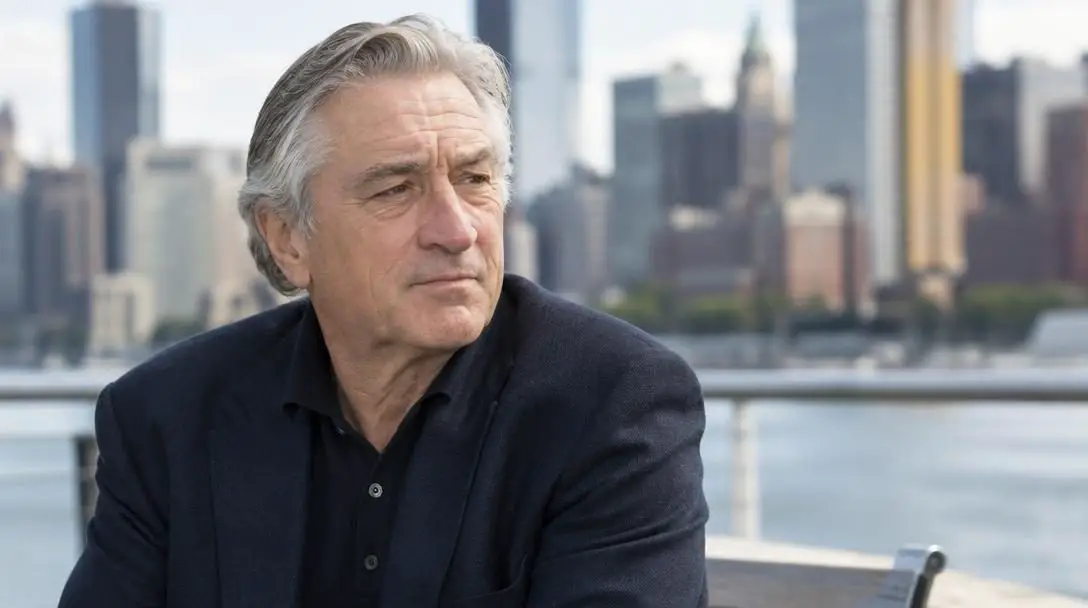
Philanthropy integrates financial success with social stewardship. Channeling resources into foundational community initiatives supports civic resilience while establishing an enduring legacy beyond business profit margins. De Niro’s sustained focus on urban recovery and social support illustrates that well-managed capital can transform communities alongside personal portfolios.
How to Apply De Niro's Wealth Principles to Personal Finance
De Niro’s wealth-building habits do not apply solely to Hollywood icons and commercial tycoons. The fundamental mechanics of disciplined overhead, asset acquisition, and diversification apply directly to personal household budgets and growing investment portfolios. Following a structured financial process helps recreate these outcomes over time.
- Cap Fixed Overhead Costs: Resist the urge to inflate your personal standard of living when compensation increases. Maintain functional assets, like a dependable vehicle, well past their loan payoff dates.
- Amass Liquid Reserves: Direct the surplus savings generated by disciplined living toward an accessible cash emergency reserve, insulating yourself from unforeseen setbacks and high-interest debt.
- Acquire Cash-Flowing Hard Assets: Channel accumulated capital into physical real estate assets, whether through rental properties, commercial syndications, or structured property funds that prioritize recurring income and long-term appreciation.
- Diversify Beyond Your Primary Profession: Eliminate sector concentration risk by spreading investments across varied asset categories, including broad-market index funds, private enterprise, and alternative assets.
- Build Professional Alliances: Partner with individuals whose specialized skills complement your own when launching business ventures or purchasing property, dividing workloads and operational risk.
- Establish Structured Giving Habits: Incorporate charitable contributions directly into your financial roadmap from the start, allocating consistent capital and personal time to initiatives aligned with your values.
Common Financial Mistakes to Avoid
Long-term wealth accumulation relies as much on eliminating catastrophic behavioral missteps as it does on finding profitable investments. Review these critical pitfalls that routinely drain personal capital:
- Lifestyle Creep: Raising baseline living expenses alongside every salary increase, which completely erodes the liquidity necessary to seize new investment opportunities.
- Status-Driven Expenditure: Funneling capital into depreciating consumer goods, exotic cars, and fleeting luxury experiences merely to project an outward image of affluence.
- Concentration Risk: Investing the vast majority of your savings within your own employer or immediate industry, leaving your entire balance sheet exposed to a single economic slump.
- Refusing Collaborative Help: Insisting on solo ownership and management of business ventures instead of teaming up with capable, specialized operators who bring vital industry expertise.
- Over-Reliance on Paper Assets: Neglecting physical property and tangible, cash-generating businesses in favor of volatile, purely digital or speculative investments.
- Postponing Charitable Giving: Delaying community support until an arbitrary retirement figure is reached, rather than developing disciplined giving habits throughout your working career.
Frequently asked questions
What is Robert De Niro's estimated net worth?
Robert De Niro's estimated net worth is over $500 million, built through his decades-long cinematic career alongside major global business ventures and extensive property holdings.
What is Robert De Niro's biggest business investment?
His most prominent commercial asset is the Nobu Hospitality Group, a global luxury hotel and fine dining chain co-founded with Chef Nobu Matsuhisa and producer Meir Teper, featuring more than 40 premier worldwide locations.
How does Robert De Niro practice frugal living?
Despite his substantial wealth, De Niro avoids ostentatious consumption by regularly using public transit instead of private drivers and continuing to operate a personal vehicle purchased more than a decade ago.
Which charities and foundations does Robert De Niro support?
De Niro has contributed over $100 million across his career to charitable causes, providing substantial financial backing to organizations including the World Trade Center Memorial Foundation, the Robin Hood Foundation, and the Robert F. Kennedy Memorial.
What is Tribeca Productions?
Tribeca Productions is a film and television production company co-founded by Robert De Niro that develops cinematic projects across the entertainment industry, including the critically acclaimed 2019 film The Irishman.
The bottom line
The remarkable durability of Robert De Niro’s financial legacy offers a practical masterclass in long-term capital stewardship. His economic trajectory shows that durable wealth does not depend on creative brilliance or immense income alone. Instead, it requires the self-discipline to live below your means, the foresight to invest in cash-flowing real estate, the patience to diversify across disparate industries, and the humility to leverage partnerships with proven experts.
By reviewing your own balance sheet, curbing discretionary lifestyle inflation, securing hard assets, and embedding philanthropic purpose into your monetary goals, you can construct an enduring foundation that withstands economic uncertainty and protects your financial independence for generations.