5 Financial Secrets of Tom Cruise: Spending, Investments, and Net Worth
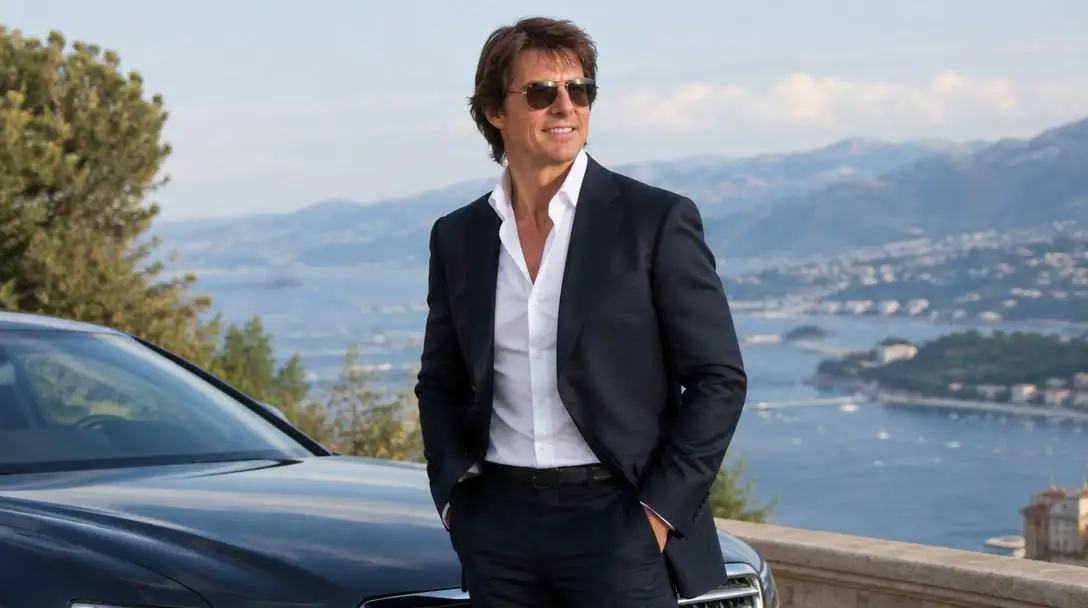
Tom Cruise stands among the most durable icons in Hollywood history, maintaining top-tier box office draw across more than four decades. Widely celebrated for landmark cinematic achievements such as Risky Business, Top Gun, and the multi-billion-dollar Mission: Impossible franchise, Cruise has paired his intense work ethic and renowned stunt performances with equally formidable financial acumen. Over his extended career, he has accumulated an estimated net worth of $600 million, placing him in an elite tier of entertainment industry earners.
Generating tens of millions of dollars from blockbuster studio paychecks is an enviable feat, but preserving and compounding that wealth across economic cycles demands disciplined capital allocation and deliberate long-term planning. While many high earners succumb to rapid lifestyle inflation and ill-advised ventures, Cruise has directed his earnings into prime real estate developments, corporate equities, and production equity. Examining the financial architecture behind his fortune provides valuable insight into how concentrated earnings can be converted into enduring, multi-generational wealth.
Key takeaways
- Tom Cruise has built an estimated net worth of $600 million through high-margin film contracts paired with aggressive equity investing and real estate acquisition.
- His personal balance sheet balances trophy assets with disciplined day-to-day frugality, avoiding continuous recurring overhead like personal drivers.
- Key outside investments include an early $100,000 position in Apple that expanded past $11 million, as well as an $11 million profit on a $2 billion Dubai commercial property venture.
- Cruise co-founded production company United Artists in 2006 alongside Paula Wagner, successfully monetizing the corporate entity when it was acquired by MGM in 2015.
- His long-term wealth strategy emphasizes asset preservation, capital diversification, and multi-million-dollar philanthropic commitments to cancer research and education.
The Five Pillars of Tom Cruise's Financial Playbook
The foundation of Cruise's financial longevity rests upon five distinct structural pillars. Rather than treating his film income as an endless cash reservoir, Cruise has systematically organized his finances to ensure capital security, steady growth, and downside protection.
| Financial Pillar | Primary Focus | Key Asset or Strategy | Long-Term Objective |
|---|---|---|---|
| Spending Habits | Selective luxury vs. daily restraint | $35M estate; discount shopping; driving himself | Minimizing lifestyle creep and overhead |
| Investment Allocation | Multi-sector asset diversification | Tech equities, foreign development, production | Non-correlated capital compounding |
| Net Worth Composition | Layered balance sheet structure | $600M net worth across liquid and illiquid holdings | Insulation from single-industry downturns |
| Financial Goals | Enterprise scaling and philanthropy | Golden Era Productions; health and educational giving | Generational continuity and social impact |
| Capital Preservation | Estate security and risk management | Long-term buy-and-hold strategy in his sixties | Protection of principal against market shocks |
By compartmentalizing his capital across these distinct strategic lanes, Cruise prevents the vulnerabilities that frequently trouble entertainment professionals who concentrate their holdings in a single income stream or single asset class.
Inside Tom Cruise's Major Assets and Investment Portfolio
Examining Cruise's physical and corporate balance sheet reveals a focused approach to asset selection. His capital is concentrated in prime tangible properties, heavy logistics assets, tech equities, and entertainment production equity.
Beverly Hills Luxury Estate

- Asset Type: Residential luxury real estate
- Reported Valuation: $35 million
- Primary Location: Beverly Hills, California
Cruise's residential real estate decisions emphasize ultra-prime markets with historical resilience. His Beverly Hills compound represents a classic trophy property designed for absolute privacy, security, and long-term capital preservation. In premium California markets, high-end estates function not merely as residences, but as stable stores of real value that appreciate alongside broader property trends while acting as hedges against currency debasement.
Manhattan Luxury Penthouse

- Asset Type: Urban multi-story residence
- Purchase Price: $30 million
- Primary Location: Manhattan, New York
To complement his West Coast presence, Cruise acquired a prestigious penthouse apartment in Manhattan for $30 million. High-value New York urban residences provide strong liquidity compared to rural estates, offering durable demand from international capital. Securing high-tier residential properties in world financial centers ensures Cruise maintains a footprint in markets characterized by strict zoning limits and scarce prime inventory.

Private Aviation and Marine Transport

- Asset Class: Transportation and mobile infrastructure
- Combined Value: Approximately $36 million
- Included Holdings: Private jet and private yacht
High-profile international actors face severe security, logistical, and privacy constraints that make commercial transport impractical during global film shoots. Cruise addressed these challenges by securing a private jet and a private yacht, representing a combined balance sheet commitment of roughly $36 million. While mobile luxury transport assets incur significant carrying costs, they provide invaluable logistical utility for maintaining demanding multi-country production and promotional schedules.
Dubai Commercial Real Estate Venture

- Project Scale: $2 billion total development
- Realized Return: $11 million in profit
- Market Sector: International commercial property
Rather than confining his real estate investments to domestic personal residences, Cruise expanded into large-scale foreign commercial infrastructure. He took an early stake in a massive $2 billion property development initiative in Dubai. By recognizing the expansion of the United Arab Emirates as a premier international commercial hub, Cruise captured substantial upside, ultimately exiting his equity position with an estimated profit of $11 million upon selling his shares.
United Artists Production Venture

- Entity Established: 2006
- Co-Founder: Paula Wagner
- Corporate Exit: Acquired by MGM in 2015
Cruise understood early on that acting wages, however massive, remain labor income. To capture true enterprise value, he co-founded the film production company United Artists in 2006 alongside veteran entertainment executive Paula Wagner. Moving into production ownership allowed Cruise to control underlying intellectual property, negotiate distribution margins, and build institutional equity. That equity was ultimately realized when the entity was sold to Metro-Goldwyn-Mayer (MGM) in 2015, delivering an attractive return on capital.
Apple Equity Investment

- Initial Capital Invested: $100,000
- Investment Year: 2003
- Subsequent Portfolio Value: Over $11 million
Cruise's foray into the public financial markets highlights the outsized power of patience and conviction. In 2003, Cruise allocated $100,000 to the publicly traded shares of Apple. Rather than trading around product releases or quarterly earnings noise, he retained the stock through consecutive product expansion cycles, stock splits, and the mobile revolution. That initial $100,000 stake expanded into a position worth over $11 million, showcasing classic buy-and-hold compounding.
Generating wealth through blockbuster studio paychecks is common, but sustaining and growing an immense fortune requires disciplined capital allocation and long-term planning.
How the Wealth-Building Model Works
The core engine driving Cruise's multi-decade accumulation is the deliberate migration from labor-based compensation to equity-based ownership. When an actor or professional trades time for compensation, their earning capacity ceases the moment they stop producing. While Cruise's performance compensation remains among the highest in film history, he leveraged that active earnings stream to build permanent capital structures.
First, active production income is filtered into defensive, high-utility stores of wealth such as prime California and New York real estate. Second, a dedicated portion of liquid cash flow is directed toward commercial ventures and public equities with asymmetrical upside, such as his Apple stock holding and Dubai property stake. Finally, corporate vehicles like United Artists and Golden Era Productions—the latter formed in partnership with the Church of Scientology—allow him to direct media projects through company structures rather than individual service agreements.
Balancing Splurges with Practical Restraint
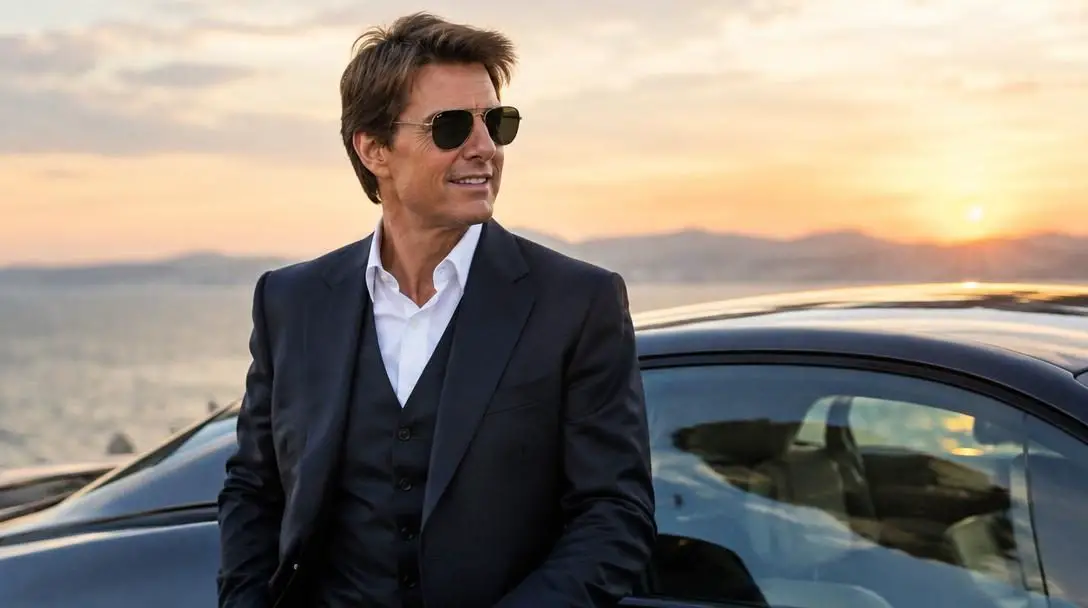
A distinctive hallmark of Cruise's financial management is the sharp divide between his ownership of appreciating or high-utility assets and his personal restraint regarding consumable overhead. Despite a $600 million fortune, Cruise avoids the recurring personal entourage expenses that quietly erode the fortunes of many high-profile entertainers.
Reports consistently highlight that Cruise routinely prefers driving himself rather than maintaining full-time dedicated chauffeurs for domestic errands. Similarly, he has been known to frequent discount retailers for routine personal and household supplies. This intentional behavioral habit eliminates unnecessary micro-expenditures and combats lifestyle inflation. By distinguishing between meaningful capital deployments and frivolous ongoing consumption, Cruise preserves liquidity for productive investments.
Practical Financial Steps for Everyday Wealth Building
While average investors cannot participate in multi-billion-dollar overseas developments or purchase private jets, the underlying principles governing Tom Cruise's financial playbook are universally applicable across income tiers.
- Conduct a rigorous overhead audit: Review monthly bank and credit accounts to separate high-utility, appreciating asset expenses from depreciating lifestyle consumables. Trim recurring service costs that provide no long-term financial yield.
- Establish a multi-asset diversification plan: Allocate excess savings across broad equity index funds, cash reserves, and accessible real estate vehicles to insulate your personal balance sheet against industry-specific contractions.
- Implement a strict buy-and-hold investment rule: Emulate Cruise's 2003 Apple equity strategy by identifying durable, established market leaders or index portfolios and committing to holding them through multi-year market volatility.
- Build secondary non-wage revenue sources: Develop secondary income through equity investments, fractional real estate platforms, or digital business ventures to move beyond sole reliance on a single primary paycheck.
- Formalize clear philanthropic and preservation targets: Establish specific parameters for charitable giving, tax optimization, and estate continuity to guide how your accumulated assets will be used and safeguarded over time.
Costly Financial Traps to Avoid
Studying Cruise's financial path reveals several critical mistakes that derail high-earning professionals and everyday wage earners alike:
- Uncontrolled lifestyle creep: Allowing discretionary spending to match or exceed every salary increase, preventing capital from ever reaching productive investment accounts.
- Over-concentration in one sector: Keeping savings tied strictly to your own employer or immediate industry, which leaves your livelihood and your portfolio exposed to the exact same economic shock.
- Short-term speculative trading: Chasing volatile trends and attempting to time market highs and lows, which typically underperforms patient buy-and-hold equity investing.
- Neglecting recurring holding costs: Buying real estate, luxury vehicles, or complex assets without factoring in property taxes, insurance, routine maintenance, and carrying overhead.
- Delaying estate and retirement preservation: Failing to adjust investment risk toward capital preservation as you advance in age, leaving legacy assets vulnerable to market drawdowns.
Frequently asked questions
What is Tom Cruise's total estimated net worth?
Tom Cruise holds an estimated net worth of approximately $600 million, built through decades of record-setting film salaries, box office profit participation, prime real estate developments, and strategic corporate equity investments.
How did Tom Cruise turn a $100,000 investment in Apple into $11 million?
In 2003, Cruise purchased $100,000 worth of Apple stock. By adopting a patient, long-term buy-and-hold strategy across two decades of historic corporate growth, product expansions, and stock splits, that initial position expanded into an equity holding worth more than $11 million.
What major real estate properties does Tom Cruise own?
Cruise's real estate portfolio features a $35 million luxury estate located in Beverly Hills, California, along with an upscale multi-million-dollar Manhattan penthouse in New York City that he acquired for $30 million, alongside past participation in a $2 billion commercial project in Dubai.
What production company did Tom Cruise co-found and sell?
In 2006, Cruise co-founded the production company United Artists in partnership with film executive Paula Wagner. Cruise and Wagner successfully ran the production entity until it was sold to Metro-Goldwyn-Mayer (MGM) in 2015.
Which charitable and philanthropic causes does Tom Cruise support?
Cruise directs millions of dollars toward philanthropic initiatives, with prominent donations going to cancer research institutions, youth education programs, and the Church of Scientology, where he also partnered to establish Golden Era Productions.
The bottom line
Tom Cruise's multi-decade career demonstrates that generating substantial income is only the first step toward building lasting financial security. By transitioning from labor-dependent film paychecks to diversified equity stakes, international property developments, and long-term tech holdings, he engineered a resilient $600 million fortune capable of withstanding broader market swings.
Equally critical to his financial durability is his intentional behavioral discipline. Pairing high-value trophy assets with everyday frugality, avoiding runaway lifestyle inflation, and adhering to patient buy-and-hold investing principles offer universal lessons. Regardless of income scale, investors who adopt broad diversification, control overhead costs, and prioritize equity accumulation can build robust financial foundations designed to endure for decades.