5 First Ladies Who Won Plaudits From Across the Aisle
The position of First Lady of the United States remains one of the most demanding, ambiguous, and heavily scrutinized offices in American public life. Without any constitutional definition, statutory authority, or formal salary, the president's spouse is expected to manage complex diplomatic and ceremonial duties while existing perpetually under the national spotlight. When a First Lady chooses to remain quiet or stay strictly within domestic hosting duties, critics often accuse her of neglecting an extraordinary national platform. Conversely, when she pursues meaningful policy initiatives or speaks out on national controversies, political adversaries frequently allege that an unelected spouse is overstepping democratic boundaries.
Because the role is tethered directly to the executive branch, many First Ladies have faced harsh partisan attacks merely by association with their husbands' administrations. Yet across American history, a select group of presidential spouses managed to break through entrenched partisan lines. By championing unassailable humanitarian efforts, demonstrating intellectual independence, and communicating with remarkable candor, these women secured genuine praise and lasting goodwill from political allies and fierce opponents alike.
Key takeaways
- The role of First Lady carries no constitutional duties, forcing each spouse to navigate public scrutiny and political polarization without formal authority.
- Several historic First Ladies managed to become significantly more popular than their presidential husbands by championing unifying cultural or humanitarian causes.
- Bipartisan respect often developed when these women demonstrated personal candor, direct public communication, or an willingness to break with their party's standard platform.
- Advocacy for public health, literacy, civil rights, and historic preservation provided durable platforms that resisted ordinary partisan hostility.
At a glance: Five First Ladies praised across party lines
While their husband's presidencies spanned different eras and faced vastly distinct political climates, each of these five women achieved rare cross-aisle acclaim through their individual character and substantive initiatives.
| First Lady | Presidential Husband | Primary Initiatives and Causes | Key Cross-Aisle Appeal Factor |
|---|---|---|---|
| Barbara Bush | George H.W. Bush | Literacy campaigns and education | Candid nature and independent stances on abortion access and LGBT rights |
| Betty Ford | Gerald R. Ford | Addiction recovery and HIV/AIDS advocacy | Radical openness about personal struggles and destigmatizing taboo health topics |
| Abigail Adams | John Adams | Abolitionism and women's higher education | Uncompromising intellectual counsel and early defense of human rights |
| Eleanor Roosevelt | Franklin D. Roosevelt | Civil rights, United Nations, and women's rights | Unprecedented public accessibility through regular columns and radio broadcasts |
| Jackie Kennedy | John F. Kennedy | Historic preservation and White House redesign | Transcendent cultural stewardship that elevated American history above party politics |
Trailblazers who earned acclaim from both sides of the aisle
The five First Ladies examined here each approached their public duties with distinct personalities, backgrounds, and priorities. Despite the partisan acrimony surrounding their respective administrations, each cultivated a level of public affection and respect that transcended ordinary political allegiances.
Barbara Bush

- Husband: George H.W. Bush
- Key causes: Literacy campaigns, education
- Distinctive distinction: Mother of a subsequent U.S. President
Barbara Bush holds a historically rare position as one of just two women in American history to serve as First Lady and also be the mother of a U.S. President. Her husband, George H.W. Bush, served only a single term in the White House, but Barbara maintained exceptional popularity throughout his presidency and well into her later years. Long before becoming First Lady, she dedicated eight years as Second Lady to elevating national literacy campaigns, recognizing that reading proficiency serves as a critical foundation for economic opportunity and social progress.
Once in the White House, Bush maintained her dedicated work on literacy while simultaneously winning plaudits from across the political aisle for her refreshing candor and independent mindset. In an era marked by strict partisan expectations, she openly diverged from standard Republican positions by voicing support for expanded abortion access and expressing backing for more rights for the LGBT community. Her willingness to speak her mind without regard for partisan talking points earned her deep and enduring appreciation from both sides of the political spectrum.
Betty Ford

- Tenure: 1974 to 1977
- Major honor: Presidential Medal of Freedom (1991)
- Key legacy: Founder of the Betty Ford Center
The presidency of Gerald R. Ford lasted from 1974 until 1977, a brief and challenging period in the immediate wake of national executive turmoil that left his administration viewed by many as relatively unremarkable. However, his wife, Betty Ford, established an extraordinary standard for political and social engagement in the modern era. Rather than remaining an ornamental figure, Ford addressed some of the most stigmatized topics of her era with astonishing honesty.
Having faced personal struggles with alcoholism early in her life, she used her national platform to bring substance use disorders into the open, eventually establishing the world-renowned Betty Ford Center to offer treatment and rehabilitation. When HIV and AIDS emerged as deeply taboo and misunderstood crises, Ford stepped forward to offer compassion, awareness, and direct support to affected individuals. Her fearless advocacy continued long after leaving Washington, culminating in a Presidential Medal of Freedom in 1991. When she passed away in 2011 at the age of 93, leaders from all political corners celebrated her life as a model of courageous public service.
Abigail Adams
- Tenure: 1797 to 1801
- Husband: John Adams
- Key causes: Staunch abolitionist and women's rights advocate
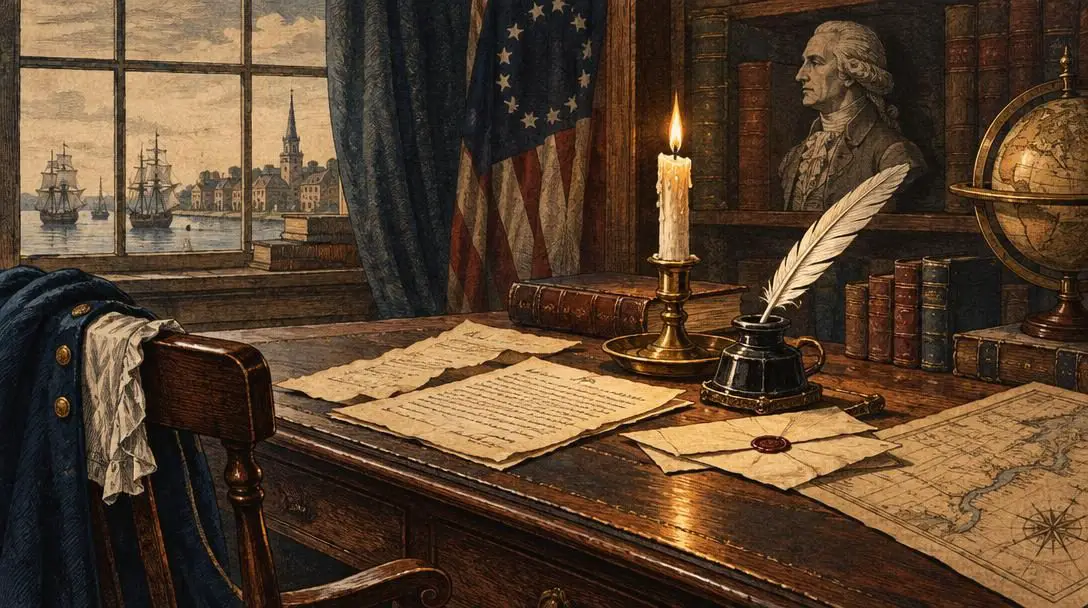
During the earliest chapters of the American republic, formal government roles for women were essentially non-existent. Abigail Adams entirely challenged that limitation, serving as the nation's second First Lady from 1797 to 1801 alongside her husband, John Adams. Far more than a traditional hostess, Abigail was an intellectual peer and trusted mentor to her husband, offering sharp counsel that helped shape national governance during a fragile formative period.
Abigail Adams refused to maintain polite silence regarding the critical moral controversies of the founding era. She was an uncompromising, staunch abolitionist who openly opposed slavery and consistently argued that the American experiment could not claim true liberty while maintaining human bondage. Furthermore, she was a pioneering champion of women's rights, famously advocating for women to receive formal education beyond basic primary school and pushing for legal rights that recognized female autonomy. Her historical significance and formidable intellect have inspired numerous contemporary cultural portrayals, including the acclaimed miniseries John Adams, where she was depicted by actress Laura Linney.
Eleanor Roosevelt

- Tenure: 1933 to 1945
- Husband: Franklin D. Roosevelt
- Key causes: Civil Rights Movement, United Nations, women's rights
Prior to the modern constitutional limit established after 1945, which restricts presidents to two terms, Franklin D. Roosevelt served a historic twelve-year presidency between 1933 and 1945. Navigating the depths of the Great Depression and the global turmoil of World War II, the nation required extraordinary leadership, which was delivered in large part through the transformational public work of Eleanor Roosevelt. She completely redefined what an active, politically engaged First Lady could accomplish.
By opening direct channels of communication with ordinary citizens, public figures can build durable goodwill that softens even the sharpest political differences.
Eleanor Roosevelt was an uncompromising champion of the Civil Rights Movement, constantly pressing the federal government to confront racial inequality, and she proved instrumental in ensuring the United States joined the United Nations. What truly separated Roosevelt from her predecessors was her unparalleled personal accessibility. She communicated directly with everyday Americans through regular magazine and newspaper columns, alongside a weekly radio program. From her tenure in the White House until her death in 1962, she remained one of the most widely admired women in the country, earning respect from citizens of diverse backgrounds and varying political leanings.
Jackie Kennedy

- Age at entry: 31 years old
- Husband: John F. Kennedy
- Key achievement: Comprehensive historic restoration of the White House
Decades after her time in Washington, Jackie Kennedy remains perhaps the definitive First Lady in the collective American consciousness. When she entered the White House alongside John F. Kennedy, she was just 31 years old. A highly educated photographer prior to her marriage, she brought refined aesthetic vision, cultural sophistication, and deep historical awareness to the executive mansion.
Kennedy's signature achievement was the comprehensive restoration and redesign of the White House. Rather than treating the mansion as a private residential home, she approached it as an essential, living national landmark that belonged to all American citizens. Her televised tour and preservation initiatives resonated with millions of Americans regardless of political affiliation. In fact, her public appeal was so immense that she proved substantially more popular than President Kennedy himself among voters who staunchly opposed his administration's legislative policies.
The mechanics of cross-party popularity
The universal acclaim achieved by these five First Ladies was neither accidental nor purely a product of favorable media coverage. An examination of their tenures reveals several consistent strategic behaviors and interpersonal dynamics that insulated them from ordinary partisan warfare.
- Championing unifying, humanitarian causes: By directing their primary energies toward non-legislative pursuits such as literacy, historic preservation, and public health, these women selected arenas where opposition appeared narrow-minded or needlessly obstructive.
- Demonstrating genuine personal candor: Betty Ford's willingness to share her personal struggle with alcoholism disarmed political critics, replacing partisan suspicion with widespread public empathy and admiration.
- Maintaining unfiltered, direct communication: Eleanor Roosevelt used weekly radio shows and written columns to speak directly to citizens, allowing the public to judge her ideas and character without partisan distortion.
- Exercising intellectual independence: Barbara Bush's willingness to depart publicly from Republican orthodoxy on divisive matters like LGBT rights and abortion access signaled that her principles were not dictated by administration strategy.
- Preserving shared national heritage: Jackie Kennedy's restoration of the White House treated American history as common ground, inviting citizens of all political persuasions to take shared pride in national symbols.
Practical strategies for achieving broad public consensus
Modern public figures, institutional leaders, and high-visibility advocates can draw actionable lessons from how these historic First Ladies bridged political divides. Achieving broad goodwill in a polarized society requires deliberate choices and emotional discipline.
- Identify causes with deep moral resonance: Select core initiatives focused on human development, health, or cultural preservation that speak to basic needs rather than factional legislative arguments.
- Establish direct public communication channels: Engage audiences openly and consistently through broad media formats to prevent political adversaries from defining your motivations or framing your message.
- Demonstrate intellectual honesty: Be willing to diverge constructively from institutional or party doctrine when core principles demand it, signaling that your loyalty rests with the public rather than an ideological faction.
- Confront difficult truths constructively: When facing taboo issues or social crises, offer practical and compassionate remedies rather than ignoring uncomfortable realities.
- Balance personal counsel with institutional respect: Provide unvarnished guidance in private while pursuing public actions that respect governing norms, avoiding the perception of unelected overreach.
Pitfalls that erode bipartisan goodwill
Just as certain deliberate behaviors build broad public trust, specific missteps can instantly alienate large segments of the population. Public figures operating in high-visibility environments should take care to avoid several common mistakes:
- Regurgitating partisan talking points: Repeating narrow ideological rhetoric instantly alienates political opponents and reduces an influential office to a mere political instrument.
- Overstepping institutional boundaries without clarity: Exercising political authority without an elective mandate or transparent role invites fierce accusations of undemocratic overreach.
- Treating high public visibility as purely decorative: Remaining entirely passive or focusing solely on ceremonial hosting invites criticism that a historic platform is being squandered.
- Retreating behind communications staff during crises: Disappearing or dodging public engagement when controversies arise breeds deep suspicion and fuels negative narratives.
- Ignoring the concerns of ideological opponents: Failing to listen to or engage with communities outside the administration's core base reinforces the impression of insular governance.
Considerations for the future of presidential spouses
As the contemporary media landscape grows increasingly fractured and political polarization deepens, establishing the broad cross-aisle goodwill once commanded by figures like Eleanor Roosevelt or Jackie Kennedy presents steep new challenges. In the current 24-hour news cycle and digital ecosystem, virtually any policy stance or public comment can be swiftly interpreted through an ideological lens.
Future presidential spouses—regardless of gender—will inevitably face evolving societal expectations. Modern spouses increasingly enter the executive mansion with established professional careers, distinct public reputations, and independent financial identities. Navigating the delicate balance between personal professional autonomy, ceremonial state responsibilities, and substantive advocacy will require exceptional diplomatic skill, transparent boundaries, and an enduring commitment to causes that unite rather than divide the nation.
Frequently asked questions
Why is the role of First Lady so difficult to navigate politically?
The role carries no constitutional authority, defined responsibilities, or official salary, yet it exists under relentless public scrutiny. Spouses who remain inactive are often criticized for wasting a national platform, while those who advocate for policy can face accusations of unelected political overreach.
How did Barbara Bush earn respect from political opponents?
In addition to her decades of work championing national literacy campaigns, Barbara Bush won cross-aisle acclaim through her candid nature and her willingness to express independent views, including support for LGBT rights and expanded abortion access that broke with standard Republican doctrine.
What major contributions made Betty Ford so widely admired?
Betty Ford addressed highly stigmatized national topics with profound openness. After sharing her personal battle with alcoholism, she founded the Betty Ford Center for addiction treatment and advocated for individuals diagnosed with HIV and AIDS, earning a Presidential Medal of Freedom in 1991.
What issues did Abigail Adams champion during the founding era?
Abigail Adams served as an essential mentor to John Adams while taking firm, progressive stances on core moral issues. She was an outspoken abolitionist who staunchly opposed slavery and fought for women to receive expanded rights, including formal education beyond the primary level.
How did Jackie Kennedy appeal to voters who opposed her husband's administration?
Jackie Kennedy focused her public role on the cultural stewardship and comprehensive restoration of the White House, treating it as an essential national landmark. Her emphasis on shared American heritage transcended partisan debates and made her remarkably popular across the political spectrum.
The bottom line
The lives and legacies of Barbara Bush, Betty Ford, Abigail Adams, Eleanor Roosevelt, and Jackie Kennedy demonstrate that genuine public admiration does not require retreating into passive silence. Rather, cross-aisle respect is forged when public figures apply their visibility toward authentic, unifying purposes. By addressing pressing humanitarian crises, defending core human liberties, preserving shared cultural heritage, and speaking with unwavering intellectual honesty, these five First Ladies proved that principled leadership can rise far above the partisan fray.