5 Hyped Up Cubs Prospects That Didn’t Pan Out
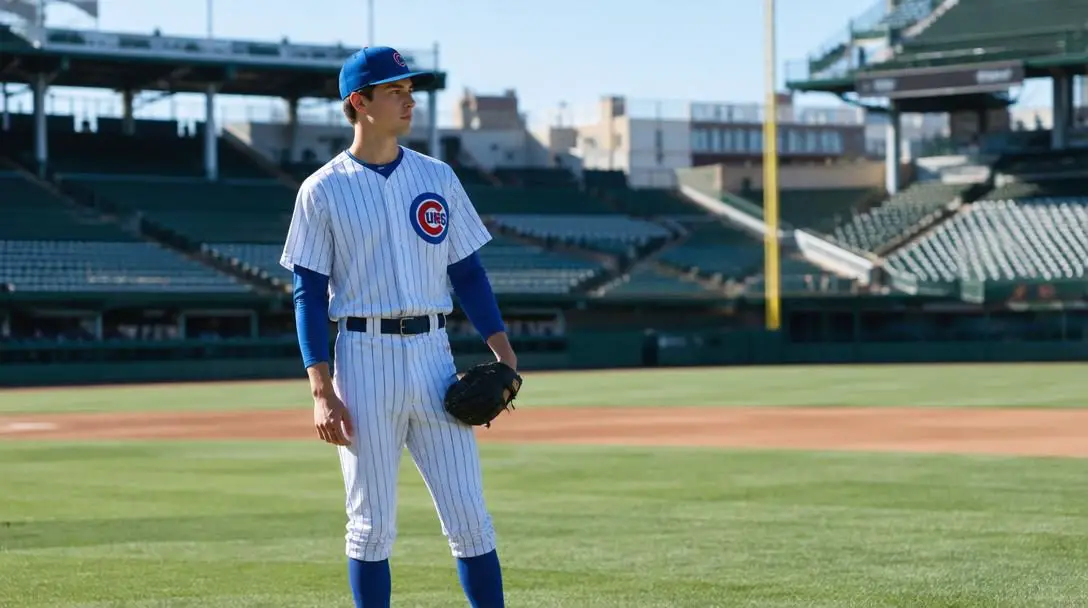
Baseball franchises consistently invest more in long-term developmental projection than organizations in almost any other professional sport. Teams sign international teenagers and draft collegiate stars with the ambition that these young athletes will anchor their Major League rosters for a decade or more. While elite scouting reports often create boundless optimism across front offices and fan bases, player development rarely follows a straight line. Every franchise eventually experiences the disappointment of earmarking a celebrated prospect as a foundational superstar, only to watch recurring physical injuries, mechanical shortcomings, or unexpected skill plateaus derail those plans.
The Chicago Cubs have experienced both sides of player development throughout their long history. While some homegrown stars have carried the franchise to postseason glory, others arrived with immense fanfare only to fall remarkably short of expectations. The gulf between dominating minor league pitching or hitting and performing consistently under the bright lights of Wrigley Field remains one of the steepest challenges in professional sports. Reviewing the careers of five highly touted Cubs prospects illustrates how fragile athletic potential can be, while also shedding light on the complexities of modern player evaluation.
Key takeaways
- Top draft pedigree and exceptional minor league statistics do not guarantee that a player's skills will translate against elite Major League competition.
- Severe injuries cut short the dominant early trajectories of foundational talents like pitcher Mark Prior.
- Raw physical attributes often overshadow fundamental plate discipline, leading five-tool prospects to struggle once opponents identify their weaknesses.
- Front offices risk organizational stagnation when they prematurely plan multi-year championship windows around unproven young talent.
Five Hyped Cubs Prospects Who Failed to Pan Out
High draft selections and high-dollar international signings carry tremendous pressure. When premier prospects encounter adversity at the plate or on the mound, the transition can turn quickly from a minor slump into a career-altering stall. These five players arrived in the Cubs system with near-universal acclaim, but their careers serve as cautionary tales of baseball's inherent unpredictability.
Corey Patterson
- Draft Position: Third overall, 1998 MLB Draft
- MLB Debut: 2000
- Peak Solid Campaigns: 2003 and 2004
- Final MLB Game: 2011
When the Cubs selected outfielder Corey Patterson with the third overall pick in the 1998 draft, organizational scouts envisioned a true franchise cornerstone. Observers regularly viewed Patterson as a classic five-tool prospect capable of shifting games through raw power, blazing speed, exceptional defensive range, and arm strength from the outfield. His rapid ascent through the minor league system seemed to validate the early hype, allowing him to make his big-league debut in 2000, just two years after being drafted.
For a brief stretch, Patterson looked every bit the superstar Chicago had envisioned. He settled into the daily rhythm of Major League pitching and produced solid back-to-back campaigns during the 2003 and 2004 seasons. However, the momentum dissolved completely in 2005. Patterson suffered a dramatic drop in offensive output, eventually resulting in a mid-season demotion to Triple-A. He was never able to recapture his early promise in a Cubs uniform. Patterson spent the remainder of his professional career bouncing among multiple franchises as a journeyman before playing his final Major League game in 2011.
Ty Griffin
- Draft Position: Ninth overall, 1988 MLB Draft
- Projected Position: Second baseman
- Highest Level Reached: Double-A
- Final Competitive Team: Grand Forks (Prairie League, 1997)
Selected ninth overall in the 1988 draft, second baseman Ty Griffin entered professional baseball carrying exceptional expectations. Although he was not the consensus top pick in his draft class, Griffin generated immense buzz as he began his professional journey. Both front office executives and Chicago supporters viewed the athletic infielder as the natural heir apparent to Hall of Fame second baseman Ryne Sandberg, expecting Griffin to eventually command the Cubs' middle infield for years to come.
Griffin's career represents one of the most surprising developmental ceilings in team history. Despite his high draft status and nationwide fanfare, Griffin never appeared in a single Major League game for the Cubs or any other organization. He stalled at the Double-A level, unable to solve advanced minor league pitching. Griffin spent his entire twenties trying to retool his game across various affiliated minor league and independent circuits. Organizations such as the Cincinnati Reds and St. Louis Cardinals acquired Griffin in hopes of unlocking his early potential, but neither could jumpstart his climb to the big leagues. Griffin ultimately concluded his playing career in 1997 with Grand Forks in the independent Prairie League.
Mark Prior
- Draft Position: Second overall, 2001 MLB Draft
- MLB Career Record: 42-29
- Career Major League ERA: 3.51
- Final Major League Season: 2006
Mark Prior stands as perhaps the quintessential "what might have been" story in modern baseball lore. Drafted second overall in 2001 behind catcher Joe Mauer, Prior was widely considered by professional evaluators to be the most polished pitching prospect to enter the draft in a generation. Featuring textbook pitching mechanics, poise, and an overpowering pitch repertoire, Prior skipped extended seasoning and debuted at Wrigley Field in May 2002, less than a year after being drafted.
Over his first two seasons, Prior was a dominant force on the mound, helping lead Chicago to the brink of a pennant. His career numbers remain thoroughly respectable, highlighted by a 42-29 win-loss record and a 3.51 earned run average. However, those marks capture only a fraction of what his talent projected. A relentless sequence of severe arm and shoulder injuries undermined his physical durability. The physical toll reached a crisis point during the 2006 season, which turned into his worst statistical performance and his final appearance on a Major League mound.
Felix Pie
- MLB Debut: 2007
- Cubs Career Numbers: 130 games, .223 BA, 3 HR
- Career Batting Average: .246
- Career Home Runs: 17
International outfielder Felix Pie entered the Cubs organization from the Dominican Republic surrounded by immense buzz regarding his athletic ceiling. Evaluators drew comparisons between Pie and Corey Patterson, believing Pie possessed the speed, range, and physical power to anchor the Cubs' outfield for a decade. Fans waited through several minor league seasons with mounting anticipation as Pie developed his tools across the farm system.
Pie finally made his long-awaited debut in 2007, but the transition to Major League pitching proved overwhelming. In 130 games with Chicago spread across two seasons, Pie managed a disappointing .223 batting average with only three home runs. Unable to handle big-league breaking balls or secure consistent contact, Pie was traded to the Baltimore Orioles. He spent three seasons in Baltimore before concluding his big-league career with the Pittsburgh Pirates in 2013, finishing his major-league tenure with a .246 average and 17 career home runs.
Josh Vitters
- Draft Position: Third overall, 2007 MLB Draft
- MLB Debut: 2012
- Cubs Major League Games: 36 games
- Final Competitive Year: 2021 (Atlantic League)
Toward the close of the 2000s, the Cubs' existing core was aging out of contention, prompting the front office to seek a new generation of foundational bats. Third baseman Josh Vitters was identified as that centerpiece when Chicago selected him third overall in the 2007 draft, immediately following future All-Stars David Price and Mike Moustakas. Vitters earned praise for his fast swing and power potential, leading observers to project him as a middle-of-the-order run producer.
The transition through the developmental pipeline proved sluggish, taking Vitters five full seasons to earn a big-league promotion. When his chance finally came in 2012, the results were disastrous. Vitters appeared in 36 games for the Cubs, batting an abysmal .121 while striking out regularly. He was demoted back to the minors and released entirely by the organization in 2014. Vitters never played in the Major Leagues again, spending time in independent baseball before officially retiring after a 2021 stint with the Atlantic League of Professional Baseball, where he hit .157 with zero home runs.
The step between dominance in minor league affiliates and consistent production in Major League Baseball is notoriously steep.
At a Glance: Comparing the Five Hyped Cubs Prospects
Examining the pedigree, major-league output, and career longevity of these five players demonstrates how varied the reasons for developmental stalls can be, from sudden injury to an inability to make consistent contact against advanced pitching.
| Player | Draft / Origin | Position | Cubs Big-League Output | Final Pro Year |
|---|---|---|---|---|
| Corey Patterson | 3rd Overall (1998) | Outfield | Solid 2003-04; Demoted 2005 | 2011 (MLB) |
| Ty Griffin | 9th Overall (1988) | Second Base | Zero MLB appearances (peaked at AA) | 1997 (Ind.) |
| Mark Prior | 2nd Overall (2001) | Pitcher | 42-29, 3.51 ERA (derailed by injury) | 2006 (MLB) |
| Felix Pie | Dominican Republic | Outfield | 130 games, .223 BA, 3 HR | 2013 (MLB) |
| Josh Vitters | 3rd Overall (2007) | Third Base | 36 games, .121 BA | 2021 (Ind.) |
The Foundations of Baseball Prospect Pedigree
To understand why these players generated such enormous expectations, it is essential to understand traditional scouting practices. For position players, scouts assess talent through the lens of the traditional five tools: hitting for average, hitting for power, foot speed, arm strength, and fielding ability. Pitching prospects are graded on raw velocity, movement, delivery consistency, and command over multiple pitch variations.
When an amateur showcases elite grades across multiple areas, scouts assign exceptional potential ratings. However, these grades are often compiled against high school or collegiate competition where athletic superiority alone is enough to dominate. In lower levels, an athlete with raw bat speed can crush mistakes even with a flawed swing path, and a pitcher with an upper-90s fastball can blow hitters away without locating pitches carefully. The minor league system was created specifically to expose those mechanical inefficiencies and force players to develop refined techniques before reaching the highest level.
The Progression of the Minor League Pipeline
Ascending through professional baseball is a deliberate multi-stage journey. Each developmental level introduces higher athletic and tactical demands designed to prepare prospects for big-league scrutiny.
- Rookie and Short-Season Leagues: Young players adjust to professional schedules, daily conditioning routines, and wood bats while facing athletes within their immediate age group.
- Single-A Affiliates: Players encounter structured defensive shifts, specialized bullpens, and advanced preparation, though raw athleticism can still yield impressive statistics.
- Double-A (The Crucial Test): Widely viewed as the pivotal tier in prospect development. Pitchers show advanced command of secondary pitches and hitters master pitch sequencing; players without plate discipline often stall here, as seen with Ty Griffin.
- Triple-A: Populated by experienced veterans and fringe Major League talent. Teams use this tier to polish prospects or allow slumping big-leaguers—such as Corey Patterson in 2005—to rebuild confidence and fix mechanical flaws.
- The Major Leagues: The ultimate proving ground where opposing teams utilize exhaustive scouting reports to exploit any undisciplined swing, pitch tip, or physical weakness every single night.
Strategies Modern Teams Use to Protect Young Talent
Given the enormous financial resources committed to amateur signings, front offices continually modernize their developmental protocols to keep top prospects on track.
- Workload and Inning Limitations: To avoid the overuse injuries that curtailed Mark Prior's career, teams monitor pitching workloads, enforce pitch counts, and build recovery periods across the farm system.
- Biomechanical Motion Capture: Organizations deploy high-speed cameras and wearable sensors to analyze pitcher arm action and batter kinetic chains, identifying stress points before they cause physical breakdown.
- Swing Path and Launch Angle Engineering: Hitting instructors use sensor data to correct swing hitches, helping raw power hitters avoid the swing-and-miss traps that plagued Felix Pie and Josh Vitters.
- Deliberate Promotion Timelines: Front offices resist rushing top draft picks to the majors to plug roster holes, preferring that players demonstrate sustained plate discipline across multiple minor league levels.
- Mental Skills Coaching: Specialized performance coaches work with prospects to navigate the immense psychological stress of high expectations, media scrutiny, and extended slumps.
Common Missteps in Prospect Management and Evaluation
Despite advanced analytical departments, front offices still make critical mistakes when evaluating minor league talent. Recognizing recurring pitfalls provides clarity on why top-rated players fail to translate their skills.
- Overvaluing Raw Tools Over Zone Discipline: Scouts can easily be seduced by high bat speed or foot speed, downplaying a hitter's inability to recognize off-speed pitches. Without strike-zone judgment, raw power becomes ineffective against big-league pitching.
- Treating Minor League Stats in a Vacuum: Minor league numbers can be artificially inflated by extreme ballpark factors, older player age relative to competition, or erratic opposing pitching.
- Ignoring High-Stress Throwing Deliveries: Exceptional pitch movement or high velocity can mask violent throwing mechanics that place unsustainable stress on the elbow, shoulder, and back.
- Rushing Prospects into Big-League Roster Roles: Pushing a young player through the upper minors before they have mastered secondary pitch recognition frequently leads to severe offensive failure at the Major League level.
- Building Franchise Timelines on Unproven Assets: Assuming that top draft choices will immediately replace outgoing veterans leaves an organization vulnerable if those prospects fail to adapt.
Frequently asked questions
Why did Mark Prior's career end so early despite his early dominance?
Mark Prior posted an impressive 42-29 record and a 3.51 ERA over his early seasons, establishing himself as a dominant presence on the mound. However, a continuous series of severe arm and shoulder injuries undermined his physical durability, culminating in a difficult 2006 season that became his final year in the majors.
How high did Ty Griffin climb in the professional baseball system?
Despite being selected ninth overall in the 1988 draft with expectations of replacing Ryne Sandberg, Griffin never reached the Major Leagues. He topped out at the Double-A level and spent his twenties playing in the minor league systems of the Reds and Cardinals before finishing his career in independent baseball in 1997.
What were Felix Pie's career statistics in the Major Leagues?
Over the course of his Major League career with the Cubs, Orioles, and Pirates, Pie batted .246 with 17 home runs. In his two seasons with the Cubs, he appeared in 130 games, batting .223 with just three home runs before being traded to Baltimore.
Why is the Double-A level considered such an important test for prospects?
Double-A is widely regarded as the ultimate test because pitchers possess refined command of secondary off-speed pitches and hitters encounter advanced pitch sequencing. Raw athletic ability can carry a player through Single-A, but Double-A exposes mechanical flaws and poor strike-zone discipline.
How did Josh Vitters perform during his time in the Major Leagues?
Vitters appeared in only 36 Major League games, all with the Cubs during the 2012 season. Over that stretch, he batted .121, struggled with strikeouts, and was demoted back to the minors before being released by Chicago in 2014.
The Bottom Line
Projecting the future performance of young baseball players remains one of the most volatile endeavors in professional sports. The stories of Corey Patterson, Ty Griffin, Mark Prior, Felix Pie, and Josh Vitters highlight the unpredictable nature of player development. Even high draft status, clean pitching mechanics, or exceptional physical tools cannot guarantee success against elite Major League competition. For baseball front offices and fans alike, these careers serve as an enduring reminder that until a prospect demonstrates sustained durability and productivity at the big-league level, no player is an absolute certainty.