5 Memorable Large Companies That Went Out of Business
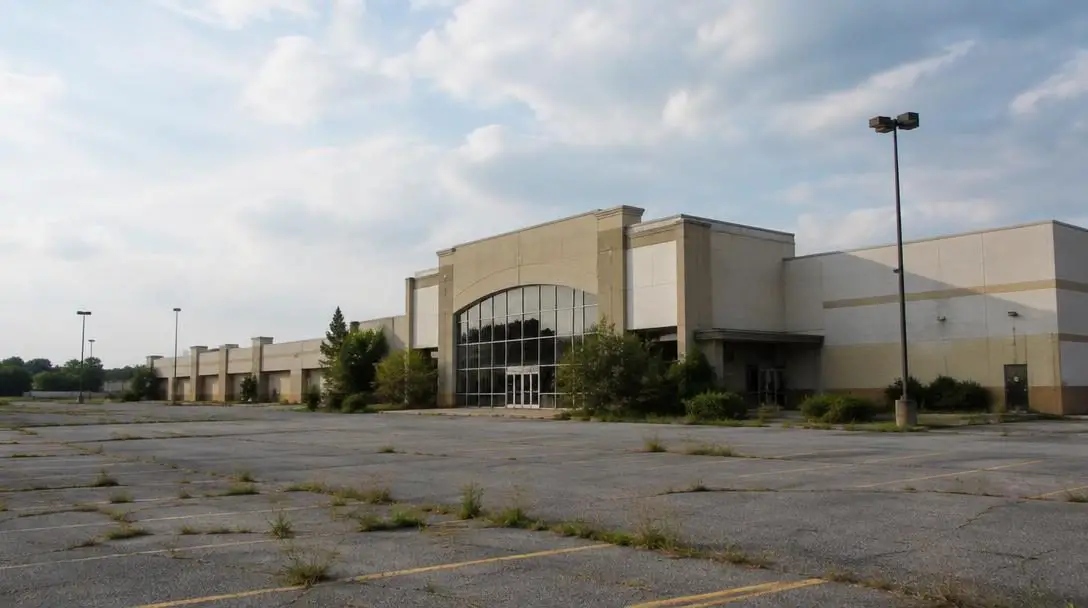
Corporate longevity is often mistaken for permanent stability. Enterprises can spend decades or even more than a century building sprawling store networks, amassing billions in revenue, and cementing themselves into consumer culture, only to unravel in a surprisingly compressed timeframe.
When retail powerhouses and storied investment firms shutter their doors, the fallout reshapes communities, shifts thousands of careers, and rewrites the competitive playbook. Examining the trajectories of these vanished commercial institutions reveals how fragile market dominance truly is when faced with digital disruption, shifts in consumer habits, and crushing debt loads.
Key takeaways
- Centuries or decades of institutional history cannot insulate a corporation from liquidity crunches or market irrelevance.
- Failing to recognize digital alternatives early—or dismissing emerging platforms—repeatedly leaves market leaders vulnerable to displacement.
- Aggressive debt taken on during corporate mergers strips businesses of the cash reserves needed to weather economic shifts.
- Big-box discount generalists can erode category specialists by using high-demand items as loss leaders.
At a glance: Five corporate downfalls
While their respective sectors varied from investment banking to children's entertainment, each company below built an immense footprint before facing bankruptcy and liquidation.
| Company | Founded | Peak Scale | Core Industry | Primary Downfall Catalysts |
|---|---|---|---|---|
| Lehman Brothers | 1850 (Montgomery, AL) | 26,000+ employees | Investment banking | Subprime mortgage exposure and liquidity collapse |
| Blockbuster | 1985 (Dallas, TX) | 84,000+ employees | Home entertainment rental | Refusal to embrace streaming and mail-order formats |
| Borders Bookstores | 1971 (Ann Arbor, MI) | 500+ locations | Book and music retail | Online retail competition and delayed digital integration |
| Toys R Us | Mid-20th century | 1,000+ stores; 60,000+ staff | Toy and youth retail | Discount supercenter pricing and e-commerce growth |
| Sports Authority | 1928 (Denver, CO) | Nearly 500 stores; 15,000+ staff | Sporting goods retail | Post-merger debt burden and physical retail shifts |
Five memorable companies that ceased operations
Each of the following five organizations established vast operations, became household names across the globe, and left behind critical lessons about the hazards of modern corporate stagnation.
Lehman Brothers

- Founded: 1850 in Montgomery, Alabama
- Peak workforce: More than 26,000 employees
- Downfall milestone: Chapter 11 bankruptcy filing in September 2008
- Core business: Global investment banking and financial services
Founded in 1850 in Montgomery, Alabama, Lehman Brothers spent over 150 years expanding into a global financial powerhouse. The institution navigated wars, industrial transformations, and historical economic depressions, eventually employing more than 26,000 people. Its long survival fostered an assumption that ancient institutional pedigree guaranteed resilience against systemic catastrophe.
That assumption ended abruptly during the financial crisis of 2007 and 2008. While the federal government orchestrated bailouts for several distressed financial firms, Lehman Brothers was left without a rescue package. Severely exposed to the subprime mortgage collapse, the bank reported a loss of nearly $3 billion in a single quarter. In September 2008, the firm filed for Chapter 11 bankruptcy protection, setting off a global panic and demonstrating that even century-old titans can fail when liquidity evaporates.
Blockbuster

- Founded: 1985 in Dallas, Texas
- Peak workforce: Over 84,000 employees worldwide
- Downfall milestone: Mass store liquidations; one remaining store in Bend, Oregon
- Core business: Home video and video game rentals
For millions who grew up in the late twentieth century, Blockbuster was an integral weekend ritual. Founded in Dallas, Texas in 1985, the chain expanded across suburbs nationwide. Customers eagerly wandered aisles of blue-and-yellow shelving, hunting down new VHS and DVD releases, picking up video games, and taking in the store's distinctive, memorable interior atmosphere.
Blockbuster's brick-and-mortar rental model relied on heavy customer foot traffic and rental fees. When digital alternatives emerged, leadership faltered. The company famously passed on an early opportunity to purchase Netflix for a modest sum, dismissing digital streaming and mail-order delivery models as unviable. Within years, consumer preferences rapidly shifted to online platforms. Blockbuster's business model collapsed, resulting in the loss of more than 84,000 jobs and the shuttering of virtually all retail locations, leaving behind a single surviving legacy store operating in Bend, Oregon.

Borders Bookstores

- Founded: 1971 in Ann Arbor, Michigan
- Peak footprint: More than 500 retail stores nationwide
- Downfall milestone: Bankruptcy and liquidation in the early 2010s
- Core business: Retail literature, music, and café culture
Starting as an independent operation in Ann Arbor, Michigan in 1971, Borders Bookstores grew into an expansive retail giant that redefined the suburban bookstore experience. Featuring comfortable seating, in-store espresso bars, and deep literary and musical inventories, Borders operated more than 500 locations across the country and competed directly with Barnes and Noble.
The company was still profitable as late as 2006, but underlying market dynamics were already moving against its physical superstore concept. Amazon, which had launched in the 1990s as a digital bookseller, steadily chipped away at physical book sales by offering larger catalogs and direct home delivery. Borders struggled to create a viable in-house digital alternative and remained saddled with expensive commercial retail leases. Just over four years after reporting healthy profits, Borders entered bankruptcy in the early 2010s. Its retail doors closed permanently, and its brand assets were purchased by longtime rival Barnes and Noble.
Toys R Us
- Founded: Mid-twentieth century
- Peak scale: Over 1,000 stores globally; 60,000+ employees
- Downfall milestone: Store closures began in 2017; final traditional stores shut by 2021
- Core business: Specialty toy and children's merchandise retail
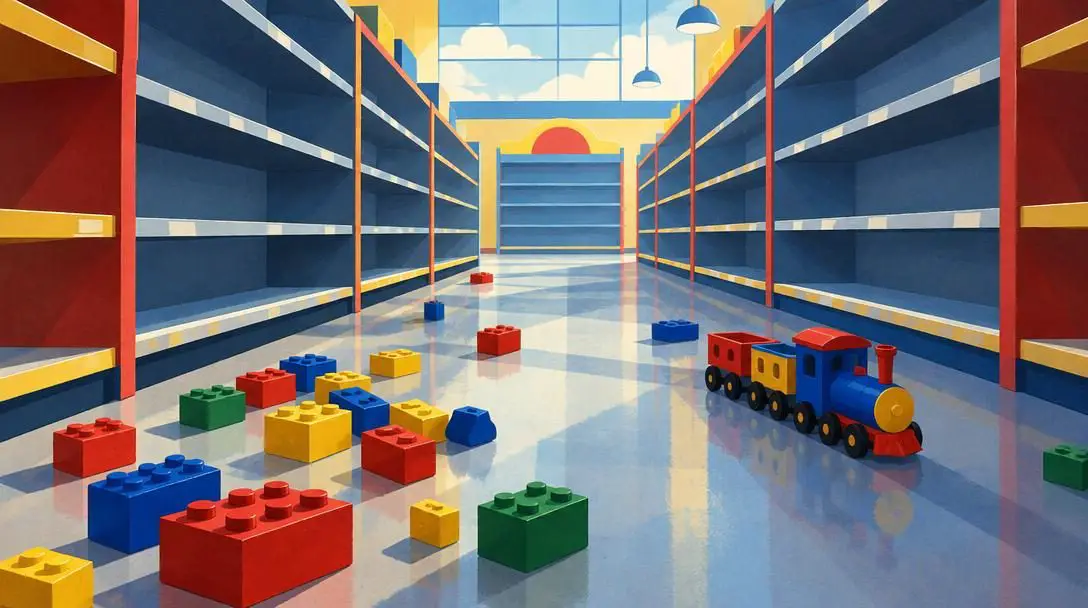
During the peak of its operations, Toys R Us represented an undisputed retail powerhouse in children's merchandise. For generations of shoppers, its cavernous aisles served as the primary destination for action figures, board games, video game consoles, and bicycles. Boasting more than 1,000 international locations and over 60,000 employees at its height, the brand held immense market leverage with toy manufacturers.
The chain's retail dominance began eroding in the 1990s. Mass-market discount retailers, particularly Walmart, converted existing stores into massive supercenters and began selling popular toys at razor-thin margins to lure parents inside for grocery purchases. Simultaneously, e-commerce platforms offered shoppers greater convenience without the trip to a physical shopping plaza. Squeezed by discounters and burdened by the economics of oversized retail properties, Toys R Us commenced nationwide store closures in 2017, and its final traditional storefronts closed by 2021.
Sports Authority
- Founded: 1928 in Denver, Colorado
- Peak footprint: Nearly 500 retail storefronts
- Downfall milestone: Liquidation and closure of all stores in the mid-2010s
- Core business: Team sports gear, athletic apparel, and outdoor equipment
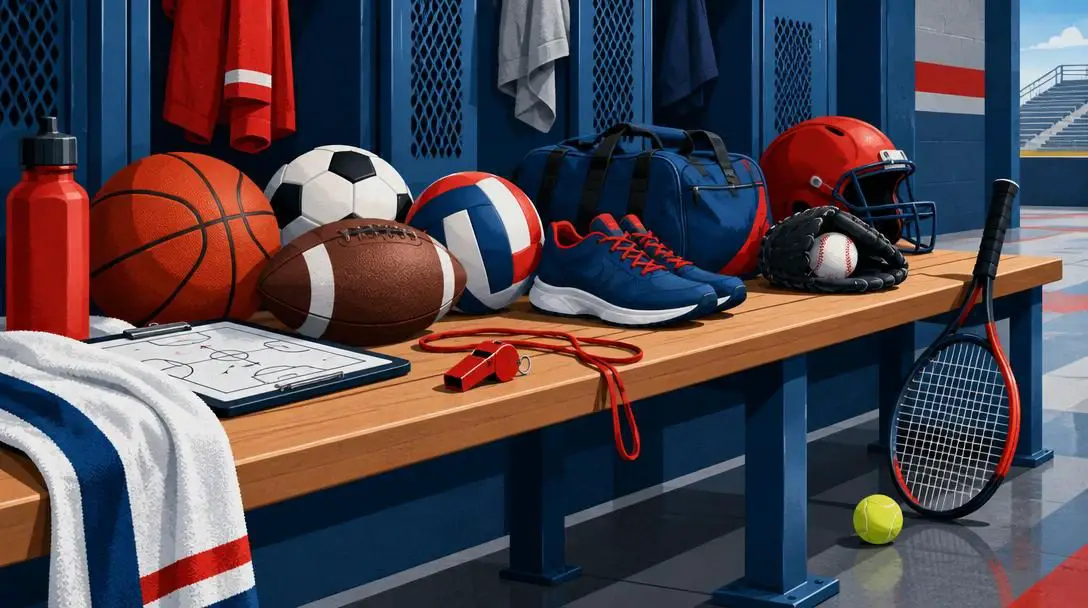
Athletic enthusiasm has remained consistently strong across the United States, yet enthusiasm alone was not enough to preserve Sports Authority. Founded in Denver, Colorado in 1928, the company built a strong presence in sporting goods before shifting its corporate headquarters to Florida during the 1980s. In the 1990s, the company was acquired by K-Mart, another retail brand that would experience serious operational distress.
Sports Authority subsequently executed a large merger with Gart Sports, but the transaction loaded the combined entity with heavy debt obligations. Servicing that debt limited the company's ability to renovate its aging physical properties or invest aggressively in modern digital storefronts. While competitors like Dick's Sporting Goods adapted and grew, Sports Authority buckled under its financial obligations. By the mid-2010s, the chain closed nearly 500 stores and released more than 15,000 workers.
Institutional lineage and household recognition offer no protection when operational flexibility is sacrificed to mounting debt and stagnant strategy.
Structural forces that topple corporate market leaders
Major corporate failures are rarely caused by an isolated misstep. Instead, insolvencies develop over years as broad external market pressures collide with inflexible internal business models.
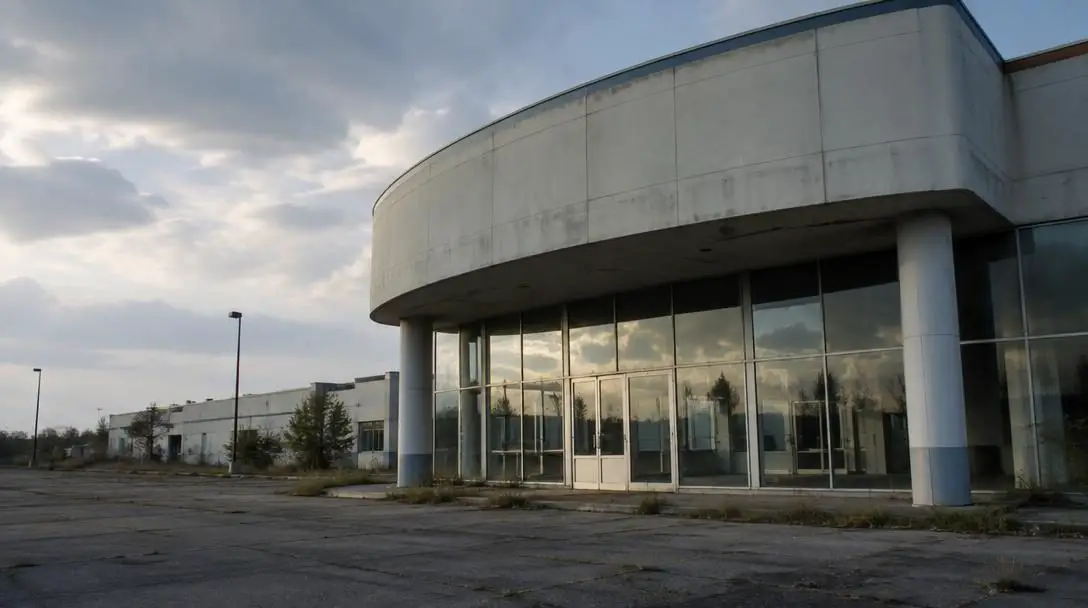
The foremost driver of collapse is technological disruption. When consumer behaviors shift toward internet platforms—whether ordering paperbacks online or streaming media directly into the living room—legacy retailers face severe operational friction. Both Blockbuster and Borders carried massive real estate expenses that were viable only when shoppers had no convenient alternative. Once digital distribution streamlined the checkout process, oversized physical footprints quickly turned into cost centers.
A second recurring threat is margin erosion from general discount retailers. Specialty retailers like Toys R Us built their historical profitability on retail markups across deep selections. When general discounters such as Walmart entered the market with supercenter formats, they used popular toys as loss leaders. By selling top toy lines at or near wholesale cost, discount supercenters drew family foot traffic to buy high-margin groceries and sundries, undercutting specialized retail outlets that lacked alternative product categories.
The five stages of corporate insolvency
A multi-billion-dollar enterprise does not vanish overnight. Operational decline typically follows five sequential stages as internal resources dry up and debt covenants are triggered.
- Margin compression: Disruptive market competitors or discounters force the incumbent to lower retail prices or accept shrinking sales volumes, reducing the gross profit earned per transaction while fixed costs remain unchanged.
- Cash flow deterioration: Operational expenses—including property leases, inventory purchase orders, payroll, and debt service—begin to outstrip incoming revenue, requiring the firm to consume its working capital reserves.
- Reduction in capital investment: Executive leadership initiates austerity measures to conserve cash, deferring essential digital upgrades, cutting store maintenance, and pausing employee development, which accelerates customer dissatisfaction.
- Debt covenant breaches: Declining operating earnings breach agreed-upon leverage thresholds established with commercial lenders, causing creditors to demand higher borrowing interest rates or collateral pledges.
- Formal insolvency and liquidation: Depleted of cash and unable to secure new financing or an outside buyer, the enterprise files for legal bankruptcy protections, resulting in debt restructuring, asset sales, or total operational liquidation.
Strategic mistakes that accelerated these corporate failures
Studying the downfalls of Lehman Brothers, Blockbuster, Borders, Toys R Us, and Sports Authority reveals recurring strategic errors that modern leadership teams frequently repeat.
- Dismissing new delivery models: Assuming an emergent distribution channel is a minor fad—such as Blockbuster undervaluing Netflix's early subscription model—allows nimble challengers to establish dominant customer bases before legacy firms respond.
- Outsourcing or deferring digital retail: Relying excessively on physical foot traffic while delaying proprietary e-commerce platforms ceded digital literature sales to Amazon, directly contributing to Borders' downfall.
- Accumulating merger-related liabilities: Using high financial leverage to acquire market share, as Sports Authority did through its Gart Sports merger, eliminates the cash cushions required during retail recessions.
- Overconcentrating capital in volatile assets: Pursuing rapid, short-term quarterly gains through illiquid instruments like subprime mortgages left Lehman Brothers defenseless against sudden systemic devaluations.
- Underestimating discount cross-subsidization: Assuming specialty brand depth alone will maintain customer loyalty when mass-market competitors sell key items at deep discounts, as experienced by Toys R Us.
How to identify early signs of corporate distress
Employees, vendors, and investors do not need access to private board meetings to see that an organization is struggling. Several external indicators signal operational danger well before a bankruptcy filing occurs.
- Noticeable physical and technical neglect: Look for deferred property maintenance, curtailed retail operating hours, delayed checkout technology, and widespread inventory shortages across primary product categories.
- Lengthening vendor payment terms: Companies running out of cash routinely stretch payment windows with suppliers from 30 days to 60, 90, or beyond, often prompting suppliers to demand cash on delivery.
- Refinancing crunches on the balance sheet: Enterprises carrying massive short-term debt during periods of rising interest rates face extreme rollover friction, as seen in Sports Authority's capitalization troubles.
- Executive turnover in finance and logistics: Abrupt departures among chief financial officers, controllers, and supply-chain leaders frequently indicate internal disputes over cash allocation and financial reporting.
Frequently asked questions
Are any Blockbuster locations still open today?
Yes. Although Blockbuster closed thousands of corporate and franchised locations worldwide following its collapse, a single independently owned franchised store continues to operate in Bend, Oregon.
Why was Lehman Brothers allowed to collapse when other institutions were bailed out?
During the 2007 and 2008 financial crisis, government officials and regulators determined that Lehman Brothers lacked the collateral required for a rescue, and no commercial buyer stepped forward to absorb its massive, illiquid subprime mortgage losses.
Who acquired the rights to the Borders Bookstores brand?
Following Borders' bankruptcy and total retail liquidation in the early 2010s, its intellectual property, customer lists, and brand assets were acquired by its long-standing competitor, Barnes and Noble.
Did online shopping directly cause Toys R Us to fail?
Online retail was a major factor, but not the only one. Aggressive toy discounting by big-box stores like Walmart, combined with shifting retail economics and heavy overhead from maintaining massive physical properties, contributed heavily to the chain's closure.
How did Dick's Sporting Goods survive while Sports Authority failed?
Unlike Sports Authority, which carried unmanageable debt from its merger with Gart Sports, competitors like Dick's Sporting Goods avoided crippling leverage, modernized store formats, and managed inventory and digital operations more conservatively.
The bottom line
The disappearance of household names like Lehman Brothers, Blockbuster, Borders Bookstores, Toys R Us, and Sports Authority demonstrates that size and historical legacy offer no immunity against changing market conditions. When consumer preferences shift, competitive discounters emerge, or balance sheets become overleveraged, even market leaders can unravel in just a few years.
The central takeaway for modern enterprises is clear: commercial durability requires ongoing adaptability. Prioritizing lean balance sheets, monitoring customer habits, embracing digital channels, and respecting new competitors are the essential defensive steps that keep established corporations from becoming historical case studies.