The Role of Innovation in Building A Competitive Business

In a commercial environment defined by rapid technological acceleration and shifting consumer expectations, resting on past success has become one of the most perilous choices an enterprise can make. Organizations no longer operate in static marketplaces where a single reliable product line or established operational routine can guarantee multi-decade dominance. Instead, market entry barriers continue to fall, consumer preferences evolve with unprecedented speed, and globalized supply networks expose traditional firms to agile competitors around the world.
To survive and thrive under these pressures, modern organizations must treat innovation not as an occasional brainstorming workshop, but as an essential, repeatable operational discipline. Innovation is broadly defined as the introduction of something new or different that creates meaningful value—whether by upgrading an existing product, streamlining a backend workflow, reinventing a customer service channel, or engineering an entirely original business model. By embedding continuous problem-solving into everyday operations, businesses can protect their market standing, unlock fresh revenue streams, and build lasting resilience against unforeseen market disruptions.
Key takeaways
- Innovation is the disciplined introduction of new or modified ideas, workflows, products, or models that generate tangible commercial value.
- Organizations can pursue four distinct types of innovation: product, process, business model, and service innovation.
- Sustained competitive advantage requires combining internal research and development with open employee suggestion channels and external stakeholder feedback.
- A corporate culture that penalizes experimental failure or prioritizes quarterly returns over long-term experimentation will stifle creative problem-solving.
- Long-term market leadership demands ongoing intellectual property protection and a balanced commitment across all operational areas, even during economic downturns.
The Four Primary Types of Organizational Innovation
A common misconception across corporate leadership is that innovation belongs exclusively to software developers, scientific laboratories, or gadget manufacturers. In reality, impactful innovation takes multiple forms across every level of an enterprise. By distinguishing between these different dimensions, leadership teams can identify operational bottlenecks, direct their capital effectively, and avoid over-concentrating resources on product design at the expense of operational efficiency.
| Innovation Type | Primary Focus | Key Business Benefit | Operational Scope |
|---|---|---|---|
| Product Innovation | Features, design, and functionality of offerings | Captures market attention and satisfies unmet customer needs | External customer-facing merchandise or software |
| Process Innovation | Internal workflows, logistics, and production methods | Reduces operating overhead, improves output quality, and eliminates waste | Internal manufacturing, back-office systems, and supply chains |
| Business Model Innovation | Revenue mechanisms, distribution channels, and value delivery | Unlocks entirely new commercial ecosystems and economic structures | Organizational architecture, monetization, and partnerships |
| Service Innovation | Customer journey, post-purchase care, and support accessibility | Enhances client retention, loyalty, and brand differentiation | Customer service teams, account management, and client onboarding |
Product Innovation
Product innovation centers on creating brand-new offerings or upgrading established products with enhanced features, refined aesthetics, superior materials, and elevated performance. Organizations turn to product innovation to resolve unaddressed customer pain points, capitalize on emerging technical capabilities, and establish clear differentiation on crowded retail shelves or digital marketplaces. When executed thoughtfully, product innovation directly increases a brand's pricing power, as consumers are routinely willing to pay a premium for solutions that solve their challenges more effectively than legacy options.
Process Innovation
While product innovation dictates what a company delivers to the world, process innovation dictates how the enterprise functions internally. This category involves pioneering new manufacturing workflows, modernizing supply chain networks, automating routine back-office tasks, or introducing leaner delivery protocols. Process innovation rarely makes the evening news, yet it often provides the strongest structural defense against rivals. By developing proprietary operational techniques that reduce production costs, minimize errors, and accelerate turnaround times, an enterprise can generate superior profit margins even when selling products at competitive market rates.
Business Model Innovation
Business model innovation requires leadership to reconsider the foundational architecture of how an enterprise captures, creates, and distributes value. Rather than simply modifying a product's exterior or tweaking an internal workflow, this discipline transforms the financial mechanics and strategic relationships that govern the company. A business model pivot can convert one-time transactional sales into predictable subscription programs, replace physical retail setups with direct-to-consumer networks, or connect fragmented markets through digital multi-sided platforms. Because business model innovation challenges standard industry assumptions, it frequently disrupts entire commercial sectors.
Service Innovation
In mature industries where core physical or digital products share nearly identical specifications, service innovation serves as the decisive battleground for customer loyalty. This approach focuses on enriching the consumer experience through responsive customer care, friction-free warranty workflows, comprehensive post-purchase support, and personalized assistance. By designing accessible, thoughtful post-sale environments, businesses transform single-purchase buyers into enthusiastic brand champions, shielding the company from price wars driven by commoditized rivals.
The Tangible Benefits of Building an Innovative Enterprise
Fostering an innovative organization requires continuous allocations of capital, executive attention, and team bandwidth. However, companies that make this ongoing investment reap substantial competitive rewards across their strategic and financial operations.

The first direct gain is increased efficiency and productivity. When teams are encouraged to evaluate their day-to-day operations critically, they eliminate redundant approvals, remove operational bottlenecks, and streamline manual workflows. Employees spend less time managing tedious friction and more time delivering high-value output, directly lowering unit costs and increasing throughput.
Simultaneously, innovation drives enhanced customer satisfaction and loyalty. Consumer demands are not static; expectations around speed, convenience, and usability climb relentlessly. By regularly introducing refreshed features, intuitive digital interfaces, and responsive support channels, organizations demonstrate that they respect their customers' time and evolving preferences.
Innovation is not a sporadic creative exercise, but a continuous discipline that safeguards an organization against rapid market obsolescence.
Beyond immediate operational metrics, innovative organizations enjoy a vastly better brand image and market reputation. Enterprises that consistently introduce thoughtful, reliable, and forward-looking solutions earn high public trust. They become industry benchmarks, making it easier to attract elite talent, command vendor respect, and earn favorable coverage across media outlets.
Finally, continuous experimentation facilitates the creation of new markets and revenue streams. By probing adjacent customer needs and testing novel business concepts, innovative firms discover underserved demographics and commercial white space. These discoveries open fresh top-line revenue opportunities, support premium pricing models, and establish a sustained competitive advantage that competitors struggle to dismantle.
Real-World Examples of Innovation in Action
Examining how industry leaders operationalize innovation illustrates how different strategic approaches function in practice. The following organizations transformed their respective fields by applying focused innovation to their products, logistics, and delivery models.
Apple Inc.

- Industry: Consumer technology and software
- Breakthrough Offerings: iPhone, iPad, and iOS operating system
- Core Strategic Impact: Redefined personal computing through hardware-software integration
Apple Inc. transformed modern personal computing and telecommunications by uniting precision industrial hardware design with an intuitive, user-friendly touch interface. Rather than treating hardware and software as separate commercial domains, the enterprise combined them into an integrated digital ecosystem through flagship products like the iPhone and iPad. This focus on seamless user experience, combined with an interconnected software and media architecture, established new expectations across the consumer electronics sector.
Tesla Inc.

- Industry: Automotive and clean energy
- Breakthrough Offerings: High-performance electric vehicles and autonomous software
- Core Strategic Impact: Accelerated the global transition toward electric transportation
Tesla Inc. challenged the entrenched standards of the automotive industry by demonstrating that electric transportation could outperform traditional internal combustion vehicles in acceleration, design, and software integration. By investing heavily in proprietary battery architectures, vertically integrated manufacturing, and continuous over-the-air software updates, the company proved that vehicles could improve after leaving the factory floor. This structural shift forced legacy automakers worldwide to dramatically accelerate their own electric vehicle roadmaps.
Amazon.com Inc.
- Industry: E-commerce, logistics, and retail
- Breakthrough Offerings: Multi-channel fulfillment and integrated digital marketplace
- Core Strategic Impact: Standardized rapid delivery and frictionless online purchasing
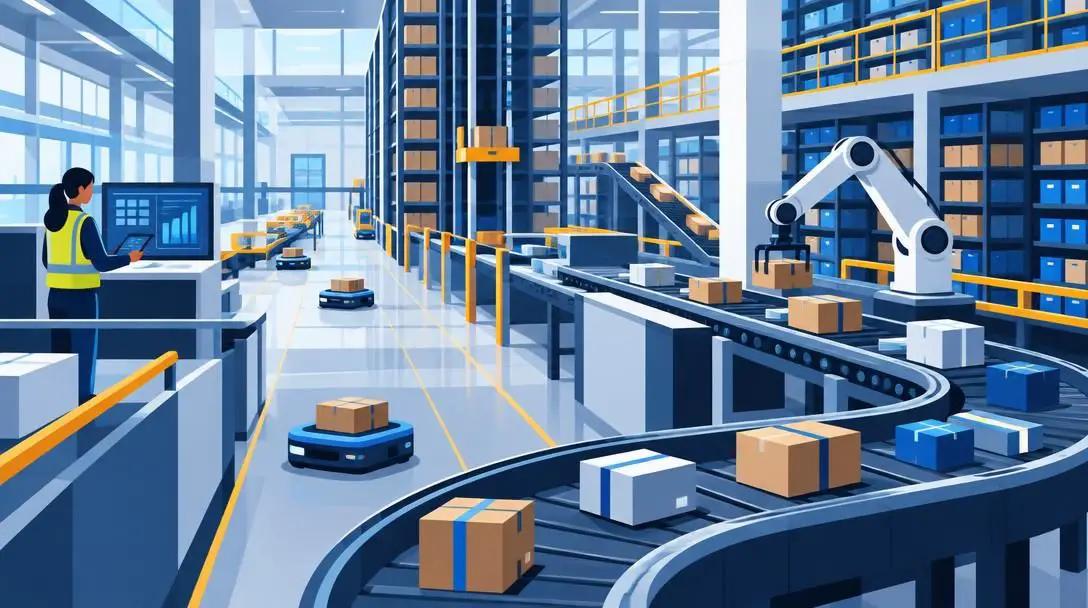
Amazon.com Inc. reengineered modern retail by reimagining the logistics network and digital shopping experience. By combining expansive warehousing operations, algorithmic inventory management, and multi-channel fulfillment systems, the company lowered fulfillment friction for both consumers and third-party merchants. Its ability to blend online browsing with reliable, rapid delivery infrastructure raised consumer standards for speed, convenience, and supply visibility across global commerce.

Netflix Inc.

- Industry: Entertainment and digital media
- Breakthrough Offerings: On-demand streaming video platform
- Core Strategic Impact: Disrupted physical media rentals and transformed global media distribution
Netflix Inc. reshaped the global entertainment sector through successive waves of business model and delivery innovation. Initially disrupting brick-and-mortar video rental chains via mail-order DVD subscriptions without late fees, the company executed a bold pivot into digital on-demand streaming. By replacing physical media with centralized data distribution and personalized recommendation systems, it changed how audiences consume visual media and compelled traditional broadcasting networks to rethink distribution entirely.
Common Pitfalls and Challenges in Executing Innovation
Despite the indisputable advantages of innovation, many organizations struggle to turn creative concepts into viable commercial outcomes. Recognizing internal barriers and strategic traps is essential for corporate survival.
- Deep-seated resistance to change: Established teams often become attached to legacy habits and tools. When managers prioritize familiarity over progress, internal friction can stall even the most promising modernization initiatives.
- Resource starvation and inadequate funding: Promising projects frequently collapse when leadership treats innovation as a side project rather than a formally budgeted operational expense with dedicated personnel.
- A punitive fear of failure: When corporate leadership penalizes employees for unsuccessful experiments, team members stop proposing unorthodox ideas, resulting in cultural stagnation.
- Short-term financial pressure: An excessive focus on quarterly financial reporting often pushes executives to eliminate exploratory research, prototyping, and long-term capability building in favor of fleeting operational savings.
- Disconnection from customer needs: Developing novel features solely for the sake of technological complexity leads to products that the market neither desires nor understands.
- Siloed organizational structures: When engineering, product design, marketing, and customer support operate in total isolation, critical market insights fail to cross departmental boundaries.
How to Cultivate a Sustainable Culture of Innovation
Establishing an innovative enterprise cannot be left to luck or spontaneous inspiration. Forward-thinking companies build systematic frameworks that capture ideas, allocate resources, test assumptions, and reward creative initiative.
- Establish a clear innovation strategy and vision: Articulate why innovation is critical to the organization's mission, identify the operational domains most in need of modernization, and secure explicit alignment across executive leadership, board members, and frontline workers.
- Form dedicated channels for idea collection: Introduce structured brainstorming sessions, digital suggestion portals, and cross-functional forums that give employees at all levels an accessible, judgment-free medium to voice operational improvements.
- Commit dedicated resources to development: Ring-fence dedicated capital, technical equipment, and working hours exclusively for experimental projects, shielding these vital resources from being consumed by daily operational crises.
- Incorporate regular stakeholder consultations: Maintain continuous interview loops, focus groups, and feedback mechanisms with customers, distribution partners, and suppliers to uncover practical problems that need solving.
- Implement iterative testing and prototyping: Build small-scale, cost-effective versions of prospective products or workflows to test core assumptions before committing extensive capital to full-scale rollouts.
- Recognize and celebrate creative contributions: Publicly praise individuals and teams who put forward inventive ideas, conduct rigorous tests, or pioneer internal improvements, regardless of whether every experiment yields immediate profit.
Sustaining Competitive Momentum Over Time
Building an innovative enterprise is not a finite project with an absolute completion date; it is a permanent organizational posture. To protect competitive advantages across decades, leadership must remain vigilant, particularly during periods of profitability and market stability.
During economic expansions, businesses are often tempted to become complacent, letting exploratory research languish while exploiting existing revenue streams. However, industry dynamics can shift suddenly due to technological leaps or external economic realignments. Maintaining steady investment in research, operational refinement, and talent acquisition safeguards the enterprise against sudden disruptions.
Furthermore, organizations must continuously secure their hard-earned advancements by establishing robust intellectual property protections. Securing patents, trademarks, and copyrights prevents imitators from copying proprietary software, mechanical designs, or brand identities, safeguarding the organization's return on its experimental capital.
Frequently asked questions
What is the basic definition of business innovation?
Business innovation is the introduction of a new or improved product, process, service, or business model that delivers measurable value to customers and enhances the organization's operational or commercial performance.
How does process innovation differ from product innovation?
Product innovation concentrates on improving or inventing goods and services that the organization sells to customers, whereas process innovation focuses on internal methods, manufacturing workflows, supply chains, and administrative systems to increase efficiency and reduce operational costs.
Why do so many corporate innovation programs fail?
Most innovation initiatives falter due to rigid corporate cultures that penalize failure, severe underfunding, an excessive focus on short-term quarterly targets, and poor communication between isolated internal departments.
Can smaller businesses innovate without massive R&D budgets?
Yes. Innovation is not restricted to expensive laboratory research. Smaller firms can innovate effectively through process improvements, tailored customer service models, and direct feedback loops with their client base.
Why is intellectual property protection important for innovation?
Protecting intellectual property through patents, trademarks, and copyrights prevents rival firms from duplicating proprietary designs, processes, and branding, ensuring the company can capture the commercial return on its development investments.
The bottom line
In an unpredictable global economy, the greatest risk an enterprise can take is to assume that yesterday's operating formulas will remain effective tomorrow. Innovation is the operational bridge between strategic ambition and commercial longevity. By establishing dedicated channels for creative ideas, balancing investments across products, processes, and service delivery, and protecting novel concepts through intellectual property rights, organizations can adapt to change, satisfy customer needs, and build a lasting competitive edge.