5 Rappers Who Retired Early

In the high-intensity landscape of popular hip-hop, an artist's career trajectory often mirrors that of a professional football player. While veteran musicians in other genres may tour comfortably into their fifties and sixties playing catalog favorites, hip-hop is intensely tied to youth culture, linguistic innovation, and grueling commercial schedules. Once unprecedented wealth arrives, or when connection with shifting teenage demographics begins to fray, maintaining that sharp competitive edge becomes increasingly difficult.
Because of these sustained pressures, numerous landmark rap figures have chosen to step away from recording before turning forty, with some even walking away prior to their thirtieth birthdays. Stepping back in their prime allows artists to protect their creative legacy, address profound personal callings, or escape the relentless demands of the music industry. These early departures have produced some of the most celebrated and debated retirements in entertainment history.
Key takeaways
- Hip-hop careers often parallel professional athletics, demanding rapid creative output and an intense connection to evolving youth trends.
- Early exits are driven by diverse factors, ranging from relentless release fatigue and family priorities to spiritual awakenings and sudden tragedy.
- Retirement in rap frequently functions as a renegotiation of an artist's public persona rather than a permanent ban on creative production.
- Navigating an early exit successfully requires resolving complex contractual obligations and establishing clear post-retirement goals.
At a glance: Five landmark early retirements
The following table summarizes the five artists who defined the concept of leaving the recording studio early, detailing their critical milestones and primary motivations for departing.
| Artist / Group | Key Career Milestone | Announced Departure | Primary Reason for Stepping Back |
|---|---|---|---|
| Jay-Z | Reasonable Doubt (1996) | 2003 (The Black Album) | Burnout from relentless recording schedules |
| Logic | Under Pressure (2014) | 2020 (No Pressure) | Prioritizing family life and fatherhood |
| Ma$e | Harlem World (1997) | 1999 | Pursuing a spiritual calling as a minister |
| Kid Cudi | Man on the Moon: The End of Day (2009) | 2022 (announced at age 38) | Creative fatigue and closing the moniker's chapter |
| Run DMC | Raising Hell (1986) | 2002 | The murder of founding member Jason Mizell |
Five standout hip-hop figures who stepped back early
While hundreds of performers cycle through the music industry every decade, these five acts left indelible marks on rap history before choosing or being forced to close their active chapters prematurely.
Jay-Z
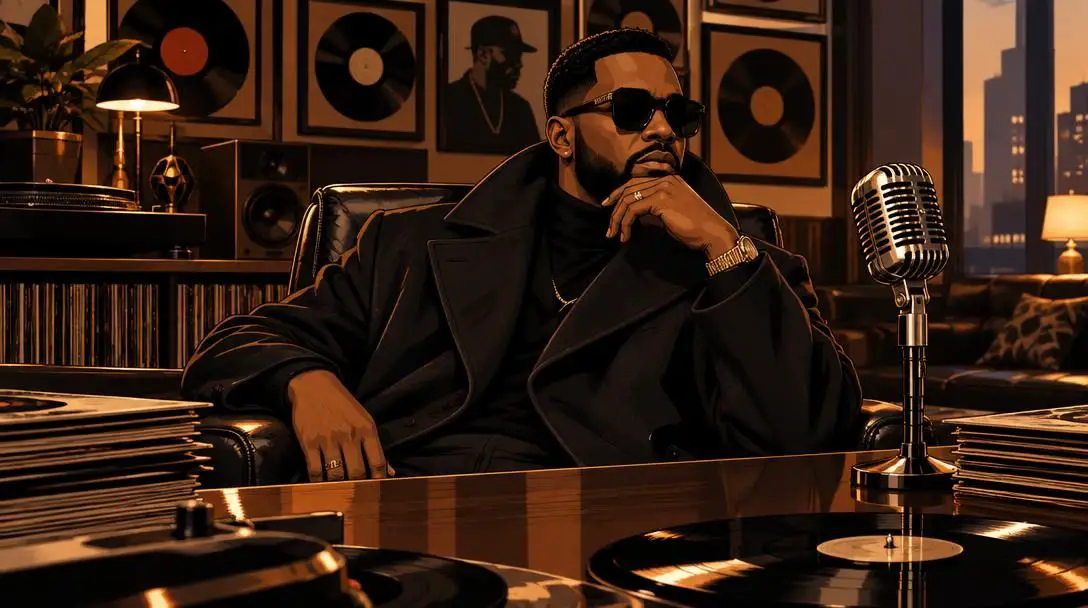
- Full name: Shawn Carter
- Debut album: Reasonable Doubt (1996)
- Key release: The Black Album (2003)
- Notable tracks: "Big Pimpin’", "Can I Get A…", "Hard Knock Life (Ghetto Anthem)", "99 Problems"
Shawn Carter built one of the most commercially formidable and critically acclaimed empires in modern music. After co-founding Roc-A-Fella Records, he dropped his classic 1996 debut Reasonable Doubt, kicking off a near-unprecedented pace of commercial dominant projects year after year. Anthems such as "Hard Knock Life (Ghetto Anthem)" and "99 Problems" solidified him as the preeminent voice of East Coast hip-hop.
Following the massive success of 2003's The Black Album, Carter formally announced his retirement from music. The primary catalyst was sheer creative fatigue: churning out high-stakes full-length projects on an annual basis had depleted his creative enthusiasm. While he noted from the beginning that making music might remain a component of his distant future, his initial step back proved that stepping away at the absolute apex of commercial viability could solidify an artist's legendary status.
Logic

- Full name: Robert Hall
- Debut mixtape: Young, Broke, & Infamous (2010)
- Breakthrough projects: Under Pressure, The Incredible True Story, Everybody
- Retirement announcement album: No Pressure (2020)
Robert Hall, known throughout the music world as Logic, gained a fiercely devoted following through rapid-fire lyricism, technical precision, and socially conscious themes. Beginning his journey with his 2010 mixtape Young, Broke, & Infamous, he spent three years building an independent base before signing a major deal with Def Jam Recordings. That partnership yielded commercial juggernauts like Under Pressure and the chart-topping conceptual records The Incredible True Story and Everybody.
In 2020, Logic declared that his album No Pressure would serve as his definitive retirement from the rap arena. The driving motivation was entirely personal: he wanted to escape the relentless pressure cooker of public commentary to dedicate his energy to starting a family and being an attentive father. Although he eventually delivered two additional albums through Def Jam to cleanly conclude his contractual relationship before his formal departure, his exit highlighted how family considerations can supersede industrial demands.

Ma$e

- Full name: Mason Betha
- Career breakthrough: 1996
- Debut solo album: Harlem World (1997)
- Iconic collaborations: "Mo’ Money, Mo’ Problems", "Can’t Nobody Hold Me Down", "Been Around the World"
Mason Betha possessed one of the smoothest, most effortless deliveries of the late-1990s pop-rap boom. His entry into elite music circles came in 1996 after connecting with Cudda Love, the road manager for the Notorious B.I.G. After an impromptu audition before Sean "Puff Daddy" Combs at a music convention, Betha secured an immediate recording contract with Bad Boy Records. He rapidly became the label's charismatic anchor, dominating MTV and radio airwaves on smash singles alongside Combs and the Notorious B.I.G.
Betha's 1997 debut album, Harlem World, raced to the peak of the charts and earned multi-platinum certification. Yet at the exact pinnacle of his commercial visibility in 1999, he stunned the entertainment industry by walking away entirely. Choosing faith over fame, Betha stepped out of the limelight to enter the ministry, demonstrating that deeply held personal convictions can instantly outweigh millions of dollars in future recording royalties.
Kid Cudi

- Full name: Scott Mescudi
- Hometown: Cleveland, Ohio
- Debut studio album: Man on the Moon: The End of Day (2009)
- Signature tracks: "Day ‘n’ Nite", "Pursuit of Happiness", "Erase Me"
Scott Mescudi revolutionized the emotional breadth of modern hip-hop by combining melodic vulnerability, atmospheric production, and candid depictions of mental health struggles. Raised in Cleveland, Ohio, Mescudi migrated to New York City to chase his creative dreams, gaining his initial viral foothold via MySpace. His groundbreaking 2009 debut, Man on the Moon: The End of Day, yielded massive crossover hits like "Day ‘n’ Nite" and "Pursuit of Happiness."
Though he stepped back from the peak mainstream spotlight during the early 2010s, Mescudi orchestrated a massive artistic resurgence in 2020 through high-profile collaborations with Eminem and Travis Scott. Despite this renewed commercial relevance, he announced his intention to retire at the age of thirty-eight. Remarking that he wanted to close the chapter on the Kid Cudi identity after having produced an enormous body of music, Mescudi proved that an exit can stem simply from satisfying one's creative vision.
Stepping away from the microphone is often less about quitting creativity and more about reclaiming one's life from the unrelenting machine of the entertainment industry.
Run DMC

- Founding members: Joseph Simmons, Darryl McDaniels, Jason Mizell
- Label signing: Profile Records (1983)
- Debut single: "It’s Like That" (1983)
- Defining album: Raising Hell (1986)
Run DMC stands as one of the most foundational and influential musical groups in American history. Assembled by Joseph Simmons, Darryl McDaniels, and Jason Mizell, the trio signed with Profile Records in 1983 and immediately challenged the musical status quo with their debut single "It’s Like That." Their aggressive delivery, stripped-down drum machine arrangements, and street-centric presentation propelled hip-hop from urban parks into suburban arenas, culminating in their historic best-selling project Raising Hell.
Unlike peers who retired due to fatigue or philosophical shifts, Run DMC's retirement was precipitated by unspeakable tragedy. In 2002, founding turntablist Jason Mizell was murdered inside a recording studio. Recognizing that the group's sonic architecture and brotherhood could never be replaced, Simmons and McDaniels permanently retired the group, bringing an iconic nineteen-year run to an honorable, grief-stricken conclusion.
The complex mechanisms behind rap retirements
A high-profile retirement in the music industry operates quite differently from an ordinary corporate resignation. Rather than giving standard notice and walking away immediately, artists must navigate several complex layers of creative, legal, and operational factors before stepping out of the spotlight.
The primary mechanism is the farewell milestone project. Hip-hop culture values legacy and self-mythologizing, prompting artists to frame their planned exits around ambitious concept records. Jay-Z established this blueprint with The Black Album, presenting the release as a definitive closing argument for his lyrical supremacy. Similarly, Logic utilized No Pressure as a structural bookend to his debut album, giving his audience a sense of thematic completion.

The secondary mechanism involves navigating intricate contractual obligations. A recording artist cannot simply abandon active duty if they remain legally bound to delivery quotas. Logic's departure demonstrated this balance: after making his public declaration, he still fulfilled his business commitments by delivering two subsequent projects through Def Jam. Resolving these corporate relationships cleanly ensures that artists retain control over their past royalties and avoid prolonged legal entanglements.
Finally, there is the separation of the artistic moniker from the private individual. Performers frequently find themselves trapped inside a persona created in their late teens or early twenties. Kid Cudi's retirement comments illustrated this dynamic perfectly when he spoke of closing the book specifically on his stage identity. Retiring the stage name provides emotional closure without necessarily preventing the human being behind it from writing, producing, or pursuing alternative artistic avenues later.
How to navigate an early professional transition
The strategic lessons learned from high-profile rap retirements apply far beyond recording studios. Whether stepping away from professional athletics, intense corporate roles, or entrepreneurial ventures, executing a clean departure requires methodical forethought.
- Map all legal and financial entanglements: Examine every ongoing contract, royalty split, and corporate agreement. Just as Logic worked through remaining distribution terms with Def Jam, professionals must settle non-compete clauses, stock options, and operational obligations before walking out the door.
- Establish a distinct forward destination: Exiting without a purpose often leads to disillusionment and restless regret. Ma$e successfully transitioned because his exit was directed toward a tangible calling in ministry rather than an ambiguous desire to do nothing.
- Prioritize internal motives over public validation: Industry peers and casual observers will always demand more output if you are commercially viable. Choosing health, marriage, or fatherhood requires prioritizing internal balance over the external applause of an audience.
- Communicate the exit with honest clarity: Whether citing creative exhaustion or a tragic shift in team dynamics, transparent public communication prevents unfounded rumors and preserves the integrity of your hard-earned body of work.
Common mistakes when stepping away from the spotlight
Examining early career departures across creative disciplines highlights several recurring traps that can undermine an otherwise brilliant legacy:
- Making absolute, irreversible claims: Promising that you will never touch your craft again often creates public embarrassment if creative inspiration strikes later. Jay-Z maintained credibility by leaving the door open to future music even while pausing his intense album-cycle schedule.
- Failing to resolve distribution and partnership contracts: Rushing an exit without legally formalizing the dissolution of business entities can spawn decades of royalty freezes and federal litigation.
- Underestimating identity loss: Individuals who invest decades into building a recognizable brand frequently experience depression when the daily routine stops. Without grounding ventures like faith, family, or philanthropy, the void can feel overwhelming.
- Ignoring shifts in the surrounding landscape: Run DMC understood that certain events, like the tragic loss of Jason Mizell, permanently close a chapter. Attempting to artificially replace an irreplaceable component damages the original magic of the work.
Cultural implications and the future of rap careers
The dynamic between aging artists and the hip-hop genre will continue to shift as technology transforms music discovery. When Kid Cudi first emerged, platforms like MySpace altered how independent musicians bypassed traditional corporate gatekeepers to reach dedicated listeners. Today, newer algorithmic platforms drive consumer habits even faster, accelerating the pace at which younger listeners seek new voices.
Furthermore, the physical reality of touring versus the perpetual availability of digital catalogs means an artist never truly disappears. Even when figures like Ma$e or Run DMC cease recording new material, their landmark albums remain instantly accessible worldwide. This ensures that an early exit preserves the artist's legacy in amber: their catalog remains untarnished by late-career creative decline, allowing future generations to discover their discography at the height of its power.
Frequently asked questions
Why do rappers tend to retire earlier than rock or country musicians?
Hip-hop is uniquely centered on youth slang, relentless stylistic evolution, and fast-paced studio cycles. Maintaining that level of cultural immediacy becomes difficult as artists age, prompting many to step aside rather than risk creative dilution.
Did Jay-Z stay retired after releasing The Black Album in 2003?
No. While Shawn Carter stepped back from his grueling annual release routine to focus on corporate ventures, he maintained from the start that music could remain in his future, eventually returning to the studio down the road.
Why did Ma$e abruptly quit Bad Boy Records at the height of his fame?
In 1999, right after his debut album Harlem World achieved multi-platinum chart success, Ma$e experienced a profound religious awakening and left the entertainment business to pursue his faith and become a Christian minister.
What caused the legendary group Run DMC to formally disband?
Run DMC announced their retirement in 2002 following the murder of their founding DJ and producer, Jason Mizell (Jam Master Jay), inside a recording studio, agreeing that the group could not continue without him.
Can a recording artist still release music after announcing their retirement?
Yes. As demonstrated by Logic, artists often have outstanding multi-album contractual agreements with record labels that must be fulfilled before their departure is legally recognized and complete.
The bottom line
Walking away from a wildly lucrative career in hip-hop requires immense courage, discipline, and personal clarity. Whether driven by creative exhaustion like Jay-Z, family devotion like Logic, religious awakening like Ma$e, creative closure like Kid Cudi, or unbearable tragedy like Run DMC, these performers proved that an artist's personal well-being matters far more than corporate expectations. By stepping away on their own terms, they protected their artistic reputations and set the standard for what it means to exit gracefully.