5 Retro Games That Changed The World
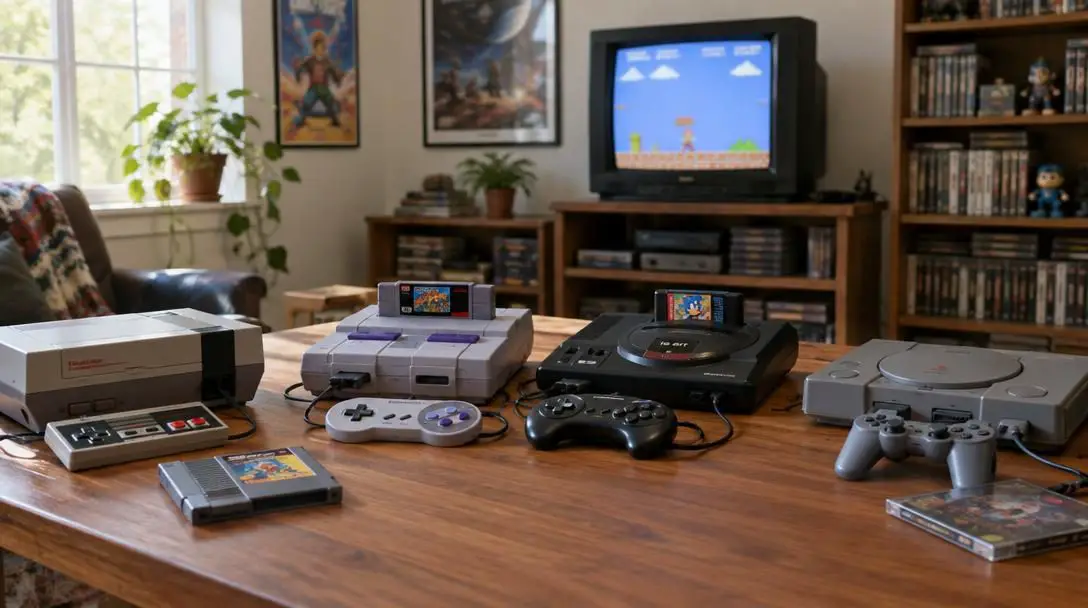
Video games were once widely regarded as a short-lived novelty, with skeptics dismissing interactive digital play as a passing fad destined to fade alongside transient mechanical arcade amusements. Instead, the medium underwent an astonishing creative and economic evolution, transforming into an entertainment powerhouse that generates roughly $200 billion in revenue each year across console, mobile, and PC ecosystems.
This immense cultural and financial status was not achieved overnight. It was built through decades of technical experimentation, daring game design, and unexpected commercial triumphs that repeatedly proved the public's boundless appetite for virtual play. By examining the history of interactive media, five groundbreaking titles emerge as the definitive architects of modern gaming, each leaving a lasting imprint on consumer culture, hardware engineering, and narrative design.
Key takeaways
- Video games have expanded from a minor electronic hobby into a global industry that generates around $200 billion annually across personal computers, home consoles, and mobile devices.
- Groundbreaking early releases established essential commercial pipelines, taking digital gameplay out of public arcades and introducing dedicated hardware to domestic living rooms.
- Seminal masterworks pulled the wider marketplace out of catastrophic economic downturns by proving that inventive mechanics and tight player controls could revive consumer faith.
- Technological breakthroughs in game presentation, from dynamic side-scrolling to true first-person perspectives and open-ended urban navigation, formed the architectural blueprint for modern commercial blockbusters.
At a glance: Five landmark games that transformed entertainment
| Game | Initial Release | Original Platform | Key Creators or Publishers | Industry Impact |
|---|---|---|---|---|
| Pong | 1972 | Arcade cabinet | Atari (Allan Alcorn, Nolan Bushnell) | Proved commercial viability of coin-operated video games and pioneered the home console market through Sears. |
| Space Invaders | 1978 | Arcade cabinet | Tomohiro Nishikado | Introduced competitive high-score chasing, generated billions in revenue, and made arcades a reliable business sector. |
| Super Mario Bros. | 1985 | Nintendo Entertainment System (NES) | Nintendo | Revitalized the home console market after the 1983 crash and established standard conventions for side-scrolling platformers. |
| Wolfenstein 3D | 1992 | PC | id Software, Apogee Software, Formgen | Established the core mechanics of the first-person shooter genre and proved the commercial power of 3D PC action. |
| Grand Theft Auto | 1997 | PC, PlayStation | Rockstar (published across platforms) | Demonstrated the massive commercial viability of open-ended, mature game worlds despite heavy mainstream controversy. |
The five groundbreaking titles that reshaped modern play
Every era of interactive software has had its share of popular releases, but only a handful of titles managed to shatter technical ceilings, disrupt retail expectations, and permanently alter human leisure habits. These five seminal games fundamentally shifted how society perceived digital entertainment.
Pong
- Initial release year: 1972
- Key figures: Allan Alcorn, Nolan Bushnell
- Original hardware: Arcade cabinet
- Major home variant: Home Pong (sold via Sears)
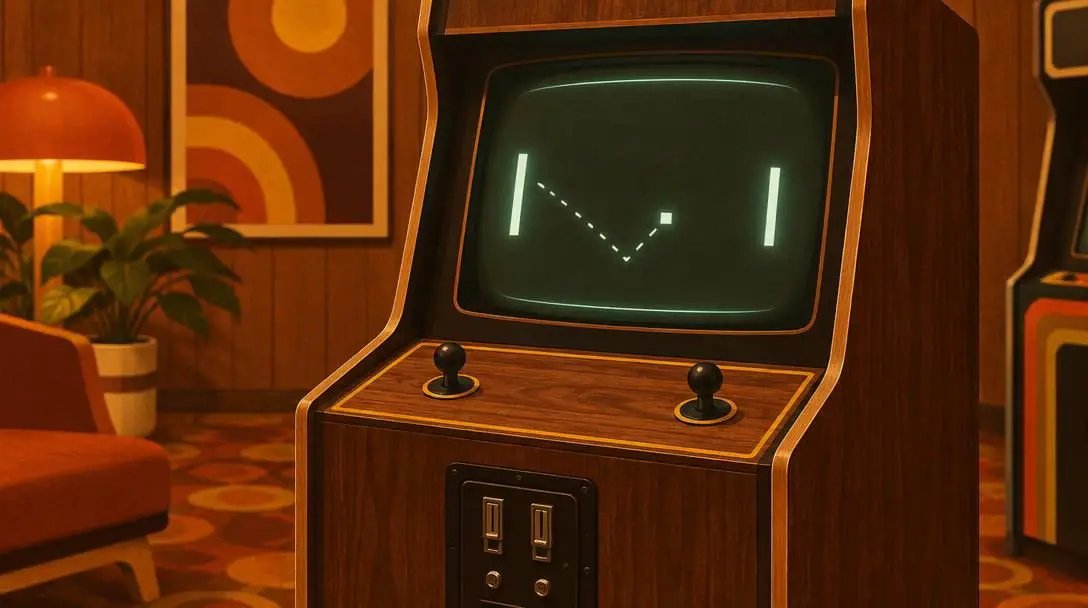
The journey of modern gaming began in earnest with Pong, an unpretentious electronic ping-pong simulation released in 1972. The project originated when Atari co-founder Nolan Bushnell assigned newly hired engineer Allan Alcorn a simple training exercise: create an uncomplicated game featuring two paddles, a bouncing ball, and score counters. Alcorn executed the task with brilliant simplicity, adding responsive sound effects and paddle angle physics that made the gameplay loop immediately addictive.
Recognizing the undeniable appeal of the finished prototype, Bushnell and the Atari team pushed the coin-operated cabinet into commercial production. The game quickly captured public imagination, drawing massive crowds eager to deposit their spare coins. Capitalizing on this runaway success, Atari partnered with retail giant Sears to distribute a dedicated home version known as Home Pong. This pivotal distribution move welcomed digital entertainment into private households, demonstrating that the family television could serve as an interactive playground rather than merely a passive receiver of broadcast signals.
Space Invaders
- Initial release year: 1978
- Lead creator: Tomohiro Nishikado
- Gameplay style: Fixed shooter
- Commercial footprint: Billions of dollars in global arcade revenue
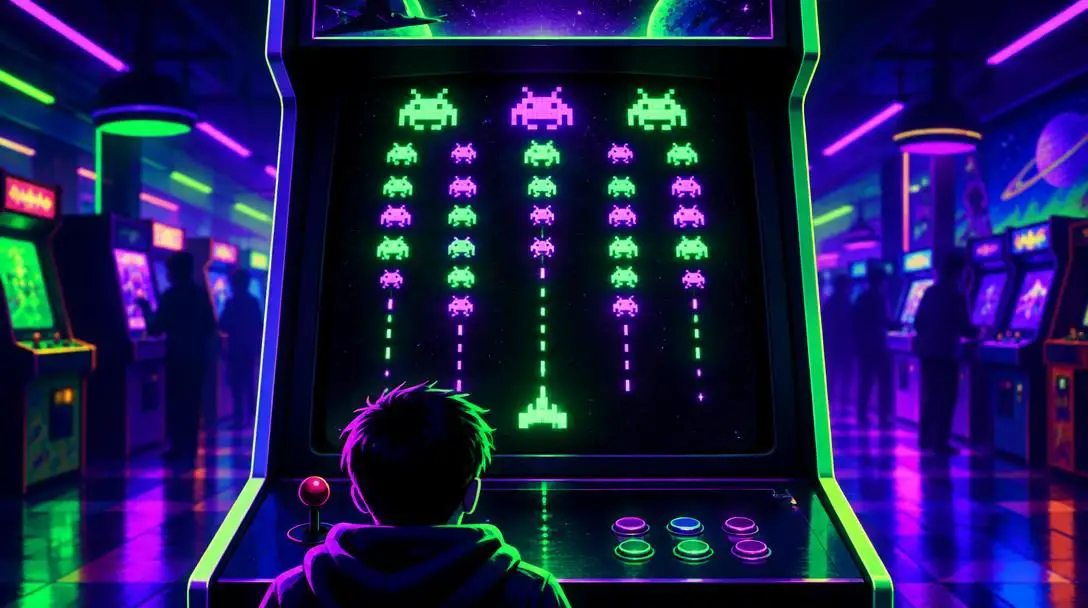
By the late 1970s, public interest in basic sports simulations was leveling off, leaving room for a new creative wave. In 1978, Japanese game designer Tomohiro Nishikado observed the burgeoning popularity of shooting games in Western markets and sought to create a more intense, mechanically demanding alternative. The result was Space Invaders, a tension-packed arcade title where the player commands a mobile laser cannon beneath descending columns of extraterrestrial attackers.
As players destroyed incoming UFOs and advancing alien ranks, the remaining invaders accelerated their descent, introducing an organic difficulty curve that set player hearts racing. The addition of a clear, persistent scoring system sparked relentless social competition across North America and Japan. Arcade halls and public gathering spots saw endless streams of quarters pumped into coin slots at all hours of the day. The phenomenon generated billions of dollars in revenue, ultimately convincing manufacturers and entrepreneurs worldwide that arcade gaming was not a temporary novelty, but a durable, highly lucrative commercial industry.
Super Mario Bros.
- Initial release year: 1985
- Target platform: Nintendo Entertainment System (NES)
- Direct predecessor: Mario Bros. (1983 arcade release)
- Industry milestone: Rebuilt the North American home console market after the 1983 crash
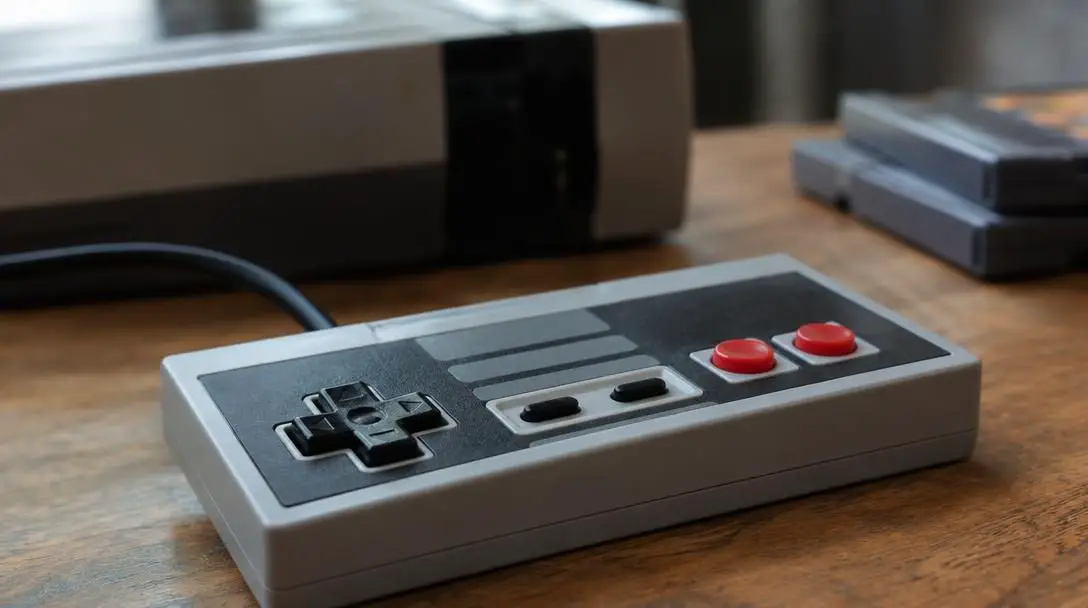
The global video game market faced an existential crisis during the catastrophic video game crash of 1983, a commercial collapse fueled by a glut of low-quality software and an erosion of consumer confidence. The medium's miraculous rescue came in 1985 with the arrival of Super Mario Bros. on the Nintendo Entertainment System. Building upon the foundational characters introduced in Nintendo's 1983 Japanese arcade release, Mario Bros., this ambitious home release redefined player expectations of depth, visual variety, and controller responsiveness.
Rather than confining action to a single static screen, the game introduced players to a lush, sprawling world that scrolled smoothly from left to right across distinct subterranean, oceanic, and castle environments. Its vibrant artistic palette and exceptionally tight jumping mechanics restored consumer trust in home video game hardware. Furthermore, its massive commercial success established a golden age for side-scrolling platformers, paving the path for the legendary 16-bit era that later produced enduring masterpieces such as Super Metroid, Street Fighter II, and Sonic the Hedgehog.
Super Mario Bros. proved that precision design and boundless imagination could rescue a fractured market and turn a home console into an essential domestic appliance.
Wolfenstein 3D
- Initial release year: 1992
- Developer: id Software
- Publishers: Apogee Software, Formgen
- Sales performance: Over a quarter million copies sold within three years
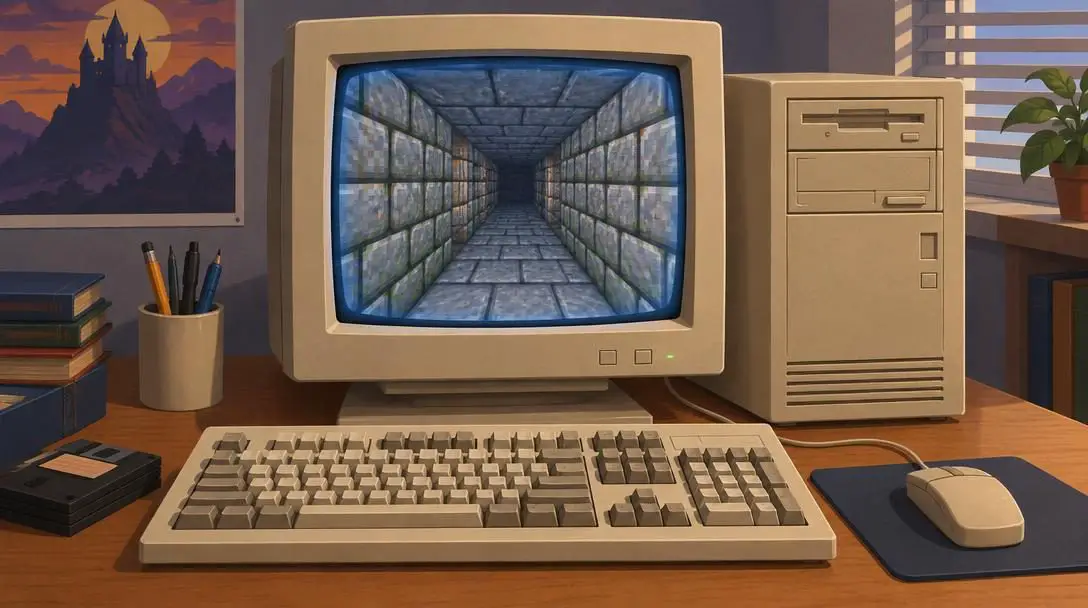
During the early 1990s, home computer gaming was largely defined by top-down adventure titles, text parsers, and two-dimensional side-scrollers. That paradigm shattered in 1992 when developer id Software unleashed Wolfenstein 3D, a project that served as the third installment within the broader Wolfenstein lineage. Published by Apogee Software and Formgen, the title earned its historical reputation as the undisputed "grandfather of 3D shooters."
By placing the player directly behind the sights of a firearm inside a rapid-moving labyrinth, Wolfenstein 3D delivered a visceral, action-packed, and violent gameplay experience entirely unprecedented in mainstream consumer software. It became the best-selling PC title of 1992 and maintained exceptional momentum, selling over a quarter million copies within its first three years on the market. By proving the technical viability and commercial magnetism of first-person perspective rendering, the game laid the technical and design groundwork for historic sequels and spiritual successors such as Doom, GoldenEye 007, and the modern multi-billion-dollar Call of Duty franchise.
Grand Theft Auto

- Initial release year: 1997
- Original platforms: PC, PlayStation (followed by Game Boy Color in 1999)
- Genre: Action / role-playing
- Franchise pinnacle: Grand Theft Auto V (over $6 billion in worldwide revenue)
When the original Grand Theft Auto debuted in 1997 for PC and Sony's PlayStation—later making its way to the Game Boy Color in 1999—it caused an immediate cultural firestorm. Combining top-down vehicle driving, urban exploration, and open-ended criminal missions, the game threw out the traditional, linear objective structures that had governed action games for two decades. Players were given the freedom to complete jobs, evade law enforcement, or simply explore a living city grid at their own leisure.
Even prior to its official launch, the title encountered fierce resistance from moral watchdogs and concerned parents who raised alarm over the escalation of graphic violence in consumer entertainment. Yet, this intense pushback only deepened public curiosity. The game became a commercial blockbuster, validating an enormous consumer demand for mature, player-driven sandbox environments. This early success established an entertainment empire; decades later, the franchise's fifth mainline installment, Grand Theft Auto V, generated over $6 billion in revenue for Rockstar, making it one of the most profitable individual entertainment releases in human history.
How to study and experience vintage gaming milestones
Engaging with historic video games offers valuable lessons in creative economy, hardware optimization, and the evolution of human-computer interaction. Whether you are an aspiring game developer, an academic researcher, or a curious player, approaching historical software with a structured methodology yields the deepest appreciation for these masterworks.
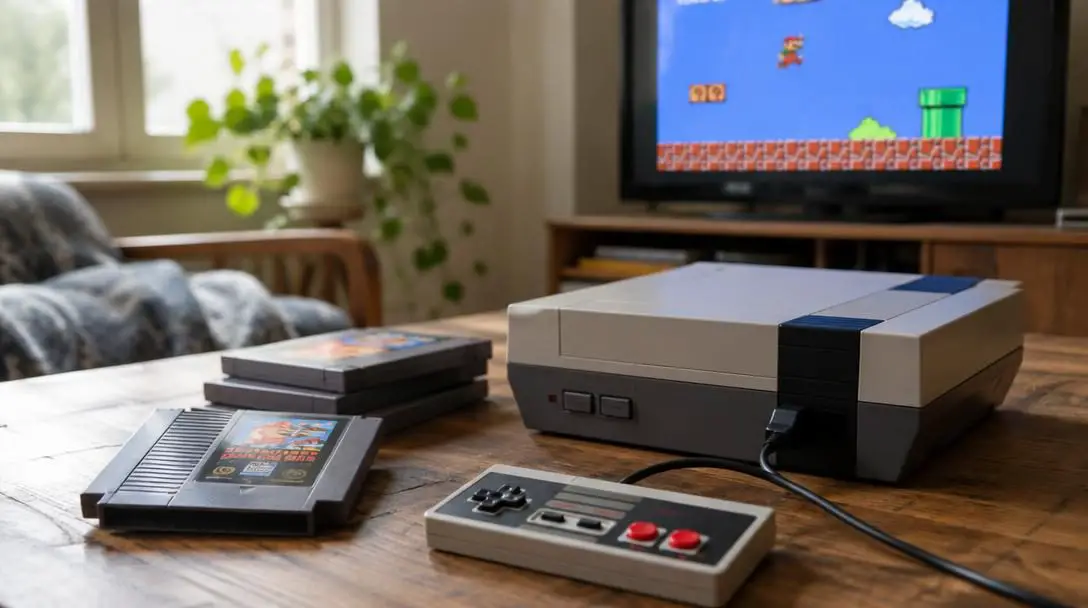
- Trace historical releases chronologically: Begin your exploration with the early 1970s analog-digital hybrids to understand early mechanical limits before progressing toward 1980s console cartridges, 1990s PC shareware releases, and late-90s open-world experiments.
- Evaluate hardware constraints alongside user input: Examine how physical controls shaped game complexity, noting the historical shift from single-axis paddle knobs on early coin-op machines to directional arcade joysticks, standard console gamepads, and dual-analog or mouse-and-keyboard setups.
- Analyze changing mechanical objectives: Contrast the quick, reflex-oriented, high-score loops designed to extract arcade tokens with the expansive narrative arcs, intricate inventories, and freedom of choice found in later home computer and console titles.
- Compare foundational releases with contemporary sequels: Place early milestone releases side-by-side with their modern descendants to see how rudimentary concepts—such as corridor shooting or open-city navigation—evolved into modern interactive spectacles.
- Track shifting business distribution models: Investigate how industry monetization transitioned from quarter-fed arcade machines to mail-order physical cartridges, shareware floppy disks, and eventually massive digital retail networks.
Common historical misconceptions to avoid
Looking back at primitive technology from a modern vantage point frequently gives rise to flawed historical narratives. Researchers and casual enthusiasts should steer clear of several prevalent misunderstandings:
- Assuming early games were merely academic experiments: While computer labs birthed early software experiments, releases like Pong and Space Invaders were highly sophisticated commercial ventures engineered specifically to generate substantial cash flow.
- Believing the gaming sector enjoyed uninterrupted growth: The video game business did not follow a smooth, continuous upward trajectory. The disastrous crash of 1983 wiped out scores of publishers and threatened the entire domestic console market before the NES restored stability.
- Overlooking the pioneers of mainstream genres: It is easy to credit modern franchises with inventing popular gameplay loops, but first-person giants like Call of Duty and Doom directly inherited their core structural framework from the breakthrough design of Wolfenstein 3D.
- Presuming mainstream controversy ruins commercial prospects: Public outcries and parental anxieties over violence did not suppress titles like Grand Theft Auto; instead, the surrounding moral panic fueled widespread curiosity and helped establish a record-breaking cultural brand.
- Treating legendary intellectual properties as sudden anomalies: Iconic franchises rarely materialized out of thin air. For instance, the monumental world of Super Mario Bros. grew out of lessons Nintendo learned from its earlier 1983 arcade release, Mario Bros.
Lasting legacies and future considerations
The lessons etched into interactive entertainment by these five pioneer titles continue to govern modern software development and platform architecture. The rapid-fire gratification and retention loops originally devised for coin-operated cabinets like Space Invaders remain the cornerstone of contemporary mobile games and free-to-play ecosystems.
At the same time, the preservation of early interactive media presents an urgent challenge for cultural institutions. As physical arcade boards degrade, floppy disks succumb to magnetic decay, and legacy console components wear out, digital historians must devise dependable emulation and archival frameworks to ensure future generations can directly experience foundational works like Wolfenstein 3D and the original Pong.
Finally, the sheer commercial trajectory of modern gaming owes its existence to these creative gambles. With modern blockbusters generating billions of dollars in revenue—surpassing the box-office hauls of major Hollywood movie studios—the video game medium has definitively outgrown its initial characterization as a transient hobby. The medium's sustained dominance demonstrates that inventive mechanics, intuitive player agency, and bold worldbuilding possess permanent cultural staying power.
Frequently asked questions
How did Pong transition from public arcades to domestic households?
Following the tremendous success of the initial 1972 arcade cabinet, Atari developed a dedicated consumer hardware unit called Home Pong. By securing an exclusive retail partnership with department store giant Sears, Atari brought interactive tennis gameplay directly into American living rooms, establishing the blueprint for the consumer home video game market.
Why was Space Invaders so important to the commercial viability of video games?
Space Invaders introduced a compelling, competitive high-score dynamic that motivated players across Japan and North America to pump countless quarters into arcade machines. The title generated billions of dollars in worldwide revenue, proving to international manufacturers that video games were a dependable, highly profitable business model.
How did Super Mario Bros. help save the video game industry in 1985?
The North American home console market experienced a devastating crash in 1983 caused by low-quality software and saturated store shelves. The 1985 release of Super Mario Bros. on the Nintendo Entertainment System restored player confidence by introducing polished side-scrolling mechanics, rich visual variety, and flawless controls that outclassed competing home entertainment products.
Why is Wolfenstein 3D considered the grandfather of 3D shooters?
Released in 1992 by id Software, Wolfenstein 3D popularized the fast-paced, first-person perspective on home personal computers. It presented an intense, violent gameplay loop that had never been seen before in mainstream PC gaming, directly inspiring subsequent industry blockbusters such as Doom, GoldenEye 007, and Call of Duty.
Did moral controversy harm the commercial launch of Grand Theft Auto?
No. Although the original 1997 release sparked intense public concern and parental pushback regarding interactive violence, the media attention actually heightened consumer intrigue. The title became an enormous sales hit across PC and PlayStation, laying the groundwork for a franchise whose fifth installment eventually earned more than $6 billion.
The bottom line
The modern video game landscape—spanning international e-sports tournaments, cinematic digital narratives, and massive multi-billion-dollar game franchises—stands upon the structural shoulders of a few daring electronic experiments. From Allan Alcorn's humble paddle mechanics in Pong to the open-world criminality of Grand Theft Auto, each of these five titles solved a critical technical or commercial riddle of its time.
By transforming raw silicon chips into arenas of emotional tension, social competition, and boundless exploration, these foundational games elevated interactive software from a passing arcade novelty into the defining cultural art form of the twenty-first century.