5 Simple Psychological Principles for Healthy Parenting
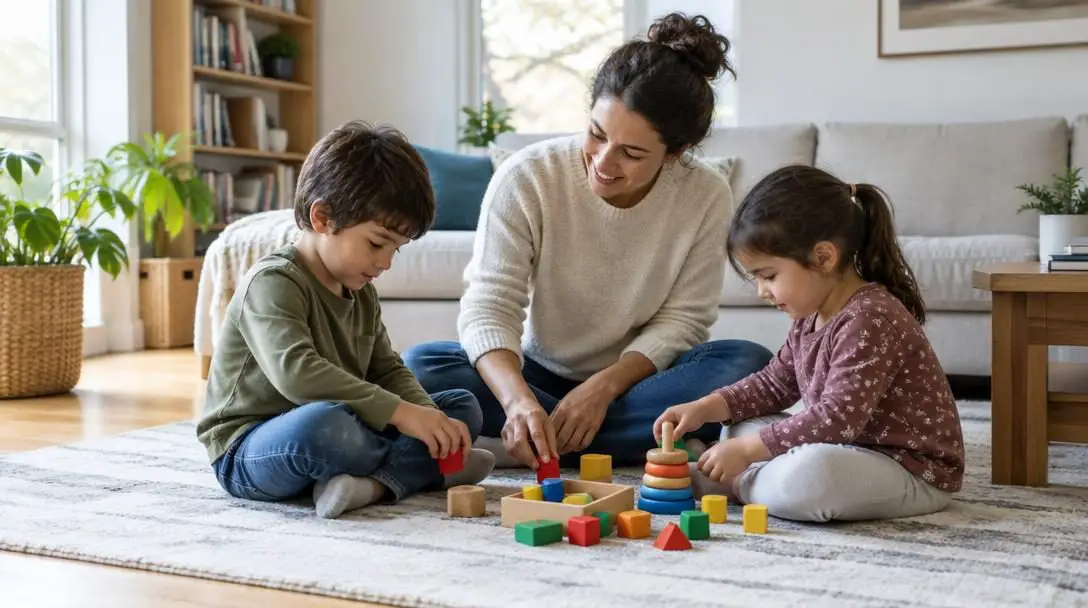
Raising children is an evolving journey marked by continuous personal discovery, adaptation, and reflection. No caregiver enters parenthood equipped with a flawless manual, nor does intuition alone provide all the answers needed to navigate the complexities of raising confident, emotionally healthy human beings. By anchoring daily interactions in basic psychological principles, caregivers can construct a stable domestic framework that promotes mutual trust, security, and lifelong resilience.
The daily habits, communication patterns, and physical environments established in the home directly shape a child's understanding of their own worth and their place in the broader world. When caregivers mindfully integrate five foundational pillars—supportive environments, consistent praise, proactive conversation, unconditional respect, and balanced assertiveness—they provide the structural and emotional safety net children need to develop into capable, independent adults.
Key takeaways
- Intellectual and creative development depends on accessible resources rather than expensive or luxurious playthings.
- Intentional validation through praise builds an internal reservoir of self-esteem that supports a child well into adulthood.
- Proactive everyday conversation allows parents to identify hidden distress and understand the motivators behind their child's actions.
- Respect is not a privilege children must earn; it must be extended freely across physical, mental, and emotional dimensions.
- Assertive parenting provides a steady middle ground between fear-inducing aggression and boundary-free passivity.
At a glance: The five core psychological principles
Applying psychological insights to caregiving helps clarify why specific parental behaviors yield lasting emotional and cognitive benefits. These five principles work together to support children across every stage of development.
| Principle | Core Focus | Primary Psychological Benefit | Everyday Application |
|---|---|---|---|
| Environment | Physical space and learning materials | Stimulates curiosity, creative problem-solving, and intellect | Providing simple, accessible craft supplies, building blocks, and books |
| Praise | Validation of effort and achievement | Fosters self-worth and prevents feelings of inadequacy | Directly acknowledging perseverance and celebrating meaningful milestones |
| Conversation | Proactive and reciprocal dialogue | Deepens emotional safety and enables early problem identification | Initiating daily open-ended discussions about interests, feelings, and worries |
| Respect | Unconditional personal dignity | Models healthy boundaries and teaches children how to treat others | Honoring bodily autonomy, taking emotions seriously, and speaking courteously |
| Assertiveness | Firm, calm authority and boundaries | Clarifies cause and effect while protecting psychological safety | Enforcing household rules steadily without resorting to anger or hostility |
The five core psychological principles in detail
Each of the five core concepts addresses a distinct facet of a child's psychological needs. When practiced in harmony, they create an atmosphere where children feel both protected by boundaries and empowered to explore.
Environment
Early childhood development relies heavily on tangible interaction with the surrounding physical world. To cultivate intellectual agility and creative confidence, children require physical materials that invite manipulation, construction, and critical thinking. Crucially, a stimulating environment does not require significant financial investment or top-tier luxury items. Overly intricate electronic gadgets often dictate how play must unfold, whereas basic resources allow the child's imagination to direct the activity.
Supplying straightforward tools such as modeling clay, drawing paper, building bricks, and accessible reading books offers the tactile stimulation necessary for neural growth. When children have continuous access to functional, exploratory materials, they learn to formulate hypotheses, test physical limitations, and solve problems independently. An intentionally organized, accessible environment signals to the child that their curiosity is welcomed and prioritized within the household.
Praise
Recognition and validation serve as foundational building blocks for healthy human psychology. Unfortunately, some caregivers withhold verbal praise under the mistaken impression that withholding recognition prevents complacency or builds toughness. In practice, chronic deprivation of praise frequently leads children to conclude that their labor, dedication, and personal milestones are fundamentally inconsequential, sowing deep seeds of inadequacy that persist into later life.
Offering intentional praise provides children with the vital confirmation that their efforts are observed, valued, and appreciated. This form of reinforcement does far more than provide fleeting bursts of happiness; it constructs an internal blueprint of self-worth. Children who receive genuine validation for their persistence and achievements grow into adults who can comfortably recognize their own capabilities, face difficult challenges, and navigate both personal and professional environments without persistent imposter syndrome.
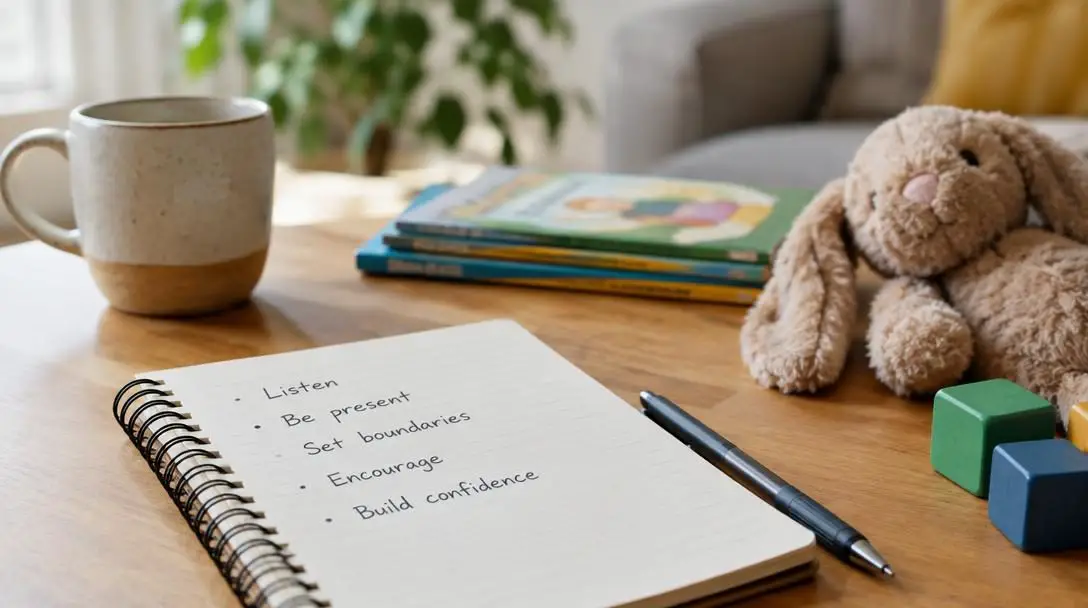
Validating a child's endeavors in youth builds the self-esteem they rely on when navigating personal and professional achievements as adults.
Conversation
A widespread hurdle in family dynamics is the communication chasm that often separates generations. Many adults carry lingering memories of feeling uncomfortable, hesitant, or awkward when speaking to their own parents during youth. This hesitation almost always develops when caregivers assume a passive role in communication, waiting for their children to bring up critical concerns or complex emotions on their own.
Proactive dialogue requires caregivers to take the lead in initiating daily discussions. By regularly posing open-ended questions and engaging in active listening without hasty interruptions, parents uncover the intricate layers of their child's inner world. Understanding a child's unique preferences, personal dislikes, and individual motivators gives parents the insight necessary to detect distress long before it erupts into crisis. When dialogue is normalized as an effortless, nonjudgmental daily routine, children feel entirely safe articulating their vulnerabilities.
Respect
In competitive sports or corporate hierarchies, conventional wisdom suggests that respect must be slowly earned through performance or seniority. While that standard may serve performance-driven adult environments, it is profoundly counterproductive within a family. Children require and deserve deep respect from infancy, granted freely across physical, mental, and emotional dimensions.
Practicing respect means honoring a child's bodily autonomy, taking their expressed thoughts seriously, and validating their emotions even when their logic is underdeveloped. Treating children with innate dignity establishes an authentic template for what healthy interpersonal relationships look like. Children who grow up experiencing authentic dignity naturally internalize boundaries, develop high standards for how others treat them, and learn how to extend that same courtesy to peers and colleagues throughout their adult lives.
Assertiveness
Calibrating parental authority is among the most demanding aspects of caregiving. Parental styles often swing toward unhelpful extremes: harsh aggression on one end, or complete passivity on the other. Aggressive parenting—marked by yelling, intimidation, or punitive hostility—provokes chronic fear, fractures communication, and significantly increases the likelihood of long-term mental health challenges. Conversely, passive parenting abandons boundary-setting altogether, inadvertently teaching children that rules are optional and that selfish demands will be indulged.
Assertive parenting represents the healthy middle path. An assertive caregiver sets explicit expectations, establishes transparent consequences, and firmly maintains household boundaries without raising their voice or resorting to intimidation. Assertiveness protects parents from being manipulated or overwhelmed, while teaching children the objective realities of cause and effect in a safe, emotionally stable setting.
Actionable steps for everyday family life
Translating theoretical psychology into the fast-paced reality of home life requires practical, repeatable actions. Incorporating small behavioral shifts into daily routines helps embed these five principles into the family culture.

- Ensure physical play supplies like sketchbooks, colored pencils, building sets, and age-appropriate books remain freely accessible in communal spaces to encourage independent exploration.
- Acknowledge effort directly by explicitly stating what was accomplished, highlighting the child's dedication, focus, and perseverance rather than just the final score or outcome.
- Initiate daily conversations by asking about specific ideas, friendships, or creative thoughts instead of settling for passive questions about homework or chores.
- Practice active listening when your child speaks by pausing tasks, maintaining eye contact, and reflecting back what they say before offering solutions or advice.
- Honor personal dignity across all three dimensions by speaking politely, respecting physical boundaries, and validating emotional feelings without mockery.
- Establish clear, non-negotiable household boundaries while clearly explaining the functional purpose behind each rule so the child understands consequences logically.
- Maintain boundaries calmly when tested, refusing to give in to emotional manipulation while entirely avoiding insults, raised voices, or physical intimidation.
Common caregiving missteps to avoid
Even conscientious parents can fall into reactive patterns that inadvertently hinder a child's psychological growth. Recognizing these common missteps allows caregivers to correct course before unhelpful habits solidify.
- Overspending on commercial playthings: Believing that cognitive growth requires high-cost, specialized toys, which burdens family finances while frequently limiting imaginative, self-directed exploration.
- Withholding encouragement out of fear: Refusing to praise accomplishments because of an unfounded worry that positive reinforcement will make the child arrogant or spoiled.
- Expecting children to initiate serious talks: Waiting passively for a child to voice their internal struggles, which can lead the child to believe their concerns are inconvenient or uninteresting to the caregiver.
- Treating dignity as a conditional reward: Forcing children to "earn" basic respect through compliance, which leaves them vulnerable to accepting disrespectful treatment from others later in life.
- Resorting to hostile discipline: Relying on intimidation, shaming, or aggressive verbal outbursts to enforce rules, which drives children into secretive self-preservation.
- Succumbing to permissive passivity: Allowing boundaries to collapse to avoid short-term tantrums, leaving the child unprepared for the non-negotiable boundaries of the adult world.
Adapting psychological principles across developmental stages
While the fundamental principles remain constant, their outward implementation must naturally transform as children mature through distinct stages of development.
During the toddler and preschool years, physical safety and early exploration take center stage. Caregivers must structure the physical environment so young children can manipulate objects without constant danger. At this phase, assertiveness focuses on establishing predictable rhythms and simple boundaries, while praise should reinforce basic self-help skills and cooperative behavior.
As children enter school age, the social sphere broadens, making proactive conversation and intentional praise central to their emotional stability. Caregivers should actively inquire about peer dynamics, classroom challenges, and budding personal interests. Because school-age children begin comparing themselves to classmates, regular parental validation protects their emerging self-worth and helps them process setbacks constructively.
Throughout adolescence, the intersection of respect and assertiveness encounters its most rigorous test. Teenagers naturally push against family limits as they construct an autonomous identity. Parents must maintain clear, non-negotiable standards for safety and ethics while expanding the adolescent's freedom to make personal choices. Extending deep respect for a teenager's individuality, privacy, and perspectives keeps communication channels clear, ensuring that the young person views their parents as allies rather than adversaries when facing major life dilemmas.
Frequently asked questions
Does providing a stimulating environment require expensive educational tools?
No. Children do not need high-end or luxury toys to develop intellect and creativity. Providing straightforward, open-ended materials such as building blocks, simple art supplies, and accessible reading books offers all the physical stimulation required to foster problem-solving skills and curiosity.
Can praising a child too frequently cause them to become spoiled?
Withholding praise out of fear of spoiling a child is counterproductive; it often leads them to feel that their efforts and achievements do not matter. Genuine, intentional praise that acknowledges meaningful effort and milestones builds essential self-esteem that supports a person into adulthood.
How can I encourage my child to open up if they rarely start conversations?
Parents must take the proactive initiative rather than waiting for the child to speak. Ask open-ended questions about their daily thoughts, personal interests, and frustrations, and practice active listening without immediate judgment to help them feel safe sharing their feelings.
Why shouldn't respect be something a child has to earn?
While earning respect may apply in competitive professional or athletic spaces, parenting requires unconditional dignity across physical, mental, and emotional dimensions. When children experience respect from their earliest days, they learn what healthy treatment looks like and how to treat others with equal dignity.
What is the primary difference between assertive and aggressive parenting?
Aggressive parenting relies on hostility, intimidation, and harsh reactions, which damages trust and induces fear. Assertive parenting maintains firm boundaries and clear consequences calmly and steadily, helping the child understand cause and effect without attacking their dignity.
The bottom line
Healthy parenting is an ongoing practice of intentional connection rather than a test of perfection. Caregivers will inevitably face days marked by exhaustion, conflict, and miscommunication. However, sustainable success does not depend on never making mistakes; it relies on maintaining a steady, thoughtful commitment to core developmental concepts.
By curating an accessible physical environment, delivering regular validation, initiating proactive dialogue, offering unconditional dignity, and anchoring discipline in calm assertiveness, parents establish an enduring foundation. These daily habits teach children how to regulate their emotions, build fulfilling relationships, and approach the wider world with self-reliance, capability, and confidence.