5 Weird Adam Sandler Facts You’re Dying To Know
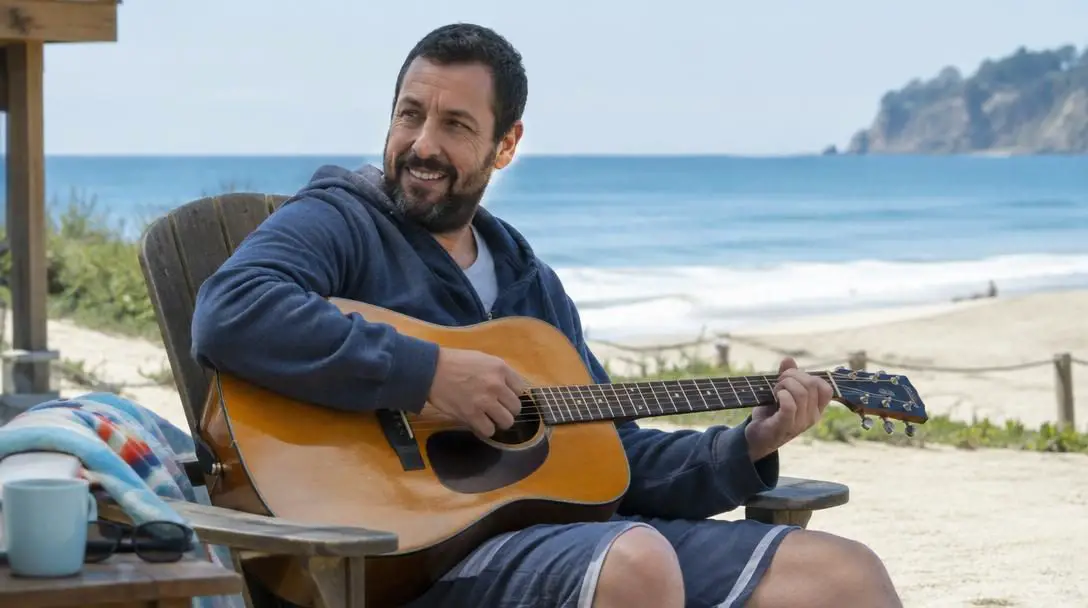
Adam Sandler stands as one of the most recognizable and enduring comedic figures in modern entertainment. From his formative seasons on Saturday Night Live to decades spent commanding the box office, Sandler has built an extensive filmography defined by sharp physical comedy, repeatable catchphrases, and a dedicated global fanbase. Because he has spent so much of his adult life in the public eye, casual viewers often assume they know everything about the performer behind the characters.
Behind the easygoing screen persona, however, lies a complex blend of cultural heritage, foundational professional partnerships, and distinct creative methods. Examining Sandler's early domestic life, his family history, and his production habits reveals how personal background directly informs cinematic success. A closer look at his life reveals several surprising details that alter the way audiences view his long-running Hollywood career.
Key takeaways
- Adam Sandler is fluent in Hebrew, having spent significant time in Israel as a child and later using the language on screen in the film Blended.
- Before achieving stardom, Sandler shared a Los Angeles apartment nicknamed "The Improv" with filmmaker Judd Apatow while both were developing their comedic styles.
- Sandler grew up in a multilingual household raised by immigrant parents born in Russia and Germany who spoke both Russian and Yiddish.
- A lifelong passion for professional wrestling directly inspired famous scenes in Sandler's films, including the golf course fight in Happy Gilmore.
- Industry perspectives on Sandler's on-set behavior remain divided between those who find his heavy improvisation difficult and those who praise his work ethic.
At a glance: Five surprising facets of Adam Sandler's life
Understanding an entertainer of Sandler's scale requires looking at the diverse personal and professional experiences that shaped his worldview. The table below outlines five distinct dimensions of his background, highlighting how early influences and private interests eventually surfaced in his mainstream creative output.
| Fascinating fact | Life category | Primary influence or setting | Notable professional connection |
|---|---|---|---|
| Fluent Hebrew Speaker | Linguistic heritage | Childhood education and time in Israel | Spoken on screen in Blended (2014) |
| Roommates with Judd Apatow | Early career development | Shared Los Angeles apartment ("The Improv") | Collaborative scriptwriting and character concepts |
| Immigrant Parents | Family background | Russian and German immigrant household | Multilingual home life with Yiddish and Russian |
| Lifelong Wrestling Fan | Personal enthusiasm | Classic 1980s televised wrestling icons | Fight scene with Bob Barker in Happy Gilmore |
| Challenging Set Reputation | Workplace dynamic | Film production sets and creative control | Improvisational friction versus strong work ethic |
Five weird and fascinating facts about Adam Sandler
Despite decades of sustained media coverage, certain aspects of Sandler's personal background and industry habits remain unexpected even to long-time viewers. These five detailed facts illustrate the unexpected paths that defined his life both on and off the movie set.
Fluent Hebrew Speaker

Although born in Brooklyn, New York, Sandler is an entirely fluent Hebrew speaker. His parents, Stanley and Judy Sandler, maintained a deep commitment to their Jewish heritage and raised their children with an active connection to traditional culture and language. As part of this upbringing, Sandler spent considerable time living in Israel during his formative youth, where he began studying Hebrew at an early age.
Rather than letting his linguistic skills lapse as an adult, Sandler continued his language studies across subsequent decades. This authentic connection to his roots eventually crossed over into his mainstream film work. In the 2014 comedy Blended, which takes place partially on location in Africa, Sandler's character engages in conversational Hebrew with local residents during a key scene, bringing a genuine piece of his personal background into an international studio production.
Roommates with Judd Apatow
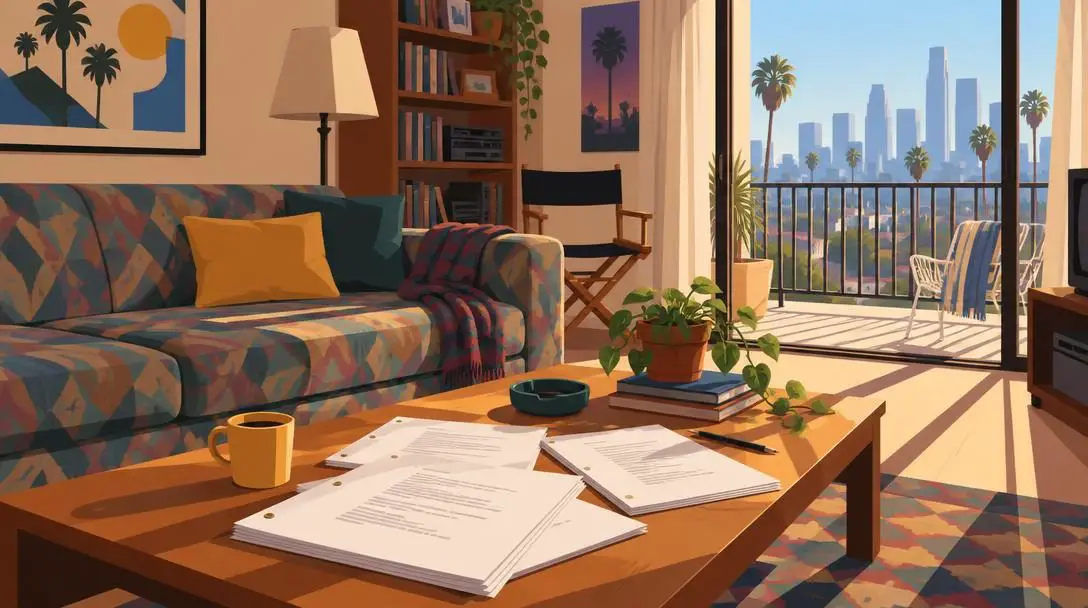
- Shared residence: An apartment nicknamed "The Improv" in Los Angeles
- Early career roles: Apatow wrote for The Larry Sanders Show while Sandler worked stand-up clubs
- Creative output: Early character concepts and scenarios later refined for major feature films
Long before either became a dominant force at the Hollywood box office, Sandler and writer-director Judd Apatow shared an apartment in Los Angeles. At the time, Apatow was developing his television writing career on The Larry Sanders Show, while Sandler was striving to break through on the demanding local stand-up comedy circuit. Bound by shared ambition and mutual respect, the two comedians established a collaborative living space they nicknamed "The Improv."
During this foundational chapter, their living quarters served as an informal workshop. Sandler and Apatow spent countless hours brainstorming comedic scenarios, dissecting joke structures, and trading feedback on raw material. Many of the exaggerated characters, distinct vocal mannerisms, and physical premises that Sandler later integrated into his signature 1990s films were originally conceived and refined during these shared writing sessions with Apatow.

Communal living and peer feedback during the early comedy club days laid the groundwork for characters and scenes that later reached millions on the big screen.
Immigrant Parents from Russia and Germany

- Father: Stanley Sandler, born in Russia
- Mother: Judy Sandler, born in Germany
- Household languages: Russian and Yiddish spoken alongside English
Sandler's perspective on life and comedy was deeply informed by his domestic upbringing as the child of immigrant parents. His father, Stanley Sandler, was born in Russia and emigrated to the United States during his childhood. His mother, Judy Sandler, was born in Germany and completed her journey to America as a teenager. Together, they established a home that blended European traditions with American opportunities.
Growing up in a household where both Russian and Yiddish were spoken regularly gave Sandler early exposure to diverse cultural nuances, speech rhythms, and worldviews. This multicultural home environment instilled in him an enduring appreciation for differing cultural perspectives. Observers often trace the warmth, familial loyalty, and cross-cultural relatability found in Sandler's broad comedic projects directly back to the rich immigrant traditions modeled by his parents.
Lifelong Fan of Professional Wrestling

Decades before stepping onto red carpets, Sandler developed an intense passion for professional wrestling. As a young viewer during the golden era of the sport, he closely followed larger-than-life performers such as Hulk Hogan and Andre the Giant. Rather than outgrowing this hobby, Sandler remained an active enthusiast throughout adulthood, frequently attending live WWE events, making on-air guest appearances, and forging personal friendships with prominent industry wrestlers.
This enduring personal interest has repeatedly leaked into his cinematic work. In his 1996 hit Happy Gilmore, Sandler staged an iconic brawl on a golf course opposite legendary television host Bob Barker. The scene was deliberately blocked and choreographed as a direct homage to the exaggerated physical brawls of televised wrestling rings, showcasing how Sandler translated theatrical sports entertainment into box-office comedy gold.
Reputation for Being Difficult to Work With
While Sandler enjoys exceptional affection from worldwide audiences and maintains an intensely loyal circle of frequent collaborators, he has also carried a reputation in certain Hollywood circles for being demanding on set. Reports have emerged from various film productions describing instances where Sandler was viewed as disruptive or uncooperative, and several former co-stars have spoken publicly about challenging experiences while working alongside him.
Industry observers offer distinct explanations for these workplace frictions. On one hand, Sandler is known to be fiercely protective of his unique creative vision, refusing to compromise on comedic tone or narrative rhythm. On the other hand, his heavy reliance on spontaneous improvisation often forces technical crews and fellow actors to adapt without warning, creating significant logistical stress. Conversely, many longtime colleagues adamantly defend Sandler, citing his relentless work ethic, personal loyalty, and innate comedic brilliance.
The evolution of late-twentieth-century American comedy
To fully grasp the significance of Sandler's career trajectory, it is necessary to consider the broader transformation of American entertainment during the late 1980s and early 1990s. During this era, the traditional live comedy club network operated as the primary proving ground for aspiring performers. However, major television networks and film studios were actively looking beyond conventional stand-up acts, seeking distinct comedic voices capable of connecting with a rapidly changing youth demographic.

Performers of Sandler's generation were forced to cultivate two very different disciplines at once. Solo stand-up required an immediate ability to read live audiences, improvise responses to hecklers, and test jokes through immediate trial and error. Conversely, breaking into television and studio films demanded collaborative writing, disciplined structural outlining, and ensemble coordination. The cooperative living arrangement between Sandler and Judd Apatow epitomized how rising comedians formed informal hubs to bridge the gap between solo club performances and Hollywood screenwriting rooms.
Simultaneously, mainstream entertainment was heavily shaped by broad theatrical phenomena like professional wrestling. During the 1980s, wrestling evolved into a cultural juggernaut by merging athletic storytelling, exaggerated rivalries, and physical comedy. Performers who consumed both wrestling broadcasts and traditional stand-up developed an acute instinct for visual humor, heightened conflict, and crowd-pleasing spectacle. These exact elements became the foundation for the commercial comedy explosion of the 1990s.
From writing room to the big screen: How comedic projects develop
The progression of comedic concepts from late-night apartment brainstorms to multimillion-dollar feature films follows a structured creative pipeline. Understanding these distinct phases explains why early artistic environments and personal hobbies leave such lasting impressions on finished films:
- Concept generation and shared brainstorming: Writers and performers exchange loose concepts in informal environments, testing premises through casual dialogue and collaborative debate similar to Sandler and Apatow's early living room sessions.
- Live testing on the stand-up stage: Comedians take unpolished dialogue and character mannerisms directly to live comedy club audiences, using crowd reactions to gauge timing, rhythm, and comedic viability.
- Narrative formatting and script construction: Raw comedic concepts are integrated into formal screenplay structures, establishing plot arcs and creating specific supporting roles tailored for frequent collaborators, athletes, or celebrity guests.
- On-set execution and spontaneous improvisation: During active filming, actors deviate from written dialogue to test alternate punchlines and spontaneous physical reactions, adapting the material directly within the physical set.
- Editorial assembly and comedic timing: Post-production editors assemble footage, refining the precise pacing of physical stunts and spoken jokes to maximize narrative cohesion and audience engagement.
Navigating creative collaboration and workplace friction
Whether producing a studio comedy or managing creative teams in other professional industries, collaborating with strong, visionary personalities requires deliberate operational strategies. Implementing structured practices ensures that individual creative freedom does not undermine overall team cohesion:
- Establish clear parameters for improvisation: Define specific points during a production where team members must follow the established script and designate separate windows reserved for spontaneous creative experimentation.
- Build low-pressure brainstorming spaces: Replicate the productive atmosphere of informal writing partnerships by offering regular sessions where team members can present unpolished concepts without fear of criticism.
- Incorporate authentic personal backgrounds: Encourage collaborators to weave genuine cultural heritages, foreign language proficiencies, and personal hobbies directly into their work to foster originality.
- Communicate transparently regarding creative intent: When an artist is fiercely protective of their specific vision, hold regular discussions to clarify artistic goals and prevent misunderstandings among the ensemble.
- Shield supporting personnel from sudden changes: Ensure that spontaneous alterations in creative direction do not impose unreasonable scheduling demands or logistical burdens on technical crews.
Common pitfalls when assessing creative professionals
Examining the public discussions surrounding Sandler's career reveals several frequent errors made when analyzing prominent creative figures in high-stakes industries:
- Equating public personas with private demeanor: Observers frequently assume an entertainer who plays easygoing, juvenile characters is similarly relaxed behind the camera, ignoring the intense focus required to direct and produce commercial films.
- Overlooking how improvisation impacts crew logistics: While unscripted moments often yield memorable comedic scenes, failing to recognize how abrupt changes disrupt camera blocking and lighting setups can lead to unnecessary workplace friction.
- Minimizing the importance of family heritage: Public profiles often treat immigrant backgrounds and multilingual skills as incidental trivia, missing how early exposure to diverse cultures enriches storytelling.
- Dismissing personal hobbies as irrelevant: Analysts sometimes dismiss interests like professional wrestling as lowbrow distractions, failing to realize how physical theater and sports entertainment shape comedic timing and staging.
- Relying on polarized workplace accounts: Evaluating an industry reputation by listening exclusively to either vocal critics or dedicated defenders produces an incomplete view of how high-pressure film sets operate.
Frequently asked questions
Is Adam Sandler fluent in Hebrew?
Yes. Sandler was raised in a Jewish household with a strong connection to his cultural heritage, spent significant time in Israel during his childhood, and studied Hebrew from a young age. He maintained his language skills into adulthood and spoke Hebrew on screen in the 2014 comedy film Blended.
Did Adam Sandler and Judd Apatow live together?
Yes. Before either attained mainstream Hollywood success, Sandler and Apatow shared an apartment in Los Angeles nicknamed "The Improv." During this period, Apatow was writing for The Larry Sanders Show while Sandler worked the stand-up comedy circuit, and the two regularly collaborated on early comedic material.
Where were Adam Sandler's parents born?
Sandler's father, Stanley Sandler, was born in Russia and moved to the United States as a child. His mother, Judy Sandler, was born in Germany and emigrated to America as a teenager. Both Yiddish and Russian were spoken in their household during Sandler's youth.
How did professional wrestling affect Sandler's films?
Sandler grew up an avid fan of 1980s wrestling icons like Hulk Hogan and Andre the Giant. This passion inspired him to incorporate wrestling-style choreography into his movies, most famously the physical brawl between his character and television host Bob Barker in the 1996 comedy Happy Gilmore.
Why does Adam Sandler have a reputation for being challenging on set?
Sandler is known for being fiercely protective of his creative vision and leans heavily on spontaneous improvisation during filming. While many longtime collaborators praise his strong work ethic and loyalty, his unpredictable improvisational style and demanding standards have caused friction with certain co-stars and crew members.
The bottom line
Adam Sandler's decades of box-office dominance are rooted in far more than casual juvenile humor. His comedic sensibility is the product of a rich cultural heritage, early artistic partnerships, and lifelong personal passions that extend from Hebrew fluency to classic professional wrestling. While his uncompromising creative methods and improvisational habits have occasionally created tension on movie sets, they have also produced one of the most distinctive and commercially successful bodies of work in American comedy history. Re-examining his catalog through the lens of these lesser-known realities offers a deeper appreciation for the personal history behind the laughs.