5 Weird Bill Clinton Facts You’re Dying To Know
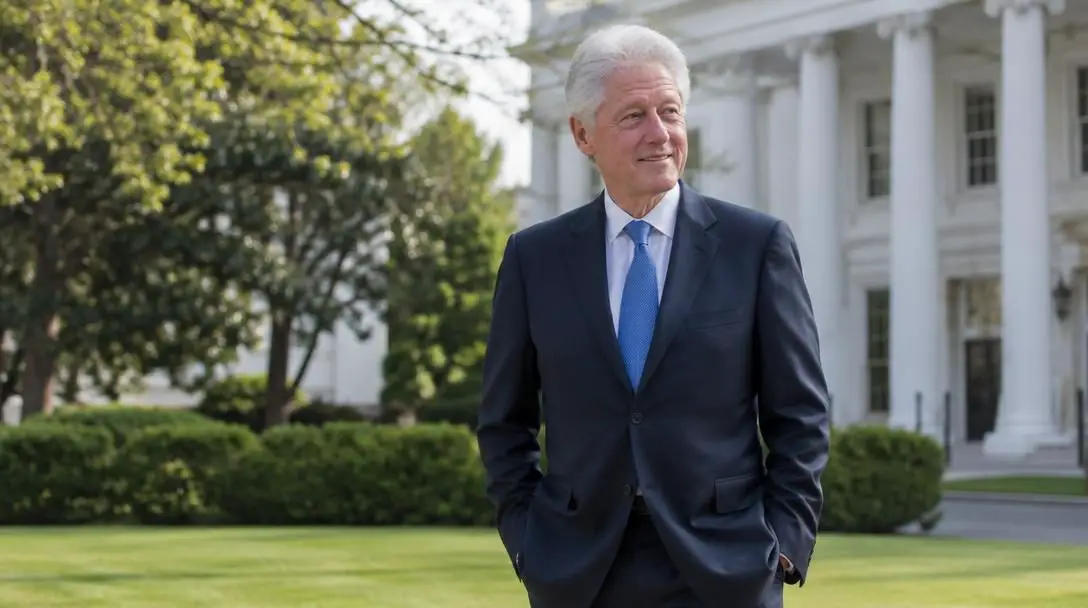
Bill Clinton remains one of the most recognizable and consequential political figures of the late twentieth century. Serving as the 42nd President of the United States from 1993 to 2001, his administration oversaw substantial shifts in economic policy, international diplomacy, and domestic social reform. While presidential historians frequently concentrate on legislative milestones, executive decisions, and cabinet appointments, public fascination with the executive branch often hinges on personal idiosyncrasies, lifestyle habits, and unscripted cultural moments.
The intersection of political leadership and popular culture underwent a dramatic transformation during the Clinton era. From iconic late-night television appearances to casual admissions regarding his diet and wardrobe, Clinton projected an approachable persona that stood in stark contrast to the formal demeanor of traditional heads of state. Exploring these distinctive, lesser-known facets of his personal history provides a richer understanding of how modern political identities are forged, communicated, and remembered by the public.
Key takeaways
- Bill Clinton's unabashed love for popular fast-food chains became a defining personal trademark that crossed over into Hollywood pop culture.
- A breakthrough musical performance on late-night television demonstrated how cultural fluency could bypass conventional campaign media.
- An unexpected lifestyle answer during a youth television broadcast disarmed an opposition campaign attack and humanized the candidate.
- Prior to holding national office, Clinton honed his communication style and progressive policy ideals as an academic instructor in Arkansas.
- Speculation surrounding his undergraduate membership in a clandestine collegiate organization highlights the enduring public fascination with political societies.
At a glance: Five memorable Clinton traits and milestones
| Subject | Key Context | Cultural or Political Significance | Primary Venue or Setting |
|---|---|---|---|
| Fast Food Staples | Frequent visits to major burger and pizza franchises | Inspired a notable Hollywood movie scene and humanized his executive image | National campaign trail and executive office |
| The Saxophone | Trained musician inspired by jazz greats | Broke political decorum to directly connect with younger demographics | The Arsenio Hall Show |
| Boxers or Briefs | Spontaneous response to a cheeky opposition question | Neutralized an opposition campaign jab through candid humor | MTV's Choose or Lose forum |
| University Teaching | Academic career teaching law and political science | Built early populist credibility and advocacy for social funding | University of Arkansas |
| Brotherhood of the Order | Collegiate initiation into a private organization | Spawned long-standing political theories despite a lack of concrete proof | Georgetown University |
Five unusual and iconic Bill Clinton facts
Fast food staples
- Preferred establishments: McDonald's, Burger King, Pizza Hut, and Taco Bell
- Film reference: The "Royale with cheese" scene in Pulp Fiction
- Leading theory: Childhood poverty created a taste for inexpensive, accessible food
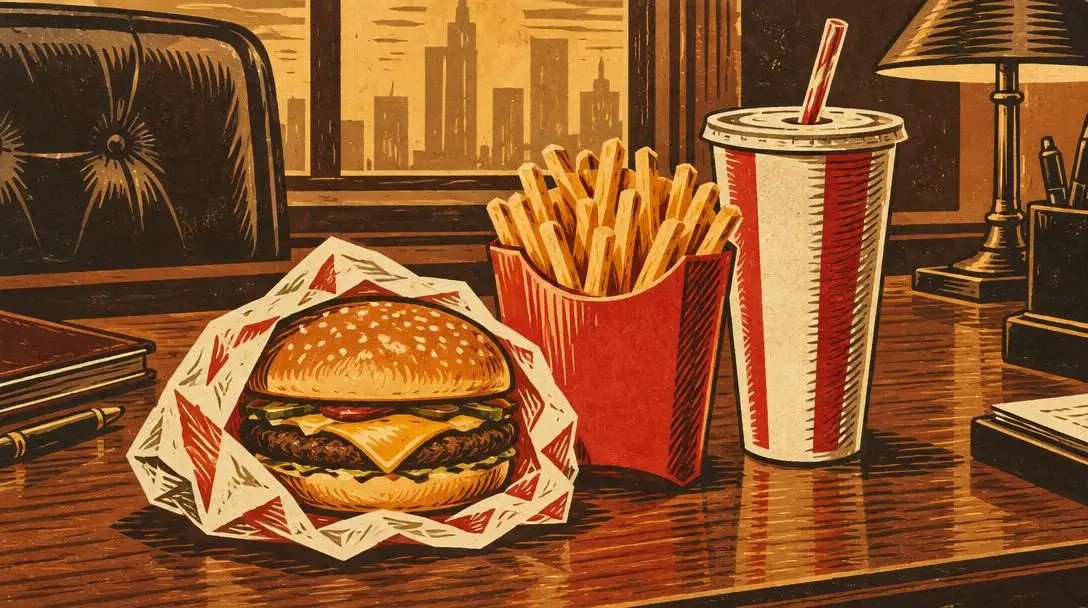
Despite his elite education and ascent to the nation's highest office, Bill Clinton consistently maintained an appetite for comforting, mass-market fast food. Throughout his two terms in the White House, the president was widely known for frequently patronizing major American franchises, regularly ordering greasy burgers, french fries, and other quick-service staples. This routine occurred much to the ongoing distress of his medical advisers and health-conscious administrative staff, who sought to encourage more balanced nutrition for the chief executive.
His preferred culinary spots spanned the most recognizable franchises in the United States, including McDonald's, Burger King, Pizza Hut, and Taco Bell. Observers have long speculated on the roots of this enduring habit. One prevalent explanation suggests that having experienced economic hardship during his youth, Clinton formed an enduring preference for affordable, widely available meals. The habit resonated so strongly with American audiences that it entered Hollywood lore, inspiring a character in the celebrated film Pulp Fiction to order a "Royale with cheese" as an explicit nod to the president's dining tastes.
The saxophone
- Primary influence: A live performance by John Coltrane in 1962
- Historic broadcast: The Arsenio Hall Show in 1992
- Signature track: "Heartbreak Hotel"
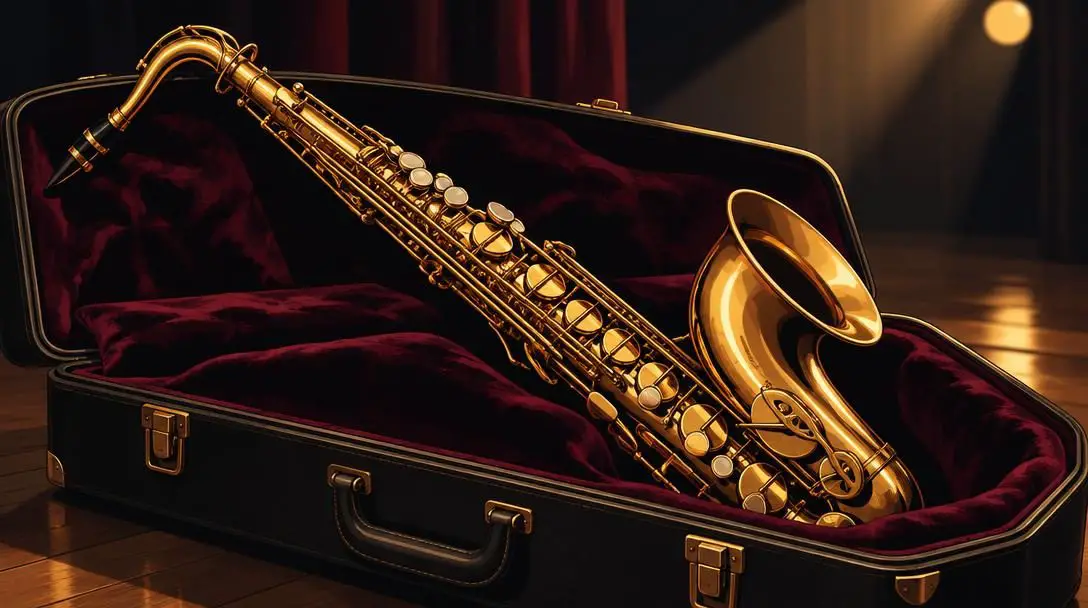
Beyond his extensive legal and political achievements, Clinton possessed genuine musical talent as an accomplished saxophonist. He picked up the instrument early in life, playing regularly throughout his youth and joining various musical groups over the years. His passion for the instrument took a serious turn in 1962, when he attended a live concert by the iconic jazz saxophonist John Coltrane. Deeply inspired by the virtuoso's improvisational skill, Clinton committed himself to rigorous instruction and consistent daily practice.
This creative ability yielded historic dividends during the 1992 presidential race. Breaking with traditional campaign protocols, Clinton made a high-profile guest appearance on The Arsenio Hall Show, donning dark sunglasses and delivering an energetic performance of Elvis Presley's "Heartbreak Hotel" before a screaming studio audience. The appearance marked a watershed moment in political communications, positioning Clinton as an authentic, culturally attuned figure who stood apart from the traditional Washington establishment.
Boxers or briefs

- Broadcast event: MTV's "Choose or Lose" town hall
- Famous answer: "Usually briefs"
- Underlying context: Origin began as a cheeky slogan from George H.W. Bush supporters
In the modern political arena, boundaries between high-stakes policy discussions and intimate personal lifestyle queries often dissolve. Perhaps no single moment captured this transition more clearly than Clinton's appearance on an MTV "Choose or Lose" broadcast. During an open question-and-answer exchange with young voters, an audience member bluntly asked whether the candidate wore boxers or briefs. Rather than evading the query or delivering a reprimand on decorum, Clinton candidly answered, "usually briefs."

The exchange sparked immediate worldwide headlines and became an enduring fixture in pop culture discourse. While many viewed the candid response as an unprecedented departure from presidential reserve, the underlying question carried strategic campaign origins. Supporters of Clinton's political opponent, George H.W. Bush, had previously popularized the phrase as a lighthearted slogan designed to suggest that Clinton's informal demeanor and lifestyle made him unsuitable for executive responsibility. By meeting the inquiry with relaxed good humor, Clinton effectively transformed an opposition attack into an endearing, relatable public moment.
Meeting an intrusive campaign inquiry with lighthearted humor transformed a potential political liability into a humanizing masterclass.
University of Arkansas teaching career
- Academic home: University of Arkansas
- Course curriculum: Law and political science
- Policy focus: Expanded public resources for healthcare and schooling
Before launching his national political career, Clinton spent time in higher education, serving as an academic instructor at the University of Arkansas. In this capacity, he led courses focusing on legal principles and political science, earning high marks from both students and academic peers for his energetic classroom delivery. Colleagues noted his unique ability to deconstruct complex constitutional frameworks and connect with undergraduates on an approachable, personal level.
Clinton also leveraged his academic platform to champion broader social initiatives. During his time on campus, he vocalized strong support for progressive structural reforms, with a particular focus on expanding financial resources for state healthcare programs and public schooling. Although this academic phase was relatively brief, it proved essential to his broader career trajectory. Working directly with students gave Clinton practical insight into the challenges facing public education and helped cultivate the charismatic, populist style that later defined his gubernatorial and presidential campaigns.
Brotherhood of the Order

- Academic location: Georgetown University
- Initiation timeline: The 1960s
- Evidentiary status: Lacks concrete corroborating documentation
Among the more enigmatic episodes associated with Clinton's early life is his reported involvement with an elite, secretive student society known as the Brotherhood of the Order. Accounts indicate that Clinton was initiated into this selective group while completing his undergraduate studies at Georgetown University during the 1960s. Described by some observers as an exclusive fraternity for aspiring leaders, the society allegedly connected politically ambitious young scholars with influential figures in commerce and public governance.
The organization supposedly bound its members to lifetime allegiance and enforced strict standards of absolute secrecy. Over subsequent decades, the group generated a multitude of political conspiracy theories, with commentators attempting to link its members to coordinated economic decisions and political maneuvering. However, despite endless public fascination and widespread theoretical speculation, no concrete documentary evidence exists to prove that the Brotherhood of the Order exerted any systemic influence over domestic or global political outcomes.
The mechanics of personal trivia in modern political media
The sustained public resonance of personal trivia is rarely an accident of history. Within political media ecosystems, specific psychological and structural mechanisms dictate how unusual personal habits reshape public sentiment regarding national leaders.
First, personal lifestyle habits act as powerful cultural bridges. When a president routinely dines at everyday commercial establishments like McDonald's, Taco Bell, Pizza Hut, or Burger King, the cultural distance between the nation's political elite and regular voters shrinks. Shared consumer habits provide relatable points of reference, reassuring citizens that their elected officials inhabit the same daily reality as ordinary Americans.
Second, participating directly in contemporary entertainment programming circumvents conventional political gatekeepers. Prior to the 1990s, candidates relied heavily on scripted speeches, formal press conferences, and Sunday morning policy panels. Choosing instead to perform musical numbers like "Heartbreak Hotel" on late-night talk shows or answering lifestyle questions on youth networks enabled Clinton to speak past traditional news analysts, directly establishing rapport with demographic groups that felt detached from standard political debates.
Finally, a candidate's pre-political resume provides critical narrative reinforcement for their platform. Early employment experiences, such as instructing legal and political science courses at a state university, offer organic credibility. A leader who has stood in front of classrooms can present themselves not simply as a career politician, but as a dedicated public servant with firsthand appreciation of structural educational and social challenges.
How to critically evaluate presidential lore and anecdotes
Navigating historical trivia and viral anecdotes requires a methodical approach. Readers can utilize the following structured process to separate verified historical facts from embellished folklore:
- Verify public broadcast records by checking archival audio and video footage for moments that occurred on public airwaves, such as late-night performances and televised town hall forums.
- Distinguish between speculative hypotheses and documented historical facts when examining personal preferences, noting whether an explanation is an unproven theory or an established reality.
- Uncover opposition messaging strategies by researching whether seemingly spontaneous lifestyle questions originated as deliberate campaign tactics designed to challenge a candidate's fitness.
- Confirm professional backgrounds through institutional archives, examining university directories, syllabi, and official faculty records to validate early career positions.
- Scrutinize claims regarding private organizations by demanding primary source materials and acknowledging when evidence for alleged political influence remains completely unsubstantiated.
Common pitfalls when analyzing political trivia
Encountering fascinating personal details about executive figures often tempts observers to draw broad conclusions. Avoid these common interpretive missteps:
- Assuming media moments lack strategy: Viewing appearances on entertainment platforms as purely spontaneous overlooks the deliberate strategic intent behind humanizing a candidate.
- Conflating popular theories with settled fact: Treating interpretive explanations—such as theories about childhood poverty dictating adult dietary tastes—as definitive truths rather than unproven possibilities.
- Ignoring the role of political adversaries: Forgetting that unusual questions or criticisms often originate from opponents looking to construct a specific narrative of incompetence or lack of seriousness.
- Dismissing cultural details as inconsequential: Believing that personal trivia has no bearing on governance, when in reality cultural relatability profoundly impacts political capital and public approval.
Deepening your historical perspective
Exploring the unique personal history of the 42nd President opens multiple productive avenues for broader historical study. Consider examining the following areas to expand your perspective:
- The evolution of campaign entertainment: Investigate how the transition from traditional press conferences to late-night and cable appearances during the 1992 race established the standard playbook for subsequent twentieth- and twenty-first-century candidates.
- The impact of pre-executive careers: Study how early professional appointments—such as legal scholarship, state-level teaching, or community leadership—actively mold subsequent presidential policy agendas in healthcare and education.
- Collegiate campus culture in the 1960s: Research student political organizations and fraternal bodies at mid-century institutions like Georgetown University to better discern genuine student traditions from sensationalized political conspiracy theories.
Frequently asked questions
Why did Bill Clinton's fast-food choices receive so much media attention?
His frequent indulgence in fast-food brands such as McDonald's, Burger King, Pizza Hut, and Taco Bell contrasted sharply with the formal expectations of executive life, leading to lighthearted friction with his health-conscious medical staff and inspiring parodies in films like Pulp Fiction.
How did playing the saxophone benefit Bill Clinton's political campaign?
Performing "Heartbreak Hotel" on The Arsenio Hall Show in 1992 bypassed standard news broadcasts, allowing Clinton to showcase his authentic musical background and connect directly with younger, culturally engaged demographics.
Where did the question about boxers or briefs originate?
The query surfaced during an MTV "Choose or Lose" town hall, but it originated as a cheeky slogan utilized by supporters of his opponent, George H.W. Bush, intended to imply that Clinton was not serious enough for the presidency.
What subjects did Bill Clinton teach at the University of Arkansas?
Before launching his national political career, Clinton worked as an instructor at the University of Arkansas, where he taught law and political science while advocating for increased public support for education and healthcare.
Is there documented proof that the Brotherhood of the Order directed political decisions?
No. While reports indicate Clinton joined the collegiate organization during his undergraduate studies at Georgetown University in the 1960s, there is no concrete evidence connecting the society to coordinated political or economic events.
The bottom line
The enduring fascination with Bill Clinton's personal traits underscores a vital truth about modern American leadership: executive power is never judged on policy decisions alone. A leader's public identity is equally shaped by cultural instincts, culinary preferences, unscripted media interactions, and youthful pursuits. Whether demonstrating his musical fluency on late-night television, deflecting opposition barbs with candid charm, or grounding his rhetoric in early classroom teaching, Clinton revolutionized how presidents communicate with everyday citizens. Examining these distinctive historical milestones reveals the enduring power of personality in shaping national political life.