5 Weird Stephen King Facts You’re Dying To Know
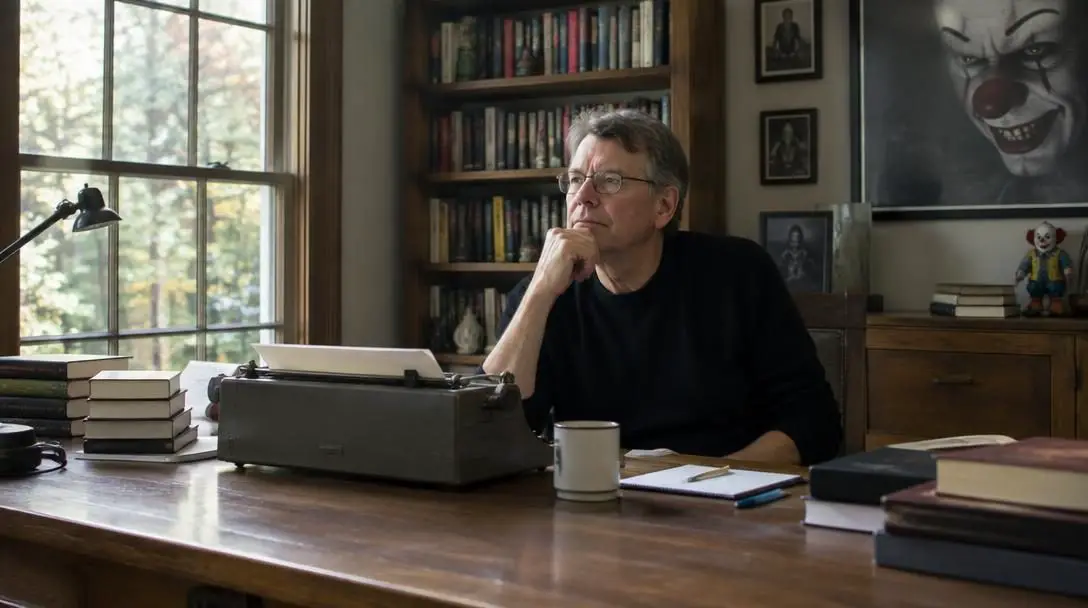
Stephen King has captivated readers across the globe for decades with his vivid imagination and chilling psychological suspense. From small-town supernatural horrors to intimate character portraits, his massive bibliography has defined modern popular storytelling. Yet behind his dozens of international bestsellers lies a life shaped by unusual working-class jobs, deeply held personal superstitions, and dramatic real-world trials that rival the tension in his fictional worlds.
Before achieving widespread acclaim and selling hundreds of millions of books, King navigated financial instability, performed unexpected odd jobs to make ends meet, and channeled eccentric personal quirks directly into his manuscripts. Examining these lesser-known episodes illustrates how the master of the macabre translates mundane moments, childhood hobbies, and severe personal trauma into cultural phenomena.
Key takeaways
- Working as a high school janitor directly inspired King to write the opening scene of his breakout novel, Carrie.
- A severe case of triskaidekaphobia drives King to avoid the number 13 in his travel plans, building floors, and narrative structures.
- King once earned extra money performing as a clown at children's birthday parties long before creating Pennywise the Dancing Clown for It.
- He published novels like Thinner under the pseudonym Richard Bachman to discover whether his books sold because of his talent or his famous name.
- A devastating 1999 roadside collision tested King's physical endurance and became a central theme in his memoir, On Writing: A Memoir of the Craft.
At a glance: five unusual milestones from Stephen King's life
| Milestone or quirk | Life period | Core details | Literary connection |
|---|---|---|---|
| High school janitorial work | Early career | Cleaned school hallways and girls' locker rooms to supplement his household income | Carrie |
| Triskaidekaphobia | Lifelong phobia | Extreme dread of the number 13 in travel, seating, and architecture | The Shining (Room 217 vs. Room 237) |
| Birthday party clowning | Childhood and youth | Wore costumes and makeup to entertain kids at private birthday celebrations | It and The Circus of Dr. Lao |
| The Richard Bachman pseudonym | 1980s | Penned darker books under a false identity to test audience merit | Thinner, The Running Man, and Rage |
| 1999 roadside collision | Mid-career | Suffered multiple critical injuries after being hit by a vehicle while walking | On Writing: A Memoir of the Craft |
Five unusual facts about Stephen King's life and work
Stephen King's novels often depict ordinary working-class characters who find themselves confronted by unthinkable circumstances. This thematic trademark did not emerge in a vacuum; it grew out of the author's own life experiences, daily routines, and unexpected personal setbacks. Here are five unconventional facts that reveal the real-world roots of his storytelling power.
1. The high school janitor job that sparked Carrie
- Position: High school janitor
- Household motive: Supplementing his wife's teaching salary
- Primary duties: Cleaning toilets, sweeping hallways, and emptying heavy trash bins
- Literary outcome: Inspired the iconic locker room opening of Carrie
Before his debut novel launched a legendary literary career, Stephen King struggled with intense financial pressure. His wife's salary as a teacher was insufficient to support their growing household, prompting King to take on a variety of manual labor positions to pay the bills. One of the most demanding of these roles was working as a high school janitor, where his daily responsibilities included sweeping endless corridor floors, emptying industrial trash containers, and scrubbing communal bathrooms.
Rather than letting the grueling labor dull his creative impulses, King treated the institutional setting as a prime observation post. The pivotal moment arrived while he was cleaning the high school's athletic facilities. In his instructional memoir, On Writing: A Memoir of the Craft, King described the exact sensory trigger that changed his life: "I got the idea for 'Carrie' from working as a janitor in a girls’ locker room. I saw the shower curtains move by themselves and got the idea for the opening shower scene." That solitary, slightly unsettling image of swinging plastic curtains in an empty communal shower blossomed into the story of a telekinetic high schooler, transforming King from an underpaid custodian into a full-time author.
2. An overwhelming case of triskaidekaphobia
- Phobia: Triskaidekaphobia (morbid fear of the number 13)
- Avoidance behavior: Refuses the 13th seat on airplanes and 13th hotel floors
- Storytelling application: Deliberate numeric tension in horror settings
- Notable adaptation: Room 217 in The Shining altered to 237 for film
While King has spent half a century terrifying readers, he is vulnerable to deep-seated personal anxieties of his own. Chief among them is severe triskaidekaphobia, the chronic, irrational fear of the number 13. King has acknowledged in interviews that this superstitious aversion influences his daily routine, dictating how he navigates travel, lodging, and public spaces. Whenever he books a flight, he goes out of his way to avoid sitting in seat 13, and he refuses to stay on the 13th floor of any hotel building.
This numeric anxiety frequently filters into his fictional worlds, where specific digits build underlying dread. In his classic horror novel The Shining, the sinister hub of paranormal evil was designated as room number 217. When director Stanley Kubrick adapted the novel into his iconic feature film, the production secured permission to shoot exterior scenes at the real-life Timberline Lodge. However, the lodge's management was well aware of how superstition affects consumer behavior.

The hotel operators worried that prospective guests would refuse to sleep in an actual Room 217 after watching the terrifying supernatural events unfold on the silver screen. To preserve their room bookings, the film production shifted the haunted setting to room 237, a non-existent room at the lodge, sidestepping the real-world consequences of guest phobias.
3. Childhood clowning and The Circus of Dr. Lao
- Early activity: Performing as a clown at children's birthday parties
- Primary motivation: Earning extra spending cash during childhood
- Masterpiece inspired: Pennywise the Dancing Clown in It
- Non-fiction release: The Circus of Dr. Lao (written under a pseudonym)
Few monsters in modern horror are as universally recognized or feared as Pennywise the Dancing Clown, the malevolent, shape-shifting entity at the heart of King's massive 1986 epic, It. While coulrophobia—the fear of clowns—is common among audiences, King's creative connection to the archetype began with firsthand costume performance during his youth. As a child, King dressed up as a clown to entertain youngsters at local birthday parties in exchange for extra cash.
Applying the white face paint, colorful garments, and exaggerated expressions taught the young writer how easily festive entertainment can cross over into uncanny psychological unease. Entertaining groups of children while hiding his true face provided him with a lasting appreciation for the disturbing tension between cheerful celebration and hidden dread. King continued to nurture this interest in carnival culture throughout his career. Under an alternate pseudonym, he even authored a non-fiction volume titled The Circus of Dr. Lao, an exploration of an unusual traveling circus that showcased mythological beasts, including a talking sphinx and a chimera.
4. Testing his talent under the pseudonym Richard Bachman
- Identity: Pseudonym of Stephen King
- Breakout test novel: Thinner (published in 1984)
- Author's objective: Determining whether quality or marketing drove his success
- Other published titles: The Running Man and Rage
By the 1980s, Stephen King had become a publishing powerhouse. His name alone on a book jacket guaranteed commercial dominance, glowing shelf placement, and immediate film rights sales. However, this runaway fame triggered an existential artistic doubt: were his books selling because his raw storytelling was genuinely compelling, or was his success purely the result of unstoppable marketing momentum and brand recognition?
To resolve this question, King created the alter ego Richard Bachman. In 1984, he published the novel Thinner under this pseudonym without any public acknowledgment of his involvement. The experiment yielded decisive results. Stripped of the King brand name, Thinner earned widespread critical acclaim and achieved solid commercial success on its own storytelling merits. Once curious readers and persistent sleuths discovered stylistic parallels and exposed the author's real identity, King stepped forward to acknowledge the deception. Having validated his craft, he went on to release several other dark, gritty manuscripts under the Bachman byline, including The Running Man and Rage.
5. The devastating 1999 roadside collision and recovery
- Date of incident: 1999
- Circumstances: Struck by an automobile while taking a routine walk near home
- Severe injuries: Collapsed lung, a broken leg, and several fractured ribs
- Resulting book: On Writing: A Memoir of the Craft
In the summer of 1999, Stephen King confronted a terrifying brush with mortality that did not originate in the supernatural. While taking an ordinary afternoon walk down a rural road near his residence, he was struck by an oncoming passenger van. The violent impact threw him off the roadway, inflicting catastrophic bodily trauma that threatened his life and his ability to walk. Paramedics and medical personnel treated him for a collapsed lung, a severely shattered leg, and multiple broken ribs.
The subsequent road to recovery was an excruciating test of physical discipline and psychological willpower. Confined to hospital beds and grueling physical therapy routines, King initially struggled with the fear that his writing career had come to an abrupt, tragic end. Yet returning to his desk became the cornerstone of his rehabilitation. During this painful period, he completed On Writing: A Memoir of the Craft, using the manuscript to reflect on the collision and confront his mortality.

Writing had saved my life once; it seemed that, this time, it had saved my life again.
The act of drafting sentences, refining prose, and sharing his survival journey helped him work through severe physical pain, producing an enduring guide that serves as equal parts technical handbook and deeply emotional memoir.
How everyday realities fuel supernatural fiction
Readers frequently imagine best-selling novelists working in sheltered, intellectual isolation, conjuring terrifying monsters entirely out of thin air. In Stephen King's case, however, his most enduring narrative concepts stem from mundane labor and physical vulnerability. Rather than avoiding discomfort, King treats his personal quirks, past odd jobs, and major life crises as direct narrative fuel.
Working as a custodian provided the visual framing for the locker room scene in Carrie, demonstrating that even a chore like sweeping floors can yield creative breakthroughs if the observer remains alert to environmental details. Similarly, personal dread surrounding numbers or childhood memories of wearing clown makeup at parties offered authentic psychological weight to classic antagonists like Pennywise. When life handed him near-fatal physical trauma in 1999, he processed the recovery through disciplined daily output. Writers across all genres can emulate this approach by treating everyday frustrations and real-world struggles as creative opportunities.
Practical steps for turning real-world experiences into stories
Aspiring authors looking to convert daily routines, unglamorous jobs, and personal anxieties into captivating fiction can follow the structured framework King utilized throughout his career:
- Observe routine environments closely: Pay careful attention to the ordinary spaces where you work, run errands, or complete chores. Look for small sensory abnormalities, such as an unexpected shadow, a strange echo, or an unexplained movement like a shifting shower curtain.
- Catalog personal phobias and discomforts: Create a dedicated inventory of the specific numbers, cramped spaces, medical situations, or childhood memories that produce personal tension, then explore how to project those fears onto fictional characters.
- Draw from past odd jobs: Revisit former manual labor roles, entry-level jobs, or service positions. Incorporating realistic descriptions of tools, physical tasks, and workplace dynamics lends immediate credibility to a story's setting.
- Test your work under objective conditions: Share stories anonymously or submit them under a pseudonym to critique groups and publications to verify that your narrative strength stands independent of your reputation or social circle.
- Use writing as a tool for recovery: Establish structured, consistent writing sessions during periods of stress, physical illness, or emotional recovery to regain focus, rebuild confidence, and process trauma through creative work.
Common pitfalls when fictionalizing personal experiences
While mining personal history can enhance realism, writers often stumble when translating actual memories directly to the page. Avoiding these common mistakes will ensure your stories remain engaging:
- Copying reality too literally: Documenting real events word-for-word without adjusting narrative pacing, conflict, or dramatic tension usually results in flat, uninspired prose. Lived experiences must serve as launching pads rather than rigid transcripts.
- Relying exclusively on name recognition: Assuming an audience will automatically engage with a project based on prior titles or social reputation leads to creative stagnation, as King proved when he tested his raw storytelling talent with Thinner.
- Ignoring physical and emotional vulnerability: Holding back authentic fears, childhood oddities, or painful medical struggles prevents readers from connecting with the characters on an empathetic level.
- Overlooking horror in mundane settings: Searching exclusively for exotic, dramatic locations often causes creators to miss the eerie potential hiding inside ordinary spaces like quiet high school corridors, suburban basements, or vacant hotel rooms.
Frequently asked questions
Why did Stephen King publish under the pseudonym Richard Bachman?
Stephen King created the Richard Bachman persona to determine whether his books succeeded because of his genuine storytelling talent or because of aggressive publishing marketing and established name recognition. His 1984 novel Thinner earned critical praise under the Bachman name before King publicly revealed his true identity.
How did working as a high school janitor inspire the novel Carrie?
King took a high school janitor job to help support his household when his wife's teaching salary was not enough to cover their family expenses. While cleaning a vacant girls' locker room, he observed shower curtains moving seemingly on their own, which gave him the original visual idea for the opening shower scene in Carrie.
What is triskaidekaphobia, and how does it manifest in King's life?
Triskaidekaphobia is the chronic fear of the number 13. King avoids this number in his daily life by refusing to stay on the 13th floor of hotel buildings or sit in the 13th seat when flying on an airplane. He also incorporates numeric variations into his horror novels to amplify suspense.
Why was the hotel room number changed in Stanley Kubrick's film adaptation of The Shining?
In King's original novel, the haunted room was Room 217. During the filming of Stanley Kubrick's adaptation at the Timberline Lodge, hotel management requested the change to Room 237 because the lodge featured an actual Room 217, and they feared superstitious guests would refuse to book it after seeing the movie.
What injuries did Stephen King sustain in his 1999 roadside accident?
King was hit by a car while taking a routine walk near his home in 1999. The collision caused critical injuries, including a collapsed lung, a broken leg, and several broken ribs. Returning to work and finishing his book On Writing: A Memoir of the Craft played a crucial role in his mental and physical recovery.
The bottom line
Stephen King's transformation from an underpaid high school custodian into one of the most prolific authors in modern history illustrates that creative genius is deeply rooted in real-world perseverance. His willingness to confront personal superstitions like triskaidekaphobia, test his abilities through pseudonyms like Richard Bachman, and channel severe physical trauma into celebrated memoirs demonstrates that everyday life provides the raw material for compelling fiction. By observing the mundane world with curiosity and embracing personal vulnerability, King turned ordinary challenges into some of the most celebrated horror classics of our time.