5 Weird Tom Hanks Facts You’re Dying To Know
Tom Hanks remains one of the most enduring, versatile, and beloved figures in modern cinema history. With an acclaimed screen career that spans more than four decades, he has brought dozens of memorable characters to life, earned prestigious accolades, and secured an indelible place in international popular culture. Behind that familiar screen presence lies an extraordinary personal narrative shaped by surprising family roots, tactile artistic passions, everyday service labor, multilingual talents, and direct ties to the history of human space exploration.
Examining the lesser-known dimensions of a celebrated artist provides meaningful context for their creative choices. Rather than emerging from an isolated Hollywood bubble, Hanks built his craft upon a rich mosaic of real-world experiences. From handling luggage in Northern California to collecting mid-century mechanical relics, the unexpected milestones of his life reveal how diverse personal pursuits directly nourish an iconic artistic journey.
Key takeaways
- Tom Hanks is a direct descendant of the Lincoln family tree and portrayed his distant relative Abraham Lincoln in Steven Spielberg's 2012 historical drama.
- An avid collector of more than 100 manual typewriters, Hanks uses these machines daily and channeled his hobby into a short story collection and visual art.
- Before his acting breakthrough, Hanks spent a formative year working as a hotel bellhop at the Oakland Hilton in California.
- Beyond his native English, Hanks has developed varying degrees of skill in Spanish, French, Italian, and German.
- Hanks holds a lifelong passion for space travel rooted in his father's work powering mission control during the 1969 Apollo 11 lunar landing.
At a glance: Five unexpected milestones in the life of Tom Hanks
While audiences recognize Tom Hanks primarily through his award-winning filmography, his background includes an array of real-world labor, technical hobbies, and historical links that predate or run parallel to his acting work.
| Milestone | Key Detail | Primary Creative Connection |
|---|---|---|
| Presidential Lineage | Third cousin four times removed from Abraham Lincoln through John Hanks | Portrayed Abraham Lincoln in the 2012 film Lincoln |
| Vintage Typewriters | Maintains a working collection of over 100 manual machines | Published Uncommon Type and typed an Ernest Hemingway portrait |
| Hospitality Labor | Worked as a bellhop at the Oakland Hilton Hotel for roughly one year | Honed observational skills and character interpretation |
| Linguistic Fluency | Speaks Spanish, French, Italian, and conversational German | Informed his performance as a stranded traveler in The Terminal |
| Apollo 11 Connection | Father worked for PG&E, the utility powering NASA mission control in 1969 | Produced From the Earth to the Moon and starred in Apollo 13 |
Five unexpected facts from the life of Tom Hanks
The details of Hanks' personal history highlight a lifelong curiosity about people, history, and the mechanics of communication. These five unexpected facets illuminate the surprising life behind the silver-screen legend.
Abraham Lincoln Ancestry
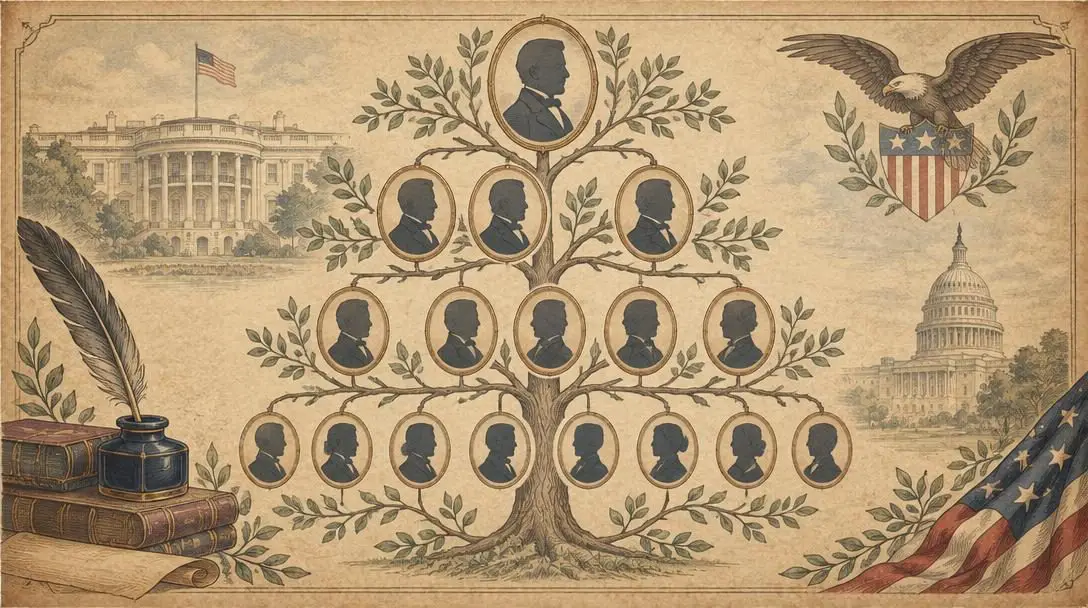
- Relationship: Third cousin four times removed from Abraham Lincoln
- Connecting Ancestor: John Hanks, second cousin to Lincoln
- On-Screen Portrayal: Abraham Lincoln in the 2012 film Lincoln
Genealogical research has confirmed that Tom Hanks shares a direct ancestral link with one of the most prominent figures in American history: Abraham Lincoln. Hanks is officially recognized as the sixteenth president's third cousin four times removed. Their shared lineage traces back through an ancestor named John Hanks, who was Lincoln's second cousin.
Hanks has long expressed a profound respect and admiration for his historic relative. This ancestral connection and personal reverence culminated when Hanks took on the role of Abraham Lincoln in the 2012 historical drama film Lincoln, directed by Steven Spielberg, allowing him to portray his own distant kin on screen.
Vintage Typewriter Collection

- Collection Size: Over 100 working manual typewriters
- Origins: Childhood experimentation on his mother's manual machine
- Literary Output: 2017 short story collection Uncommon Type
Beyond acting, Hanks is an obsessive collector of manual typewriters, possessing a private collection of well over 100 vintage machines. Rather than treating these mid-century contraptions merely as display pieces or decorative relics, he regularly uses them to draft personal letters, notes, and manuscripts. This tactile fascination originated during his childhood years, when he first discovered the satisfaction of composing imaginative stories on his mother's manual typewriter.
Hanks eventually channeled this lifelong mechanical passion into published literature. In 2017, he released Uncommon Type, a collection of short stories in which a typewriter plays a thematic or literal role in every narrative. His engagement with the medium also extends into typographical visual art; he famously created an intricate portrait of author Ernest Hemingway composed entirely out of typed letters, punctuation marks, and typographical symbols.
Far from serving as mere mantlepiece ornaments, manual typewriters function as essential instruments of focus and patience in Hanks' daily creative routine.
Oakland Hilton Bellhop Experience
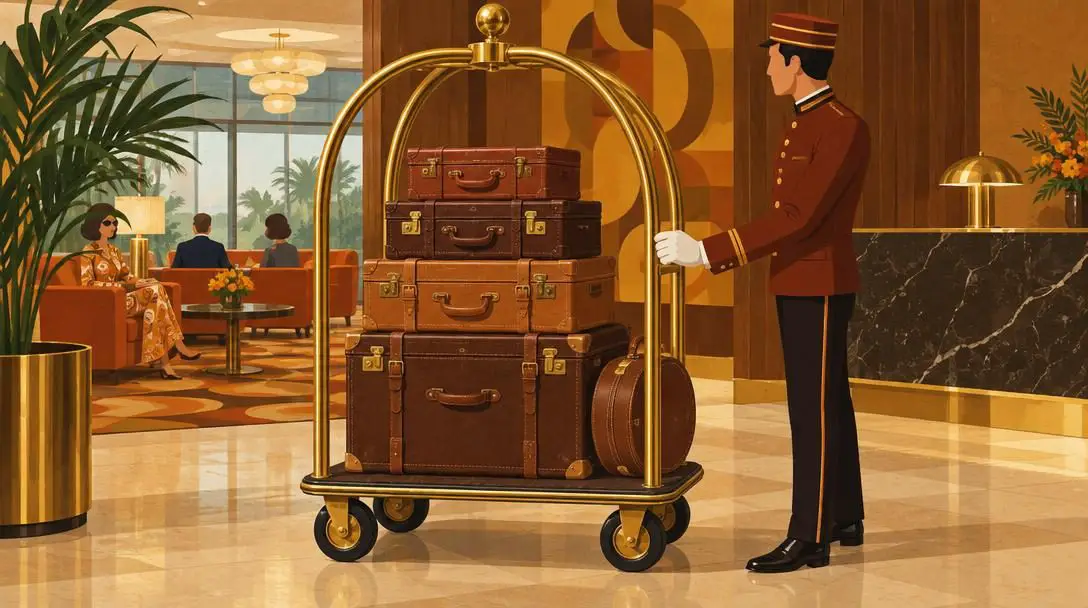
- Employer: Oakland Hilton Hotel in California
- Duration: Approximately one year
- Role: Hotel luggage handler and guest services bellhop
Before his breakthrough as an actor, Hanks spent his early adulthood working an everyday service job. Through a personal family friend, he secured employment as a hotel bellhop at the Oakland Hilton Hotel in California. He worked in this hospitality role for approximately one year before committing fully to a professional acting path.
Rather than dismissing this period as menial labor, Hanks has repeatedly cited his year as a bellhop as a formative masterclass in dramatic performance. Hauling suitcases and serving travelers required him to read guest temperaments instantly, interpret nonverbal signals, and anticipate individual needs. Those interpersonal instincts became foundational tools for his subsequent acting technique.
Multilingual Polyglot Talents

- Languages Spoken: English, Spanish, French, Italian, and German
- Proficiency: Conversational to functional fluency across four foreign tongues
- Cinematic Impact: Influenced his character work in the 2004 film The Terminal
Hanks exhibits an exceptional degree of cultural and linguistic versatility. In addition to his native English, he is capable in Spanish, French, and Italian, and possesses functional conversational knowledge of German. He has long cultivated an active interest in languages as a means of bridging cultural divides and establishing personal rapport with people across the globe.
This linguistic facility has directly informed his approach to screen acting. In the 2004 film The Terminal, Hanks portrayed an Eastern European traveler stranded inside an international airport, navigating severe language barriers, unfamiliar syntax, and shifting social norms—a performance shaped by his deep understanding of foreign languages and cross-cultural communication.
Apollo 11 Moon Landing Connection
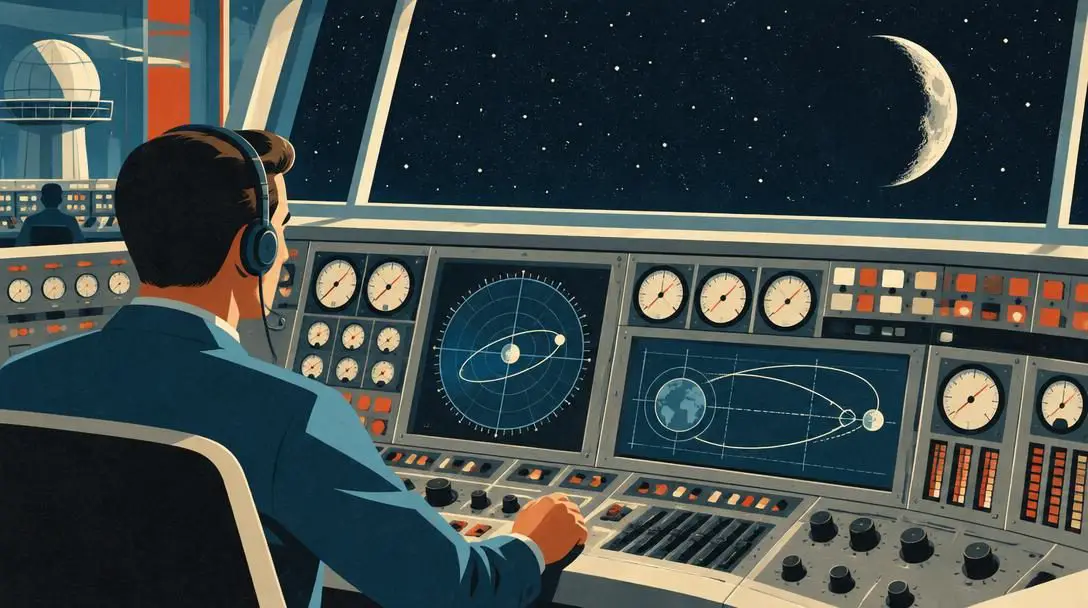
- Familial Tie: Father employed by Pacific Gas and Electric Company
- Historic Event: Apollo 11 lunar landing in July 1969
- Subsequent Space Works: Apollo 13, From the Earth to the Moon, and Magnificent Desolation
Hanks' celebrated affiliation with outer space extends well beyond starring as astronaut Jim Lovell in the 1995 blockbuster Apollo 13. During the Apollo 11 lunar landing in July 1969, his father was employed by the Pacific Gas and Electric Company, the California utility firm responsible for supplying electrical power to NASA's mission control center during the historic mission.
Watching the lunar broadcast as a young boy, knowing his father's company was actively powering the operation, left an indelible mark on Hanks. That childhood excitement blossomed into a lifelong advocacy for space exploration. He later turned this passion into major creative endeavors, serving as executive producer for the acclaimed 1998 HBO miniseries From the Earth to the Moon and co-writing and narrating the 2005 documentary film Magnificent Desolation: Walking on the Moon 3D.
How real-world experiences shape creative longevity
Creative excellence is rarely the byproduct of raw instinct alone. The unconventional facts of Tom Hanks' journey demonstrate how varied real-world contexts provide the raw emotional and practical material necessary for creative longevity. When analyzed closely, his early jobs, technical hobbies, and familial backgrounds serve clear functional roles in artistic development.
Service-industry positions, such as working as a bellhop, operate as intensive real-world classrooms. In a service role, an individual must observe human behavior in real time, noting subtle emotional cues, body language, and spoken cadences. For an actor, these encounters build an internal catalog of human types and behaviors. Learning to anticipate a guest's needs fosters deep empathy, which is the exact cognitive tool an actor uses to understand the motivations of a scripted character.
Similarly, interacting with languages alters how an artist listens. Learning grammar and vocabulary across French, Spanish, Italian, and German requires attention to rhythm, pronunciation, and the cultural contexts in which people speak. This linguistic agility directly aids an actor when mastering accents, deciphering complex dialogue, or portraying characters who must negotiate unfamiliar worlds, as Hanks demonstrated in The Terminal.
Personal hobbies like typewriter collecting serve a functional purpose in an artist's routine. Unlike digital keyboards, mechanical typewriters demand deliberate physical effort. Each strike of a key requires intention, and mistakes cannot simply be deleted with a single backspace key. This slow, tactile process creates focus, helping a writer consider each word before stamping it onto the page. Hanks turned this mechanical process into a narrative tool, resulting in his book Uncommon Type and his intricate typed portraiture.
Steps to channel personal background into creative work
The lessons drawn from Tom Hanks' past can be applied by anyone seeking to turn their hobbies, unusual family histories, or past jobs into creative assets. Follow these structured steps to cultivate this approach in your own creative pursuits:
- Audit past entry-level jobs for observational lessons. Reflect on previous employment, such as retail, food service, or hospitality work. Write down specific instances where you had to predict a customer's reaction, calm an agitated individual, or observe human behavior under stress. Identify how those observational skills can inform your current creative projects or daily communications.
- Engage with tactile, low-technology hobbies. Incorporate physical tools into your routine to step away from modern digital distractions. Whether adopting a manual typewriter, journaling with a fountain pen, or working with physical craft materials, use these tools to build sustained focus and patience.
- Study languages to improve listening and empathy. Dedicate regular practice to learning foreign languages such as Spanish, French, Italian, or German. Pay close attention to how native speakers express emotions and phrase their ideas. Use language study not merely as an academic exercise, but as a practical method to connect with people from different cultural backgrounds.
- Trace historical and familial connections. Conduct basic genealogical research or gather stories from family elders. Look for connections to significant historical moments, such as family members working for companies tied to milestones like the Apollo 11 mission, or distant familial branches linked to historic leaders like Abraham Lincoln. Use these historical connections to ground your personal storytelling or artistic writing.
- Channel lifelong passions into structured projects. Take a topic that fascinated you in childhood—such as outer space, astronomy, or machinery—and translate it into an actionable pursuit. This can include writing short stories around that subject, pitching related projects at work, or producing creative works that educate and inspire others.
Common misconceptions about celebrity backgrounds
When reading intriguing facts about high-profile actors, readers often form misconceptions about how these traits develop and why they matter. Avoiding these common mistakes will give you a clearer perspective on career longevity and creative success:
- Assuming unusual backgrounds are mere coincidences: It is easy to treat facts like Hanks' bellhop job or his father's role at Pacific Gas and Electric Company as meaningless trivia. In reality, real-life backgrounds provide the emotional foundation for authentic creative work. Dismissing these moments overlooks how diverse life experiences contribute to high-level artistic performance.
- Believing that technical skills cannot crossover into creative fields: Some people view mechanics or manual tasks—such as using a typewriter—as completely separate from artistic talent. Hanks showed that operating manual typewriters can lead directly to writing published books like Uncommon Type and creating visual art like his Ernest Hemingway portrait. Technical interests often feed artistic expression.
- Overlooking the discipline required for language acquisition: Fluency in multiple languages is not an innate trick; it requires continuous curiosity and practice. Assuming someone learns languages without effort diminishes the focus required to speak French, Spanish, Italian, or German. Language learning requires intentional dedication to understanding people from different cultures.
- Thinking success eliminates the value of early labor: It is a mistake to view early, low-wage jobs like hotel bellhopping as lost time or irrelevant steps. The skills gained from direct customer service—such as reading people and responding to their needs—often provide practical advantages that formal schooling cannot match.
How to experience Hanks' influences in his filmography
Now that you know these lesser-known facts about Tom Hanks, you can view his projects with a deeper appreciation of the background that informs them. Consider taking these steps to enrich your exploration of his creative career:
First, revisit his filmography with an eye toward his real-world influences. When watching The Terminal, observe how his character navigates language barriers and cultural differences, keeping in mind Hanks' own polyglot background and fascination with cross-cultural communication. When viewing Apollo 13, remember his personal childhood connection to Apollo 11 through his father's work at Pacific Gas and Electric Company, and consider how that emotional tie brings authenticity to his performance.
Second, explore his space-related productions beyond standard theatrical features. Seek out the HBO miniseries From the Earth to the Moon, which Hanks produced, to see how his passion for space history was translated into expansive television storytelling. Additionally, consider looking into the documentary Magnificent Desolation: Walking on the Moon 3D to hear him narrate the realities of the lunar landing.
Finally, examine his literary and artistic efforts. Reading Uncommon Type provides direct insight into how a love for vintage typewriters can yield an entire collection of creative fiction. By analyzing how Hanks integrated family history, past service jobs, linguistic study, and mechanical hobbies into a lasting career, fans and aspiring creators alike can discover new ways to draw inspiration from their own lives.
Frequently asked questions
How exactly is Tom Hanks related to Abraham Lincoln?
Tom Hanks is Abraham Lincoln's third cousin four times removed. Their shared lineage traces through John Hanks, who was the sixteenth president's second cousin. Hanks later portrayed Lincoln on screen in Steven Spielberg's 2012 historical drama Lincoln.
How many typewriters does Tom Hanks own, and does he use them?
Hanks owns a private collection of well over 100 manual vintage typewriters. He does not treat them merely as display relics; he actively uses them to draft personal letters, notes, and manuscripts, and he published the typewriter-themed short story collection Uncommon Type in 2017.
Where did Tom Hanks work as a hotel bellhop?
Hanks worked as a bellhop at the Oakland Hilton Hotel in California for roughly one year during his early adulthood. He obtained the position through a personal family friend before transitioning fully to acting.
What foreign languages can Tom Hanks speak?
In addition to his native English, Hanks has varying degrees of ability in Spanish, French, and Italian, and possesses conversational knowledge of German. His linguistic background assisted his portrayal of an Eastern European immigrant in the 2004 film The Terminal.
What was Tom Hanks' father's role in the Apollo 11 mission?
During the Apollo 11 moon landing in July 1969, Hanks' father worked for the Pacific Gas and Electric Company, the California utility responsible for supplying electrical power to NASA's mission control center during the operation.
The bottom line
The enduring appeal of Tom Hanks stems from much more than on-screen charisma; it is anchored in a lifetime of wide-ranging curiosity, manual craftsmanship, and genuine human connection. From the luggage corridors of the Oakland Hilton to the ancestral legacy of Abraham Lincoln, his unique background demonstrates that creative depth is built from the ground up through authentic life experience.