7 Ways to Save Money on Miniatures Gaming
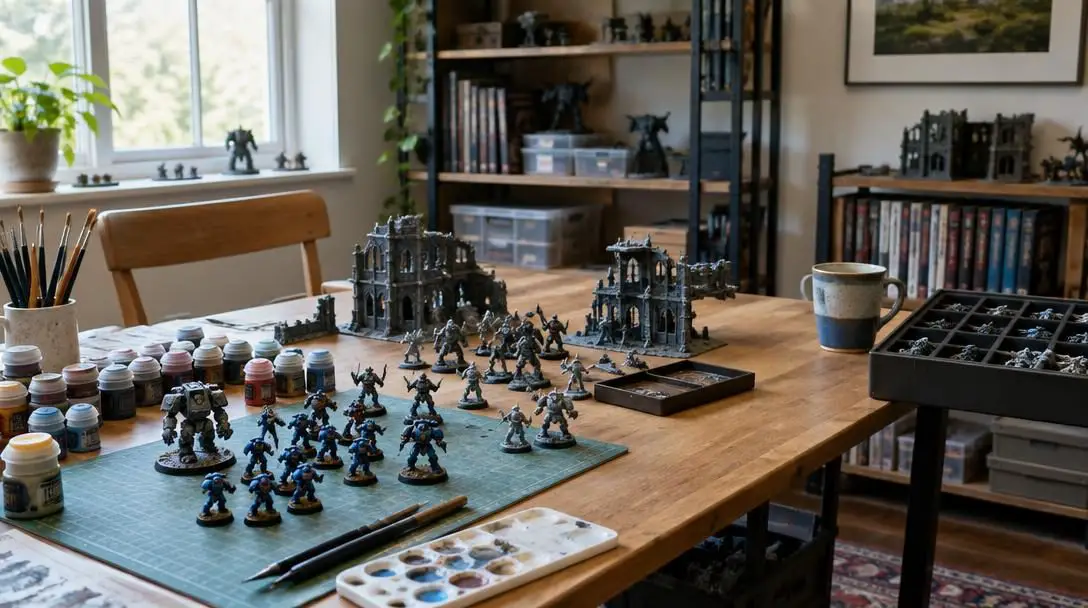
Miniatures gaming stands out as one of the most rewarding pastimes in modern hobby culture, merging competitive tactical gameplay with narrative depth, fine craftsmanship, and passionate local communities. Players spend hours assembling armies of detailed figures, painting tiny soldiers, war machines, and monsters, and staging tabletop battles across hand-crafted scenery. Yet behind the dramatic battle lines lies an undeniable reality: tabletop miniatures gaming carries a reputation for being remarkably expensive, with rulebooks, miniatures, paint sets, and commercial terrain requiring a substantial financial commitment.
Fortunately, building an impressive force and hosting immersive game nights does not require an endless stream of retail purchases. By trading immediate consumer convenience for resourcefulness, creative crafting, and community collaboration, hobbyists can dramatically reduce their expenses while retaining the full visual and tactical joy of tabletop gaming.
Key takeaways
- Purchasing second-hand figures and trading duplicates locally slashes retail acquisition costs while circulating out-of-print pieces.
- Crafting scenery from common household supplies like cardboard, plaster, and foam boards provides custom, budget-friendly battlefield environments.
- Prioritizing reusable, modular terrain across multiple gaming genres preserves both storage space and financial resources over the long haul.
- Learning essential painting fundamentals such as base coating, washing, and drybrushing eliminates the need for expensive commercial pre-painted sets or commission artists.
Understanding the Tabletop Miniatures Economy
Tabletop budgeting begins by recognizing how the commercial miniatures industry prices its goods. When a hobbyist purchases brand-new, factory-boxed miniatures or ready-to-play molded terrain, they pay a premium for precision injection molding, global brand marketing, and boxed convenience. Navigating the hobby on a practical budget requires shifting from convenience-driven spending to value-driven acquisition. This approach takes advantage of the natural turnover within the gaming community, where veteran players continually rotate through armies, downsize their collections, or leave older rule systems behind.
This dynamic secondary circulation creates an abundant supply of pre-owned models, unbuilt sprues, and discontinued treasures. Furthermore, the tactile, physical nature of the hobby invites self-reliance. Commercial terrain and painting services carry steep markups, yet both can be replaced with basic household crafting skills and straightforward painting techniques that yield professional-looking results for pocket change.
Saving money in miniatures gaming is fundamentally about shifting from convenience-driven spending to value-driven acquisition.
Seven Core Strategies to Cut Hobby Expenses
Whether you are constructing your very first squad or expanding an existing legion, seven proven approaches make it possible to play at any scale without draining your bank account.
| Strategy | Primary Benefit | Key Resource Required | Best For |
|---|---|---|---|
| Buy Used Models | Deep retail discounts | Secondary market patience | Army expansion |
| Make Your Own Terrain | Near-zero material costs | Basic craft tools | Battlefield building |
| Invest in Reusable Pieces | Multi-game utility | Modular planning | Space and money saving |
| Buy Miniatures in Bulk | Lower cost per model | Upfront capital or group buys | Horde armies and starters |
| Shop Thrift Stores | Unusual bargain finds | Persistent store visits | Board game salvage and scenery |
| Learn Basic Painting Techniques | Avoids commission rates | Introductory practice | Personalized collections |
| Trade with Other Gamers | Zero cash outlay | Unwanted collection surplus | Out-of-print and specialty units |
Buy Used Models
Specialty online platforms and secondary marketplaces provide constant access to pre-owned figures that sell far below original retail pricing. Dedicated outlets such as eBay, Miniature Market, and Reaper Miniatures frequently feature assembled models, partially painted regiments, or unboxed sprues from players downsizing their collections. While pre-owned miniatures may not always feature the pristine, untouched crispness of fresh retail kits, they are fully functional gaming pieces that dramatically lower the cost of entry for competitive or casual play.
Make Your Own Terrain
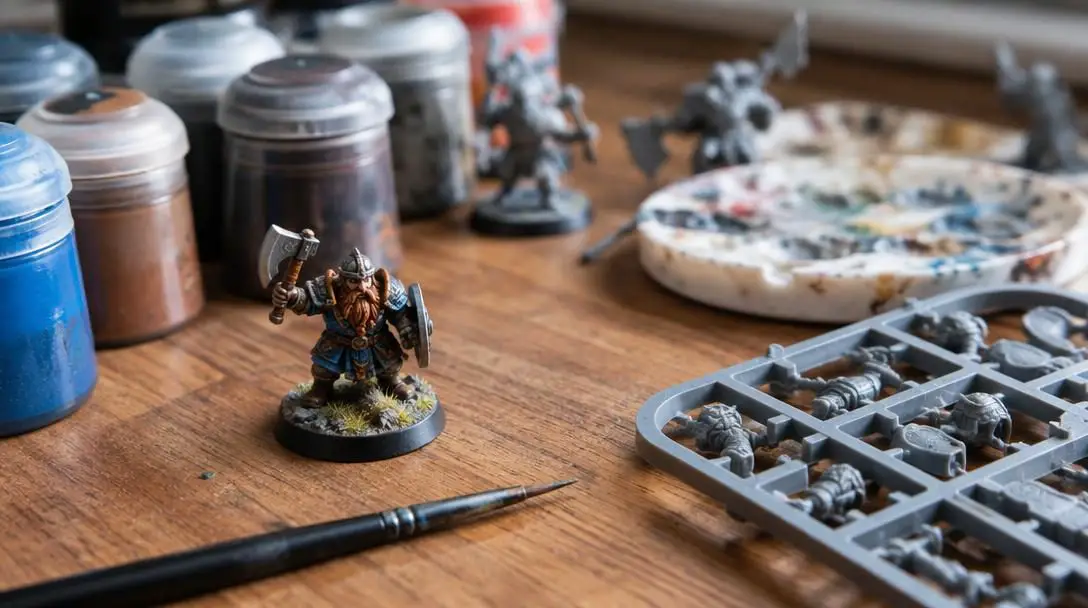
Commercial terrain kits—such as injection-molded plastic ruins, resin bunkers, and pre-formed hills—can easily cost as much as the armies fighting across them. You can bypass this commercial markup entirely by handcrafting your own terrain using everyday domestic materials. Inexpensive components such as corrugated cardboard, packing foam, plaster wrap, and dense foam boards can be cut, stacked, textured, and painted to create rugged cliff sides, industrial ruins, and defensive barricades that look remarkable on the tabletop.
Invest in Reusable Pieces
It is easy to fall into the trap of purchasing or building specialized terrain tailored to a single thematic scenario. Doing so not only depletes your hobby budget but also consumes massive amounts of residential storage. Instead, focus your energy and funds on versatile, reusable terrain pieces that transition seamlessly between genres and rule systems. Modular stone walls, generic forested areas, and weathered rock outcrops serve equally well in a grimdark sci-fi firefight, a medieval fantasy skirmish, or a World War II engagement.
Buy Miniatures in Bulk
Miniatures manufacturers frequently price individual character blister packs at steep premiums while offering significant volume discounts on boxed sets, army deals, and starter bundles. Sourcing miniatures in larger quantities lowers the average cost per model. Gamers can capitalize on bulk pricing by purchasing larger army lots directly or organizing group purchases with friends to split multi-faction starter kits, allowing everyone to acquire the specific units they need at an advantageous per-figure rate.
Shop Thrift Stores
Charity outlets and secondhand thrift shops represent an unexpected paradise for budget-conscious gamers. Dedicated shelf browsing through the board game, toy, and household sections often yields vintage miniatures, classic fantasy board games brimming with usable figures, and out-of-print curiosities donated by former collectors. Even broken toy vehicles, architectural knick-knacks, and craft wire found in thrift stores can be scavenged and converted into post-apocalyptic terrain or conversion bitz for pennies on the dollar.
Learn Basic Painting Techniques
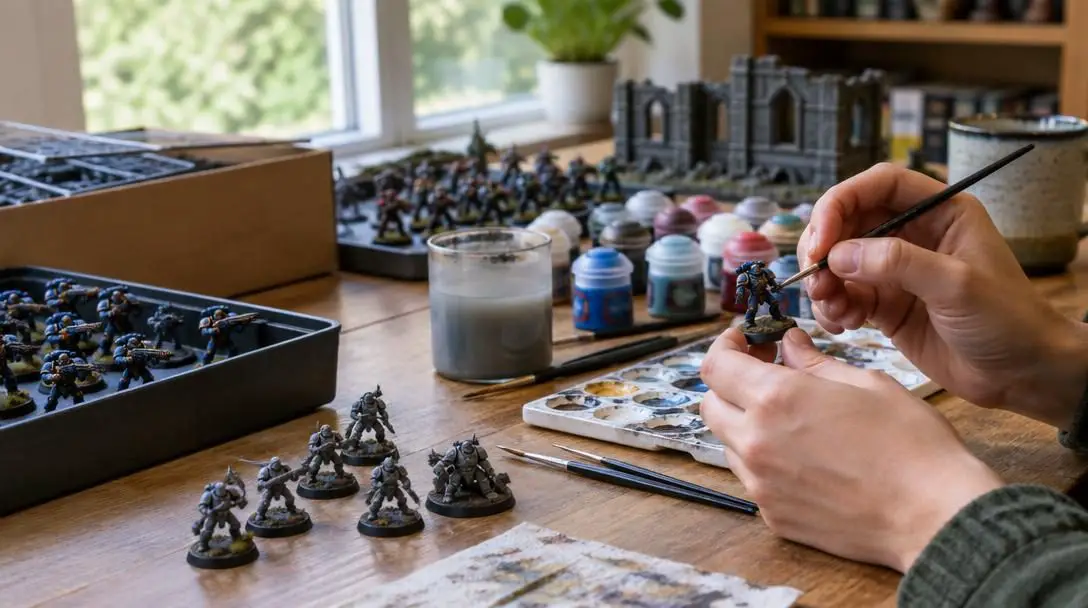
Acquiring pre-painted miniatures or hiring professional commission artists to paint raw plastic can quickly multiply your hobby expenses by hundreds of dollars. By taking the time to master basic hobby painting techniques, you eliminate external labor fees entirely while establishing complete creative control over your army's aesthetic. Fundamental painting techniques like establishing smooth base coats, applying acrylic washes for instant shadows, and drybrushing raised textures allow beginners to produce tabletop-standard forces quickly without requiring high-end artistic talent.
Trade with Other Gamers
Unassembled plastic sprues, extra unit options, and abandoned army projects sitting inside closet boxes represent genuine purchasing power within the tabletop gaming community. Direct trading with fellow hobbyists enables you to secure desired models without spending any cash. Establishing regular swap events at your local hobby shop or community club makes it easy to barter unwanted pieces for essential units, while offering a reliable route for tracking down discontinued figures from out-of-print production lines.
Step-by-Step Practical Implementation
Putting these money-saving principles into daily practice requires consistent habits rather than occasional bursts of bargain hunting. Organizing your hobby routine keeps your spending focused and deliberate.
- Audit your existing collection: Sort through all storage bins, carrying cases, and sprues to catalog unused figures, duplicate models, and surplus bitz that can serve as future trade currency or terrain components.
- Establish dedicated secondhand search alerts: Create automated or weekly search routines on eBay, Miniature Market, and Reaper Miniatures for your desired army factions, clearance items, and unpainted bulk lots.
- Assemble a core terrain workbench: Gather delivery boxes, scrap foam packaging, plaster wrap, craft glue, and standard hobby knives so you can construct battlefield hills and fortifications without buying retail sets.
- Prioritize multi-genre modular scenery: Design scratch-built pieces with neutral palettes—such as grey stone structures and natural earthworks—that fit historical, fantasy, and sci-fi rulebooks alike.
- Coordinate group orders with club members: Partner with local players to pool funds for discounted wholesale bundles, starter boxes, or holiday army releases to minimize individual unit costs.
- Conduct routine thrift store sweeps: Check neighborhood charity shops for plastic-heavy board games, discarded model kits, and textured crafting castoffs that can be repurposed into terrain.
- Practice basic painting fundamentals: Follow step-by-step digital tutorials on washing and drybrushing to paint your own units cleanly using affordable starter acrylic paints.
- Organize a community swap night: Work with local gaming spaces or club organizers to host open trading sessions where members trade sprues, rules, and models directly.
Common Budgeting Mistakes to Avoid
Attempting to cut corners without careful planning can sometimes lead to unexpected expenses and buyer frustration. Staying aware of frequent missteps protects both your wallet and your hobby morale.
- Accumulating unusable bulk lots: Purchasing a massive box of assorted second-hand models merely because the price is low wastes money if eighty percent of the figures cannot be used in your current armies.
- Overlooking damaged or poorly painted models: Buying used miniatures without verifying whether weapons are snapped, components are missing, or thick layers of enamel paint have clogged surface details can demand tedious repair or stripping work.
- Constructing structurally weak terrain: Using lightweight cardboard or unreinforced foam boards without sealing them with diluted glue, plaster, or paint often results in warping, crushing, and ruined terrain during intense gameplay.
- Impulse buying large bundles for single models: Committing to a high-priced starter set solely to obtain one exclusive commander model leaves you with unwanted plastic sprues that drain cash reserves.
- Attempting complex painting methods prematurely: Trying to master advanced display-level blending and layering techniques right away often leads to project fatigue, abandoned armies, and rushed purchases of expensive specialty supplies.
- Violating community trading etiquette: Attempting to trade damaged, low-value components for pristine, premium models breeds distrust among peers and damages future trading opportunities within your local scene.
Balancing Time, Storage, and Community Resources
Sustaining a cost-effective tabletop hobby requires finding the right equilibrium between financial investment and personal time. While making your own terrain from cardboard, plaster, and foam boards costs virtually nothing in cash, it demands hours of measuring, cutting, texturing, and drying. Similarly, stripping thick acrylic paint from secondhand miniatures demands patience and manual cleaning. Weighing the time required for DIY crafting against your personal schedule ensures that budget hobbying remains an enjoyable creative outlet rather than a burdensome chore.
Storage considerations are equally critical when operating on a budget. Bulk purchases and thrift store hauls can quickly clutter closets, garages, and game rooms if collected haphazardly. Sticking to reusable, modular terrain pieces and carefully curated army lists ensures your physical gaming space stays orderly and functional.
Above all, active community participation is the most powerful budget tool available to any miniatures gamer. Connecting with a local club or gaming shop allows players to share painting supplies, swap modular scenery across campaigns, and split retail army sets. By pooling resources and enthusiasm, hobbyists cultivate a thriving tabletop environment that remains accessible, creative, and financially sustainable over years of play.
Frequently asked questions
Where can I reliably find discounted used miniatures?
Established online storefronts and community-driven marketplaces like eBay, Miniature Market, and Reaper Miniatures routinely list pre-owned models, opened boxes, and clearance stock at significant markdowns compared to standard retail prices.
What everyday materials work best for scratch-building terrain?
Corrugated cardboard, scrap delivery boxes, high-density foam boards, plaster wrap, and basic craft foam form the backbone of homemade terrain. Joined with PVA craft glue and painted with basic acrylics, they create durable hills, ruins, and barricades.
How can I paint miniatures affordably without buying specialty paints?
You can begin with entry-level hobby paints or student-grade acrylics from craft stores. Mastering core painting fundamentals such as thin base coats, dark acrylic washes for shadow depth, and drybrushing for highlights produces great tabletop results without high costs.
Is buying miniatures in bulk always cost-effective?
Bulk sets and army bundles lower the per-figure cost significantly, but they are only economical if you actually need the units included. If you only want a single miniature from a large set, buying the bundle will deplete your funds with unwanted surplus.
How do I organize a tabletop swap meet?
Coordinate with your local game store or club organizer to reserve space for an open trading night. Encourage participants to bring labeled boxes of unused sprues, loose miniatures, bitz, and rulebooks to make direct, equitable exchanges without cash.
The Bottom Line
Miniatures gaming does not have to be an exclusive, high-cost pastime reserved only for those willing to spend freely on every new commercial release. By leaning into secondhand marketplaces, handcrafting modular scenery with household cardboard and plaster, learning basic painting methods, and participating in local trading networks, you can field magnificent, battle-ready armies on an affordable budget. Thoughtful curation and community collaboration ensure that your tabletop journey remains financially sound, artistically fulfilling, and endlessly engaging.