A Brief History Of McDonald’s Corporate Strategies
There are commercial enterprises that achieve steady, modest returns through routine marketing, and then there are organizations whose operational strategies become universal case studies in brand building. Over several decades, McDonald’s has distinguished itself as one of the most studied corporate powerhouses in modern commerce, evolving from a modest regional hamburger stand into an international franchise network whose promotional maneuvers are dissected in university business courses worldwide.
The company’s rise was not an accident of culinary novelty, but rather the result of methodical corporate planning. By mastering structural architecture, high-stakes sports sponsorships, localized menu experimentation, and globally coordinated messaging, the fast-food giant established an enduring blueprint for retail expansion. Tracing this operational history offers valuable lessons on how physical design, consumer psychology, and distributed franchise innovation can transform a regional storefront into a global institution.
Key takeaways
- Architectural design served as the chain's earliest billboard, using soaring parabolas that unintentionally formed the famous "M" when viewed from specific angles.
- Major product breakthroughs, including the Happy Meal and McCafé, originated from entrepreneurial international franchisees rather than corporate headquarters.
- High-profile sponsorships with the FIFA World Cup and the Olympic Games deliberately positioned the fast-food brand alongside elite athletic performance to counter negative health perceptions.
- Uncapped promotional sweepstakes tied to real-world athletic outcomes can trigger massive financial liability, as demonstrated during the 1984 Summer Olympics.
- Sustained global messaging achieved peak cohesion through the 2003 worldwide launch of the German-originated "I'm Lovin' It" campaign.
Architectural Identity: Turning Storefronts into Roadside Billboards
Before digital channels, ubiquitous broadcast networks, and algorithmic mobile ads, roadside restaurant operators faced a strictly physical challenge: securing the immediate visual attention of approaching vehicular traffic. In the early automotive era, a restaurant building had to advertise itself instantly to drivers traveling at high speeds. Architectural distinctiveness was an operational necessity, not merely a decorative choice.
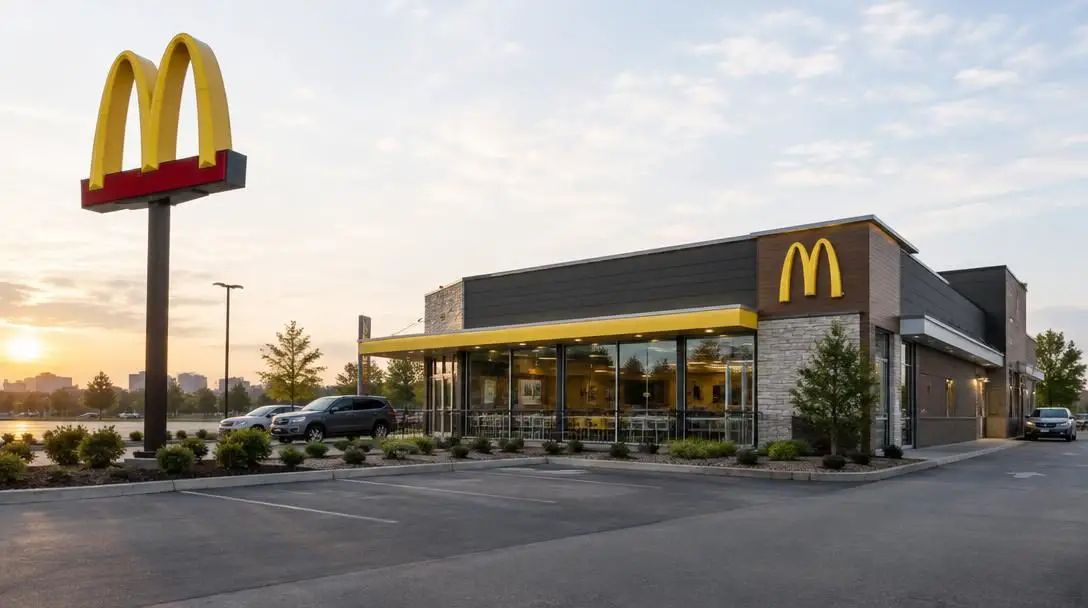
The founding McDonald brothers initially proposed mounting two oversized half-circles directly onto the roofline of their restaurants. However, architect Clark Meston revised the idea, recommending soaring parabolic structures that extended upward from the ground. This structural revision created the chain's signature golden arches. The arches were not originally designed to represent the English letter "M." Instead, when an approaching driver viewed the building from a specific oblique exterior angle, the dual parabolas overlapped visually to form the letter shape. The resulting structural aesthetic proved so durable that it has endured largely unchanged for decades, establishing an architectural hallmark recognized across the globe.
The most transformative and enduring corporate initiatives often emerge not from corporate boardrooms, but from individual franchisees solving local customer challenges.
Foundational Pillars of Brand Expansion and Menu Innovation
McDonald's sustained its post-war growth by developing operational strategies tailored to specific market pressures. Rather than enforcing top-down ideas uniformly across every territory, corporate leadership repeatedly turned regional franchise experiments into worldwide retail standards.
The Happy Meal
- Origin: Guatemala
- Initial Concept: Ronald Menu
- Debut Era: Mid-1970s
- Domestic Test Market: Kansas City
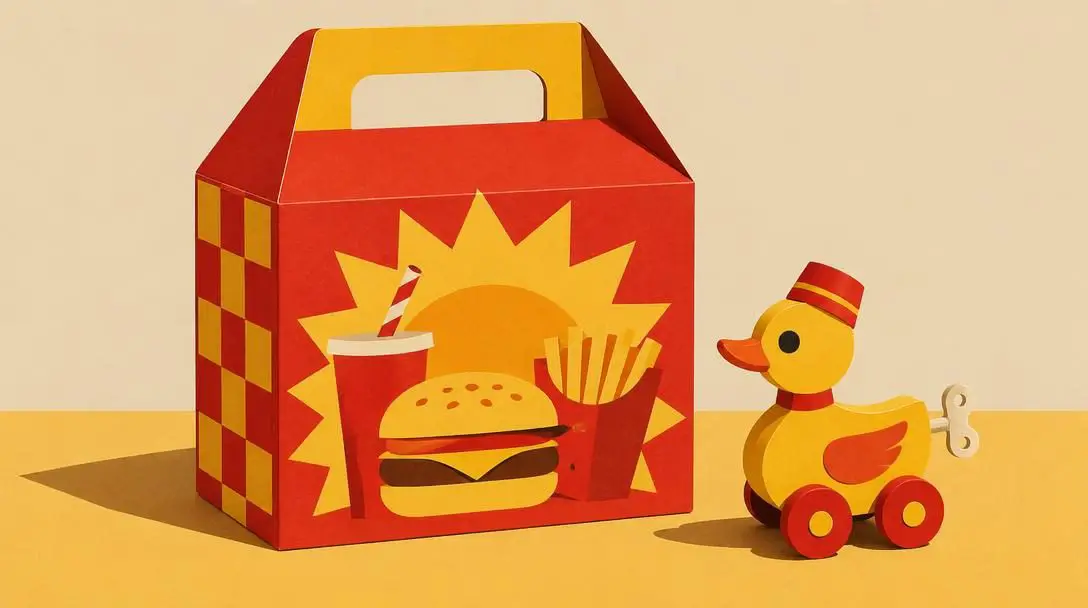
In the mid-1970s, restaurant operators routinely struggled to capture family meal visits because young children were frequently picky eaters. A franchisee operating in Guatemala developed a practical regional solution: bundling child-sized portions into a custom package that included a small novelty toy. Dubbed the Ronald Menu, the regional experiment solved the dining friction parents experienced when visiting the restaurant. Upon discovering the program's success, corporate leaders refined the presentation, streamlined assembly times on kitchen prep lines, and ran validation trials in Kansas City before releasing the bundled offering across global markets as the Happy Meal.
McCafé

- Origin: Melbourne, Australia
- Launch Year: 1993
- U.S. Pilot Region: Chicagoland area
- Signature Drinks: Macchiatos, cappuccinos, specialized roasts
During the late twentieth century, changing consumer preferences prompted younger demographics to frequent upscale specialty coffee chains like Starbucks. Rather than launching an immediate nationwide overhaul in the United States, McDonald’s leveraged a format that debuted in Melbourne, Australia, in 1993. The McCafé specialty concept introduced premium roast coffees, cappuccinos, and macchiatos directly into the franchise layout. After a decade of steady refinement across Australian stores, corporate management imported the specialty coffee model to domestic company locations within the Chicagoland area before rolling it out nationally to drive high-margin morning and afternoon sales.
Global Athletic Partnerships
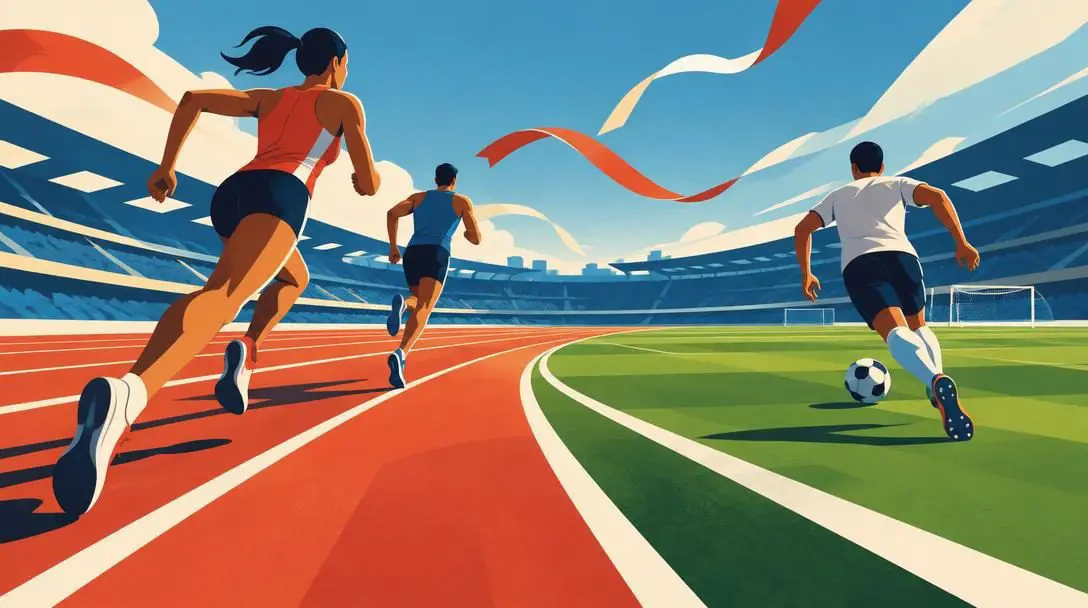
- Key Properties: FIFA World Cup, Olympic Games, Super Bowl
- Investment Scale: Hundreds of millions of dollars
- Primary Goal: Countering negative health stigmas
As the fast-food sector matured, societal perceptions increasingly associated quick-service food with sedentary lifestyles and poor nutritional habits. Rather than passively accepting the assumption that health-conscious consumers would avoid quick-service restaurants, McDonald’s launched a counter-strategy. The company invested hundreds of millions of dollars to secure flagship partnerships with premier sporting events, notably the FIFA World Cup, the Olympic Games, and the Super Bowl. By associating its identity with elite international competition, the enterprise successfully buffered its public image against health-related stigmas.
The "I’m Lovin’ It" Global Campaign
- Origin: Germany ("Ich Liebe Es")
- Launch Year: 2003
- Musical Collaborators: Justin Timberlake, Pharrell Williams
- Operational Role: Unified worldwide packaging anchor
For decades, McDonald’s cycled through regional and rotating promotional taglines, including phrases like "There’s a difference at McDonald’s You’ll Enjoy" and "There’s Nothing Quite Like a McDonald’s." While functional, these slogans lacked cohesive global alignment. In 2003, leadership adapted a German marketing initiative built on the phrase "Ich Liebe Es," translating it into English as "I’m Lovin’ It." Bolstered by high-profile musical collaborations with Pharrell Williams and Justin Timberlake, the phrase became a permanent fixture on packaging worldwide, providing a single cross-border anchor beneath which local campaigns operate.
At a Glance: Landmark Operational Strategies
| Strategic Pillar | Place of Origin | Primary Business Objective | Core Implementation Driver |
|---|---|---|---|
| Parabolic Golden Arches | United States | Capture high-speed roadside traffic | Dual-arch visual alignment by Clark Meston |
| The Happy Meal | Guatemala | Attract dining families and picky eaters | Bundled portions paired with toys and packaging |
| McCafé Specialty Drinks | Australia | Recapture afternoon and beverage market share | Espresso drinks, macchiatos, and specialty roasts |
| Athletic Event Sponsorships | Global | Overturn negative health and wellness stigmas | Flagship alignments with FIFA and the Olympics |
| "I’m Lovin’ It" Campaign | Germany | Unify international promotional messaging | Pop-culture integration with Pharrell and Timberlake |
A Five-Step Framework for Scaling Local Innovations
The operational trajectory of McDonald’s reveals a consistent, repeatable methodology for transitioning localized market ideas into permanent international practices. Enterprises managing multi-unit or franchised operations can trace this roadmap to scale grass-roots solutions without disrupting core operations.
- Monitor decentralized franchise experiments: Identify practical adjustments executed by local managers facing regional market pressures, such as the initial Guatemalan packaging bundle designed to address picky eaters.
- Standardize components and assembly workflows: Re-engineer the regional product at corporate test kitchens to streamline food prep, reduce assembly steps, and avoid slowing down existing service speeds.
- Conduct controlled secondary market trials: Validate consumer appetite in an isolated domestic test market, such as the Kansas City trials that validated the Happy Meal format, before allocating global capital.
- Pilot expansion within dense regional clusters: Introduce international retail formats into tightly controlled urban regions—similar to testing McCafé throughout the Chicagoland area—to measure franchisee adaptation under domestic conditions.
- Anchor the initiative with mainstream cultural integration: Reinforce rollouts using durable music, celebrity alignments, and consistent multilingual packaging to integrate the concept into daily consumer culture.
Costly Promotional Pitfalls: The 1984 Olympic Miscalculation
Studying brand history requires reviewing expensive promotional miscalculations alongside major victories. When corporate promotional campaigns link financial liabilities to unpredictable real-world outcomes, the operational exposure can quickly become untenable.
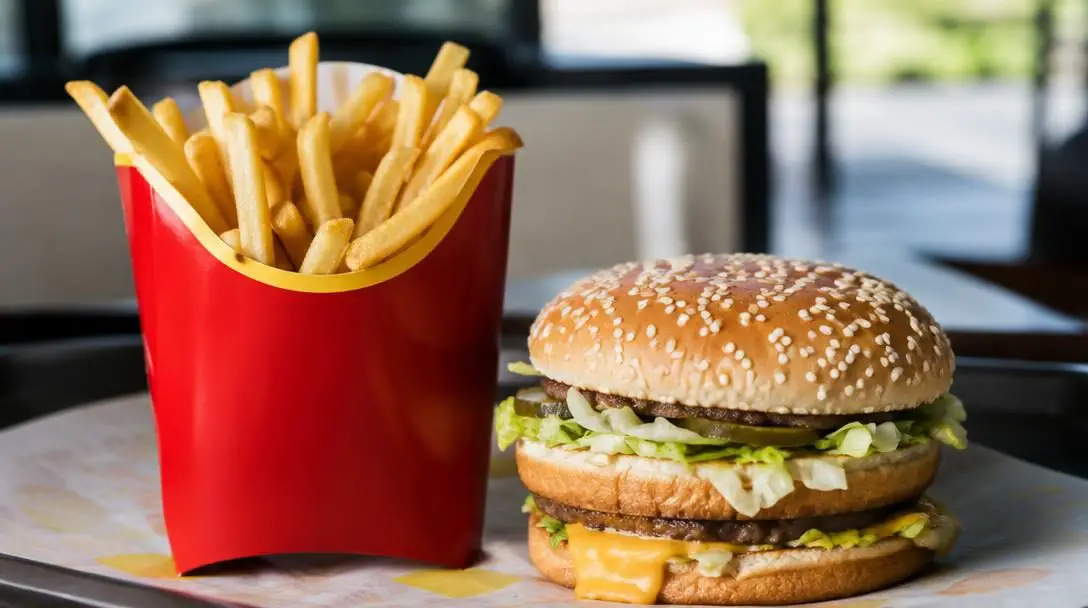
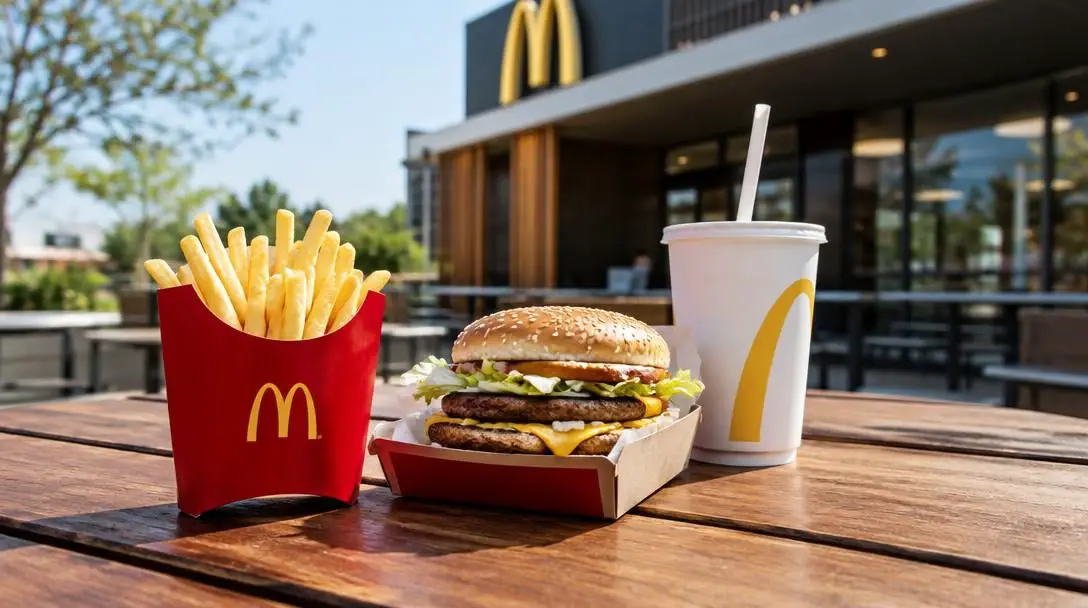
During the 1984 Summer Olympics, McDonald’s ran a high-profile domestic sweepstakes where retail patrons received scratch-off game pieces tied to specific athletic events. If the United States team captured a medal in the designated category on the card, the customer could redeem the game piece for a free food item. For instance, holding a game piece for a men's basketball matchup meant a free Big Mac if the domestic team took the gold medal.
Corporate planners modeled the financial risk around historical medal expectations. However, when the Soviet Union and its allied nations orchestrated a diplomatic boycott of the 1984 Los Angeles Games, the competitive landscape shifted entirely. Facing a heavily diminished international field, United States athletes dominated the games, securing an unprecedented tally of podium finishes. Millions of consumers rushed to counter locations to redeem winning cards. Fulfilling the massive wave of free food items cost the enterprise vast sums of money, solidifying the promotion as an enduring case study in the danger of uncapped sweepstakes mechanics.
A similar vulnerability surfaced regarding product category development. By relying comfortably on its core drip coffee menu for decades, the enterprise left substantial market share open for specialty coffee purveyors throughout the late 1980s and 1990s. Had Melbourne franchisees not innovated the McCafé format locally in 1993, the company would have faced an uphill battle when trying to establish credibility in the espresso and cappuccino segments years later.
Future Strategic Considerations for Modern Enterprise Retail
As retail operations face shifts brought on by digital order streams, changing urban density, and changing diner habits, restaurant operators must reconcile historical corporate strengths with modern practical realities.
First, corporate leadership must balance physical architectural presence with digital service channels. Clark Meston’s soaring golden parabolas originally served as functional visual billboards for passing drivers. In an operating environment increasingly dominated by delivery couriers, third-party apps, and multi-lane drive-thrus, commercial chains must figure out how to maintain physical brand identity without compromising efficient vehicular turnaround.
Second, operators face constant tension between menu diversification and assembly velocity. Broadening drink menus to include custom espresso, specialty iced beverages, and multi-tier happy meals drives incremental revenue outside traditional lunch and dinner hours. However, each operational variation risks adding prep time to kitchen workflows. Maintaining core operational speed while offering tailored items requires continuous adjustments to equipment layout and kitchen floor plans.
Finally, enterprises must strike a balance between creative reinvention and stable brand messaging. While individual seasonal promotions introduce novelty, long-term brand equity relies on stability. Modern enterprises can borrow from the operational strategy behind the "I’m Lovin’ It" campaign: maintain a stable, global branding anchor while encouraging regional operators to experiment with localized variations on the ground.
Frequently asked questions
Did the McDonald brothers intend for the arches to represent the letter M?
No. The founding brothers initially conceived half-circles on the roof. Architect Clark Meston transformed them into large parabolas to catch the eye of approaching motorists. The arches only appeared as the letter "M" when viewed from an angle where the two structures visually aligned.
Where was the original Happy Meal concept developed?
The Happy Meal originated in Guatemala during the mid-1970s. A local franchisee created the "Ronald Menu," pairing kid-sized meal portions with a small toy to assist parents dining with picky children. Corporate later refined the concept and tested it in Kansas City.
Why did the 1984 Olympic promotion cost McDonald's so much money?
The campaign offered customers free menu items, such as Big Macs, whenever United States athletes won Olympic medals in specific events. After the Soviet Union and allied nations boycotted the 1984 Summer Games, American athletes won far more medals than projected, resulting in millions of unexpected free meal redemptions.
Where did the McCafé concept originate before coming to the United States?
The McCafé concept originated in Melbourne, Australia, in 1993. It was tested and refined throughout Australia for a decade before corporate management imported the format into the United States, piloting it in the Chicagoland area.
What was the origin of the "I'm Lovin' It" slogan?
The slogan originated from a 2003 German marketing campaign centered on the phrase "Ich Liebe Es." It was translated to English and launched globally with musical partnerships featuring Justin Timberlake and Pharrell Williams.
The bottom line
The business evolution of McDonald’s highlights a consistent corporate truth: monumental brand growth relies on combining structural discipline with bottom-up operational freedom. From Clark Meston’s calculated roadside parabolas to franchisee-driven breakthroughs like the Happy Meal and McCafé, the chain's most resilient business strategies evolved from solving direct, localized consumer frictions. By protecting core branding anchors while welcoming regional innovation, retail enterprises can build an adaptable operating model capable of weathering economic shifts and sustaining cross-generational customer loyalty.