A Key Stress-Buster: Why Is Coloring So Relaxing?

Modern daily life presents an ongoing stream of digital alerts, workplace deadlines, and personal responsibilities. Because persistent tension takes an undeniable toll on both psychological and physical well-being, people continuously seek practical ways to unwind. Widely recommended wellness habits such as vigorous workouts, formal meditation sessions, expressive journaling, and social gatherings provide substantial relief. Yet, many of these activities demand dedicated gear, physical stamina, or complex scheduling that can feel daunting after an exhausting day.
Alongside these classic self-care habits, another restorative outlet has earned a prominent place in daily routines: coloring. Long dismissed as a pastime strictly suited for early childhood, filling black-and-white line art with pigment offers an accessible, remarkably effective escape from everyday strain. By providing gentle boundaries and a tactile, screen-free focus, coloring invites the mind to step out of rumination and into calm awareness without requiring special talent or arduous preparation.
Key takeaways
- Coloring engages just enough focus to divert attention away from stressful loops without demanding heavy cognitive effort.
- Research highlights that concentrating on pleasant imagery helps displace intrusive, negative mental pictures.
- Unlike fitness goals or creative endeavors that demand mastery, coloring removes performance anxiety and welcomes mistakes.
- Nostalgic associations provide comforting emotional grounding, making the activity especially rewarding across generations, including senior citizens.
The Evolution from Childhood Play to Adult Wellness
For decades, coloring books were viewed primarily as simple pastimes designed to keep young children quietly occupied at kitchen tables and in classrooms. Parents and teachers valued them because holding crayons and working inside outlines aided fine motor development and color recognition. Almost everyone carries early sensory memories of opening a crisp box of wax crayons or colored pencils to fill pictures of cartoon favorites and simple animal figures.
Over the last decade, cultural perspectives surrounding creative rest shifted dramatically. Adults exhausted by constant screen exposure, professional pressures, and relentless multitasking began searching for tactile, low-stress hobbies. Many wanted to engage with art but felt intimidated by blank sketchbooks or the technical demands of painting. Coloring offered the perfect middle ground: an inviting, analog craft with clear boundaries that bypassed the fear of creative failure.
Publishers responded by developing sophisticated books filled with intricate botanicals, sweeping landscapes, and geometric designs. What began as a nostalgic novelty quickly matured into a widely recognized wellness tool, proving that an activity practiced since preschool holds enduring therapeutic power throughout adulthood.
Cognitive Mechanics: How Coloring Calms the Nervous System
To understand why coloring provides such genuine relief, it helps to examine how human attention behaves under stress. Everyday anxieties often begin as small, manageable problems—a traffic jam, an awkward comment, or an impending work task. However, when the brain fixates on these isolated friction points, they can spiral into overwhelming mental fatigue. Breaking that rumination requires redirecting conscious attention toward a neutral, absorbing physical task.
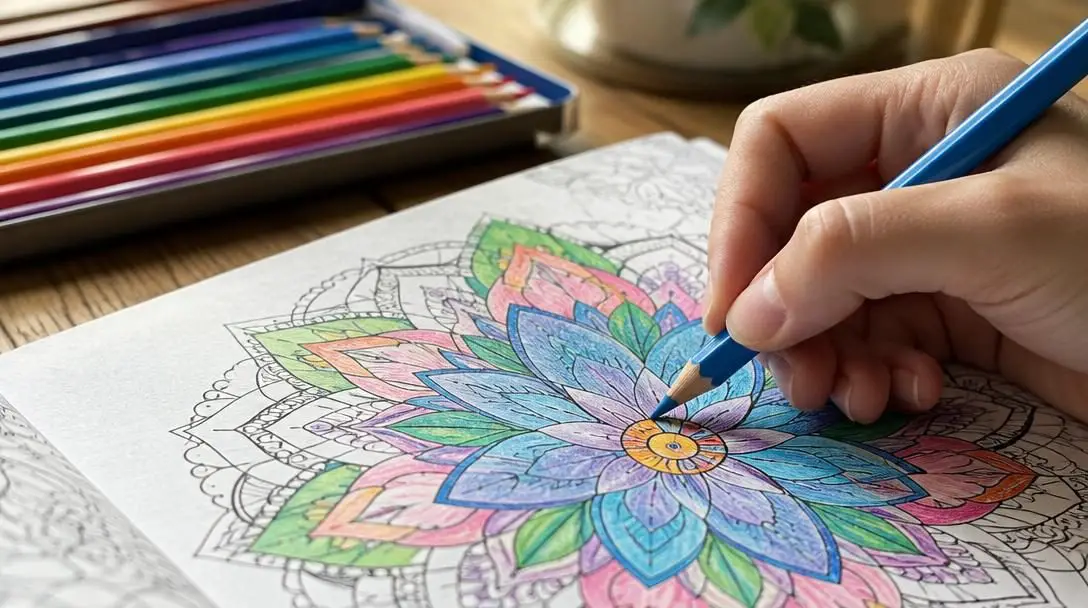
Coloring achieves this shift because it strikes a delicate psychological balance. Tracking printed lines, deciding on color combinations, and applying steady hand pressure require genuine presence of mind. Yet because the structure is already supplied by the page, the activity never taxes working memory or provokes decision fatigue. This balance allows the autonomic nervous system to ease away from a heightened fight-or-flight response and settle into a state of relaxed concentration.
In addition to redirecting focus, the visual content of a coloring page actively reshapes mental imagery. As noted by Dr. Joel Pearson, a scientist at the University of South Wales, concentrating on coloring may facilitate the replacement of negative thoughts and images with pleasant ones. The human brain struggles to hold two competing visual representations at the exact same moment. When attention is immersed in pleasing designs—whether a peaceful botanical garden or lighthearted, nostalgic figures like The Flintstones or SpongeBob SquarePants—troubling thoughts naturally recede from the mental foreground.
Immersing the visual mind in gentle, constructive shapes leaves little room for distressing mental loops to linger.
Stress Relief Practices Compared
While many activities help alleviate tension, they engage the mind and body in distinct ways. The following comparison illustrates how coloring fits alongside other common stress-reduction techniques.
| Practice | Primary Requirement | Cognitive Style | Risk of Performance Pressure |
|---|---|---|---|
| Adult Coloring | Paper, coloring tools, flat surface | Gentle sensory focus and visual distraction | Extremely low; mistakes carry no consequence |
| Physical Exercise | Dedicated space, stamina, athletic gear | Active physical exertion and somatic release | Moderate to high; pacing and metrics can trigger competition |
| Mindfulness Meditation | Quiet setting, seated discipline | Internal monitoring and breath awareness | Moderate; wandering thoughts can prompt frustration |
| Expressive Writing | Notebook, pen, emotional vulnerability | Analytical self-reflection and processing | Low to moderate; revisiting difficult memories may feel heavy |
The Emotional Dimension: Nostalgia and Freedom from Perfection
Beyond its neurological benefits, coloring carries an emotional warmth that few contemporary hobbies can match. For adults navigating complicated adult obligations, picking up a colored pencil creates an immediate sensory bridge to the simpler, unstructured afternoons of childhood. Reconnecting with those innocent memories provides authentic emotional comfort, temporarily peeling away the weight of adult responsibilities.
This nostalgic quality holds special significance for senior citizens. Older adults often find that coloring taps into pleasant memories, providing a comforting, dignified creative outlet. In situations where physical mobility or manual dexterity has declined, coloring remains an accessible way to experience creative accomplishment. It offers a renewed sense of purpose and autonomy, reviving a feeling of playful curiosity that many adults mistakenly believe is lost with age.
Just as importantly, coloring establishes an emotional contract built on complete freedom from judgment. Many popular pastimes unintentionally harbor covert performance pressures. Even well-intentioned fitness programs can prompt individuals to monitor mile splits, lift heavier loads, or outpace peers, transforming self-care into another domain of evaluation. Coloring completely rejects this dynamic. If you color outside a printed line, select an unrealistic palette, or leave half a page blank, nothing is ruined. The process itself—not the finished page—is the sole objective.
Step-by-Step Guide to Establishing a Relaxing Practice
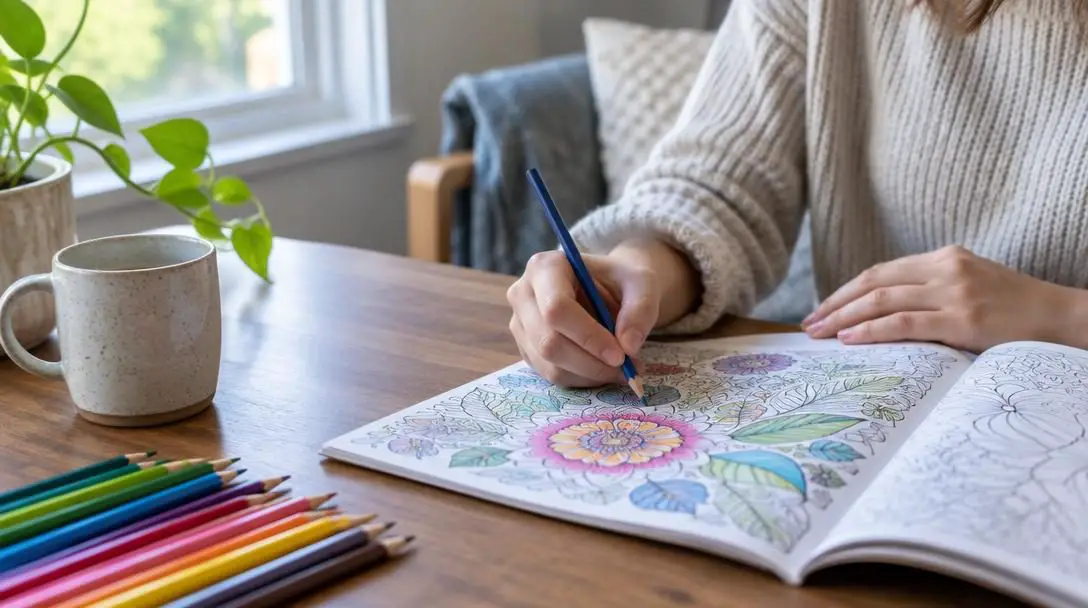
Developing a consistent coloring routine does not require extensive planning or expensive art kits. Following a few practical steps will ensure your sessions remain calm, grounding, and restorative.
- Select approachable tools: Start with basic colored pencils, felt-tip markers, or smooth gel pens that feel comfortable in your hand. There is no need to purchase professional artist supplies to experience authentic stress relief.
- Choose themes that genuinely appeal to you: Select subject matter that sparks interest, whether that involves natural flora, geometric patterns, architectural scenes, or familiar animated characters.
- Set aside modest, dedicated windows: You do not need hours of free time; a brief session lasting ten to twenty minutes during a midday break or right before bed is enough to settle a racing mind.
- Prepare a comfortable physical environment: Sit at a sturdy table with adequate lighting so you do not strain your eyes or hunch your shoulders while working on fine sections.
- Treat each page as an open-ended project: Abandon any impulse to finish a design in a single sitting. Allowing pages to develop over several days keeps expectations low and enjoyment high.
Habits to Avoid While Coloring
Even though coloring is inherently low-stakes, certain modern habits can inadvertently introduce tension into what should be a peaceful ritual.
- Treating the page like an assignment: Aiming to produce a museum-worthy piece reintroduces perfectionism and defeats the purpose of restorative play.
- Fixating on rigid color rules: Hesitating over whether a leaf must be green or an ocean must be blue creates unnecessary friction; use whatever shade appeals to you in the moment.
- Selecting overly intricate patterns too soon: Designs with microscopic line density can strain your eyes and hands, causing physical fatigue rather than relief.
- Splitting attention with stressful media: Coloring while monitoring contentious news feeds or work messages divides your focus and blunts the soothing mental escape.
- Comparing your work on social platforms: Scrolling through highly stylized, professionally shaded coloring pages online can trigger self-criticism instead of self-care.
Broadening Your Creative Routine
Once you experience the restorative power of coloring, consider pairing it with other low-stimulation habits. Listening to soft instrumental recordings, brewing an herbal tea, or sitting outdoors on a quiet porch can elevate a simple ten-minute coloring break into a complete sensory reset. By establishing these gentle environmental cues, your brain learns to associate the appearance of your coloring materials with an immediate reduction in nervous energy.
Furthermore, coloring offers an effortless, non-intrusive way to connect with others. Because it requires no specialized athletic ability, academic background, or competitive drive, it serves as a universal social bridge. Sitting around a dining table with a shared set of markers allows family members, children, and aging relatives to spend time in companionable presence, conversing freely without the pressure of having to perform or entertain.
Frequently asked questions
Do I need artistic skills to benefit from adult coloring?
No artistic ability is necessary. Because the lines, shapes, and overall compositions are already provided, the therapeutic value comes entirely from selecting colors and enjoying the tactile movement of the tool across the page.
How long should a coloring session last to reduce stress?
Even brief sessions lasting ten to fifteen minutes can successfully calm your nervous system. You do not need to finish an entire page; even filling in a few small segments provides a meaningful mental break from daily demands.
Why is coloring often more relaxing than other creative hobbies?
Many creative pursuits, such as drawing from life or creative writing, confront you with an intimidating blank page that triggers performance anxiety. Coloring provides pre-drawn boundaries, eliminating self-doubt while still allowing personal creative expression.
Can coloring replace traditional stress management habits like exercise?
Coloring is best viewed as a complementary self-care tool rather than a total replacement for physical movement, healthy rest, or social support. It provides an immediate, low-energy alternative when you feel too exhausted for vigorous physical activity.
What types of coloring materials work best for beginners?
Basic colored pencils are often the most forgiving starting point because they offer fine control and rarely bleed through standard paper. As you become more comfortable, smooth gel pens and water-based markers can add vibrant variety to your sessions.
The bottom line
Modern self-care does not always require strenuous workouts, expensive equipment, or deep psychological self-interrogation. By turning to the straightforward, tactile rhythm of coloring, you offer your mind a gentle refuge from persistent mental strain. Keeping a coloring book and a modest set of pencils within reach provides an effortless, screen-free method to quiet anxious thoughts, awaken pleasant memories, and restore a sense of calm whenever daily pressures become overwhelming.