Guild Wars 2: 5 Tips For Success
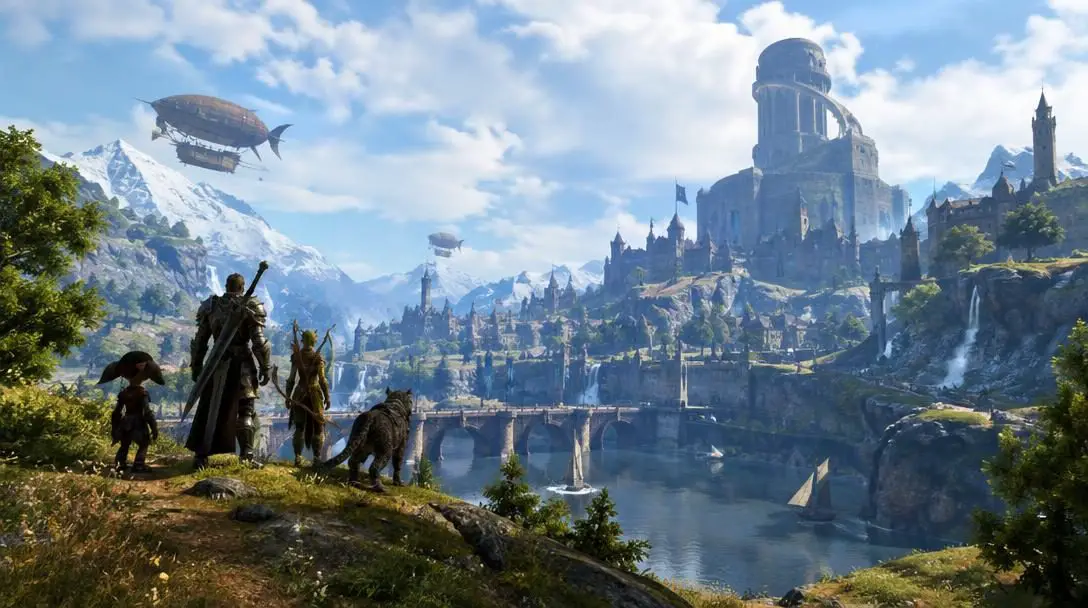
Since its global debut in 2012, Guild Wars 2 has stood apart as a uniquely player-friendly massively multiplayer online role-playing game. Developed to challenge the static conventions of the MMO genre, the title exchanges rigid quest hubs and endless gear treadmills for a dynamic, living open world. Adventurers in Tyria are encouraged to wander off the beaten path, discover emergent events organically, and shape encounters alongside fellow travelers without competing for resources or monster kills.
Because the game abandons traditional tropes such as stationary combat rotations and linear quest logs, newcomers often encounter an unfamiliar learning curve. Thriving in Tyria requires an understanding of how weapon-based skill systems, kinetic movement, collaborative open-world events, and a unified global economy intersect. Establishing strong fundamentals early ensures you avoid frustrating setbacks and fully enjoy the game's rich, horizontal progression.
Key takeaways
- Combat relies on kinetic movement, active dodging, and weapon-based skill sets rather than static skill rotations.
- Progress in the open world is fully cooperative, allowing players to share participation credit and loot organically.
- Joining an active guild grants crucial community support, cooperative missions, and access to dedicated guild halls.
- Dynamic event chains and massive world bosses yield substantial experience and rewards when players respect event objectives.
- Checking the Trading Post before offloading inventory prevents costly losses on valuable materials and rare equipment drops.
Understanding Core Systems: Active Combat and Shared Progression
To succeed across Tyria, players must first understand the foundational mechanics that govern everyday gameplay. Unlike traditional role-playing games where characters remain anchored in one spot to execute predetermined ability cycles, kinetic combat sits at the heart of this title. Damage avoidance through active dodging, repositioning, and terrain awareness is mandatory. Standing motionless during an encounter almost always results in a swift defeat, as enemies utilize ground-targeted attacks and sweeping crowd-control maneuvers.
A character's primary skill bar is determined directly by their active profession and the specific weapons they equip in their main-hand and off-hand slots. Changing from a greatsword to a sword-and-shield setup completely transforms the first five abilities on the skill bar, instantly shifting a character from an offensive posture to a defensive, control-oriented setup. Skill availability is bound by cooldown timers rather than boundless resource bars, making deliberate ability deployment far more rewarding than indiscriminate button pressing.
Equally critical to the Tyrian experience is the philosophy of shared progression. In many conventional online environments, players compete against each other for resource nodes, monster tags, and mission objectives. Here, the world is fundamentally cooperative. Gathering nodes are instanced to individual characters, and any player who contributes meaningfully to an encounter receives full experience, karma, and loot. This shared design eliminates friction between strangers and makes spontaneous teamwork the default community behavior.
Rather than competing for kills or nodes, adventurers in Tyria thrive through a cooperative design that naturally rewards mutual assistance.
Five Essential Strategies for Mastering Tyria
Navigating the vast landscapes of Tyria is an empowering experience when built upon deliberate habits. The following five core strategies outline the key disciplines necessary for long-term success across character progression, combat encounters, social connections, and financial management.
| Strategy | Primary Focus | Key Benefit | Primary In-Game System |
|---|---|---|---|
| Understand Your Profession | Build experimentation | Discovers tailored playstyles and survivability | Weapons, skills, and specializations |
| Use Your Skills Strategically | Combat execution | Maximizes tactical control and avoids wasted cooldowns | Active cooldowns and positioning |
| Join a Guild | Social networking | Unlocks group assistance, missions, and guild halls | Community guild rosters and halls |
| Participate in Events | Open-world progression | Accelerates leveling and unlocks rare rewards | Dynamic events and world boss chains |
| Master the Trading Post | Economic management | Builds steady wealth to fund gear and cosmetics | Centralized global marketplace |
Understand Your Profession
Every profession in Tyria features distinct class mechanics, varied weapon options, and specialized trait lines. Because an adventurer's baseline effectiveness depends entirely on piloting skill, dedicating time to learn your profession inside and out is essential. Do not settle on a single weapon set prematurely; experiment broadly with every weapon combination your profession permits. Equipping a staff might turn a scholar into a wide-area support caster, while dual daggers might morph the same character into a swift, close-range skirmisher. Gaining familiarity with each weapon kit lets you adapt swiftly to shifting combat needs.
Use Your Skills Strategically
Every skill assigned to your hotbar serves a calculated purpose, whether it inflicts condition damage, provides defensive boons, cleanses debilitating effects, or breaks an enemy's defiant bar. Avoid triggering abilities the second their cooldown expires. Discharging your primary stun-break or emergency invulnerability skill during routine mob encounters leaves you utterly helpless when an elite enemy initiates a lethal channel. Observe your target's telegraphs, recognize when an adversary prepares a crushing assault, and preserve your defensive assets and high-impact crowd control for decisive moments.
Join a Guild
Although the entire game world can be traversed solo, playing in isolation cuts you off from the vibrant camaraderie that defines the community. Joining a guild connects you to seasoned mentors who can clarify complex progression tracks, assist with demanding group encounters, and guide you through unfamiliar dungeons or map metas. Beyond social ties, guilds provide substantial mechanical rewards. Member rosters gain access to shared guild halls, custom resource nodes, guild missions, and localized progression bonuses that make long-term adventures far smoother.
Participate in Events
Traditional quest-givers with static exclamation points are replaced by sprawling dynamic events that react to player actions. Ranging from defending remote settlements against hostile incursions to summoning colossal world bosses, these events grant generous experience, karma, and gear. Success requires players to coordinate in real time and read event banners carefully. When an event requires gathering repair items or destroying siege engines, blindly attacking surrounding minions will result in event failure. Pay attention to stated objectives and combine forces with nearby players to achieve victory.
Master the Trading Post
The Trading Post serves as the financial engine connecting every player across the game into a singular, unified marketplace. Navigating this system effectively transforms casual inventory management into a lucrative income source. High-end crafting materials, exotic gear, and rare weapon skins carry fluid market values driven by supply and demand. By monitoring pricing trends and placing patient buy and sell orders rather than accepting instant transactions, you preserve capital and build long-term wealth to fund end-game gear and prestigious cosmetics.
Practical Steps to Build Your Adventurer
Translating overarching strategies into daily gameplay routines requires structured execution. Use these sequential steps to establish your character's foundation as you venture into new regions:
- Test every weapon available to your profession: Visit local weapon merchants or collect basic drops across your early travels. Equip every compatible weapon type to assess its attack speed, effective range, defensive utility, and primary combo properties.
- Read your skill and trait tooltips thoroughly: Review the precise language on your ability tooltips, noting secondary properties such as boon applications, condition cleanses, combo finishers, and stun-break capabilities.
- Search for an active, beginner-friendly guild: Review map recruitment chat or community listings to find a guild that prioritizes helping newer adventurers, maintains active voice or text communication, and organizes weekly group activities.
- Follow map event chains to their conclusion: When a dynamic event wraps up, do not depart immediately. Linger in the area and observe surrounding non-player characters, as successful events frequently trigger sequential follow-up encounters or massive regional bosses.
- Check Trading Post prices before selling: Before clearing packed inventories at standard merchants, search your items on the Trading Post. Separate rare crafting components and valuable drops to sell directly to other adventurers for maximum profit.
Common Mistakes to Avoid
Many new adventurers stumble early on because they bring ingrained habits from other online titles into Tyria. Avoiding these common errors will save you time, currency, and unnecessary defeats:
- Standing stationary during combat: Treating combat as an idle DPS check will quickly lead to defeat. Keep moving, circle-strafe your foes, and dodge active ground indicators to survive intense skirmishes.
- Ignoring cooldown durations: Firing off powerful defensive utility skills or burst damage abilities indiscriminately leaves you vulnerable during telegraphed boss attacks.
- Playing entirely in isolation: Shunning community interaction locks you out of valuable guild bonuses, shared wisdom, and coordinated support for challenging world encounters.
- Ignoring event mechanics: Assuming raw damage output can bypass specific event objectives frequently causes event timers to expire and missions to fail.
- Underselling valuable goods: Discarding rare salvage, materials, or unidentified equipment to generic non-player character vendors wastes substantial profit potential.
Advancing Your Journey Across Tyria
Once you develop steady confidence in your profession's core mechanics, manage your cooldowns intentionally, participate in dynamic events, and secure a reliable income through the Trading Post, advanced avenues of progression open up. Character growth in this universe emphasizes horizontal progression, meaning your hard-earned accomplishments remain relevant indefinitely rather than being rendered obsolete by endless level-cap increases.
Your future pursuits will depend largely on what styles of gameplay inspire you most. You might explore elite specializations, which dramatically alter your profession's baseline class mechanic and introduce brand-new weapon options and trait trees. Alternatively, you can participate in coordinated world boss meta-events that demand the unified effort of entire map instances, or test your combat precision in challenging group encounters. Because progress is tied to mastery, individual skill, and personal exploration, you have full freedom to chart your own course at your own pace.
Frequently asked questions
Do I have to compete with other players for monster kills and gathering nodes?
No. Guild Wars 2 operates on a shared progression model where gathering nodes are personal to your character and all participants who contribute to a monster's defeat receive full experience and reward credit.
How do weapon choices affect my character's abilities?
Your equipped weapons dictate the first five skills on your hotbar. Equipping different weapons completely shifts your range, damage output, defensive tools, and crowd-control capabilities.
Why should I join a guild if I prefer playing solo?
Guilds offer tangible in-game advantages without compromising solo play, including access to specialized guild halls, member gathering nodes, passive experience boosts, and access to organized events when you choose to participate.
What is the difference between dynamic events and traditional quests?
Dynamic events do not require picking up tasks from static quest-givers. Instead, they occur naturally across the open world, reacting dynamically to player success or failure and chaining into larger encounters.
How does the Trading Post differ from local vendor merchants?
The Trading Post is a global marketplace connecting all players across the game. Selling items on the Trading Post allows you to trade with other players at true market values, which are usually far higher than fixed NPC vendor prices.
The bottom line
Thriving in Guild Wars 2 is an exercise in tactical freedom, active engagement, and community cooperation. By treating combat as an active dance of positioning and cooldown management, taking full advantage of the global Trading Post, and participating in the collaborative open world alongside an active guild, you unlock the full depth of Tyria. Take your time, master your class toolkit, and savor an adventure defined by personal discovery.