How to Win in Solitaire

Solitaire has endured for generations as one of the world's most recognizable pastimes, offering a soothing yet mentally engaging routine for players everywhere. Far from fading with the passage of time, the game continues to captivate an enormous global audience, boasting over thirty million monthly players and several million active daily enthusiasts who play across traditional physical card decks, desktop computers, smartphones, and tablets.
Yet despite its immense popularity, countless players find themselves trapped in beginner-level ruts, convinced that victory depends entirely on the luck of the deal. While card distribution certainly shapes each game, strategic decision-making plays a decisive role in turning messy deals into clear boards. Transitioning from mindless card shuffling to deliberate layout management will dramatically lift your winning percentage and transform how you approach each layout.
Key takeaways
- Drawing from the stock early provides crucial board information and unlocks immediate opportunities before you commit to tableau moves.
- Aces and twos should head straight to the foundations, as they have zero building utility within the main playing tableau.
- Columns on the far right hide the largest reserves of face-down cards and must be prioritized over smaller, shallow piles.
- Cards ranked three and higher should often stay in play as stepping stones rather than rushing prematurely into foundation slots.
- Filling vacant spots requires careful thought, particularly by selecting kings that liberate buried cards and alternating king colors across multiple openings.
Understanding the zones of the solitaire layout
Before executing advanced plays, you must develop a thorough understanding of how the board's different sectors interact. Standard solitaire layouts divide all fifty-two cards among five distinct mechanical areas, each serving a clear role in guiding cards toward a cleared board.
| Play area | Initial card count | Primary board function | Core movement rule |
|---|---|---|---|
| The Tableau | 28 cards (7 columns) | Main building zone to uncover face-down cards | Descending rank, alternating colors |
| The Foundations | 0 cards (4 empty spaces) | Final scoring piles for completed suits | Ascending rank from ace to king, matching suit |
| The Stock | 24 cards | Draw reserve for fresh tactical options | Flipped face-up into the waste pile |
| The Waste | 0 cards (grows during play) | Discard pool containing active drawn cards | Top card playable to tableau or foundations |
| Vacant Spots | 0 spaces (opened during play) | Reorganization hubs for restructuring sequences | Can only be settled by a king or king-led sequence |
The tableau forms the heart of your workspace, composed of seven columns that widen progressively from left to right. The first column holds a solitary face-up card, while the seventh contains seven cards with only the uppermost card exposed. Beneath the visible layer lie twenty-one face-down cards that remain inaccessible until you shift the cards covering them.
Above the tableau sit the four foundation piles. Every foundation must begin with an ace and build upward in precise sequence through the king of the identical suit. Beside these spaces rests the stock, housing the twenty-four cards leftover from the initial deal. When play stalls on the board, drawing through the stock sends cards into the waste, where the uppermost exposed card becomes available for immediate play into the columns or foundations. Finally, clearing all cards from any column opens up vacant spots, which serve as your primary tool for untangling deep card bottlenecks.
Getting the stock cards out of the way is the most important thing you can do as a solitaire player.
Five core strategies to win more games
Consistent success in solitaire relies on disciplined execution rather than rapid-fire card clicking. Applying these five foundational rules will prevent premature dead ends and keep your options open as the deck unfolds.
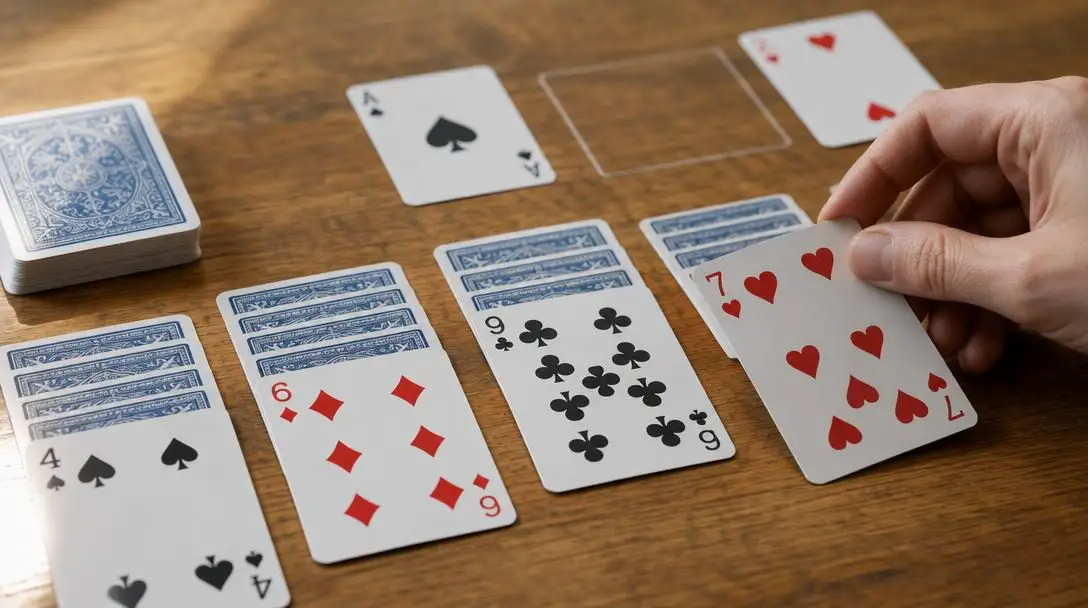
Use your stock first
One of the most frequent habits holding novice players back is the urge to clear every visible tableau move before looking at the draw pile. Inverting this sequence is essential for high-level play. Flipping your stock at the beginning of the deal exposes critical cards that might alter your entire opening scheme. A freshly turned stock card could reveal an ace, provide an essential bridge for an awkward column card, or eliminate the need to break apart a clean column prematurely. By checking what the stock has to offer right away, you build a complete picture of your available resources before locking yourself into irreversible tableau arrangements.
Get the aces and twos out of the way
Aces serve no structural purpose inside the tableau columns. Because cards can only be built downward in descending value, no card in the deck can ever be placed on top of an ace within the main play area. Leaving an ace sitting inside a column merely clutters your workspace and locks any cards underneath it out of reach. Send every ace to the foundations the exact moment it surfaces, whether it originates in the tableau or the stock. Apply this same urgency to deuces: matching twos can go directly atop their corresponding foundation aces without risk, immediately clearing board friction and creating room to maneuver.
Use your kings wisely
Creating an empty column is a major tactical accomplishment, but filling it carelessly can stall an otherwise promising game. Only a king (or a descending pile headed by a king) can occupy a vacant tableau space. When an opening appears, assess which available king yields the greatest strategic dividend. Moving a king that is currently pinning down hidden face-down cards unlocks fresh resources, whereas moving an isolated king that was already free offers negligible advantage. Furthermore, when managing two open slots simultaneously, deliberately introduce kings of contrasting colors—one red and one black. This balance ensures your columns can receive both colors of queens as the game progresses.
Make big piles a priority
The rightmost columns of the tableau represent the greatest obstacle between you and victory. Column seven begins with six hidden cards, column six with five, and column five with four. Leaving these stacks untouched while focusing on the shallow one- and two-card columns on the far left leaves the vast majority of your deck paralyzed. When faced with multiple viable moves, always prioritize card transfers that expose hidden cards in the thickest columns. Evening out the depth of the tableau from right to left as early as possible unlocks the crucial cards needed to sustain mid-game momentum.
Cards do not have to go to foundations right away
Building upward into the foundation spaces creates a tempting sense of progress, but rushing mid-tier cards off the board is a widespread trap. While aces and deuces belong in the foundations immediately, cards ranked three and above frequently serve as indispensable transit hubs in the tableau. Once a three, four, or five is swept upward into a foundation pile, it can no longer act as an anchor to support descending alternating sequences on the board. Keep mid-ranking cards in active play until their absence will not paralyze ongoing sequence reorganization across your columns.
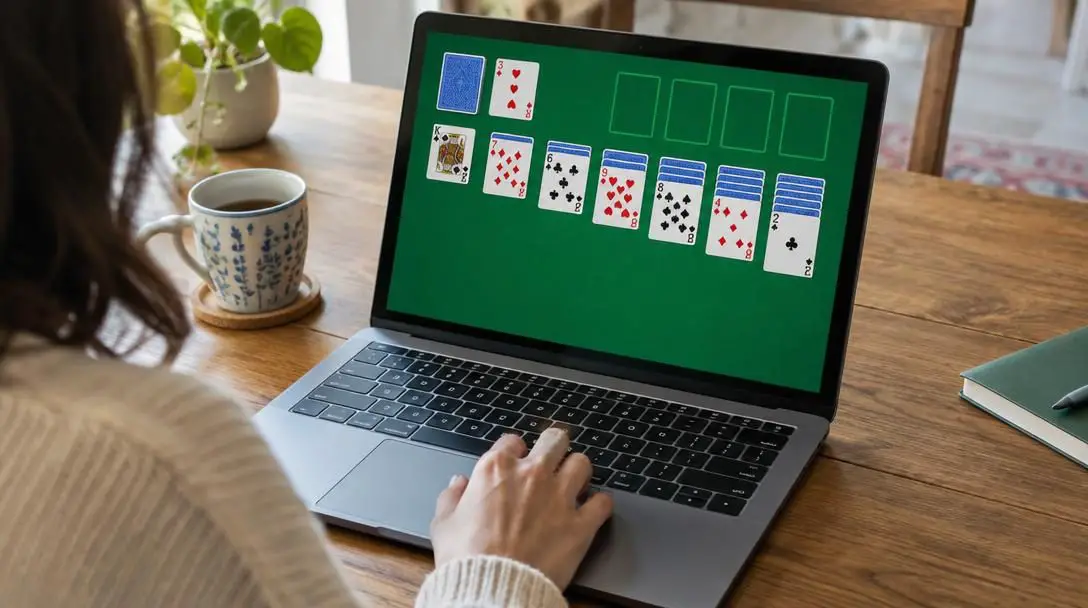
Step-by-step practical routine for every deal
Approaching a fresh board with a standardized operational checklist eliminates guesswork, helping you spot valuable moves while steering clear of impulsive misplays.
- Review the initial deal: Scan the seven face-up cards across the tableau, taking special note of available aces and assessing the card ranks topping the deep right-hand columns.
- Turn to the stock: Flip the top stock cards before locking in tableau moves to identify opening cards, suits, or low cards that might direct your opening decisions.
- Clear aces and deuces: Move any exposed aces directly to their foundation spots, following up immediately with any available twos of matching suits.
- Tackle the deep piles: Execute column transfers that liberate face-down cards beneath the thickest stacks on the right side of the board.
- Manage empty spaces: When a column is cleared, select a king that currently blocks buried cards, ensuring you alternate red and black kings across separate vacant spaces.
- Hold mid-tier cards in the tableau: Keep cards ranked three through six circulating as resting spots for descending chains rather than rushing them upward.
- Repeat the cycle: Continuously draw through the stock, uncover remaining hidden cards from the rightmost columns, and advance cards to the foundations only when safe.
Common mistakes that trap your cards
Even seasoned card players fall victim to bad habits that stealthily ruin promising layouts. Avoiding these pitfalls will immediately protect your win percentage:
- Ignoring the stock during early turns: Exhausting every move on the lower board before checking the draw pile deprives you of early foundation starters and vital sequence linkages.
- Trapping aces and twos in columns: Treating low foundation cards as standard tableau material clutters valuable columns without offering any building utility in return.
- Rushing higher cards to foundations: Hurrying threes, fours, and fives into foundation spots removes valuable bridge cards that could otherwise shift entire column assemblies.
- Filling empty columns without a plan: Dropping any arbitrary king into an open spot without checking what lies beneath its original position wastes one of your strongest board assets.
- Doubling up king colors in open spaces: Placing two red or two black kings into open spaces simultaneously restricts your downstream flexibility for queens and jacks.
- Obsessing over small columns: Spending turns clearing shallow left-hand columns while ignoring five- and six-card hidden stacks leaves the core deck inaccessible.
Frequently asked questions
Can every game of solitaire be won?
No. Due to the random nature of card distribution, some deals are mathematically impossible to solve from the moment they are dealt. Unfavorable card orders in deep columns and the stock can create unsolvable deadlocks regardless of player skill.
Why should I flip the stock before moving tableau cards?
Checking the stock first reveals available low cards, aces, or critical color connectors before you commit your tableau. This prevents you from breaking apart functional column sequences for moves that a stock card could have achieved more cleanly.
When should I start sending threes and fours to the foundations?
Threes and higher ranks should only move to foundations when both cards of the opposite color in the next-lowest rank are already secure, or when keeping the card in the tableau offers no further sequence-building utility.
What should I do if I have two kings available for one empty space?
Choose the king that currently sits atop the highest number of hidden, face-down cards. Freeing buried cards should always take priority over moving an already isolated or exposed king.
Is it ever worth pulling cards back down from the foundations?
In digital variations that permit it, retrieving a card from the foundation to serve as an emergency bridge can occasionally salvage a stalled game, though disciplined play generally makes this unnecessary.
The bottom line
Solitaire is far more than a passive game of chance; it is an exercise in resource allocation, sequence planning, and board awareness. While you cannot influence how the deck is shuffled, adopting methodical habits—such as engaging your stock early, clearing aces instantly, targeting the deepest tableau columns, and placing kings with deliberate care—gives you maximum control over every hand you play.
Equally important is knowing when to concede. Because not every deal possesses an achievable winning sequence, running into an immovable roadblock is simply a natural part of the game. Recognizing an unwinnable layout keeps frustration at bay and lets you clear the table for the next deal with confidence and sharp focus.