Pixwords Hacks: 7 Tricks to Help You Beat the Game Like a Pro

Word puzzle games have long been a fixture of casual and mobile gaming, offering mental stimulation that challenges both linguistic knowledge and visual literacy. Pixwords stands out among these titles by challenging players to identify words based exclusively on photographic clues within an interlocking crossword board. Unlike standard anagrams or conventional crossword puzzles that offer written clues, visual puzzle mechanics require the brain to bridge the gap between imagery, conceptual meaning, and specific letter arrangements.
Because the game frequently features rare items, subtle component parts of larger objects, or abstract themes that encompass dozens of synonyms, players often hit roadblocks on advanced grids. When a visual clue seems ambiguous or the required vocabulary falls outside everyday speech, guessing blindly quickly leads to frustration. By employing structured deductive techniques, players can systematically solve difficult boards, conserve resources, and advance through the levels with confidence.
Key takeaways
- Targeting the shortest entries on the board provides essential crossing letters that unlock longer, more difficult words.
- Thoroughly examining background details, textures, and isolated sub-parts reveals answers when the main focal point is misleading.
- Deconstructing lengthy entries into roots, prefixes, and compound words makes complex tile combinations easier to solve.
- Conserving finite in-game hints for truly impenetrable puzzles prevents resource shortages during advanced stages.
How Pixwords Mechanics Challenge the Brain
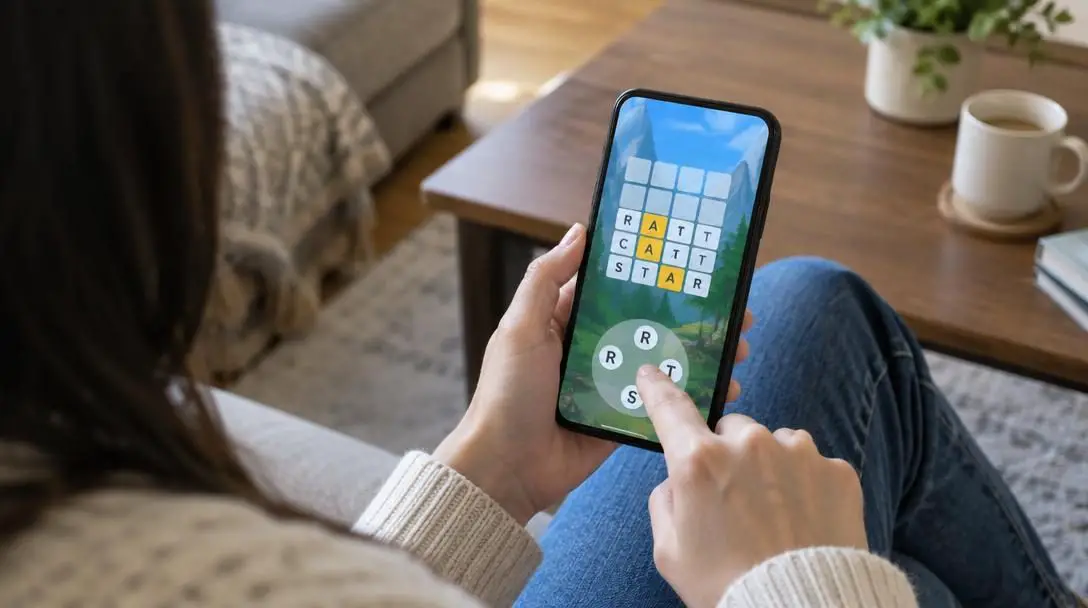
To master the game, players must first understand how its puzzle mechanics interact. Each Pixwords level consists of a mini-crossword grid where every horizontal and vertical slot links directly to an individual image. Selecting a word slot displays its associated photograph, empty tile placeholders indicating the exact length of the solution, and a scrambled bank of letter tiles. The goal is to deduce the target concept depicted in the image and assemble it correctly using only the available letters.
The core difficulty stems from visual interpretation. A photo of an animal might not represent the animal itself; instead, the puzzle might target the creature's habitat, a specific physical attribute like a claw or beak, or the action it performs. Furthermore, because every entry intersects with others on the board, a single correct entry generates a cascade effect. Interlocking letters eliminate ambiguity for crossing words, confirming whether an initial guess aligns with the rest of the puzzle layout.
The 7 Core Hacks to Master Pixwords
Transitioning from random guessing to systematic problem-solving requires specific tactical habits. Incorporating the following seven strategies will help you tackle demanding puzzles efficiently.
1. Consult Reference Dictionaries
Visual clues often depict specialized tools, biological species, or technical objects that do not appear in ordinary everyday conversation. Consulting a dictionary expands your working vocabulary and helps you discover precise terminology that matches your tile count. When an image clearly belongs to a specific subject area—such as marine biology, woodworking, or architecture—referencing vocabulary lists or standard dictionaries allows you to verify plausible words against your available letter pool without burning valuable hints.
2. Scan for Subtle Picture Clues
Puzzle designers rarely rely solely on the most obvious subject in a photograph. When an initial guess does not match the letter count, players must inspect the periphery of the image. Pay close attention to subtle colors, textures, lighting, and background items. For instance, if an image displays a bird, the target word might not be the species name; it could be feather, beak, preening, or perch. Examining fine details shifts your focus away from misleading primary subjects toward the exact concept the creator intended to highlight.
3. Break Down Compound and Complex Words
Longer words can seem overwhelming when viewed merely as a jumble of loose letter tiles. You can simplify lengthy solutions by segmenting them into recognizable structural elements, such as compound roots, common prefixes, and frequent suffixes. If the puzzle calls for a ten-letter word like television, breaking the entry into distinct phonetic or semantic chunks—such as tele and vision—allows you to verify sub-units against the letter tray before assembling the complete word.
Deconstructing complex words into foundational roots and affixes transforms an intimidating letter tray into an approachable mental exercise.
4. Ration Built-In Hints Sparingly
Pixwords provides in-game assistance tools to help players reveal letters or remove incorrect tiles from the pool. However, these resources are finite and difficult to replenish without spending currency. Relying on hints during early or intermediate stages leaves you defenseless when you face truly obscure terms in later levels. Treat hints as a strict last resort, reserving them exclusively for situations where you have exhausted all visual analysis, intersecting tile deductions, and vocabulary checks.
5. Prioritize Short Words First
Three-letter and four-letter entries have fewer potential permutations and are inherently easier to deduce from visual clues than extended terms. Solving these shorter words right away creates immediate momentum, bolsters morale, and establishes confirmed letters across the grid. The resulting cross-letters act as guideposts, drastically reducing the mental effort needed to decipher crossing six-, seven-, or eight-letter words.
6. Maintain Regular Gameplay Practice
Visual deduction is a cognitive skill that sharpens with consistent exposure. Regular play trains your brain to recognize recurring puzzle conventions, typical framing choices, and the specific photographic styles favored by game designers. Over time, your intuitive response to visual prompts accelerates, allowing you to identify abstract relationships between images and letter patterns far more rapidly.
7. Collaborate and Compete with Friends
Because vocabulary and associative thinking vary widely from person to person, playing with others is an effective way to conquer challenging levels. A detail or cultural reference that baffles one player might be instantly recognizable to someone else. Teaming up allows you to pool knowledge, compare deductive strategies, and observe alternative ways to interpret ambiguous visual prompts. You can also turn sessions into friendly competitions to see who identifies difficult words fastest.
Comparing the 7 Strategic Approaches
Every strategy targets a distinct phase of the solving process. The table below outlines how and when to apply each method for optimal efficiency on the board.
| Strategy | Primary Focus | Best Used When | Impact on Grid Progress |
|---|---|---|---|
| Dictionary Consultation | Vocabulary Expansion | Encountering technical or rare items | Resolves niche and domain-specific terms |
| Visual Clue Scanning | Detail Deduction | The primary subject yields no matches | Uncovers subtle sub-components and actions |
| Word Segmentation | Structural Analysis | Facing long, multi-syllable entries | Simplifies long letter trays into roots |
| Hint Management | Resource Preservation | Stuck on advanced, obscure levels | Provides emergency progression when blocked |
| Short-Word Priority | Board Establishment | Opening a brand-new crossword grid | Generates intersecting letters across the board |
| Consistent Practice | Pattern Recognition | Daily play sessions over time | Sharpens intuition and deduction speed |
| Social Collaboration | Collective Knowledge | Facing persistent mental blocks | Bypasses blind spots using diverse perspectives |
A Step-by-Step Solving Routine for Every Grid
Rather than jumping between random clues, following a systematic, step-by-step workflow ensures you make the most of every revealed letter and conserve your in-game resources.
- Survey the entire grid: Open each image linked to the puzzle board without entering any letters. Take inventory of the full collection to distinguish straightforward, obvious objects from complex or abstract scenes.
- Tackle the shortest entries first: Locate the three- and four-letter spaces on the board. Focus your initial energy on solving these simpler targets to anchor the crossword structure.
- Analyze intersecting letter anchors: Look at the remaining longer slots that now contain confirmed letters from your completed short words. Use these anchor letters to filter your interpretations of the corresponding images.
- Deconstruct ambiguous visuals: For images that remain unclear, scan the background, textures, lighting, and isolated physical features. Determine whether the prompt asks for an object, an attribute, or an action.
- Break down remaining long words: Check the letter count for lingering complex words and look for recognizable prefixes, suffixes, or compound words within your letter bank.
- Consult external references: If you suspect an image represents an unfamiliar animal, tool, or botanical specimen, check a reference dictionary against the exact slot count and confirmed letters.
- Deploy in-game hints as a last resort: Only spend in-game hints to reveal a letter or clear incorrect tiles when all visual deduction and vocabulary cross-referencing fail to yield an answer.
Costly Mistakes That Derail Gameplay
Even seasoned players run into roadblocks when they fall into predictable habits. Avoiding these frequent traps will keep your momentum going and preserve your resources.
- Fixating strictly on the focal subject: Assuming the puzzle always targets the most prominent figure in the photo causes players to overlook background clues, materials, and specific sub-components.
- Depleting hint reserves prematurely: Spending hints early on simple words leaves you without assistance when you encounter genuinely obscure terminology on advanced boards.
- Ignoring letter tray constraints: Trying to force a favorite guess without checking the scrambled letter tray leads to wasted effort; the supplied letters must dictate your possible solutions.
- Tackling long words first: Attempting eight- or nine-letter answers without the aid of intersecting tiles dramatically increases difficulty and slows down grid completion.
- Refusing to take breaks: Staring endlessly at an ambiguous picture causes cognitive tunnel vision. Stepping away or asking a friend for input is often all it takes to spot the answer.
Elevating Your Word Puzzle Skills
Once you have incorporated these core hacks and solving routines into your regular play, you can push your visual deduction skills even further. Introducing timed challenges into your sessions encourages faster image processing and prompts your brain to form lexical connections more rapidly.
Additionally, because Pixwords supports multiple language settings, playing in a second language offers an immersive way to build foreign vocabulary. Visual clues reinforce semantic meaning directly, helping language learners link foreign terms to tangible objects and actions without translating back and forth into their native tongue.
Frequently asked questions
How does the crossword structure in Pixwords help solve hard words?
The interlocking design means that correctly guessing one word places confirmed letters into crossing entries. These intersecting letters act as constraints, eliminating incorrect guesses and revealing key starting, middle, or ending letters for neighboring clues.
What should I do if an image seems to have multiple valid answers?
Check the slot length and your scrambled letter tray to eliminate synonyms that do not fit. If multiple options remain plausible, solve intersecting words first to lock in specific letters and identify the intended answer.
Why is it better to guess short words before long words?
Short words have fewer letter combinations, making them quicker and easier to deduce from visual clues. Completing them early establishes a framework of cross-letters that simplifies the remaining longer entries on the board.
When is the right time to spend an in-game hint?
Hints should be reserved strictly for levels where you are completely stuck after checking details in the image, analyzing intersecting letters, deconstructing word roots, and consulting a dictionary.
Can playing Pixwords help improve language skills?
Yes. The game introduces players to technical terms, rare objects, and specific attributes they might not encounter in everyday speech. Playing in an alternate language also reinforces foreign vocabulary through visual association.
The bottom line
Beating Pixwords consistently is not a matter of luck or random guessing; it is a discipline of visual analysis and linguistic deduction. By methodically prioritizing short entries, dissecting subtle image details, segmenting complex words, and safeguarding your hints, you can work through even the most bewildering grids. Apply these structured techniques to your daily play, practice consistently, and enjoy watching your word-solving efficiency climb to a professional standard.