Shocking Celebrity Arrests: Stories and Consequences
The glittering facade of Hollywood and international fame frequently masks severe personal crises, hazardous decisions, and dramatic collisions with law enforcement. When a prominent figure is taken into police custody, the resulting media frenzy commands round-the-clock headlines, dominating social networks and captivating millions of spectators worldwide. Yet behind the viral booking photographs, press conferences, and relentless public speculation lies the unyielding machinery of the judicial system.
High-visibility legal cases spotlight the volatile intersection of power, privilege, and the rule of law, demonstrating that celebrity status provides no permanent immunity against statutory prosecution. From dangerous driving offenses and illicit substance violations to violent felonies and white-collar fraud, public figures have faced nearly every level of the penal framework. While an arrest can trigger swift financial ruin, public disgrace, and the immediate cancellation of lucrative entertainment contracts, it can also serve as a societal turning point that sparks urgent public discussions regarding legal equity, addiction recovery, and criminal justice reform.
Key takeaways
- Fame, personal wealth, and commercial success provide no absolute shield against criminal investigation, statutory prosecution, or incarceration.
- High-profile offenses span a broad spectrum, ranging from substance violations and drunk driving to severe violent assaults and multi-million-dollar financial crimes.
- An arrest record often compromises commercial marketability, studio insurance coverage, and corporate sponsorships across the entertainment industry.
- Judicial outcomes highlight substantial disparities within the justice system, from heightened scrutiny under the media spotlight to the distinct advantages of premier legal defense teams.
- Several public figures have turned their legal confrontations into personal redemption, sustained recovery, or public advocacy for nationwide probation and parole reform.
Landmark Celebrity Arrests That Shocked the Public
Throughout modern entertainment history, particular arrests have shattered carefully cultivated public images to leave an enduring mark on popular culture. These cases disrupted entire production studios, ignited fierce public debate, and permanently reshaped the lives and careers of the individuals involved.
| Celebrity | Primary Allegations / Charges | Location & Year | Legal & Professional Outcome |
|---|---|---|---|
| Robin Williams | Misdemeanor public intoxication | Los Angeles, CA (2014) | Booked into county jail prior to his tragic passing |
| Mel Gibson | Driving under the influence (DUI) | Malibu, CA (2006) | Arrest report leak triggered prolonged industry ostracization |
| Chris Brown | Felony assault and criminal threats | Los Angeles, CA (2009) | Formal probation, community labor, and domestic violence outrage |
| Lindsay Lohan | DUI, cocaine possession, probation violations | California (2007–2011) | Repeated jail terms, lost film roles, and insurance unviability |
| O.J. Simpson | Double murder (criminal) / Wrongful death (civil) | Los Angeles, CA (1995/1997) | Criminal acquittal followed by a $33.5 million civil judgment |
Robin Williams

- Year: 2014
- Jurisdiction: Los Angeles, California
- Primary Charge: Misdemeanor public intoxication
In 2014, the entertainment community was stunned when Oscar-winning actor and comedian Robin Williams was taken into custody in Los Angeles, California. The incident occurred only months before the revered entertainer tragically passed away, casting a poignant light on his deep personal battles. Law enforcement personnel were dispatched to a commercial liquor store parking lot, where Williams was discovered slumped over the steering wheel of his vehicle after losing consciousness following heavy alcohol consumption.
Responding officers woke Williams and administered a standard field sobriety examination, which he failed to complete successfully. Williams was subsequently taken into custody and transported to the Los Angeles County Jail, where he underwent formal booking and processing on misdemeanor public intoxication charges. The arrest served as a painful reminder of the persistent, private challenges that can afflict even the most accomplished cultural figures.
Mel Gibson

- Year: 2006
- Jurisdiction: Malibu, California
- Primary Charge: Driving under the influence (DUI)
Acclaimed actor and Academy Award-winning director Mel Gibson was arrested in 2006 after being intercepted by sheriff's deputies along the Pacific Coast Highway in Malibu, California. Deputies initiated a traffic stop after clocking Gibson's vehicle traveling at excessive speeds. Upon being pulled over, Gibson exhibited aggressive behavior and made an unsuccessful attempt to flee the scene on foot.
Once restrained inside the patrol cruiser, Gibson unleashed an offensive, vitriolic anti-Semitic tirade directed at the arresting deputy, who was Jewish, alongside multiple derogatory sexist remarks. When the official arrest report leaked to news organizations, it prompted immediate, industry-wide condemnation. The fallout severely tarnished Gibson's public standing and resulted in him being ostracized by major Hollywood studios, production companies, and creative peers for several subsequent years.
Chris Brown
- Year: 2009
- Jurisdiction: Los Angeles, California
- Primary Charges: Felony assault and making criminal threats
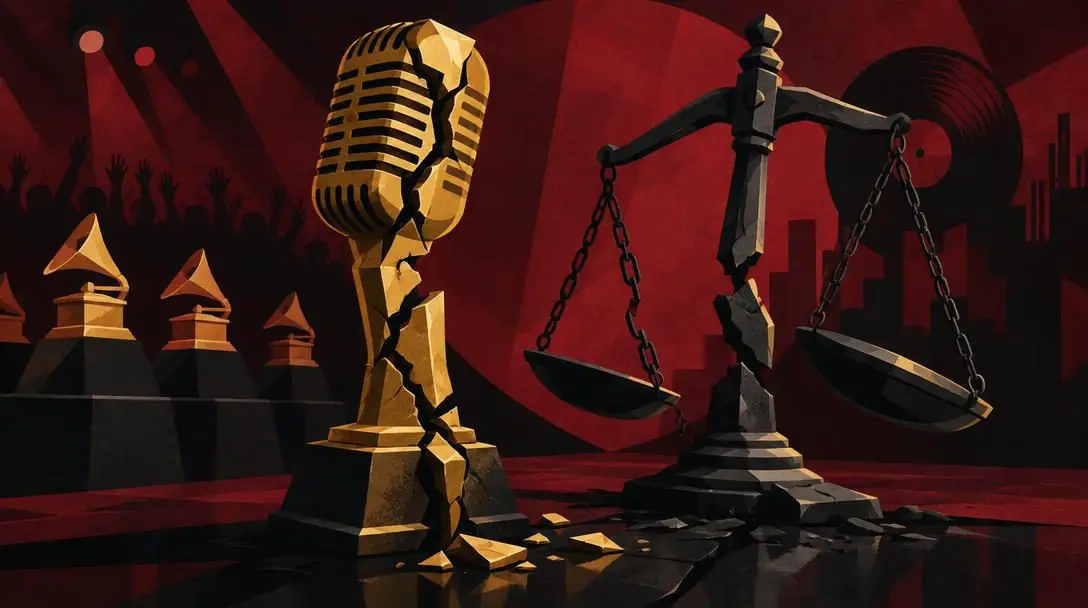
In February 2009, a violent altercation erupted between recording artist Chris Brown and his then-partner, global pop superstar Rihanna, on the eve of the 51st Annual Grammy Awards in Los Angeles. During an escalating dispute inside a rented vehicle, Brown subjected Rihanna to a sustained physical assault, inflicting extensive trauma across her face, arms, and torso that required urgent medical intervention.
Following the altercation, Brown surrendered himself directly to the Los Angeles Police Department. Prosecutors charged him with felony assault and making criminal threats. The arrest generated worldwide public indignation and ignited essential cultural dialogues regarding domestic violence, intimate partner abuse, and the ethical responsibilities of record labels, entertainment executives, and commercial sponsors who underwrite high-profile talent.
Lindsay Lohan
- Year: 2007 (Initial arrests)
- Jurisdiction: Los Angeles, California
- Primary Charges: Driving under the influence and unlawful cocaine possession
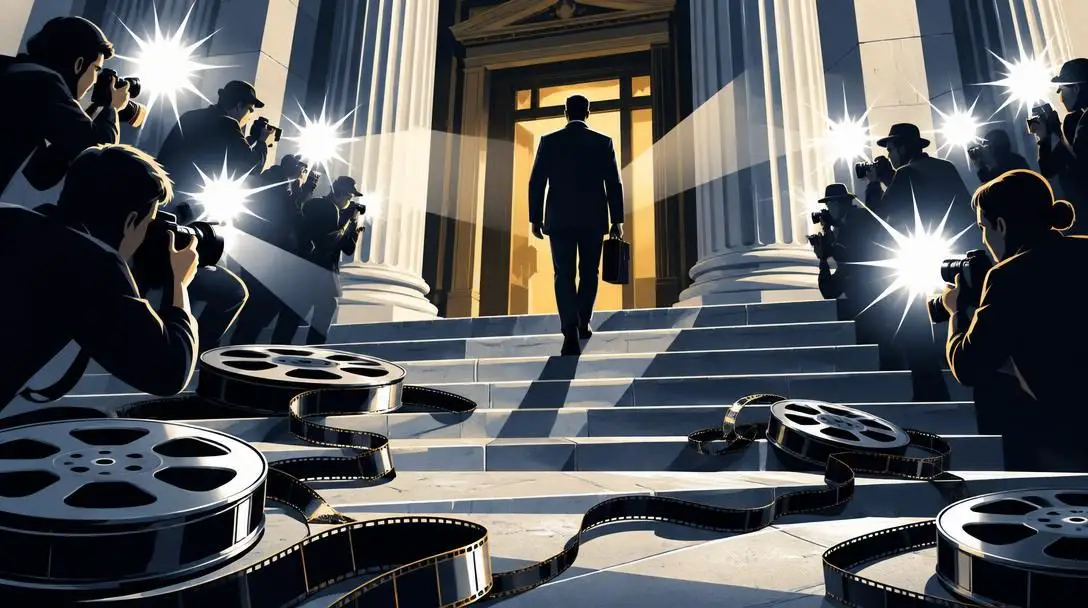
Former Disney child star Lindsay Lohan entered an intense, protracted series of legal confrontations during the late 2000s and early 2010s that severely disrupted her once-promising cinematic career. Her legal challenges escalated rapidly in 2007, when she was arrested twice within a sixty-day window for driving under the influence and unlawful possession of cocaine. Her initial sentencing ordered one day in jail and three years of formal probation.
Rather than concluding her legal troubles, that sentence marked the start of years of courtroom drama. Lohan faced compounding legal consequences driven by repeated probation infractions, positive substance screenings, accusations of grand theft and shoplifting involving high-end jewelry, and charges of providing false statements to police investigators. The continuous cycle of court dates and incarceration undermined studio confidence, rendering her virtually uninsurable for major film productions.
O.J. Simpson

- Year: 1995 (Criminal trial) / 1997 (Civil trial)
- Jurisdiction: Los Angeles, California
- Primary Charges: Double murder (acquitted) / Wrongful death (liable)
The most heavily televised legal saga of the twentieth century centered on retired NFL superstar and media personality O.J. Simpson. In June 1994, Simpson was formally accused of the brutal double murder of his former wife, Nicole Brown Simpson, and her friend Ronald Goldman outside her Brentwood residence. When formal charges were filed, Simpson failed to turn himself in as arranged, triggering an extraordinary, slow-speed pursuit across Southern California freeways in a white Ford Bronco watched by an estimated 95 million television viewers.
Simpson eventually surrendered to law enforcement at his Brentwood estate. While his sensational 1995 criminal trial culminated in an acquittal on both murder counts, his legal battles did not end there. In a subsequent 1997 civil wrongful death lawsuit brought by the victims' families, a civil jury found Simpson legally liable for both deaths, ordering him to pay $33.5 million in restitution damages.
Common Criminal Charges Faced by Public Figures
The offenses that lead celebrities into criminal proceedings mirror the charges encountered by everyday citizens, spanning basic municipal misdemeanors to complex federal prosecutions. The statutory framework treats these offenses under standardized legal principles, regardless of the defendant's celebrity status.
- Driving Under the Influence (DUI): Operating a motor vehicle with a blood alcohol concentration (BAC) of 0.08% or higher remains one of the most frequent charges levied against famous figures. Personalities like Mel Gibson, Lindsay Lohan, and pop star Justin Bieber have faced DUI charges, which trigger penalties including steep financial fines, license suspensions, mandatory ignition interlock devices, and potential incarceration.
- Unlawful Drug Possession: Controlled substance violations range from misdemeanor possession for personal use to serious felony trafficking offenses. High-profile figures such as Paris Hilton and Robert Downey Jr. encountered drug-related arrests that resulted in varied judicial outcomes, from court-supervised addiction treatment to long-term custodial sentences.
- Assault and Battery: Arising from violent disputes with romantic partners, brawls at entertainment venues, or aggressive clashes with paparazzi photographers, assault charges carry severe legal ramifications. Chris Brown's felony assault conviction mandated strict formal probation, mandatory anger management courses, and hundreds of hours of community service.
- White-Collar and Financial Crimes: Non-violent financial offenses, including securities fraud, conspiracy, and tax evasion, regularly result in severe federal prison terms. Actor Wesley Snipes served federal prison time following his conviction for willful failure to file federal income tax returns, while lifestyle entrepreneur Martha Stewart served five months in federal prison alongside supervised release for conspiracy, obstruction of justice, and false statements tied to stock sales.
- Severe Felonies and Sexual Assault: High-profile entertainment personalities have also faced serious criminal charges involving systemic abuses of power, sexual assault, and predatory conduct. Powerful figures such as Bill Cosby and Harvey Weinstein faced high-stakes prosecutions that resulted in convictions and lengthy sentences behind bars.
The Impact of Criminal Charges on Entertainment Careers
An arrest introduces immediate instability into an entertainer's commercial viability. Studio executives, corporate advertisers, and television networks are acutely sensitive to reputational liability, and an open criminal case frequently leads to terminated endorsements, canceled distributions, and shredded contracts.
The severity of the fallout often aligns with the specific nature of the crime. Allegations of domestic abuse, violent offenses, and discriminatory hate speech typically generate lasting professional exile. For instance, following a 2009 arrest connected to domestic violence, actor Charlie Sheen exhibited increasingly volatile behavior and accumulated legal entanglements that ultimately prompted his high-profile termination from his lucrative starring role on the hit television sitcom Two and a Half Men. Similarly, Lindsay Lohan's recurring jail bookings and courtroom appearances made production companies unwilling to shoulder the exorbitant insurance premiums required to cast her, bringing her cinematic career to an abrupt halt.
The outcome of a celebrity scandal is rarely determined solely by the arrest itself, but by the offender's capacity to demonstrate sincere contrition, accept legal accountability, and pursue verifiable personal reform.
Conversely, some performers demonstrate that career resurrection remains possible through dedicated recovery and undeniable creative value. Actor Robert Downey Jr. endured multiple high-profile arrests for narcotics possession throughout the late 1990s and early 2000s, leading to state prison time and leaving him virtually uninsurable in Hollywood. After completing rigorous medical rehabilitation and maintaining verified sobriety, Downey methodically rebuilt his professional reputation. He was eventually cast as Tony Stark in Marvel's Iron Man, transforming into one of the highest-grossing box office stars in cinematic history.
In another distinct trajectory, media personality Paris Hilton experienced intense public scrutiny during her 2007 arrest and subsequent 45-day jail sentence for a driving-related probation violation. Rather than allowing the incident to diminish her public standing, Hilton redirected the international media spotlight to sustain consumer interest, utilizing her notoriety to build a global retail licensing and lifestyle empire.
Judicial Realities, Media Influence, and Systemic Disparities
When high-profile figures enter the justice system, their cases frequently expose structural tensions between the appearance of fairness, media amplification, and the profound advantages that wealth provides during criminal litigation.
- Intense Public and Judicial Scrutiny: The presence of international media organizations and broadcast cameras can distort judicial decision-making. When Paris Hilton received her 45-day jail sentence for operating a vehicle on a suspended license, legal observers suggested that the presiding judge issued an unusually severe penalty for a first-time probation violation to avoid any public perception of judicial favoritism toward a wealthy socialite.
- Access to Elite Defense Resources: Wealthy defendants can retain top defense attorneys, private forensic investigators, and specialized crisis public relations firms. This level of representation routinely secures advantages unavailable to the average public defender client, including reduced charges, diverted sentencing, favorable plea agreements, or dismissed cases.
- Civil Liability Following Criminal Proceedings: Even when a criminal case ends in an acquittal or dismissed charges, celebrities remain exposed to extensive civil litigation. In criminal trials, the prosecution must prove guilt beyond a reasonable doubt; civil courts, however, rely on the lower standard of a preponderance of the evidence. This statutory distinction allowed the Goldman and Brown families to secure a multi-million-dollar wrongful death judgment against O.J. Simpson despite his criminal acquittal.
Paths to Rehabilitation and Institutional Reform
For several public figures, a public arrest marks the absolute nadir of personal dysfunction, functioning as a vital catalyst for structured intervention and long-term recovery. While ordinary individuals caught in the legal system often face limited access to mental health and addiction treatment, affluent celebrities have the financial means to enter premier inpatient rehabilitation centers, specialized medical detoxification clinics, and private psychological therapies.
Beyond personal redemption, select artists have harnessed their high-profile encounters with the justice system to advocate for broader legislative and institutional change. Hip-hop artist Meek Mill was sentenced to prison following a disputed probation violation stemming from an arrest that had occurred nearly a decade earlier. The severe sentence sparked national outrage and catalyzed widespread scrutiny regarding the punitive nature of community supervision.
Following his release from custody, Mill co-founded advocacy organizations dedicated to nationwide probation and parole reform. By partnering with institutional policymakers, business leaders, and legal scholars, Mill translated his individual legal fight into a prominent national platform addressing mass incarceration, technical probation traps, and excessive supervision mandates.
Frequently asked questions
Why was O.J. Simpson liable for $33.5 million after being acquitted of murder?
O.J. Simpson was acquitted in his 1995 criminal trial, where prosecutors had to prove his guilt beyond a reasonable doubt. However, the victims' families subsequently filed a civil wrongful death lawsuit in 1997. Civil courts operate under a lower evidentiary threshold known as the preponderance of the evidence, which requires proving only that it is more likely than not that the defendant caused the harm. The civil jury found Simpson legally liable, ordering him to pay $33.5 million in restitution.
How did Mel Gibson's 2006 arrest affect his Hollywood career?
Following his arrest for driving under the influence in Malibu, an official arrest report leaked revealing that Gibson had launched into an offensive, anti-Semitic tirade against the arresting deputy and made derogatory sexist remarks. The revelation caused an immediate, severe backlash across the entertainment industry, resulting in major studios, creative partners, and talent agencies refusing to work with him for several years.
What legal penalties did Martha Stewart and Wesley Snipes face for financial offenses?
Both individuals faced significant federal custody for white-collar crimes. Wesley Snipes served federal prison time following his conviction for willful failure to file federal income tax returns. Martha Stewart served five months in federal prison, followed by a term of supervised release, after being convicted of conspiracy, obstruction of justice, and making false statements regarding stock transactions.
Why do repeated arrests make actors uninsurable on film sets?
Film and television productions depend on completion bond insurance to protect multi-million-dollar budgets against unforeseen delays or cancellations. When a performer like Lindsay Lohan or Robert Downey Jr. faces recurring arrests, missed court dates, or positive substance tests, insurance underwriters view them as an extreme financial risk. Production companies must pay prohibitive insurance surcharges to cast them, which frequently leads studios to terminate or recast their roles.
How did Meek Mill's legal troubles contribute to criminal justice reform?
Meek Mill was sent to state prison over a disputed probation violation originating from an arrest that had occurred nearly ten years earlier. The case drew national attention to the rigidity of the probation system. After his release, Mill leveraged his platform to co-found organizations aimed at nationwide probation and parole reform, collaborating with lawmakers to reform community supervision laws and combat mass incarceration.
The bottom line
Celebrity arrests hold an enduring fascination for the public, peeling back the polished veneer of fame to reveal the vulnerabilities, reckless impulses, and personal crises beneath. Yet these high-profile incidents are far more than sensational tabloid entertainment. They serve as a clear barometer of how our society values accountability, how wealth influences legal representation, and whether our legal institutions apply justice equitably across lines of prestige and power.
While an arrest can abruptly destroy professional endorsements, disrupt studio projects, and inflict irreparable reputational harm, it can also set the stage for profound transformation. Whether serving as an urgent catalyst for verified personal rehabilitation or inspiring national advocacy for systemic probation reform, these high-profile legal encounters demonstrate that true accountability begins only when the courtroom cameras go dark.