The Five Best Roma Managers Of All Time
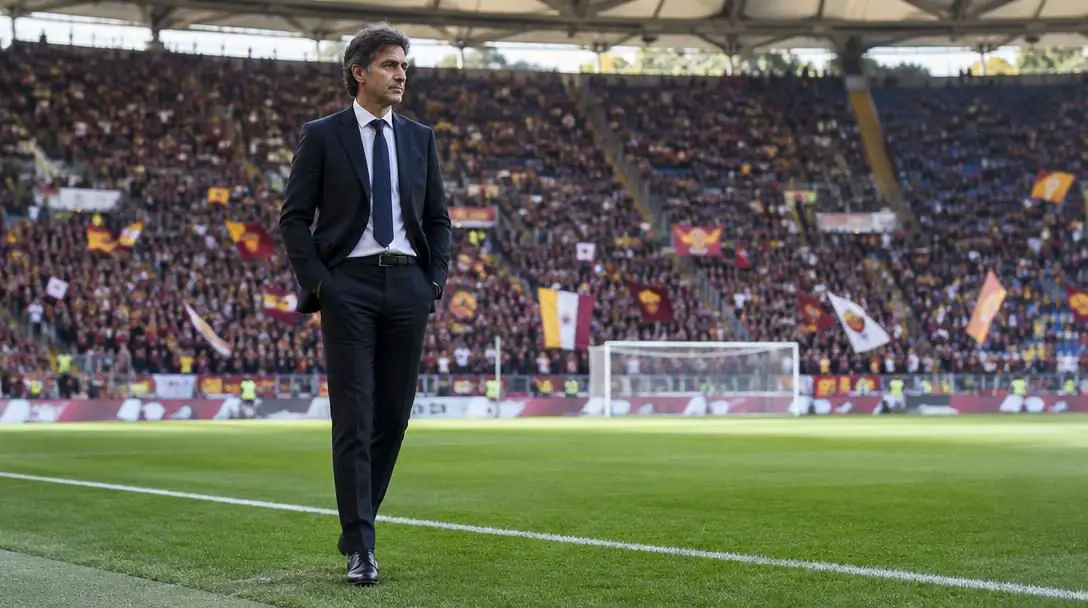
Italian football holds a revered place in global sport, defined by tactical sophistication, regional rivalry, and historic clubs that command devotion across generations. Among the oldest and most recognizable sporting institutions in Serie A is Associazione Sportiva Roma. Operating out of the grand Stadio Olimpico in the heart of the capital, the club—widely known simply as Roma or A.C. Roma—has long stood as an emotional touchstone for Roman sporting identity. Yet wearing the tracksuits and suits of Roma brings extraordinary pressure, where the relentless expectations of the capital can quickly overwhelm the unprepared.
Managing the *Giallorossi* requires balancing fiery supporters, relentless local media, and fierce competition against the industrial football giants of northern Italy. While dozens of tacticians have walked through the doors of the Stadio Olimpico only to suffer quick exits, a select few achieved legendary status. These exceptional leaders delivered major continental triumphs, coveted domestic championships, and tactical identities that reshaped how Italian football was played.
Key takeaways
- Roma's highest managerial achievements include historic Serie A titles under Nils Liedholm and Fabio Capello.
- Luciano Spalletti earned the top overall ranking through sustained winning percentages and consecutive Coppa Italia triumphs across two separate eras.
- Continental glory at the Stadio Olimpico spans six decades, from Alfredo Foni's 1961 Inter-Cities Fairs Cup to Jose Mourinho's 2022 Europa Conference League title.
- Success in the Italian capital requires navigating a unique media cauldron alongside immense tactical demands.
The five greatest managers in Roma's history
To rank the tacticians who defined Roma across different decades, one must weigh domestic championships, continental triumphs, win percentages, and the structural longevity of their projects. Here are the five managers who left the most profound imprint on the capital club.
Alfredo Foni
- Roma tenure: 1960–1961
- Major silverware: 1960–61 Inter-Cities Fairs Cup
- Previous playing career: Juventus (266 appearances over 13 years)
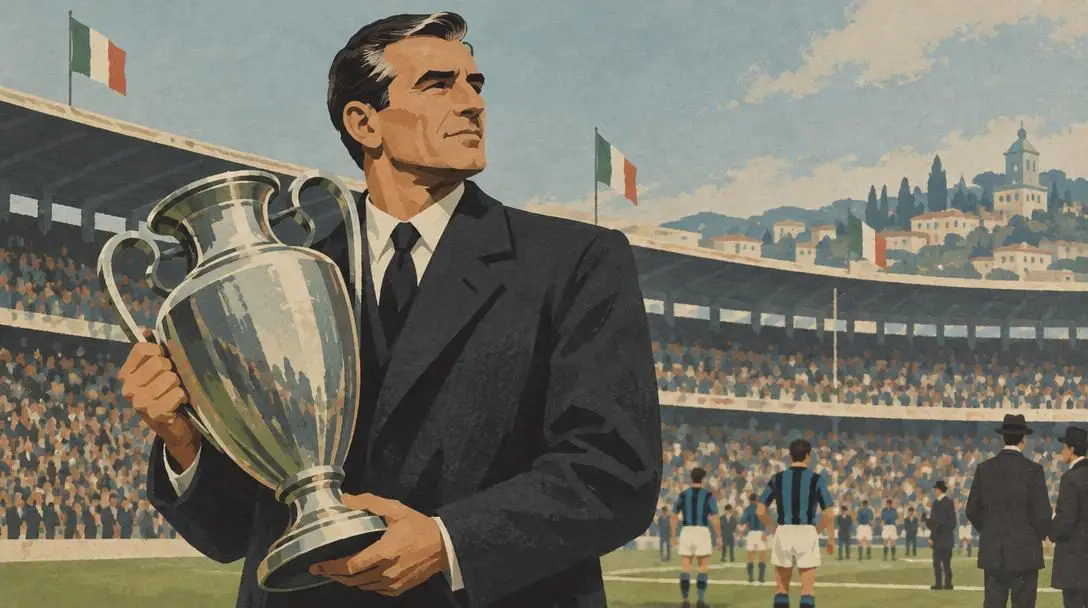
Born in 1911, Alfredo Foni initially built his football reputation through a distinguished playing career as an unyielding defender. He was best remembered on the pitch for his time with Juventus, where he made 266 appearances across a 13-year period before retiring in 1947. He moved immediately into the technical area, launching a managerial odyssey that extended across three decades. Over that 30-year coaching career, Foni led more than half a dozen club sides and took charge of two separate national teams: Italy and Switzerland.
Roma appointed Foni in 1960, and while his tenure lasted just two seasons, he delivered one of the proudest international achievements in club history: the 1960–61 Inter-Cities Fairs Cup. Continental campaigns in that era were physical, unforgiving marathons. Roma met Cologne XI in the quarterfinals, enduring two grueling legs and an exhausting play-off match before advancing. The semifinals brought another marathon against Scottish side Hibernian, which also required a tense play-off to settle.
In the final against English outfit Birmingham City, Foni demonstrated his defensive acumen. Roma claimed a hard-fought draw away from home in the opening leg, keeping the tie entirely open for the return fixture in the capital. Back on the familiar pitch of the Stadio Olimpico, Foni directed his team to a commanding 2-0 victory, claiming the trophy and cementing his brief tenure in the club's annals.
Jose Mourinho
- Roma tenure: Arrived 2021
- Major silverware: 2021–22 UEFA Europa Conference League
- Prior domestic titles: Multiple English Premier League championships
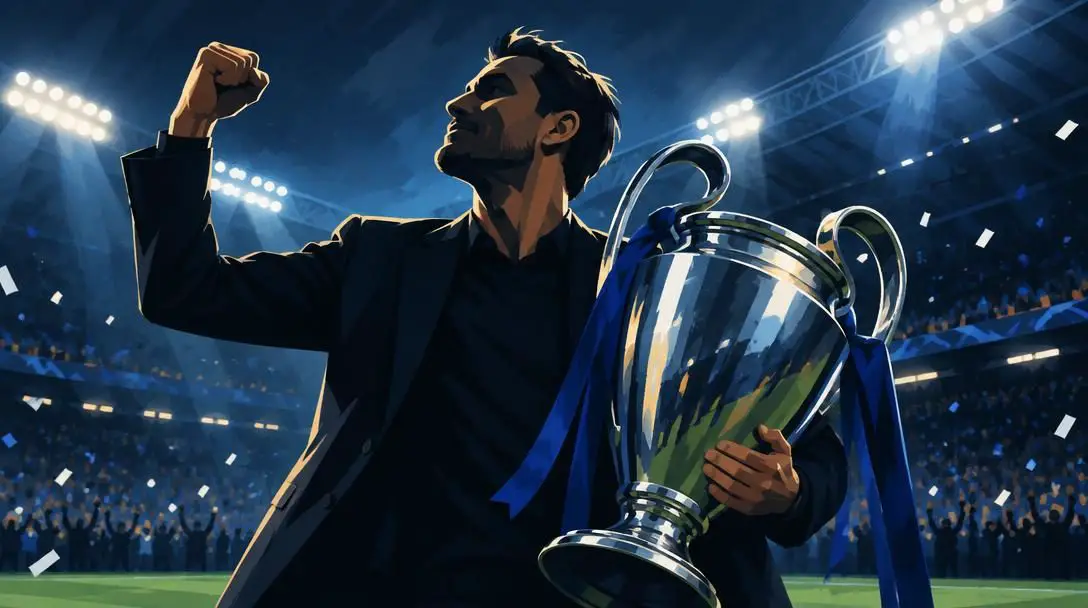
Having navigated the brightest spotlights in world football, Jose Mourinho arrived in Rome intimately familiar with the pressures of elite sport. Following a playing career that spanned from 1980 through 1987, Mourinho shifted to technical leadership. After stepping into management at Benfica, he established his credentials as a premier tactical mind across Europe, taking over at Chelsea in 2004. Over the next decade and a half, he accumulated silverware across the continent, helming Inter Milan, Real Madrid, Chelsea for a second stint, Manchester United, and Tottenham Hotspur before arriving at Roma in 2021.
Mourinho had already proven his title-winning credentials on numerous stages, including multiple Premier League triumphs. Roma supporters hoped his combative mentality would break the club's prolonged trophy drought. He delivered in his very first season by steering Roma to victory in the inaugural 2021–22 UEFA Europa Conference League.
The continental campaign was fraught with drama. Roma avenged early group-stage struggles against Norwegian side Bodo/Glimt by dispatching them in the quarterfinals, followed by a tactical battle past Premier League opponents Leicester City in the semifinals. The final against Dutch club Feyenoord in Tirana became a signature Mourinho performance: Roma grabbed a first-half lead and executed a disciplined defensive masterclass, sealing a 1-0 victory to claim their first major European trophy in six decades.
Fabio Capello
- Roma record: 118 wins, 73 draws, 50 losses
- Roma tenure: 1999–2004
- Major silverware: 2000–01 Serie A, 2001 Supercoppa Italiana
Fabio Capello stands apart on this list as the sole manager who also represented Roma as a player. Capello wore the Roma shirt between 1967 and 1970 before finishing his playing career at A.C. Milan in 1980. His deep understanding of the capital club's mentality helped shape a managerial approach rooted in iron discipline and tactical clarity. During the 1990s, Capello had already established himself as an elite winner while guiding A.C. Milan and Real Madrid to major domestic and European crowns.
Capello returned to Rome as manager as the 1990s closed, assembling a team capable of surviving the physical and mental gauntlet of Serie A. Over his tenure, he compiled an impressive record of 118 wins, 73 draws, and 50 losses. The pinnacle arrived in the 2000–01 campaign. Balancing world-class attacking talent with structural defensive rigidity, Capello guided Roma to their third Scudetto in club history, an achievement that triggered days of celebration throughout the city.
Capello consolidated that league title by winning the Supercoppa Italiana in 2001. After departing Roma, he added another managerial term at Real Madrid to his résumé before moving into international football with both the English and Russian national teams. His championship season remains the high-water mark for Roma in the 21st century.
Nils Liedholm
- Roma tenures: 1973–1977, 1979–1984, 1996
- Major silverware: 1982–83 Serie A, 3x Coppa Italia (including 1979–80)
- European milestone: 1984 European Cup runner-up
Revered throughout European football, Nils Liedholm first made his mark as one of Sweden's greatest footballers, appearing in 359 matches for A.C. Milan between 1949 and 1961. Upon hanging up his boots, Liedholm transitioned into coaching, embarking on a 35-year managerial journey spanning six clubs that concluded in 1996. The central thread of that storied coaching journey was his deep, enduring romance with Roma, which unfolded across three distinct eras.
Liedholm's initial managerial stint in Rome ran from 1973 to 1977, laying tactical foundations that came to full fruition when he was reappointed in 1979. During that second era (1979–1984), Liedholm transformed Roma into a continental powerhouse. He introduced an innovative zonal marking system and an elegant, patient possession style that confounded Italian football's traditional man-marking doctrines. He won the Coppa Italia in 1979–80—the first of three Coppa Italia crowns he would claim with the club—before achieving ultimate domestic glory by capturing the 1982–83 Serie A championship.
In 1984, Liedholm took Roma to the edge of European immortality. Leading the club to the European Cup final on their home turf at the Stadio Olimpico, Roma finished as runners-up in an agonizing penalty shootout against Liverpool. Liedholm returned for a brief third stint in 1996, forever respected as the tactical visionary who modernized the club.
Liedholm proved that tactical innovation and patient possession could conquer the notoriously rigid defensive structures of Serie A.
Luciano Spalletti
- Roma tenures: 2005–2009, 2016–2017
- Roma records: First spell: 122 wins, 53 draws, 49 losses; Second spell: 50 wins, 11 draws, 14 losses
- Major silverware: 2x Coppa Italia (2007, 2008), 2007 Supercoppa Italiana
Taking the top spot on this list is Luciano Spalletti, whose two spells at the Stadio Olimpico combined stylistic revolution with sustained winning consistency. Following a playing career from 1984 through 1993, Spalletti honed his craft at Empoli before refining his methods across the Italian league with Sampdoria, Venezia, Udinese, and Ancona. By the time Roma appointed him in 2005, Spalletti had developed a dynamic, fluid system that became one of the most studied tactical templates in modern football.
Faced with personnel challenges, Spalletti devised a groundbreaking strikerless system that revolutionized European tactics. His tactical brilliance earned him back-to-back Serie A Coach of the Year awards in his first two seasons. More importantly, his teams converted stylistic praise into major silverware. Spalletti secured consecutive Coppa Italia titles in 2007 and 2008, accompanied by a Supercoppa Italiana triumph in 2007.
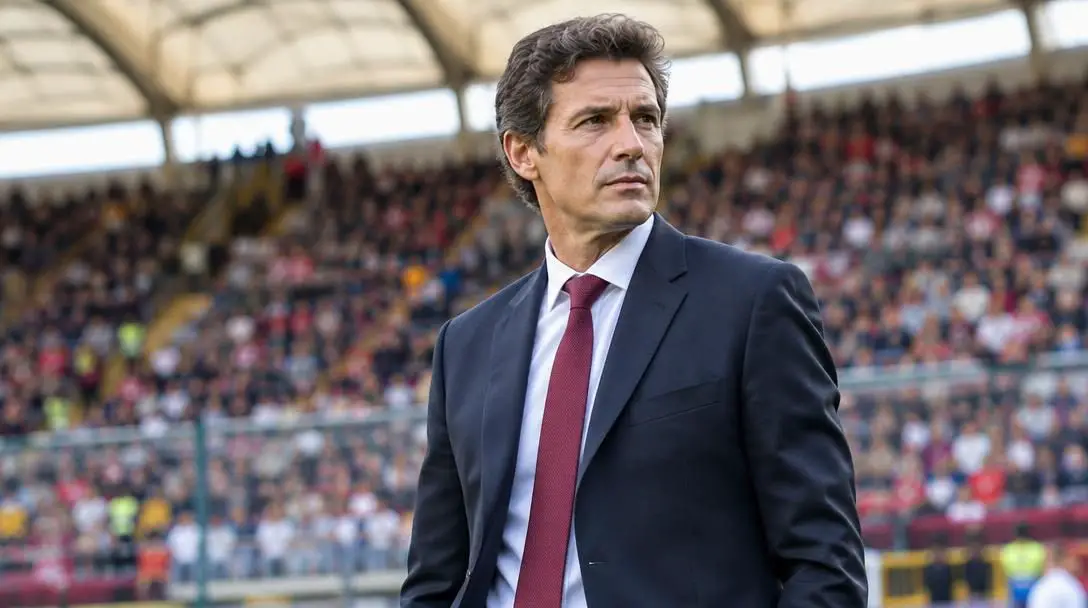
Spalletti's numbers reflect remarkable consistency. His first era yielded 122 wins, 53 draws, and 49 losses across four campaigns. When he returned to the capital for a second chapter between 2016 and 2017, he maintained that elite standard, registering 50 victories, 11 draws, and just 14 defeats. Spalletti remains the benchmark for competitive consistency and aesthetic beauty in modern Roma history.
At a glance: Roma's top managers compared
The managers who reached the pinnacle of Roma's technical area brought widely different skill sets, from short-burst knockout masteries to sustained league campaigns.
| Manager | Tenures at Roma | Key domestic honours | Key European honours |
|---|---|---|---|
| Luciano Spalletti | 2005–2009, 2016–2017 | Coppa Italia (2007, 2008), Supercoppa Italiana (2007) | Multiple Champions League quarterfinal runs |
| Nils Liedholm | 1973–1977, 1979–1984, 1996 | Serie A (1982–83), 3x Coppa Italia | European Cup runner-up (1984) |
| Fabio Capello | 1999–2004 | Serie A (2000–01), Supercoppa Italiana (2001) | Champions League appearances |
| Jose Mourinho | Arrived 2021 | Top-six domestic finishes | UEFA Europa Conference League (2021–22) |
| Alfredo Foni | 1960–1961 | Competitive Serie A finishes | Inter-Cities Fairs Cup (1960–61) |
The crucible of capital football
Grasping why these five coaches achieved legendary status requires appreciating the demanding environment of Rome. Italian football has always featured deep regional divisions, defensive tactical rigor, and intense public scrutiny. Unlike northern powerhouses Juventus, Inter Milan, and A.C. Milan—supported by major industrial centres—Roma carries the distinct weight of representing the national capital.
The Stadio Olimpico operates as an emotional volcano. Managers in Rome do not simply run training sessions; they must steer a club surrounded by dedicated sports daily newspapers, 24-hour football radio talk shows, and vocal supporter factions. Because Roma has captured fewer Scudetti than its northern rivals, the hunger for silverware is perpetually acute. Managers who fail to find rapid solutions face swift exits, making the longevity, tournament runs, and trophies won by Foni, Mourinho, Capello, Liedholm, and Spalletti extraordinary achievements.
The five pillars of elite football management
The success enjoyed by these five tacticians was not accidental. Behind every trophy and winning streak lies an intricate operational structure. In professional football, elite managers must master five core operational pillars:
- Tactical architecture: The manager defines the team's structural shape, defensive pressing triggers, offensive spacing, and set-piece execution. Visionaries like Liedholm with zonal marking and Spalletti with fluid forward lines fundamentally altered tactical thought.
- Man management and psychology: Leading twenty-five international athletes with divergent egos requires emotional intelligence. Managers like Mourinho excel at crafting an us-against-the-world mentality to unify the dressing room.
- Opposition scouting: Match preparation involves deep video analysis to uncover opponent tendencies, identify transitional vulnerabilities, and design specific defensive counters.
- In-game tactical adjustments: When an initial game plan falters, elite managers must decipher patterns in real time, making timely substitutions and system changes to swing momentum.
- Workload management and conditioning: Competing across Serie A, the Coppa Italia, and European competitions requires careful rotation and physical monitoring to prevent late-season fatigue and injury crises.
How to evaluate a football manager's legacy
Assessing managerial greatness across different historical eras requires a structured framework that moves beyond emotional bias. Analysts use a systematic process to evaluate long-term impact:
- Calculate overall win percentage: Establish a numerical baseline by tallying total matches, victories, draws, and defeats across all competitive competitions.
- Weigh trophies by prestige: Differentiate between long-form league championships (such as Serie A), domestic cup tournaments (the Coppa Italia), and continental silverware (European Cup or Conference League).
- Assess squad baseline and expenditure: Examine whether the coach inherited an underperforming roster requiring a rebuild or a pre-assembled collection of superstars.
- Judge tactical influence on the club: Measure whether the tactician left a lasting stylistic legacy that altered the club's identity or influenced subsequent generations of coaches.
- Review record in decisive fixtures: Examine performances in high-pressure environments, including local derbies against cross-city rivals and knockout ties against continental opponents.
Common analytical traps when judging historic managers
When comparing coaches who worked in the 1960s with those managing in the modern era, observers frequently fall victim to analytical pitfalls:
- Ignoring era-specific resources: Mid-century managers like Alfredo Foni had no video analyst departments, sports science units, or large international scouting networks; judging their preparation by modern standards creates an unfair picture.
- Over-indexing on trophy count alone: Silverware is essential, but viewing it in isolation ignores context. Leading an underdog squad to consecutive top-three finishes can be just as impressive as winning a cup with a dominant roster.
- Conflating tournament formats: A knockout competition requires five to seven sharp performances where single moments of luck can decide an outcome, whereas a 38-game league campaign tests squad depth and tactical resilience over nine months.
- Mistaking longevity for quality: Spending numerous seasons at a club does not automatically indicate superior managerial skill if those campaigns resulted in stagnant mid-table finishes without tactical evolution.
Frequently asked questions
Which Roma manager has won the most Serie A titles?
Among the managers featured on this list, Nils Liedholm and Fabio Capello each won one Serie A title with Roma. Liedholm captured the league in the 1982–83 campaign, while Capello secured the championship in the 2000–01 season.
Did any of these managers also play for Roma?
Yes. Fabio Capello is the only tactician on this list who suited up as an active player for Roma, representing the club on the pitch from 1967 until 1970 before concluding his playing days with A.C. Milan in 1980.
What was Jose Mourinho's biggest achievement at Roma?
Mourinho's crowning achievement in the capital was capturing the 2021–22 UEFA Europa Conference League. His side defeated Bodo/Glimt, Leicester City, and Feyenoord to deliver the club's first major European trophy in six decades.
Why is Luciano Spalletti ranked as the top Roma manager?
Spalletti earned the top spot through his sustained competitive consistency, high win totals across two distinct spells (2005–2009 and 2016–2017), back-to-back Coppa Italia titles in 2007 and 2008, a Supercoppa Italiana win, and consecutive Serie A Coach of the Year honours.
What European trophy did Alfredo Foni win with Roma?
Foni guided Roma to the 1960–61 Inter-Cities Fairs Cup title, overcoming Cologne XI and Hibernian in play-off matches before defeating Birmingham City 2-0 in the second leg of the final at the Stadio Olimpico.
The bottom line
Achieving sustained success in the Italian capital requires a rare blend of tactical vision, psychological toughness, and structural control. From the pioneering continental exploits of Alfredo Foni and the timeless elegance of Nils Liedholm to the iron will of Fabio Capello, the tournament pedigree of Jose Mourinho, and the tactical mastery of Luciano Spalletti, these five tacticians mastered the distinct cauldron of the Stadio Olimpico. In doing so, they provided Roma supporters with memories, silverware, and an enduring standard of football excellence.