The Secrets of Success: How Adam Sandler Got Famous

Adam Sandler stands as one of the most recognizable and enduring figures in the modern entertainment landscape. Over a career spanning more than three decades, he has transitioned from an unpolished stand-up comedian performing in smoky comedy clubs into a multimedia mogul commanding a vast entertainment empire. His trajectory demonstrates an unusual balance between blockbuster commercial performance, dedicated cult admiration, and an unwavering audience connection that consistently defies mainstream critical evaluation.
Rather than relying on short-lived viral fads or standard Hollywood formulas, Sandler achieved his position through relentless creative experimentation, distinct comedic branding, and an astute transition toward structural ownership. By examining his early stand-up roots, his tenure in late-night television, his high-concept cinematic streak, and the founding of Happy Madison Productions, creative professionals and business leaders can extract practical lessons in building an enduring, self-sustaining career.
Key takeaways
- Sandler built his comedic identity by pairing traditional stand-up with original songs, acoustic guitar, and bizarre character voices.
- His breakout years on Saturday Night Live established an enduring ensemble of creative collaborators who formed the bedrock of his film career.
- By founding Happy Madison Productions in 1999, Sandler gained full creative control and transformed from an actor-for-hire into an equity owner.
- Sandler prioritized his loyal paying audience over mainstream critics, ensuring his films remained commercial hits despite scathing professional reviews.
Early Life and the Stand-Up Circuit
Adam Sandler was born on September 9, 1966, in Brooklyn, New York. During his childhood, his family moved to Manchester, New Hampshire, where he grew up and completed high school. It was throughout these formative New England years that Sandler discovered his natural talent for humor and entertaining those around him. Determined to turn this natural comedic instinct into a formal discipline, he enrolled in New York University's Tisch School of the Arts.
While earning his degree at NYU, Sandler took his first serious steps into live performance. He regularly performed at local comedy clubs and college campuses across New York City, taking the stage in front of unpredictable crowds. These demanding environments served as an essential testing ground where he honed his comedic rhythm, learned how to navigate stage friction, and experimented with the boundaries of his stage persona.
After graduating from NYU, Sandler relocated to Los Angeles in the late 1980s to enter the West Coast comedy circuit. In a marketplace saturated with conventional observational stand-ups, Sandler set himself apart by bringing an acoustic guitar on stage, performing eccentric original songs, and adopting oddball character voices. This quirky, musical approach caught the attention of television scouts and club bookers, quickly establishing him as an inventive rising talent.
The Saturday Night Live Breakthrough
Sandler landed his definitive industry breakthrough in 1990 when he was recruited by the NBC sketch comedy series Saturday Night Live. He entered the production behind the scenes as a staff writer, where he learned the structural discipline of formatting sketches, pitching premises under extreme deadlines, and understanding broadcast comedy mechanics. His natural charisma and sharp comedic timing quickly made it clear that his talents belonged in front of the cameras, prompting producers to promote him to an on-air cast member.
During his early 1990s run on the show, Sandler created a roster of absurd, instantly memorable personalities. Among his most famous creations was Opera Man, a dramatic character who sang current events and satirical commentary in pseudo-Italian operatic verse. He also found immense success with group sketches, such as the recurring Gap Girls routine. Sandler's fearlessness and willingness to commit entirely to odd premises turned him into an essential centerpiece of the series.
The Inner Circle: Sandler's Enduring Ensemble
Sandler did not treat his late-night comedy breakthrough as a solitary endeavor. Instead, he treated the show as an incubator to form lifelong personal and professional partnerships that would carry over into his cinematic work.
Tim Herlihy

- Role: Longtime writing partner and collaborator
- Origin: College friendship established at New York University
- Key Milestone: Co-writer of Sandler's first starring film, Billy Madison
Tim Herlihy became one of Sandler's most influential creative sounding boards. Their shared artistic sensibilities, developed during their college years at NYU, translated directly into the foundational scripts that defined Sandler's commercial film persona.
Chris Farley

- Role: Saturday Night Live cast mate and close creative ally
- Era: Early 1990s golden era of NBC sketch comedy
- Iconic Collaboration: Chippendales audition sketch alongside Patrick Swayze
Farley's boundless physical commitment and warm comedic energy made him a pivotal partner for Sandler. Their work together, including memorable appearances such as the Chippendales sketch, set a high standard of collaborative trust and physical slapstick.

David Spade
- Role: Fellow Saturday Night Live writer and cast member
- Collaborative Work: The Gap Girls sketch ensemble
- Career Longevity: Frequent partner in post-television cinematic ventures
David Spade's dry, sarcastic delivery offered the ideal creative contrast to Sandler's broader, musical, and eccentric style, creating a durable partnership that endured well beyond their television work.
Rob Schneider
- Role: Sketch performer and frequent cinematic co-star
- Network: Core member of the early 1990s sketch era
- Production Role: Recurring ensemble player across Happy Madison releases
Schneider developed an immediate comedic chemistry with Sandler during their late-night sketch days, establishing an artistic alliance that led to multiple appearances across Sandler's extensive film catalog.
Landmark Films: The Four Foundational Hits
After leaving Saturday Night Live in 1995, Sandler bypassed the conventional career hurdles that trip up many sketch performers by immediately launching a historic run of commercially successful comedies.
Billy Madison

- Release Year: 1995
- Writing Credits: Co-written by Adam Sandler and Tim Herlihy
- Significance: First major feature leading role
Released in 1995, Billy Madison demonstrated that Sandler's uninhibited comedic energy could carry a feature-length narrative. By presenting an immature protagonist forced to repeat elementary and high school, the movie became a massive commercial triumph and turned Sandler into a bona fide movie star.
Happy Gilmore

- Release Year: 1996
- Genre: Sports comedy and slapstick
- Legacy: Enduring cult classic that crystallized his explosive comedic persona
Arriving in 1996, Happy Gilmore combined sports parody with slapstick violence and short-tempered outbursts. The film solidified Sandler's signature cinematic formula, blending lovable oddball traits with sudden eruptions of rage, and remains one of his most celebrated cult properties.
The Waterboy
- Release Year: 1998
- Milestone: Smashed box office records for sports comedies
- Character Style: Quirky, lovable protagonist with unusual vocal mannerisms
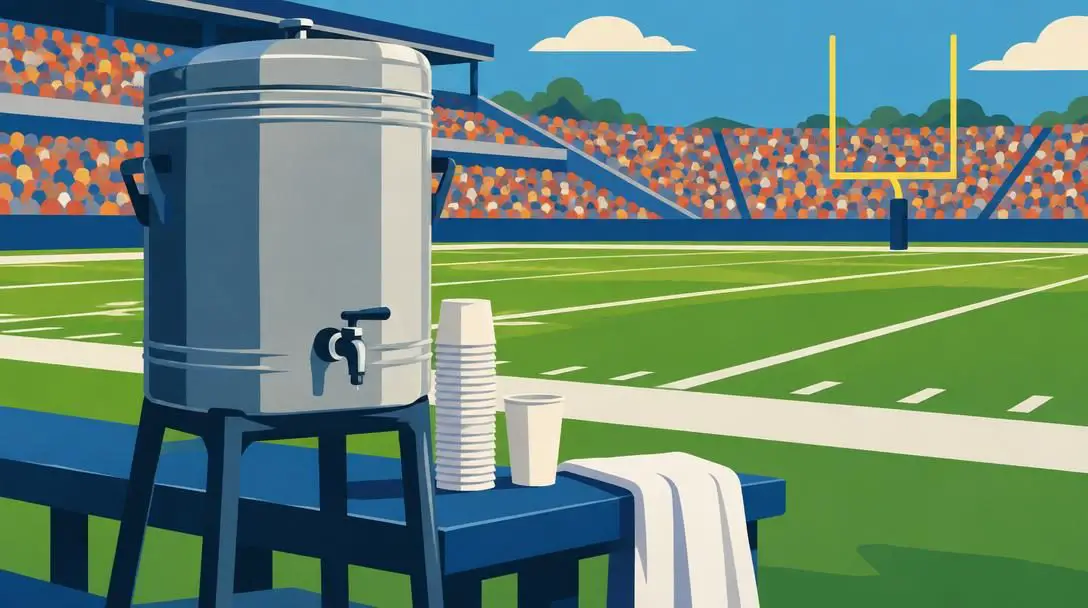
In 1998, Sandler pushed his vocal character work into high gear with The Waterboy. Playing an eccentric, stuttering water boy who unexpectedly transforms into a college football powerhouse, Sandler established unprecedented box office milestones for sports comedies.
Big Daddy

- Release Year: 1999
- Stylistic Shift: Paired irreverent humor with emotional warmth
- Market Impact: Broadened mainstream demographics and generated massive revenue
Closing out the decade in 1999, Big Daddy married Sandler's signature gross-out and slapstick humor with genuine emotional heart. The narrative broadened his demographic reach by attracting family audiences, securing enormous ticket receipts, and proving his versatility as a box office anchor.
| Film Title | Release Year | Key Creative Approach | Commercial & Cultural Impact |
|---|---|---|---|
| Billy Madison | 1995 | Absurdist narrative co-written with Tim Herlihy | Established Sandler as a viable cinematic leading man |
| Happy Gilmore | 1996 | High-concept sports parody with slapstick aggression | Cemented his signature brand and became an enduring cult classic |
| The Waterboy | 1998 | Lovable, eccentric protagonist with distinct mannerisms | Set all-time box office records for sports comedies |
| Big Daddy | 1999 | Irreverent comedy blended with paternal sentimentality | Substantially expanded his audience reach to mainstream viewers |
The Critical Disconnect and Box Office Resilience
A defining hallmark of Sandler’s cinematic reign is his profound immunity to professional critical reception. Mainstream film critics routinely greeted his work with blistering reviews. Titles such as Little Nicky in 2000 and Jack and Jill in 2011 faced overwhelming hostility from reviewers, who dismissed them as juvenile and simplistic.
Sandler proved that negative critical reviews meant remarkably little when measured against an unshakeable connection to the ticket-buying public.
Yet, despite relentless critical pans, Sandler's films continually performed remarkably well at box offices worldwide. His core audience possessed a degree of loyalty that completely bypassed conventional film journalism. Moviegoers were not turning to critical columns to decide whether to see an Adam Sandler film; they wanted his signature brand of escapism, physical comedy, and ensemble familiarity. This unbroken bond made his career virtually critique-proof.

Happy Madison Productions and Structural Ownership
Recognizing the creative limitations and financial ceilings of working as an actor-for-hire, Sandler took complete charge of his professional destiny in 1999 by founding Happy Madison Productions. The company’s name cleverly bridged his two foundational cinematic hits, Happy Gilmore and Billy Madison.
By establishing an independent production outfit, Sandler achieved three vital strategic goals:
- Autonomy from studio interference: The company allowed Sandler to greenlight projects directly aligned with his specific comedic vision without executive micromanagement.
- Platform for collaborators: Happy Madison served as an employment hub and incubator for his close circle of friends, writers, and fellow comedians.
- Diversification into television: The studio expanded beyond feature films into multi-camera sitcoms and network television, producing successful long-running hits like Rules of Engagement and The Goldbergs.
Moving into equity ownership ensured that Sandler was no longer merely a participant in the Hollywood system, but an architect of an asset generating ongoing residual value.
Personal Life and Grounded Philanthropy
In sharp contrast to the wild, juvenile, and boisterous characters he embodies on screen, Sandler has cultivated a famously quiet, stable, and low-profile personal life. In 2003, he married actress Jackie Titone, and the couple has raised two daughters. By deliberately keeping his domestic affairs out of the tabloid spotlight, Sandler avoided the personal turbulence that frequently disrupts prolonged Hollywood careers.
Alongside his stable home life, Sandler has been an active, quiet philanthropist, using his platform to support community development and medical advancements. Among his primary philanthropic commitments are:
- Dana-Farber Cancer Institute: Supporting advanced cancer research and patient care initiatives.
- Boys and Girls Club of America: Providing resources, mentorship, and safe environments for youth development across the nation.
How to Apply the Sandler Career Blueprint
While few creators will achieve global box office dominance, the structural mechanisms behind Sandler's career can be replicated across writing, media production, and digital entrepreneurship.
- Commit to intense stage repetitions: Put in the live hours necessary to refine your craft. Sandler developed his instincts through relentless stand-up sets at NYU and local clubs before seeking broadcast exposure.
- Identify your creative differentiators: Avoid generic styles. When late-1980s stand-up was dominated by standard observational acts, Sandler stood out with his acoustic guitar, eccentric songs, and unusual vocal work.
- Learn the structural mechanics behind the scenes: Master the architecture of your field before stepping into the spotlight, just as Sandler honed his storytelling skills in the Saturday Night Live writers' room.
- Build an enduring creative ensemble: Seek out trusted collaborators whose strengths complement your own. Long-term partnerships, such as Sandler's alliances with Tim Herlihy, David Spade, and Rob Schneider, foster continuous creative output.
- Transition toward operational ownership: Move from being a contractor to an owner. Establishing an entity like Happy Madison Productions secures your intellectual property and builds lasting enterprise value.
- Protect your personal foundation: Keep your private life anchored and insulated from professional stress, while allocating time and resources to community initiatives and philanthropy.
Common Traps and Pitfalls to Avoid
Studying Sandler's trajectory also illuminates the frequent missteps that derail promising creative endeavors:
- Letting critics dictate your direction: Abandoning your signature style in an attempt to please external gatekeepers will disconnect you from your core audience, as proved by Sandler's resilience with projects like Little Nicky and Jack and Jill.
- Chasing temporary industry trends: Radically altering your aesthetic to match whatever genre is currently popular produces derivative work that lacks authentic passion.
- Operating in creative isolation: Attempting to manage every writing, producing, and acting duty without a reliable team invites rapid burnout and limits your total output.
- Expecting instant commercial stardom: Bypassing the developmental stages of your craft creates fragile careers. Sandler invested years in New Hampshire, New York comedy clubs, and late-night television before releasing Billy Madison in 1995.
Frequently asked questions
Where did Adam Sandler start his stand-up comedy career?
Adam Sandler began performing stand-up comedy while studying at New York University's Tisch School of the Arts, regularizing his routine in New York City comedy clubs and on college campuses before moving to Los Angeles in the late 1980s.
When did Adam Sandler join Saturday Night Live?
Sandler joined the staff of Saturday Night Live in 1990. He was originally hired as a writer before earning a promotion to on-air cast member, where he remained until 1995.
What was the inspiration behind the name Happy Madison Productions?
Sandler formed Happy Madison Productions in 1999, naming the production company by combining the titles of two of his most successful early comedy feature films: Happy Gilmore (1996) and Billy Madison (1995).
What television shows has Happy Madison Productions produced?
In addition to Sandler's feature film output, Happy Madison Productions expanded into television, producing long-running network comedy hits such as the multi-camera sitcom Rules of Engagement and the period family comedy The Goldbergs.
Which charitable organizations does Adam Sandler actively support?
Sandler has consistently supported philanthropic causes throughout his career, focusing his charitable efforts primarily on the Dana-Farber Cancer Institute and the Boys and Girls Club of America.
The bottom line
Adam Sandler’s extraordinary career demonstrates that long-term creative longevity is not an accident of good fortune, but the outcome of a coherent, disciplined strategy. By embracing an unmistakably distinct comedic persona, building an enduring creative ensemble, maintaining unwavering loyalty to his fans over professional critics, and securing structural independence through Happy Madison Productions, Sandler transformed himself from a club comic into an autonomous entertainment powerhouse. His trajectory remains a compelling case study in how authenticity, collaborative loyalty, and equity ownership can build an enduring creative empire.