The Secrets of Success: How Larry King Got Famous
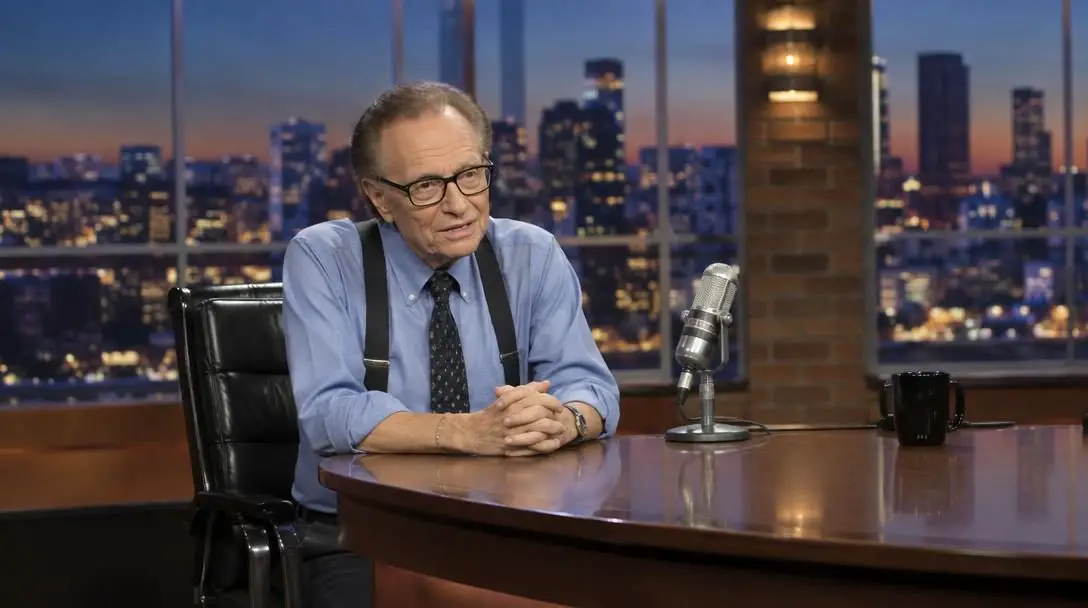
For more than half a century, the trademark suspenders, rolled-up shirt sleeves, and dark-rimmed glasses of Larry King represented an unmistakable constant in global news broadcasting. At an era when television journalism routinely drifted between rigid academic detachment and relentless, hostile confrontation, King pioneered a distinctly disarming conversational medium. By treating sit-down interviews as relaxed, living-room conversations rather than courtroom interrogations, he commanded the attention of millions of international viewers on a nightly basis.
King fundamentally altered the landscape of 24-hour cable journalism, showing that earnest curiosity, professional civility, and deliberate listening could uncover far deeper personal truths than aggressive badgering. Spanning his humble childhood in Brooklyn through his decades at the summit of prime-time cable television, his professional journey stands as an enduring case study in personal resilience, tireless behind-the-scenes research, and the timeless value of human empathy on the airwaves.
Key takeaways
- King launched his legendary cable program on CNN in 1985, steering the show through more than twenty-five years of nightly global broadcasts.
- His distinctive broadcast method traded confrontational traps for accessible questions, creating an environment that attracted reclusive cultural icons and world leaders alike.
- Extensive behind-the-scenes research allowed King to project an effortless, conversational ease while maintaining total command of complex topics.
- Throughout his multi-decade career, King achieved peerless access to world power, conducting interviews with every United States president from Richard Nixon onward.
The Early Life and Rise of a Broadcast Legend
Born in Brooklyn, New York, in 1933, Larry King was raised in an impoverished Jewish household that faced sudden catastrophe during his youth. When King was only nine years old, his father passed away, plunging the family into severe financial hardship and profound grief. Rather than allowing childhood adversity to extinguish his ambitions, King held tightly to a singular childhood dream: he wanted to speak into microphones for a living. That relentless impulse drove him south to Florida in search of any broadcast opportunity he could uncover.
Upon arriving in Miami, King secured his initial broadcast foothold working as a local radio disc jockey. Through steady on-air trial, error, and repetition, he discovered how to capture an audience's ear without relying on artificial polish or dramatic theatricality. His initial success on the radio led to television opportunities, most notably as the host of the local interview program Miami Undercover. In this Florida media laboratory, King realized that an interviewer's genuine curiosity resonated with regular audiences far more effectively than stiff formality or performative intellectualism.
In 1985, King capitalized on this momentum by taking a monumental career step: launching Larry King Live on CNN. The nightly program blossomed into a worldwide television staple, running uninterrupted for more than a quarter-century. The broadcast's longevity rested on an extraordinary spectrum of guests, ranging from reigning world leaders and literary minds to sports champions and pop-culture icons. Even as he battled private crises, including multiple divorces and personal bouts with addiction, alongside professional slumps and critics who labeled his style overly gentle, King continually rebounded to cement his status as an American broadcast institution.
Historic Encounters on the Global Cable Stage
The defining hallmark of King's nightly CNN program was its staggering breadth. King approached every personality who entered his studio with an identical level of interest, whether he was welcoming an elusive movie legend or a foreign head of state facing international turmoil. Several historic broadcasts came to define the golden era of the program.

Marlon Brando

- Guest status: Reclusive Oscar-winning actor
- Setting: Brando's private residence
- Signature moment: Shared song and spontaneous on-air kiss
Hollywood icon Marlon Brando was notoriously protective of his private life, openly suspicious of the entertainment press, and almost entirely absent from television talk shows. Because King had earned an unimpeachable reputation for conducting fair and non-sensational interviews, Brando made an extraordinary exception by welcoming King into his personal home. Their rambling, unpredictable encounter culminated in the two men casually sharing a song and a spontaneous kiss on the lips. The broadcast demonstrated King's unmatched capacity to dissolve the defenses of famously guarded celebrities.
Frank Sinatra

- Broadcast year: 1988
- Guest: Legendary entertainer and singer
- Significance: Final major television interview of his career
Music titan Frank Sinatra maintained a famously hostile relationship with news reporters throughout his life, frequently boycotting sit-down interviews for years at a time. In 1988, however, Sinatra selected King's studio to deliver what would ultimately stand as his final major televised interview. By setting aside aggressive gossip inquiries in favor of thoughtful, unhurried prompts, King offered the legendary singer an open platform to reflect honestly on his artistry, his long public life, and his personal relationships.
Nelson Mandela

- Guest role: Anti-apartheid leader and South African President
- Topic focus: Reconciliation and democratic governance
- Interview tone: Reverent and philosophically expansive
During an era of profound political transformation across South Africa, anti-apartheid hero and South African President Nelson Mandela sat before King to communicate his vision to an international audience. King approached Mandela with immense personal deference, framing simple, direct inquiries that gave the statesman room to articulate his philosophy of human dignity, racial reconciliation, and democratic principles without theatrical cross-examination.
Vladimir Putin

- Guest role: Russian head of state
- Discussion scope: Foreign policy, domestic affairs, and military action
- Format: High-stakes international news broadcast
Russian leader Vladimir Putin appeared opposite King during critical geopolitical intervals to address sensitive topics spanning domestic Russian policy, international conflicts, and military operations. King leveraged his even-tempered, straightforward questioning style to elicit direct, unvarnished statements from the Russian president. The broadcast proved that conversational interviewing could cut through diplomatic evasions without degenerating into an unproductive yelling match.
United States Presidents

- Historical span: Richard Nixon through Barack Obama
- Office held: President of the United States
- Access record: Every sitting commander-in-chief across four decades
King built an unmatched record of presidential access that remains unmatched in cable television history. Beginning with Richard Nixon, King interviewed every subsequent American head of state, including Gerald Ford, Jimmy Carter, Ronald Reagan, George H.W. Bush, Bill Clinton, George W. Bush, and Barack Obama. His studio evolved into an indispensable national venue where commanders-in-chief could explain complex legislative agendas and reflect on the burdens of executive leadership in an unhurried, conversational forum.
| Guest or Category | Primary Arena | Key Interview Focus | Historical Significance |
|---|---|---|---|
| Marlon Brando | Cinema and Culture | Personal philosophy and craft | Rare home broadcast with a notorious recluse |
| Frank Sinatra | Popular Music | Artistic legacy and private reflections | Sinatra's final major television interview (1988) |
| Nelson Mandela | Global Politics | Reconciliation and human rights | Direct international address during South Africa's transition |
| Vladimir Putin | International Affairs | Military strategy and global relations | High-stakes geopolitical dialogue in a calm format |
| United States Presidents | American Governance | Executive policy and national direction | Unbroken interview record from Nixon through Obama |
The Mechanics of King's Conversational Method
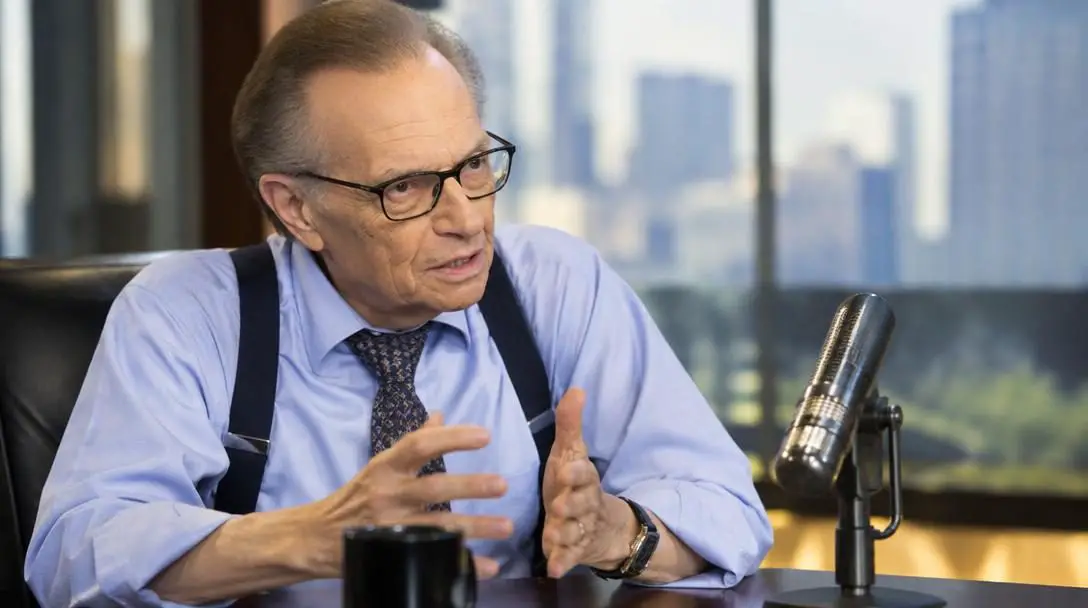
The sustained effectiveness of King's broadcast career derived from his conscious rejection of prosecutorial journalism. Where other interviewers attempted to corner their guests with loaded queries, King relied on an operating model anchored by four fundamental pillars:
- Opening with welcoming simplicity: Rather than unleashing complicated, multi-sentence interrogations, King routinely opened with plain prompts like "How are you?" or "Tell me about yourself." These non-threatening inquiries neutralized anxiety and encouraged subjects to speak freely from the outset.
- Fostering safety and professional dignity: King understood that subjects retreat behind rehearsed talking points when they sense an ambush. By establishing an atmosphere of goodwill, he inspired high-profile guests to drop their defenses and disclose spontaneous insights.
- Conducting extensive background research: The breezy rhythm of his broadcasts was made possible by intensive preparation behind closed doors. King absorbed historical timelines, past quotes, and biographical background so he could guide conversations without relying on rigid scripts.
- Operating as an active facilitator: King steadfastly refused to make himself the centerpiece of the program. He posed brief inquiries, stepped entirely out of the way, and allowed the guest to control the spotlight.
King showed an exceptional ability to make even the most controversial guests feel at ease, creating an environment where high-profile figures were willing to sit down and talk freely.
A Step-by-Step Blueprint for Compelling Interviews
Broadcasters, media professionals, podcasters, and workplace communicators can translate King's broadcast philosophy into actionable habits. Mastering the art of the interview requires discipline, empathy, and active restraint:
- Invest substantial hours into background research: Study your subject's historical statements, earlier broadcast appearances, and public milestones before walking into the studio. Deep background knowledge gives you the confidence to navigate unexpected topics smoothly without reading off a prepared sheet.
- Establish human rapport prior to recording: Spend a few moments greeting your guest warmly before starting the formal interview. Demonstrating genuine human interest helps eliminate nervous tension and fosters mutual trust.
- Begin with simple, accessible inquiries: Avoid starting your dialogue with dense or confrontational questions. Use clear, open-ended invitations that permit the interviewee to establish their voice comfortably.
- Practice disciplined listening: Resist the urge to interrupt, talk over your guest, or jump ahead to your next prepared card. Pose short questions, remain silent, and allow your subject ample room to think through and complete their thoughts.
- Treat every interviewee with dignity: Whether you are questioning an iconic performer, a world leader, or an embattled public official, maintain an impartial, respectful posture that keeps the exchange informative.
- Maintain persistence across career hurdles: Cultivate resilience in the face of bad reviews, changing production trends, and career slumps. Steady work habits and consistent curiosity will carry you through inevitable setbacks.
Common Traps to Avoid in Modern Interviewing
Many aspiring media hosts attempt to adopt a conversational broadcast manner but stumble because they mimic King's easygoing posture without embracing his underlying work ethic. Communicators should guard against these common blunders:
- Confusing casual ease with lack of preparation: Assuming that an unscripted style means you can show up without studying the subject. King worked through hours of preparatory research; improvising without facts leads straight to superficial dialogues.
- Setting combative traps out of the gate: Pushing for immediate sensational gotchas causes interviewees to shut down emotionally and revert to defensive public relations scripts.
- Turning the broadcast into a personal vanity project: Indulging in rambling soliloquies or posing complex queries designed to demonstrate the interviewer's cleverness rather than highlighting the guest.
- Viewing guests as transactional soundbites: Treating participants as disposable vehicles for controversy instead of engaging them with sincere curiosity.
- Capitulating to professional adversity: Allowing harsh critical reviews, shifting ratings, or personal hardships to disrupt consistent creative habits.
Honors, Accolades, and Career Milestones
The cultural footprint of King's career was celebrated with numerous broadcast accolades. His peers recognized that his conversational approach served as an essential public forum for global affairs:
- Two Peabody Awards: Bestowed in recognition of distinguished public service and superior broadcast achievement over the airwaves.
- Emmy Lifetime Achievement Award: Presented by the television academy in honor of his decades-long dedication to excellence in broadcast journalism.
- Broadcasting and Cable Hall of Fame: Inducted in 2011 alongside the medium's most influential historical figures.
- Historic Presidential Access: A legendary run of sit-down interviews that connected viewers with every United States president from Richard Nixon through Barack Obama.
Frequently asked questions
When did Larry King launch his signature television show?
King launched Larry King Live on CNN in 1985. The program ran continuously on the cable network for over twenty-five years, becoming an international news and cultural phenomenon.
Which United States presidents did Larry King interview?
King interviewed every American president since Richard Nixon, an unbroken lineage that featured Gerald Ford, Jimmy Carter, Ronald Reagan, George H.W. Bush, Bill Clinton, George W. Bush, and Barack Obama.
What was Larry King's interview philosophy?
King favored straightforward, open-ended questions over combative interrogation. He believed that creating a comfortable, dignified environment encouraged guests to drop their defenses and share authentic personal reflections.
Where did Larry King begin his career in broadcasting?
King began his professional broadcasting career in Miami, Florida, initially working as a local radio disc jockey before moving on to host the television program Miami Undercover.
When did Larry King pass away?
Larry King passed away in January 2021 at the age of 87, leaving behind a multi-decade legacy that permanently influenced modern talk formats and broadcast journalism.
The Bottom Line
When Larry King passed away in January 2021 at 87 years of age, he left behind an irreplaceable legacy in broadcast communication. Long before the rise of independent talk media and digital podcasting, King recognized that audiences were hungry for thoughtful, unhurried discussions where guests were approached with open curiosity rather than cynicism. His remarkable rise from a childhood marked by poverty and loss in Brooklyn to the highest tier of global broadcasting confirms that disciplined research, authentic empathy, and the quiet discipline of active listening remain the enduring foundations of great conversation.