The Secrets of Success: How Robert De Niro Got Famous
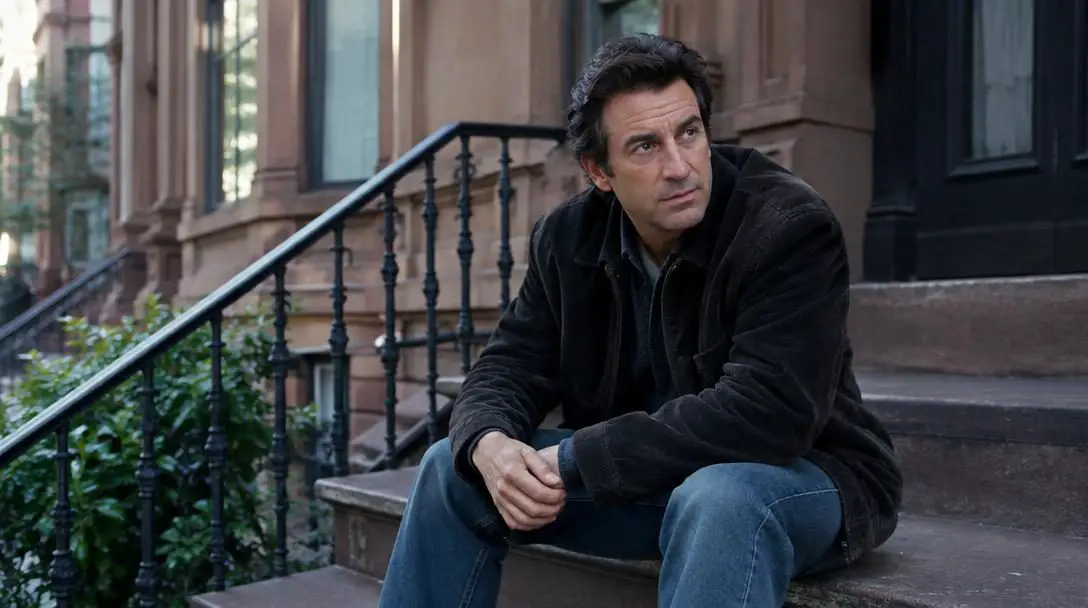
Robert De Niro represents an enduring standard of excellence, artistic rigor, and sustained achievement in modern cinema. From his breakthrough appearances in the American New Wave of the early 1970s to his work across subsequent decades, his filmography provides an exhaustive masterclass in character preparation, emotional authenticity, and the power of creative discipline.
De Niro's rise from neighborhood stages in New York City to global cultural recognition was neither rapid nor accidental. By exploring the formative training, defining film roles, collaborative partnerships, and entrepreneurial endeavors that shaped his career, we can identify the actionable principles that underpin his longevity and industry-wide influence.
Key takeaways
- Rigorous formal training at the Stella Adler Conservatory gave De Niro a repeatable, technique-driven foundation before he stepped into the public spotlight.
- Lifelong creative partnerships, most notably with director Martin Scorsese, provided the mutual trust necessary to take bold, transformative risks on screen.
- De Niro deliberately avoided career stagnation by alternating volatile, aggressive characters with tender, observational dramatic roles.
- Expanding into entrepreneurship through the Tribeca Film Festival and hospitality projects established organizational independence outside Hollywood studio systems.
- Sustainable career success relies on deep preparation and craftsmanship rather than transient visibility or reliance on unrefined natural talent.
Foundations of an Iconic Career: Upbringing and Training
De Niro’s artistic journey was deeply influenced by the environment of his youth. Born and raised in New York City, he grew up surrounded by one of the world's most vibrant cultural capitals. The city served as an open-air laboratory for an observant artist, exposing him from an early age to diverse human behaviors, distinct urban neighborhoods, and dynamic stage performances. Crucially, his parents were both artists who understood the creative process intimately. Instead of dismissing dramatic performance as an impractical whim, they recognized creative expression as a serious, viable lifelong endeavor, instilling in him an early appreciation for focused artistic labor.
Recognizing that instinctive talent requires structured technique, De Niro pursued formal dramatic education at the prestigious Stella Adler Conservatory. Stella Adler’s pedagogical framework centered on rigorous text analysis, comprehensive research into the social and psychological reality of the world inhabited by the character, and total emotional truth. Rather than skimming the surface of dialogue, De Niro learned to construct complete interior lives for the figures he portrayed. By balancing demanding conservatory classes with stage roles across New York's theater community, he developed the emotional stamina, vocal control, and physical awareness needed to navigate complex cinematic narratives.
Landmark Performances That Defined Modern Screen Acting
The turning point in De Niro’s trajectory arrived when meticulous preparation intersected with extraordinary cinematic opportunities. By committing fully to character transformation and embracing unconventional, flawed human beings, he produced a sequence of performances that permanently altered the landscape of dramatic storytelling.
Mean Streets (1973)

- Release Year: 1973
- Director: Martin Scorsese
- Key Trait: Kinetic, volatile screen energy
De Niro’s breakthrough into critical acclaim arrived with his turn in Mean Streets, directed by Martin Scorsese. This project established a fruitful, decades-long alliance between an ambitious director and a fearless actor who shared deep roots in New York's street-level culture. De Niro brought an unpredictable, kinetic vitality to the screen, combining naturalistic dialogue with volatile tension. The raw authenticity of the performance demonstrated his refusal to polish rough edges for commercial palatability, capturing the immediate attention of critics, producers, and audiences across the industry.
The Godfather Part II (1974)

- Release Year: 1974
- Major Honor: Academy Award winner
- Key Trait: Restrained gravitas and psychological nuance
Proving that his impact in Mean Streets was not an unrepeatable fluke, De Niro delivered a masterclass in subtlety and internal control in The Godfather Part II. Inhabiting a role linked to established cinema history, he avoided imitation, opting instead for calculated restraint, quiet menace, and intense nuance. The performance earned him widespread critical acclaim and an Academy Award, cementing his status as an industry powerhouse capable of carrying grand, sweeping narrative epics with effortless gravity.

Raging Bull (1980)

- Release Year: 1980
- Character Portrayed: Jake LaMotta
- Key Trait: Exhaustive physical and emotional transformation
In Raging Bull, De Niro demonstrated an unmatched commitment to dramatic realism through his portrayal of prizefighter Jake LaMotta. Refusing to rely on theatrical makeup or prosthetics to simulate physical evolution, he underwent grueling boxing conditioning followed by extreme physical changes to embody different phases of LaMotta's life. The result was a devastating exploration of self-destruction and internal conflict that set a permanent benchmark for physical and psychological immersion in American cinema.
By substituting theatrical tricks with direct experiential immersion, authentic performance becomes indistinguishable from reality.
Awakenings (1990)

- Release Year: 1990
- Character Portrayed: Dr. Malcolm Sayer
- Key Trait: Gentle curiosity and observational restraint
To avoid the professional trap of typecasting, De Niro frequently sought roles that defied his established reputation for volatile intensity. In Awakenings, he took on the role of Dr. Malcolm Sayer, an introverted, deeply empathetic physician. The performance demanded delicate physical subtlety, gentle observation, and an understated vulnerability that contrasted sharply with the aggressive personas of his crime and sports dramas. This critical success proved his broad dramatic spectrum and affirmed that restraint can convey as much emotional power as outward conflict.
| Film Title | Release Year | Character / Role | Primary Dramatic Quality |
|---|---|---|---|
| Mean Streets | 1973 | Supporting street figure | Kinetic unpredictability, urban realism |
| The Godfather Part II | 1974 | Young family patriarch | Calculated stillness, subtle gravitas |
| Raging Bull | 1980 | Jake LaMotta | Total physical transformation, raw volatility |
| Awakenings | 1990 | Dr. Malcolm Sayer | Quiet empathy, intellectual vulnerability |
Expanding Beyond the Screen: Cultural and Business Ventures
True professional longevity often demands structural autonomy. De Niro recognized that relying solely on studio casting decisions leaves an artist vulnerable to shifting industry trends. Consequently, he leveraged his artistic authority to create independent platforms and sustainable commercial enterprises outside conventional Hollywood production lines.
Tribeca Film Festival

- Co-Founder: Robert De Niro
- Core Purpose: Celebrating and promoting independent cinema
- Impact: Cultural and community revitalization
Following profound civic challenges in Lower Manhattan, De Niro co-founded the Tribeca Film Festival to foster community revitalization through the arts. The festival rapidly matured into a globally celebrated venue dedicated to showcasing independent cinema, highlighting diverse cinematic voices, and democratizing access to narrative media. Through this enterprise, De Niro transitioned from being purely an interpreter of cinematic scripts to an institutional patron supporting emerging storytellers.
Hospitality and Culinary Enterprises

- Industry: Hospitality, restaurants, and luxury hotels
- Strategic Outcome: Long-term commercial independence
- Key Skill Applied: Curatorial taste and executive leadership
In parallel with his cultural initiatives, De Niro ventured into the hospitality sector, backing acclaimed restaurants and hotel developments worldwide. These businesses reflect an acute appreciation for service, design, and atmosphere, demonstrating that the rigorous standards, leadership, and taste honed on soundstages can be applied successfully in commercial markets. By cultivating stable businesses outside film studios, he attained financial resilience and long-term organizational influence.
The Core Mechanics Behind De Niro's Professional Longevity
Analyzing De Niro's trajectory reveals an interconnected system of principles that sustained his achievements over decades of shifting cinematic trends. Rather than trusting luck, his career reflects several distinct operational habits:
- Long-Term Creative Alliances: The enduring collaborative bond between De Niro and Martin Scorsese demonstrates how an aligned creative partnership multiplies individual strengths. Working with collaborators who challenge and understand your standards allows for sustained creative daring.
- Methodical Foundational Training: His time at the Stella Adler Conservatory gave him a disciplined technique that he could rely on under high-pressure filming schedules and heavy scrutiny.
- Comprehensive Character Immersion: De Niro consistently prioritized experiential research over superficial presentation. By investigating the historical, psychological, and physical environments of his roles, his screen choices felt lived-in rather than fabricated.
- Intentional Range and Genre Variation: Moving deliberately between crime sagas, biographical sports dramas, quiet clinical character studies, and broader mainstream cinema prevented industry fatigue and kept his artistic instincts agile.
- Diversification of Influence: Extending his activities into arts administration and hospitality established commercial independence, ensuring that his creative choices were never dictated strictly by financial necessity.
A Practical Blueprint: Applying De Niro’s Principles to Any Field
While few individuals work in the spotlight of international cinema, the developmental habits that propelled De Niro can be adapted to achieve excellence across any demanding trade, craft, or industry.

- Establish a Rigorous Skill Foundation: Dedicate your early career to deep training and deliberate practice. Emphasize mastering the core history, grammar, and mechanics of your chosen discipline before seeking wide public recognition.
- Cultivate Formative Strategic Partnerships: Seek out mentors, directors, and peers who demand your absolute best and possess complementary skills. Align with colleagues whose creative standards and ambition mirror your own.
- Over-Index on Preparation and Research: Approach every major project with comprehensive background investigation. Understand the context, data, and human motivations behind a problem before attempting to execute solutions.
- Deliberately Stretch Your Professional Boundaries: Resist the urge to replicate an early success indefinitely. Accept assignments that expose your weaknesses, require new working methods, and showcase adaptability.
- Build Autonomous Platforms Outside Your Primary Trade: Once you establish authority in your main craft, reinvest your capital and influence into community initiatives, independent platforms, or complementary business ventures to secure long-term autonomy.
Critical Mistakes That Derail Long-Term Career Growth
Studying De Niro’s sustained relevance also reveals the behaviors that frequently undermine talented professionals before they can reach their full potential:
- Relying on Raw Talent Over Structured Method: Natural aptitude without disciplined practice frequently breaks down when tackling complex, high-stakes tasks that require repeatable execution.
- Accelerating Public Visibility Prematurely: Chasing fame before honing your craft yields fragile standing. De Niro spent foundational years studying, working on stage, and playing supporting parts before stepping into leading cinematic spotlights.
- Yielding to Comfortable Typecasting: Repeating the exact same style, product, or role that initially brought success produces predictability and rapid professional obsolescence.
- Approaching High-Stakes Projects with Surface-Level Effort: Attempting to improvise through major responsibilities without doing exhaustive groundwork leads to superficial results that quickly lose credibility.
- Operating in Creative and Strategic Isolation: Treating professional work as a purely solitary endeavor cuts you off from the collaborative feedback and elevated creative challenges that trusted peers provide.
Strategic Reflection: Evaluating Your Own Trajectory
De Niro’s professional blueprint provides a standard against which ambitious professionals can evaluate their own growth, workflows, and future trajectory. Consider these self-assessment prompts as you map out the next stage of your career:
Are you continuing to build your technical repertoire through structured learning, or are you operating on autopilot using existing habits? Identify the foundational skills in your field that would benefit from formal study and deliberate renewal.
Take an honest inventory of your current professional circle. Are you working alongside peers and collaborators who encourage you to expand your limits, the way De Niro collaborated with Scorsese, or are you surrounded by peers who reinforce safe, predictable choices?
Examine your recent output to see if your work has become overly uniform. If your latest projects feel routine, identify an upcoming challenge that will force you to shift tone, adopt unfamiliar methodologies, and demonstrate genuine adaptability.
Frequently asked questions
Where did Robert De Niro receive his acting training?
Robert De Niro received his primary dramatic training at the Stella Adler Conservatory in New York City, where he immersed himself in Stella Adler's technique emphasizing deep character research, emotional truth, and text analysis.
What was Robert De Niro's breakthrough film role?
De Niro's critical breakthrough arrived in 1973 with his role in Martin Scorsese's Mean Streets, a performance that introduced his kinetic screen presence and established his long-standing partnership with Scorsese.
Which role earned Robert De Niro an Academy Award for The Godfather series?
De Niro won an Academy Award for his performance as the young family patriarch in The Godfather Part II, released in 1974, which cemented his standing as an elite dramatic talent.
Why did Robert De Niro co-found the Tribeca Film Festival?
De Niro co-founded the Tribeca Film Festival to help revitalize Lower Manhattan through culture and commerce, creating a major platform to celebrate and promote independent cinema and emerging filmmakers.
How did De Niro avoid becoming typecast throughout his career?
De Niro actively avoided typecasting by intentionally alternating between aggressive, volatile roles like those in Raging Bull and gentle, restrained character studies such as Dr. Malcolm Sayer in Awakenings.
The Bottom Line
Robert De Niro’s status as a titan of modern cinema was earned through systematic preparation, an unyielding work ethic, and a fearless willingness to inhabit complex human experiences. By anchoring his artistic instincts in rigorous conservatory technique, cultivating fruitful creative alliances, and continually diversifying into cultural and commercial leadership, he transformed initial screen breakthroughs into a sustainable, decades-long legacy of creative excellence.