The Secrets of Success: How Steven Spielberg Got Famous
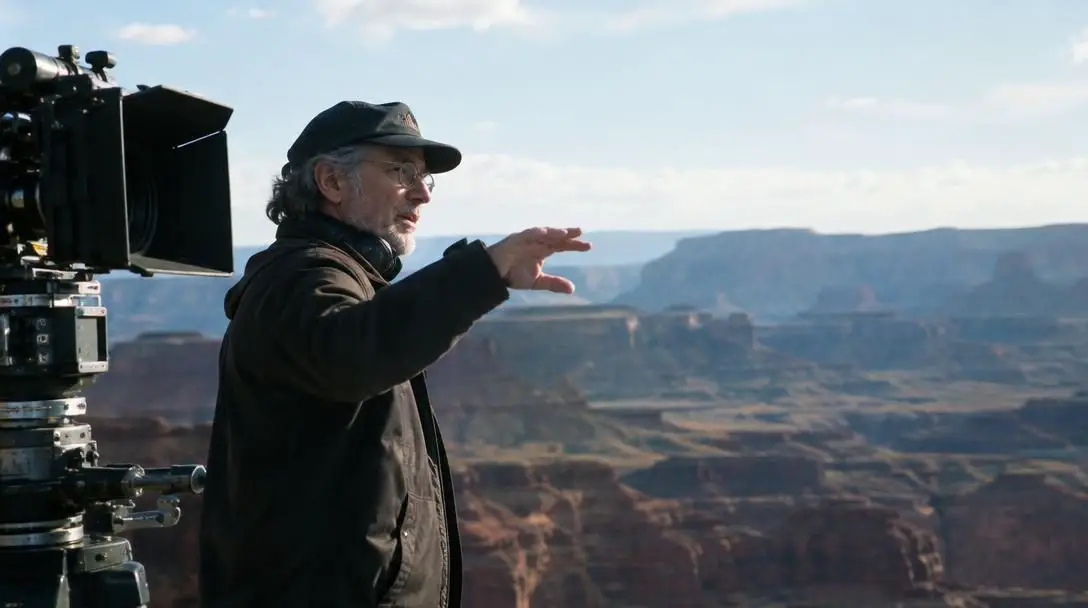
Steven Spielberg stands as one of the most successful and enduring filmmakers in cinematic history. Across a career spanning more than five decades, he has directed beloved global touchstones such as Jaws, E.T., and Jurassic Park, transforming his name into an international hallmark of storytelling excellence. His work spans genres and generations, captivating mass audiences while earning deep respect from industry peers and critics alike.
Yet his rise from an amateur teenage hobbyist to an entertainment titan was neither accidental nor an overnight sensation. Spielberg's ascent was driven by relentless personal initiative, rigorous technical craftsmanship, creative flexibility under pressure, and a profound commitment to human-centered narrative. By examining the structural habits, problem-solving methods, and industry strategies that shaped his path, creators and professionals in any field can uncover the foundational mechanics of long-term creative success.
Key takeaways
- Spielberg broke into the Hollywood studio system through self-directed education, relentless initiative, and an unpaid internship at Universal Studios at age seventeen.
- His creative methodology consistently elevates emotional, character-driven storytelling above hollow technical spectacle.
- Unplanned production catastrophes, such as the recurring mechanical shark failures on Jaws, were transformed into innovative cinematic triumphs through adaptive problem-solving.
- Sustained creative longevity requires cross-departmental collaboration, an understanding of commercial distribution, and active mentorship of emerging talent.
From 8mm amateur shorts to the Universal Studios lot
Steven Spielberg was born on December 18, 1946, in Cincinnati, Ohio. From his earliest years, he showed an intense fascination with the moving image. Rather than remaining a passive consumer of film and television, he took the initiative to learn the medium by doing. Armed with his family's 8mm camera, he began writing, staging, and filming short amateur movies throughout his childhood. These early projects served as an essential testing ground, giving him direct practical experience with framing, visual pacing, and low-budget practical effects long before he ever set foot on a professional soundstage.
As a teenager, Spielberg treated moviegoing as a rigorous form of self-directed study. He spent his free time dissecting the masterworks of the directors who preceded him, analyzing scene architecture, lighting choices, and the precise editorial rhythm required to build suspense. This deliberate analytical practice gave him an instinctive mastery of cinematic language that far outpaced other aspiring filmmakers of his generation.
His formal entry into the entertainment industry arrived when he was seventeen years old, securing an unpaid internship at Universal Studios. Instead of confining himself to clerical duties, Spielberg capitalized on his access to the lot. He routinely slipped away to observe professional directors in real time, absorbing the operational realities of camera mechanics, crew coordination, and studio set politics. Rather than waiting for someone to grant him permission to direct, he used his own time and resources to produce a polished short film. Studio executives were so impressed by the visual maturity and execution of this calling card that they signed him to a seven-year contract to direct television productions, making him one of the youngest directors ever signed to a long-term studio deal.
The seven foundational pillars of Spielberg's directing methodology
Spielberg’s decades-long run of critical and commercial triumphs is anchored in a consistent set of creative principles. His approach unites visual intuition with logistical discipline, balancing high artistic ambition with pragmatic commercial execution.
Storytelling over spectacle
Throughout his career, Spielberg has maintained that dazzling visuals are meaningless without an emotional core. While his productions frequently feature extraordinary concepts—from prehistoric predators to extraterrestrial visitors—he insists that visual effects exist solely to support recognizable human experiences. He grounds high-concept premises in authentic personal emotions, familial tension, fear, and wonder, ensuring that audiences connect with the characters before being overwhelmed by the imagery.
Visual effects are hollow unless grounded in recognizable human experiences, fears, and desires.
Precise composition and visual economy
Spielberg's visual grammar relies on deliberate blocking, strategic camera movement, and deep focus rather than erratic, rapid-fire editing. Every camera move conveys specific narrative information, guiding the viewer's gaze across the frame to establish geography, build anticipation, or reveal character dynamics. This visual economy keeps complex scenes clear, allowing the audience to follow intricate physical action without losing their emotional bearings.
Deep cross-departmental collaboration
Rejecting the archetype of the solitary, dictatorial auteur, Spielberg treats filmmaking as a fundamentally cooperative craft. He establishes deep, trusting partnerships with screenwriters, actors, cinematographers, visual effects specialists, and sound crews. By fostering open communication and ensuring every department understands the core emotional thesis of a scene, he achieves a cohesive creative harmony across monumental productions such as Jaws and Schindler’s List.
Adaptive problem-solving under pressure
Unforeseen logistical breakdowns are inevitable on major productions, but Spielberg approaches obstacles as creative catalysts rather than disasters. When equipment malfunctions, schedules collapse, or weather interferes, he recalibrates his approach on the spot. By embracing creative constraints, he frequently devises unconventional solutions that end up far surpassing his original, planned concepts.
Embracing cutting-edge technical innovation
While committed to classical storytelling fundamentals, Spielberg has never hesitated to embrace technological breakthroughs that expand the director's toolkit. He was one of the earliest directors to adopt a digital camera on a major motion picture during the filming of A.I. Artificial Intelligence. His willingness to test emerging technologies ensures his productions remain on the cutting edge of visual fidelity without sacrificing narrative coherence.
Strategic audience branding
Behind the camera, Spielberg operates with an acute awareness of global audience psychology and studio distribution mechanics. He crafts narratives that transcend cultural and generational boundaries, balancing pulse-pounding entertainment with meaningful thematic depth. This commercial intelligence allows his films to dominate global box offices while satisfying demanding critical expectations.
Generous mentorship and industry networking
Spielberg recognized early on that long-term success depends on building durable, reciprocal professional relationships across the studio system. Beyond maintaining alliances with top producers and executives, he has deliberately invested in the next generation of creative leaders. By serving as an active mentor and championing rising creators such as Robert Zemeckis and JJ Abrams, he has enriched the broader cinematic ecosystem while maintaining his own creative vitality.
Landmark productions: How creative principles met real-world execution
Examining individual productions from Spielberg's filmography illustrates how his core methodology functions under the pressure of real-world studio filmmaking.
Jaws

- Key challenge: The mechanical shark malfunctioned constantly in open water
- Creative pivot: Used subjective camera angles, floating barrels, and musical cues to imply danger
- Production hallmark: Deep cross-departmental collaboration under extreme logistical stress
During the notoriously troubled production of Jaws, the mechanical shark broke down repeatedly, threatening to derail the entire film. Faced with catastrophic delays, Spielberg shifted his strategy. Instead of relying on a visual creature reveal, he built terror through absence—using point-of-view tracking shots, floating props, and pacing to let the audience's imagination construct the horror. This pragmatic adjustment turned a mechanical failure into a masterclass in psychological suspense.
Schindler’s List

- Core focus: Emotional narrative integrity over commercial spectacle
- Visual discipline: Restrained, purposeful framing designed to preserve historical truth
- Team integration: Total unity across historical research, performance, and cinematography
With Schindler’s List, Spielberg demonstrated his ability to strip away Hollywood gloss in service of historical gravity and human truth. The production demanded absolute alignment across every creative department, relying on authentic staging and visual restraint to communicate the harrowing reality of the Holocaust without sensationalism.
A.I. Artificial Intelligence

- Technical innovation: One of the first major studio films to deploy a digital camera
- Creative ambition: Blending futuristic technological tools with timeless emotional questions
- Directorial palette: Expanding visual techniques to support complex philosophical narrative
On A.I. Artificial Intelligence, Spielberg illustrated his continuous appetite for technological experimentation. By integrating digital camera technology into a major studio production, he expanded his visual palette while maintaining a tight grip on the philosophical and emotional story of an artificial child searching for love.
E.T.

- Story focus: Deep human resonance rooted in childhood vulnerability
- Visual perspective: Camera kept predominantly at a child's eye level
- Audience reach: Transcended generational boundaries to become a global phenomenon
With E.T., Spielberg proved that high-concept science fiction resonates most deeply when viewed through the prism of intimate emotional stakes. By locking his camera at child height and focusing on the pain of a broken family, he turned a story about an alien visitor into a universal masterpiece of empathy.
Jurassic Park

- Visual milestone: Pioneering blend of practical animatronics and groundbreaking CGI
- Narrative balance: Grand technological spectacle anchored by genuine character peril
- Commercial success: Set a global benchmark for the modern blockbuster
In Jurassic Park, Spielberg balanced cutting-edge visual effects with grounded tension. By orchestrating a delicate dance between tangible physical animatronics and revolutionary digital creatures, he ensured that every visual set piece directly tested his characters, transforming technological novelty into pure cinematic suspense.
At a glance: How Spielberg balanced craft, technology, and story
The following overview illustrates how Spielberg applied his methodology across five of his most famous productions, highlighting how each project balanced distinct technical, narrative, and collaborative challenges.
| Film | Primary Narrative Focus | Key Challenge or Milestone | Collaborative and Directorial Solution |
|---|---|---|---|
| Jaws | Primal survival and collective community dread | Chronic breakdowns of the mechanical shark | Substituted physical monster with subjective camera framing and musical suspense |
| Schindler’s List | Historical tragedy, moral awakening, and human dignity | Honoring real-world trauma without commercial melodrama | United all departments around stark visual restraint and narrative authenticity |
| A.I. Artificial Intelligence | Philosophical inquiry into artificial consciousness and love | Integrating emerging digital cinematography into high-end film | Pioneered early digital camera use to broaden the production's visual palette |
| E.T. | Childhood loneliness, grief, and unconditional loyalty | Creating an emotional bond with an unusual puppet design | Anchored camera at a child's eye level to maintain emotional vulnerability |
| Jurassic Park | Scientific arrogance colliding with uncontrollable nature | Pioneering photorealistic digital effects alongside practical models | Seamlessly merged physical animatronics and CGI to maximize realistic terror |
Actionable steps to apply Spielberg's career principles
While few professionals will helm major studio features, the structural habits that propelled Spielberg from a curious teenager to an industry icon apply to any ambitious career path. Follow these concrete steps to build momentum in your own work:
- Start creating with the tools you currently own. Do not postpone your creative output until you have acquired professional-grade hardware, expensive software, or institutional funding. Use the tools currently at your disposal to establish consistent creative momentum and produce finished work.
- Put yourself where the work happens. Seek out direct physical or operational proximity to your chosen field. Apply for assistant positions, observational apprenticeships, or entry-level roles where you can study veteran practitioners as they handle daily challenges.
- Build an undeniable calling card project. Verbal pitches and bullet points on a resume rarely convince gatekeepers. Complete a standalone, high-quality sample of your work that offers tangible, undeniable evidence of your perspective, talent, and technical execution.
- Prioritize core human value over surface flash. Strip away superfluous ornamentation, technical jargon, or self-indulgent design elements. Ensure that every aspect of your product or presentation delivers clear utility and an authentic emotional or practical connection to the user.
- Pivot creatively when systems and equipment fail. When budgets shrink, key tools malfunction, or timelines compress, resist the temptation to shut down. Devise pragmatic workarounds that embrace your current limitations, often uncovering cleaner and more compelling solutions in the process.
- Cultivate enduring, high-trust partnerships. Treat every project as an investment in a long-term network. Align yourself with specialists whose strengths compensate for your blind spots, and foster an environment where constructive critique and mutual credit flow freely.
- Pass opportunities down to rising talent. As your professional influence grows, actively identify and support promising creators who are entering the industry. Guiding emerging peers expands your professional network and keeps your perspective attuned to fresh ideas.
Common mistakes that derail creative and professional growth
Aspiring leaders and creators often study iconic figures but draw the wrong tactical lessons from their success. Avoid these common pitfalls when applying Spielberg’s playbook to your career:
- Confusing spectacle with substance: Pouring excessive time, money, and energy into visual polish, high-concept hooks, or technological gimmicks while neglecting the underlying emotional truth of the core narrative.
- Refusing to adapt to physical constraints: Clinging to an unworkable plan when production realities change. Rigidity leads to cost overruns, burnout, and compromised outcomes that could be avoided with creative pivoting.
- Operating as an isolated autocrat: Believing that decisive leadership requires ignoring input from teammates. Shutting out talented collaborators stifles innovation and damages overall project quality.
- Ignoring business and market realities: Treating artistic or technical ambition as entirely detached from commercial mechanics, distribution networks, and audience needs.
- Failing to help others rise: Treating colleagues and newcomers solely as rivals. Hoarding information, connections, or praise creates a toxic reputation and cuts you off from collaborative growth.
Strategic questions to evaluate your creative trajectory
To align your current professional habits with the core strategies that drove Spielberg's longevity, assess your current approach using the following diagnostic criteria:
- Portfolio readiness: Have you completed a tangible, polished project that provides definitive proof of your skills, or are you waiting for perfect circumstances before completing your work?
- Collaborative network: Are you surrounding yourself with skilled peers who complement your strengths and refine your output, or are you attempting to micromanage every responsibility alone?
- Audience clarity: Do you genuinely understand the audience, client, or user you are creating for, and does your work offer them an engaging balance of emotional resonance and functional clarity?
- Adaptability under pressure: When equipment malfunctions or logistical road blocks threaten your workflow, are you able to use those constraints as catalysts for creative innovation?
- Mentorship dynamics: Who are the veteran practitioners you actively study, and what concrete actions are you taking to support professionals who are a few steps behind you?
Frequently asked questions
How did Steven Spielberg get his start in the movie industry?
Steven Spielberg began directing amateur short films on his family's 8mm camera as a child. At age seventeen, he obtained an unpaid internship at Universal Studios, where he snuck onto production lots to study working directors. After directing an impressive independent short film that caught the attention of studio executives, he was signed to an unprecedented seven-year contract to direct television episodes for Universal.
How did technical failures during Jaws improve the final film?
During the production of Jaws, the mechanical shark broke down repeatedly in the ocean. Instead of halting production, Spielberg altered his visual strategy, using subjective point-of-view camera shots, musical cues, and floating props to signal the shark's presence. This reliance on psychological tension rather than visual gore transformed the film into an iconic suspense thriller.
Why does Spielberg emphasize emotional storytelling over visual effects?
Spielberg operates on the principle that visual effects and technical spectacle are hollow unless they are rooted in authentic human emotions, fears, and vulnerabilities. By grounding extraordinary concepts in recognizable interpersonal relationships, he ensures that the audience remains deeply invested in the narrative regardless of the scale of the visual effects.
What role did digital camera technology play in Spielberg's career?
While known for his traditional filmmaking craft, Spielberg continuously adopts new tools that expand his visual options. Notably, he was one of the earliest directors to deploy a digital camera on a major motion picture during the production of A.I. Artificial Intelligence, demonstrating his willingness to integrate emerging technology into high-concept filmmaking.
Which prominent directors has Steven Spielberg mentored?
Spielberg has actively supported and mentored numerous rising filmmakers throughout his career, opening doors and offering guidance to prominent Hollywood directors such as Robert Zemeckis and JJ Abrams.
The bottom line
Steven Spielberg’s trajectory from a Cincinnati teenager filming 8mm amateur movies to an iconic figure in global cinema demonstrates that enduring creative greatness is built systematically. His journey underscores that talent is only the starting point; what truly separates enduring leaders from flash-in-the-pan successes is the discipline to master fundamentals, the adaptability to turn mechanical failures into creative triumphs, and the humility to collaborate deeply across all disciplines.
By prioritizing human resonance over superficial spectacle, developing proactive problem-solving habits, and cultivating reciprocal relationships with both mentors and apprentices, creators in any discipline can build a body of work that withstands the test of time.