Top 10 Classic Video Games That Left Their Mark On History
The modern video game industry, with its sprawling cinematic narratives, multi-million-dollar production values, and hyper-realistic graphics, owes its foundational principles to a handful of pioneering titles. Decades before distributed cloud rendering and complex physics engines became standard, early game developers faced immense technological hurdles. They worked with fractions of the processing power, storage, and visual fidelity available today, requiring them to design engaging experiences through pure mechanical discipline, responsive feedback loops, and creative art direction.
From smoky commercial arcade floors and early coin-operated consoles to the emergence of home computers, these foundational games established the visual vocabularies and interactive formats that still define electronic entertainment. By examining the titles that broke new ground across the early decades of gaming, we see how straightforward concepts—such as bouncing a square pixel, clearing lines of geometric blocks, or mapping a football playbook—grew into multi-generational global pastimes.
Key takeaways
- Early game developers turned extreme technical limits into timeless mechanics, creating genres that still dominate the entertainment industry today.
- Arcade trailblazers like Pong and Pac-Man proved that interactive electronic amusements could cross into mainstream social culture.
- Console and PC milestones introduced nonlinear open worlds, direct first-person viewpoints, and open-ended software simulations with no definitive end states.
- Preserving vintage hardware, foundational control schemes, and educational milestones remains essential for understanding contemporary interactive media design.
At a glance: Ten foundational games
The titles below represent major turning points in the history of interactive software. Each one pioneered a distinct genre or design philosophy that continues to influence modern game development.
| Game | Key Innovation or Genre | Original Context or Hardware | Enduring Legacy |
|---|---|---|---|
| Pong | Electronic sports simulation | Arcades, Atari systems | First widely available commercial hit; established 2-player video gaming |
| Pac-Man | Maze-chase action | Coin-op arcade cabinets | Iconic character-driven branding beyond sci-fi; expanded gaming venues |
| Mario | Precision platforming | Home consoles and arcades | Industry-defining mascot; set the benchmark for responsive character movement |
| Tetris | Geometric spatial puzzle | PC, Nintendo consoles, cross-platform | Timeless falling-block mechanics; progenitor of modern puzzle and tile-matching games |
| The Legend of Zelda | Action-adventure and exploration | Famicom Disk System, NES | Pioneered open-ended exploration and non-linear adventure design |
| Doom | First-person shooter (FPS) | Personal computers (PC) | Revolutionized direct 3D perspectives, visceral action, and PC gaming culture |
| The Oregon Trail | Historical educational simulation | School computers, early PCs | Blended resource survival with classroom curriculum; taught westward history |
| SimCity | Urban planning and system simulation | Personal computers | Eliminated win conditions in favor of creative, open-ended civic growth |
| The Sims | Life and social simulation | Personal computers | Turned domestic routines into dynamic systems, broadening player demographics |
| John Madden Football | Strategic sports simulation | 1988 PC / console software | Anchored yearly sports adaptations using authentic playbooks and tactical realism |
The top 10 classic video games that shaped interactive history
Every genre played today—whether a massive multiplayer role-playing world, an intense competitive shooter, or a cozy simulation title—can trace its lineage back to the design breakthroughs of these ten iconic releases.
Pong
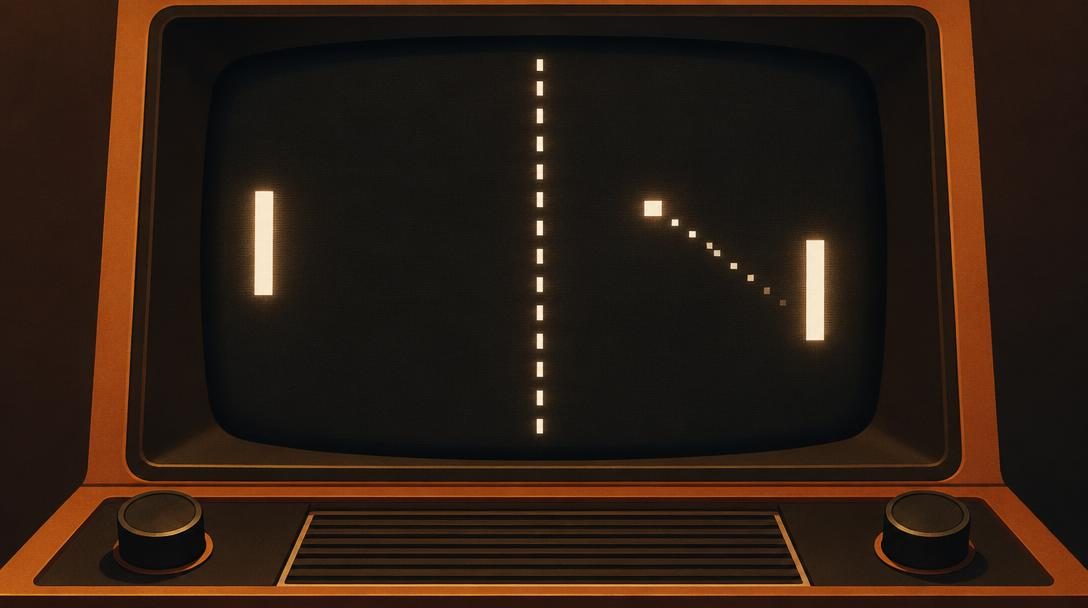
- First available: 1970s
- Platform history: Coin-operated cabinets and Atari systems
- Reign of dominance: Supreme for at least a decade
Before home consoles were commonplace and digital entertainment became an everyday reality, there was Pong. Designed around a deceptively basic concept, the game bounced a solitary white pixel ball back and forth between two rectangular paddles controlled by players. Its launch marked the arrival of the first widely available video game, captivating users in public venues and on dedicated home Atari hardware. For at least a decade, it reigned supreme in the electronic entertainment space. By stripping away visual clutter, Pong proved that electronic sports simulations could hold the attention of both casual social players and fierce competitors using nothing more than two paddles, a ball, and a scoring counter.
Pac-Man
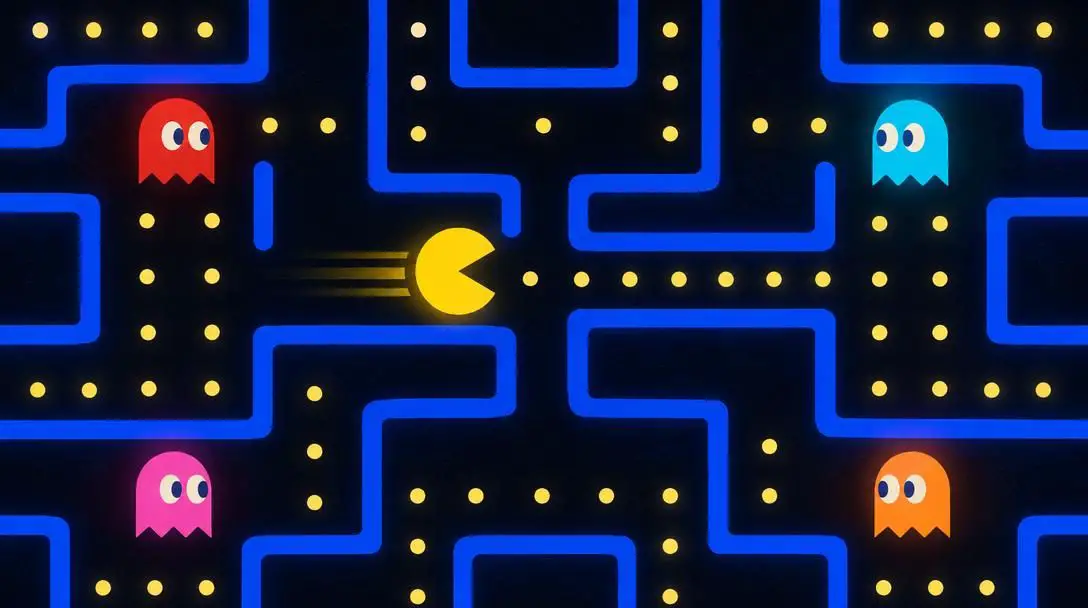
- Core gameplay: Maze-chase dot consumption and ghost avoidance
- Prominent venues: Arcades, bars, pizza shops, and hang-out spots
- Notable extensions: 3D updates and Ms. Pac-Man
Perhaps no arcade cabinet has enjoyed the universal visibility of Pac-Man. During its peak popularity, the game appeared in virtually every social environment of its era, from dedicated coin-op arcades and family pizza parlors to local bars and recreational centers. Players guided a bright, pie-shaped character through an intricate labyrinth, eating dots and evading colorful ghosts. In subsequent years, the franchise received visual updates featuring 3D graphics, alongside celebrated variations like Ms. Pac-Man. Beyond its addictive chase mechanics, the title demonstrated that vibrant, recognizable character design could appeal to broad demographics well outside the standard space-combat and sports themes common to early arcade cabinets.
Mario

- History span: More than four decades
- Key companions: Yoshi (introduced a decade after Mario's debut)
- Core activities: Conquering monsters, eating mushrooms, racing, and fighting
Universally acknowledged as the most recognized video game character in history, Mario has defined responsive control design for more than four decades. Generations of players have guided the mustachioed hero through perilous stages, stomping monsters, scaling obstacles, and consuming power-up mushrooms to expand his size and abilities. A decade after Mario first appeared on screens, his loyal dinosaur companion Yoshi joined the roster, cementing a multi-character universe that would eventually dominate entirely new genres. Today, Mario and his extended cast race against one another on dynamic tracks, brawl in competitive arenas, and tackle sprawling cooperative challenges, setting the gold standard for platforming precision and character-driven gaming.
Tetris

- Genre: Geometric falling-block puzzle
- Audio origin: Russian folk song
- Platforms: Nintendo systems, mobile phones, computers, and modern consoles
As the first major puzzle video game to achieve worldwide fame, Tetris remains one of the most compelling and addictive titles ever conceived. Set to the memorable cadence of a traditional Russian folk song, the game requires players to rotate and position falling geometric shapes (tetrominoes) to form solid horizontal lines without letting the stack reach the top of the playfield. While it gained massive early popularity on Nintendo hardware, Tetris has since migrated to personal computers, smartphones, and virtually every gaming platform in existence. Nearly every modern tile-matching, line-clearing, and bubble-shooting puzzle title operating today owes its underlying spatial logic to the structural breakthroughs of Tetris.
The Legend of Zelda
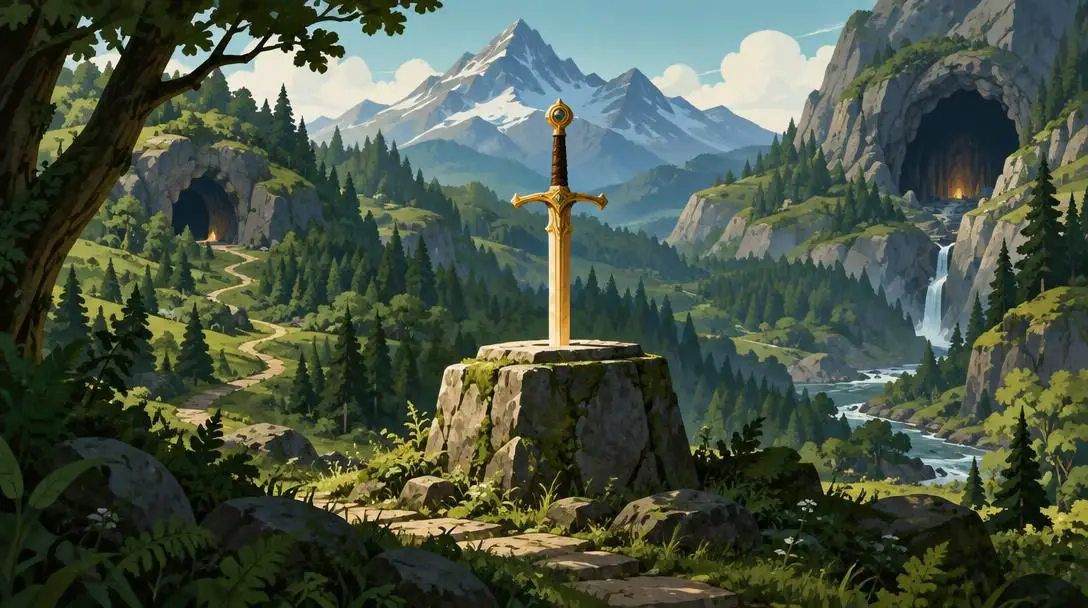
- Debut platform: Famicom Disk System
- Adapted platform: Nintendo Entertainment System (NES)
- Core genre: Action-adventure with non-linear exploration
Originally premiering on the Famicom Disk System before its iconic conversion to the Nintendo Entertainment System, The Legend of Zelda laid the blueprint for modern adventure and role-playing games. While contemporary RPG titles boast sprawling cinematic scope, photo-realistic environments, and complex branching dialogue, the core philosophy of open-world exploration began with this top-down fantasy title. Players were dropped into an untamed wilderness with minimal direct instructions, granted the freedom to discover hidden dungeons, navigate treacherous terrain, gather inventory tools, and manage scarce resources at their own pace. It transformed home gaming from a series of short, linear challenges into an expansive journey of personal discovery.
The genesis of open-world role-playing strategy, resource management, and player-guided discovery can all be found in the untamed wilderness of the first Zelda.
Doom

- Platform origin: Personal computers (PC)
- Primary gameplay: High-speed first-person zombie and demon combat
- Legacy: Catalyst for the first-person shooter (FPS) genre
Few games have generated the visceral emotional reaction that accompanied the release of Doom on personal computers. Casting players directly into the boots of a space marine battling undead creatures and zombies, the title revolutionized gaming not only through its mechanical execution, but also through its intense, adrenaline-inducing pacing. While modern first-person shooters have expanded to include intricate military simulations and battle royales, the entire FPS genre trace its lineage back to this early PC software. By shifting the perspective directly to eye level and pairing it with lightning-fast lateral movement, Doom established an immersive standard for kinetic action that redefined the limits of PC hardware.
The Oregon Trail

- Primary purpose: Educational simulation of pioneer migration
- Subject matter: 19th-century westward pioneer journeys
- Gameplay loops: Harsh resource allocation, survival, and unexpected hazards
Achieving a feat that few interactive titles have matched before or since, The Oregon Trail proved that software could be genuinely educational while remaining utterly captivating to younger audiences. Without this game, far less would be understood by generations of students regarding the grueling realities of 19th-century westward pioneer journeys. By forcing players to make life-or-death decisions regarding food rations, wagon maintenance, river crossings, and medical supplies, the simulation brought history out of static textbooks and into active, consequence-driven play. The game demonstrated that video games could serve as profound educational tools without sacrificing dramatic tension.
SimCity

- Genre: Civic simulation and urban planning
- Core philosophy: Development and maintenance over traditional victory conditions
- Franchise reach: Spawned numerous direct sequels and management spinoffs
When SimCity arrived on personal computers, it introduced an entirely new conceptual framework to interactive entertainment: winning was no longer the primary objective. Instead of racing against an opponent or defeating a final boss, players were tasked with zoning land, building transit networks, laying power infrastructure, managing tax policies, and mitigating urban disasters. The game functioned as an open-ended digital sandbox where success was measured by the prosperity, efficiency, and stability of a growing metropolis. This design pivot spawned a massive franchise with numerous ongoing sequels and established the foundation for the entire modern management and construction simulation genre.
The Sims
- Predecessor context: Emerged before the era of persistent online second-life networks
- Player role: Directing domestic life, daily careers, and social networks
- Audience impact: Substantially broadened mainstream gaming demographics
Long before persistent online virtual worlds and modern digital avatars dominated the social landscape, The Sims introduced players to a quirky, micro-scale simulation of everyday domestic life. The game offered a dynamic sandbox where users could build homes, pursue professional careers, furnish living rooms, and manage personal relationships. While it allowed players to project their own identities or invent eccentric alternative personas, maintaining happiness required balancing career demands with good taste and practical domestic habits. By turning daily human routines into compelling interactive mechanics, The Sims expanded the demographics of gaming, welcoming millions of players who had never felt drawn to traditional fantasy, combat, or sports titles.
John Madden Football
- Launch year: 1988
- Original title: John Madden Football
- Distinction: The longest-lasting and most popular sports video game franchise
While every major competitive sport currently boasts at least one video game adaptation, none has demonstrated the cultural longevity or commercial influence of the Madden series. Beginning with the release of John Madden Football in 1988, this groundbreaking simulation abandoned simplistic arcade mechanics in favor of authentic athletic strategy. Featuring detailed playbooks, accurate field formations, and realistic play-calling systems, the game established modern standards for how team sports should be translated into software. Its success cemented the practice of annual iterative releases reflecting real-world athletic tactics, team rosters, and broadcast presentation styles.
Key architectural patterns in early game design
Examining classic software reveals the clever functional structures that early developers relied on to compensate for memory and graphic constraints. Rather than relying on hours of recorded dialogue or complex three-dimensional scenes, classic games engaged players using transparent, highly tuned operational mechanics:
- Single-screen minimalist interfaces: Titles like Pong and Pac-Man kept all essential information directly in view. By avoiding layered menus or complex sub-screens, players could grasp the objective within seconds of taking control.
- Algorithmic spatial challenges: Games such as Tetris utilized straightforward procedural logic—in this case, randomly distributed geometric blocks falling at increasing speeds—to continuously test spatial reasoning and manual reflexes.
- Nonlinear world progression: The Legend of Zelda abandoned linear stage-by-stage levels, presenting an interconnected overworld where inventory items acted as physical keys to unlock deeper regions.
- Goal-free system sandboxes: Both SimCity and The Sims removed traditional "game over" screens, turning the software into an interactive toy that responded dynamically to player-driven resource allocations.
- Direct-perspective kinetic immersion: Doom bypassed detached third-person perspectives, anchoring the player's viewpoint directly behind the weapon barrel on PC monitors to generate unprecedented tension and spatial urgency.
How to explore and study vintage video games
Modern players, educators, and historians can gain immense insight into interactive software design by exploring classic titles firsthand. To experience these games with historical fidelity and technical accuracy, follow this structured approach:
- Select an era and platform environment: Choose whether you wish to explore 1970s arcade hardware, 8-bit home console platforms, or early personal computer operating systems, as each environment carries distinct hardware strengths and input schemes.
- Locate legitimate modern releases and anthologies: Seek out official retro compilations, digital storefront re-releases, and verified publisher collections that package original software roms with modern monitor compatibility.
- Access verified educational software collections: Take advantage of institutional archives and educational initiatives that host authentic, browser-playable iterations of early classroom titles like The Oregon Trail.
- Deconstruct the underlying control logic: As you play, pay close attention to how few buttons were used to execute core actions. Analyze how immediately the mechanics communicate consequences to the player without tutorials.
- Trace design lineage to modern equivalents: Directly compare an original release—such as 1988's John Madden Football or early Mario platformers—against current iterations to observe how four decades of technological power modified or preserved those original mechanics.
Common mistakes when evaluating vintage video games
Evaluating vintage software through the lens of modern standards often leads to flawed conclusions regarding its historical significance and design quality. Watch out for these common analytical pitfalls:
- Equating low visual fidelity with shallow design: Primitive sprite work or basic pixel art does not signify primitive mechanics. Tetris and Pac-Man demonstrate depth that rivals any modern blockbuster.
- Judging vintage input schemes without historical context: Complaining about the lack of dual-analog controls or modern camera smoothing ignores that classic games were creating interface conventions where none previously existed.
- Dismissing educational games as dry classroom chores: Underestimating titles like The Oregon Trail overlooks how effectively their harsh survival mechanics and random hazards reinforced genuine historical empathy.
- Demanding explicit end-game victory conditions: Criticizing simulation titles like SimCity or The Sims for lacking an ultimate ending misunderstands their open-ended sandbox purpose.
- Misinterpreting punishing arcade difficulty: Forgetting that arcade classics like Pac-Man were designed for commercial coin-operated environments leads modern critics to label intentional difficulty curves as poor design.
Frequently asked questions
Which classic video game is considered the first widely available commercial hit?
Pong is widely regarded as the first commercial breakthrough in electronic gaming. Appearing in arcade cabinets and on home Atari systems during the 1970s, its straightforward paddle-and-ball mechanics dominated the market for at least a decade.
How did The Legend of Zelda change home console game design?
Debuting on the Famicom Disk System before arriving on the NES, The Legend of Zelda replaced linear, stage-by-stage progression with an open-ended fantasy world. It gave players the freedom to explore non-linearly, discover secrets, and manage resources at their own pace.
Why did SimCity stand out from other early computer games?
SimCity was the first major simulation-building game where winning was not the primary objective. Instead of focusing on defeating opponents or clearing set levels, it tasked players with the open-ended development, balance, and management of a living civic system.
What made The Oregon Trail so effective as an educational tool?
The Oregon Trail succeeded by combining genuine historical narrative with uncompromising resource management. Students learned about westward pioneer journeys by making critical decisions regarding food, wagon parts, and terrain hazards under severe survival pressure.
When did the John Madden Football franchise first debut?
The franchise debuted in 1988 with the release of John Madden Football. It set new benchmarks for sports video games by prioritizing authentic playbook execution, tactical strategy, and roster accuracy over simplified arcade gameplay.
The bottom line
The ten titles examined here represent more than simple nostalgia; they are the architectural bedrock of modern interactive media. Long before massive development budgets, dedicated physics engines, and hyper-detailed three-dimensional worlds became industry standards, early creators proved that compelling gameplay stems from precise control mechanics, thoughtful constraints, and clear feedback loops. Whether exploring the geometric puzzles of Tetris, the fast-paced corridors of Doom, or the open-ended civic sandbox of SimCity, modern gamers continue to interact with design traditions established during these formative decades of digital entertainment history.