Understanding the Different Types of Personality Tests and What They Measure

For centuries, philosophers, scholars, and scientists have sought reliable frameworks to describe and classify the complexities of human behavior. What began as informal temperament theories has evolved into the sophisticated discipline of modern psychological assessment, offering structured methodologies to examine how individuals perceive their environment, process emotional cues, and navigate interpersonal relationships.
Today, personality assessments are deployed across corporate boardrooms, university research laboratories, counseling offices, and psychiatric clinics. By categorizing persistent cognitive, emotional, and social tendencies into recognizable patterns, these instruments provide a shared language for personal self-discovery, team cohesion, and clinical intervention.
Key takeaways
- Modern personality inventories rely on the foundational premise that human behavior exhibits recurring, measurable patterns across different settings.
- Instruments differ widely in design, ranging from trait spectrums like the Big Five to motivation-based models like the Enneagram and categorical types like the Myers-Briggs Type Indicator.
- Clinical tools such as the Minnesota Multiphasic Personality Inventory are strictly empirical diagnostic instruments requiring licensed professional administration and interpretation.
- Assessment results are structured frameworks for self-reflection and growth rather than permanent verdicts, excuses for rigid behavior, or substitutes for psychiatric care.
The Evolution and Scientific Mechanics of Personality Assessment
The transition from speculative behavioral philosophy to structured psychological measurement accelerated as researchers sought objective ways to evaluate individual differences. Modern instruments are engineered to capture the distinct attributes, cognitive preferences, and emotional baselines that differentiate one individual from another. Rather than relying on guesswork, these assessments systematically organize behavioral tendencies so they can be analyzed constructively.
In modern practice, personality assessments serve specific functions across distinct operational environments:
- Career counseling: Practitioners use inventories to guide clients toward professional roles, working environments, and vocational paths aligned with their innate working styles and personal values.
- Organizational development: Businesses incorporate assessments into team-building exercises, leadership workshops, and internal training to deepen mutual understanding, build empathy, and minimize friction among colleagues.
- Personal growth: Individuals utilize these models to gain objective vocabulary for self-examination, pinpointing personal strengths and blind spots.
- Clinical psychology: Specialized instruments allow licensed mental health clinicians to detect psychological distress, identify diagnostic considerations, and gauge the effectiveness of ongoing therapeutic treatments.
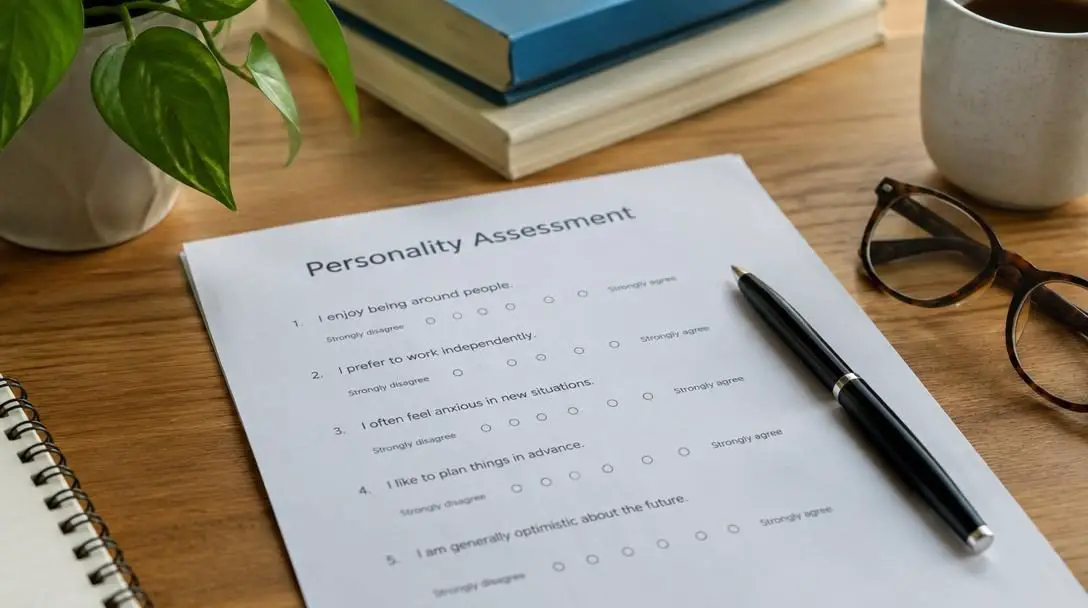
At an operational level, most personality tests gather data through self-report inventories consisting of structured prompts or rating scales. Participants indicate how closely particular statements match their typical behaviors or answer binary true-and-false items. These cumulative responses are aggregated, scored against statistical benchmarks, and mapped across theoretical dimensions or clinical scales.
Comparing Major Personality Inventories at a Glance
Understanding which assessment to choose depends entirely on the questions being asked. Different instruments measure entirely different psychological constructs, ranging from broad behavioral tendencies to deep-seated emotional fears and psychiatric conditions.
| Assessment | Primary Framework | Key Focus | Primary Setting | Measurement Approach |
|---|---|---|---|---|
| Myers-Briggs Type Indicator (MBTI) | Carl Jung's psychological types | Cognitive preferences and information processing | Workplaces, career coaching, personal development | 4 categorical dichotomies (16 types) |
| Big Five Personality Traits | Five-factor trait model (OCEAN) | Broad, universal behavioral dimensions | Academic research, population studies, self-reflection | 5 continuous dimensional spectrums |
| Minnesota Multiphasic Personality Inventory (MMPI) | Empirical clinical psychology | Psychological symptoms and mental health conditions | Psychiatric evaluations, clinical diagnostics, legal assessments | Over 500 true/false items with validity scales |
| Enneagram Test | Motivation and fear typology | Core emotional drivers, defensive habits, and desires | Personal development, relationship coaching, spiritual growth | 9 distinct interconnected types |
While the formats and intentions of personality assessments vary widely, they all share a core premise: that human behavior exhibits recurring patterns that can be identified and evaluated.
Four Widely Used Personality Assessment Frameworks
Evaluating the strengths and methodologies of the four most prominent personality systems reveals how each illuminates different corners of the human experience.
The Myers-Briggs Type Indicator (MBTI)

The Myers-Briggs Type Indicator (MBTI) was created by Isabel Briggs Myers and Katharine Cook Briggs, who translated the theoretical concepts of Swiss psychiatrist Carl Jung into an accessible evaluation tool. Jung argued that human behavior is not random, but follows predictable patterns based on how people take in information and make decisions about the world around them.
The MBTI measures individual preferences across four core dichotomies, culminating in a four-letter profile that outlines interpersonal tendencies, preferred communication habits, and optimal workplace environments:
- Extraversion vs. Introversion: Focuses on an individual's primary orientation toward the external social environment or the internal world of ideas. Extraverts draw mental energy from external engagement and active collaboration, whereas introverts recharge through quiet solitude and internal contemplation.
- Sensing vs. Intuition: Analyzes how people absorb and process information. Those with a sensing preference rely on tangible facts, hands-on experience, and immediate practical realities. Those who lean toward intuition seek overarching patterns, underlying meanings, and future possibilities.
- Thinking vs. Feeling: Examines the decision-making process. Thinking types prioritize logic, consistency, and objective criteria when reaching a conclusion, while feeling types prioritize personal values, empathy, and social harmony.
- Judging vs. Perceiving: Details how individuals organize their outer lives. A judging preference favors structure, clear deadlines, and methodical planning, while a perceiving preference leans toward flexibility, adaptability, and open-ended spontaneity.
The Big Five Personality Traits

The Big Five model, frequently referred to by the acronym OCEAN, is widely regarded in academic psychology as the gold standard for empirical personality research. Unlike categorical inventories that assign individuals to discrete types, the Big Five measures personality along five continuous, universal dimensions, recognizing that most people fall along a spectrum between two extremes.
The five traits assessed within this model include:
- Openness to Experience: The degree to which an individual exhibits intellectual curiosity, creative imagination, and an appetite for novelty. High scorers typically embrace abstract thinking, artistic expression, and unconventional ideas, whereas lower scorers favor routine, concrete facts, and established traditions.
- Conscientiousness: A measure of impulse control, organization, dependability, and deliberate goal orientation. Highly conscientious individuals are disciplined, structured, and reliable, while individuals with lower scores are often more casual, flexible, and spontaneous.
- Extraversion: Gauges social assertiveness, energy level, and enthusiastic engagement with the surrounding environment. High scorers are outgoing, communicative, and socially confident, while lower scorers display quieter, more reflective, and socially selective habits.
- Agreeableness: Reflects prosocial orientation, empathy, trustworthiness, and cooperative spirit. Individuals scoring high in agreeableness place great importance on interpersonal harmony, whereas low scorers may approach interactions with skepticism, direct challenge, or competitive drive.
- Neuroticism: Measures emotional reactivity, vulnerability to stress, and the frequency of negative emotional states such as anxiety, irritability, and sadness. High neuroticism indicates higher sensitivity to environmental stressors, while low neuroticism reflects emotional resilience, steadiness, and calm under pressure.
Because the Big Five evaluates universal dimensions on a spectrum rather than sorting people into rigid buckets, it serves as the foundation for population-level research and academic studies across cultures.
The Minnesota Multiphasic Personality Inventory (MMPI)

The Minnesota Multiphasic Personality Inventory (MMPI) differs fundamentally from self-help and team-building assessments. It is a specialized, empirical diagnostic instrument developed specifically for clinical psychology and psychiatric evaluation. It is designed to screen for psychological distress, assess personality functioning, and identify symptoms of mental health disorders.
The assessment consists of over 500 true/false questions that investigate physical health, social attitudes, emotional volatility, family background, and psychological symptoms. The instrument evaluates profiles across several specialized scales:

- Clinical scales: Measure specific psychological tendencies and conditions, including depression, generalized anxiety, paranoia, social introversion, hypochondriasis, and other psychiatric concerns.
- Validity scales: A critical architectural feature of the MMPI, these scales evaluate the truthfulness, consistency, and psychological posture of the respondent, detecting whether someone is answering randomly, exaggerating distress, or defensively presenting themselves in an overly favorable light.
The Enneagram Test

The Enneagram is an introspective framework that organizes human personality into nine interconnected types. While individuals often observe aspects of multiple types within themselves, the system posits that every person operates from one dominant core type that shapes their worldview, emotional defenses, and habitual coping strategies.
Rather than categorizing outward behavior alone, the Enneagram explores the underlying motivations, fundamental fears, and subconscious desires that drive human action:
- Type 1: Motivated by personal integrity, self-control, and purposeful improvement; driven by a fear of moral corruption, imperfection, and error.
- Type 2: Guided by the desire to be helpful, loved, and appreciated; driven by a deep fear of being unwanted or unworthy of love.
- Type 3: Focused on ambition, efficiency, and visible achievement; driven by a core fear of personal failure and worthlessness.
- Type 4: Characterized by the pursuit of authenticity, individuality, and personal significance; driven by the fear of being ordinary, flawed, or misunderstood.
- Type 5: Motivated by a desire for intellectual competence, mastery, and self-sufficiency; driven by the fear of being overwhelmed, helpless, or depleted.
- Type 6: Driven by the search for security, stability, and reliable support; constantly guarding against vulnerability, betrayal, and unforeseen dangers.
- Type 7: Focused on excitement, novelty, and stimulating variety; driven by a persistent fear of boredom, deprivation, and emotional discomfort.
- Type 8: Motivated by autonomy, inner strength, and personal authority; driven by a core fear of being controlled, manipulated, or vulnerable.
- Type 9: Guided by the desire for peace, tranquility, and harmonious connection; driven by a profound fear of interpersonal conflict, separation, and chaos.
Practical Steps for Taking and Using a Personality Test
To derive meaningful value from any psychological assessment, test-takers should follow a disciplined process that maximizes accuracy and yields actionable insights.
- Define the primary objective: Clarify the purpose behind taking the assessment. If the aim is personal self-reflection or team development, frameworks like the MBTI or Enneagram are appropriate. If the objective involves scientific research or broad behavioral profiling, the Big Five is preferred. For serious emotional distress or clinical conditions, professional evaluation using the MMPI is necessary.
- Create an uninterrupted testing environment: Settle into a quiet space free from digital notifications or workplace distractions. Lengthy inventories—particularly comprehensive clinical instruments like the MMPI—demand sustained focus to avoid careless or inconsistent responses.
- Respond with immediate, transparent authenticity: Base answers on how you typically act and feel in everyday circumstances, rather than an idealized vision of how you wish you behaved. Avoid overanalyzing questions or attempting to game the test to produce a specific outcome.
- Examine the complete report: Read through the full assessment output rather than fixating entirely on a high-level summary badge, four-letter label, or primary number. Pay careful attention to the nuances revealed by secondary scores, balance across dimensions, and underlying trait breakdowns.
- Translate insights into practical applications: Use the results as a catalyst for behavioral refinement. Identify specific workplace communication patterns, relationship dynamics, or stress responses that would benefit from conscious adjustment or deliberate development.
Common Assessment Mistakes and How to Avoid Them
Even validated personality inventories lose their constructive power when misunderstood, misapplied, or overextended beyond their intended scope.
- Treating results as permanent, absolute truths: Personality assessments are theoretical models designed to capture behavioral preferences, not rigid boundaries that dictate human potential or cognitive capability.
- Weaponizing personality labels as excuses: Identifying with a specific profile does not justify counterproductive habits. An introverted preference does not exempt an employee from clear communication, nor does low agreeableness excuse abrasive interpersonal behavior.
- Overlooking situational and environmental context: Human behavior adapts fluidly depending on cultural norms, specific social roles, and professional demands. A person may exhibit high extraversion and assertiveness in a leadership setting while remaining quiet and reserved in private life.
- Relying on unregulated online quizzes: Casual internet questionnaires frequently appropriate clinical and psychological terminology without maintaining verified scoring models, theoretical rigor, or psychometric validity.
- Attempting to self-diagnose psychiatric disorders: Developmental models like the Enneagram, MBTI, or Big Five do not assess mental illness. Diagnostic instruments like the MMPI must never be interpreted independently without the guidance of a qualified mental health clinician.
Frequently asked questions
Can an individual's personality test results change over time?
Yes. While broad personality traits often remain relatively stable throughout adult life, major life events, therapeutic interventions, personal maturity, and deliberate habit formation can shift scores on dimensional tests like the Big Five or alter one's relationship to MBTI and Enneagram types.
Which personality test is considered the most scientifically valid?
In academic psychology and scientific research, the Big Five Personality Traits framework (OCEAN) is considered the most statistically robust and empirically supported model due to its continuous spectrum scoring and replicated findings across diverse global cultures.
How does the MMPI differ from tests like the MBTI or Enneagram?
The MMPI is an empirical psychiatric diagnostic instrument used by licensed clinicians to evaluate mental health disorders and emotional distress. In contrast, the MBTI and Enneagram are developmental tools designed to help individuals understand everyday cognitive preferences, motivations, and communication styles.
Can employers make hiring decisions based solely on personality tests?
No assessment should serve as the sole criterion for hiring or promotion. Using personality tests in isolation risks misjudging talent, overlooking contextual adaptability, and misapplying tools not designed for definitive employment screening.
What are validity scales, and why are they important?
Validity scales, most prominently featured in clinical tools like the MMPI, are specialized measurement mechanisms that detect whether a participant is answering truthfully, responding inconsistently, exaggerating symptoms, or being defensive during testing.
The Bottom Line on Personality Testing
Personality tests provide valuable insight into how people process information, relate to others, and react to stress. When used appropriately, instruments like the MBTI, Big Five, MMPI, and Enneagram offer illuminating perspectives that foster deeper self-awareness, enhance team dynamics, and support clinical care.
However, the value of any psychological instrument depends on knowing its limitations. Personality tests are not definitive declarations of what an individual can achieve, nor do they replace critical self-reflection. When approached with curiosity, honesty, and an understanding of their true purpose, personality assessments serve as powerful starting points for lifelong growth and personal development.