5 Awesome Games That Inspire Empathy

Some video games possess stories that affect players on a deeply personal level. Whether by presenting characters who mirror our deepest anxieties or by stirring an intense wave of nostalgia, interactive media offers an immediate pathway to feeling what another person experiences. Instead of passively reading about a crisis or watching a conflict unfold on a television screen, the player takes control and steps directly into the boots, shoes, or sneakers of another human being.
Through carefully written scripts, poignant environmental storytelling, and agonizing choices, certain titles transcend conventional entertainment to cultivate genuine compassion. Five notable games stand out for their ability to foster empathy: Gone Home, Brothers: A Tale of Two Sons, Papers, Please, Night in the Woods, and Celeste. These works demonstrate how interactive dilemmas, narrative worldbuilding, and vulnerable character arcs can reshape our perspectives on human struggle.
Key takeaways
- Interactive media builds empathy by granting players agency, making them share direct responsibility for characters and outcomes.
- Narrative design can transform ordinary spaces, complex moral dilemmas, and mental health struggles into profound shared experiences.
- Games such as Gone Home and Celeste use environmental clues and challenging physical mechanics to mirror internal psychological battles.
- Approaching empathy-driven games requires patience, intentional pacing, and a willingness to embrace uncomfortable moral situations.
The mechanics of empathy in interactive storytelling
Historically, commercial video games focused primarily on fast reflexes, spatial puzzle-solving, and adrenaline-fueled action. Over recent decades, however, narrative designers recognized that the medium contains a distinct psychological catalyst: player agency. When a story asks you to push a button to complete an action, you take partial ownership of that decision and its fallout. This active role establishes a direct psychological link between the person holding the controller and the fictional persona on the screen.
Empathy itself requires identifying the emotions of others, understanding their specific life circumstances, and offering care or emotional solidarity. Video games accomplish this through several distinct narrative techniques:
- Intimate, domestic environments: Exploring realistic, lived-in spaces allows players to discover personal memories, domestic heartaches, and nostalgic artifacts.
- Uncompromising ethical dilemmas: Facing scenarios with no purely positive outcomes forces players to weigh personal survival against human decency.
- Vulnerable portrayals of internal battles: Directly experiencing mental health struggles, grief, familial alienation, and social estrangement normalizes human fragility.
- Mechanical translation of emotion: Using difficult controls, cooperative mechanics, or time pressure simulates the actual emotional burdens carried by protagonists.
When a story asks you to press a button to take an action, you share responsibility for the outcome.
At a glance: Five games that foster empathy
| Game Title | Protagonist | Central Emotional Focus | Primary Dilemma or Struggle |
|---|---|---|---|
| Gone Home | Katie Greenbriar | Family estrangement, nostalgia, and acceptance | Piecing together a sister's disappearance after returning home |
| Brothers: A Tale of Two Sons | Two young brothers | Sibling bonds, shared grief, and devastating loss | Journeying across hazards to locate a cure for an ailing father |
| Papers, Please | Immigration inspector | Bureaucratic complicity versus humanitarian compassion | Enforcing border laws for family survival against helping desperate migrants |
| Night in the Woods | Mae Borowski | Youthful aimlessness, mental illness, and societal decline | Navigating stagnation after dropping out and returning to a changing town |
| Celeste | Madeline | Anxiety, depression, and self-acceptance | Conquering a grueling mountain climb while confronting an inner shadow |
Five remarkable games that inspire empathy
Gone Home

- Protagonist: Katie Greenbriar
- Setting: An empty family residence
- Core Subject: Familial rejection and identity
Gone Home centers on Katie Greenbriar, a young woman returning to her family's house after a long period overseas. Upon arrival on a stormy night, she discovers the residence entirely deserted. While the creaking floorboards, flickering lights, and stormy exterior suggest the beginnings of a supernatural horror story, the narrative soon reveals a strictly realistic and grounded domestic reality.
By rummaging through handwritten notes, cassette tapes, report cards, and personal artifacts scattered across bedrooms and hallways, the player uncovers the truth behind the family's absence. Katie's younger sister, Sam, fell in love with another girl at school. When their parents refused to accept the relationship, the resulting emotional strain fractured the household, prompting Sam to run away. The game places players directly inside the painful reality of familial intolerance, while holding out hope that love and self-determination can ultimately prevail.
Brothers: A Tale of Two Sons

- Protagonist: Two unnamed brothers
- Setting: A mythic fairy-tale world
- Core Subject: Sibling interdependence and grief
Few interactive journeys deliver an emotional punch as profound as Brothers: A Tale of Two Sons. The narrative tracks two siblings whose father has fallen gravely ill. Determined to save his life, the brothers embark on an arduous expedition through treacherous landscapes to secure a life-saving cure. The game requires the player to control both brothers simultaneously, turning physical coordination into a metaphor for mutual trust and sibling unity.

During the harrowing climax against the game's final boss, the older brother suffers fatal injuries and dies, leaving the younger sibling to grieve and bury him alone. This tragic twist hits players with unbearable emotional weight, converting the sudden absence of one half of the control scheme into a visceral metaphor for permanent loss. The bittersweet resolution underscores how genuine love endures even in the wake of profound tragedy.
Papers, Please
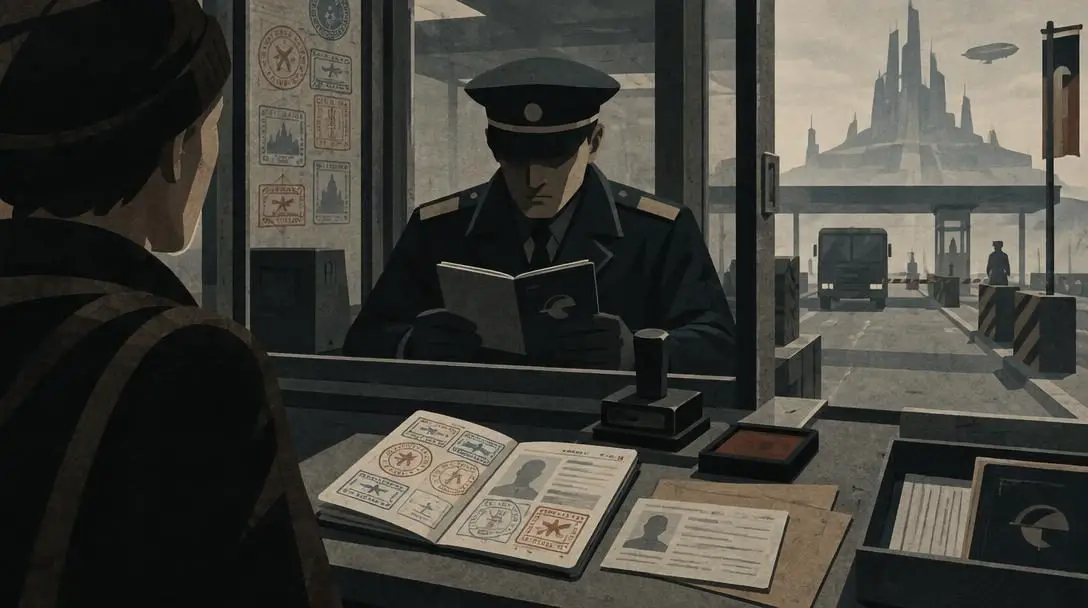
- Protagonist: Border checkpoint inspector
- Setting: The fictional state of Arstotzka
- Core Subject: Moral culpability and bureaucratic pressure
While many narrative games allow players to observe tragedy with detached sympathy, Papers, Please forces the audience into active ethical complicity. Set at a border crossing in the dystopian nation of Arstotzka, the game assigns the player the role of an immigration inspector tasked with vetting applicants under increasingly Byzantine security directives.
The core conflict lies between mechanical survival and human empathy. Denying entry to desperate individuals who lack proper paperwork earns you citations, while processing entries correctly provides paychecks to purchase food, heat, and medicine for your own starving family. The player is trapped between personal survival and the raw human suffering presented at the inspection booth, illustrating how oppressive systems weaponize basic human needs against collective compassion.
Night in the Woods

- Protagonist: Mae Borowski
- Setting: The fading town of Possum Springs
- Core Subject: Mental illness, adulthood, and economic stagnation
Night in the Woods presents the story of Mae, a young woman who drops out of college following a severe decline in her mental health. She returns to her rust-belt hometown of Possum Springs, hoping to slip comfortably back into her adolescent routines, only to realize that time has moved forward without her. Her friends have acquired adult responsibilities, the local economy has withered, and a persistent, quiet melancholy hangs over the community.
The game excels at portraying the disorientation of feeling emotionally stuck while the surrounding world continues to evolve. Through conversations, band practices, and aimless walks around town, the story captures the real-world weight of depression, anxiety, and social alienation. Mae's flawed, defensive, yet endearing personality makes her journey toward coping deeply relatable to anyone who has struggled to transition into adulthood.
Celeste

- Protagonist: Madeline
- Setting: Mount Celeste
- Core Subject: Panic disorders, depression, and self-reconciliation
On its surface, Celeste is a demanding, precision-based platformer. Narratively, it is an exquisite examination of living with anxiety and depression. The plot follows Madeline, a young woman determined to scale the formidable Mount Celeste to regain a sense of control over her unraveling life. As she climbs higher, her internal anxieties, fears, and self-loathing manifest physically as a hostile, shadowy version of herself.

The game avoids simple resolutions where inner demons are simply slain or banished. Instead, Madeline must learn to listen to her anxious counterpart, understand why she is frightened, and ultimately work alongside her. The relentless physical challenge of scaling the peak serves as a poignant metaphor for the daily, exhausting effort required to manage mental health struggles and foster self-compassion.
How to approach emotionally demanding games
Experiencing games that address grief, mental illness, poverty, and isolation requires a different posture than diving into standard competitive or casual entertainment. Following deliberate practices helps players fully absorb these nuanced stories.
- Dedicate uninterrupted play sessions: Emotional resonance requires sustained focus on subtle audio cues, atmospheric details, and nuanced dialogue that can be lost in fragmented, rushed play.
- Avoid spoilers and detailed strategy guides: Allowing story developments and character losses to unfold organically preserves the genuine shock, melancholy, or relief intended by the writers.
- Examine environmental artifacts closely: In titles rooted in discovery, background elements such as abandoned letters, photographs, and graffiti often provide the context needed to understand character motivations.
- Embrace uncomfortable moral decisions: Resist the urge to always seek a tidy, perfect outcome; confronting the consequences of imperfect choices is where ethical insight forms.
- Pause to reflect after crucial story beats: Stepping away from the screen after a significant emotional climax allows you to process the character's feelings and draw connections to your own lived experience.
Mistakes that diminish empathy in narrative games
Players often miss the profound emotional core of interactive fiction by falling into common gameplay habits suited only for action-oriented genres:
- Treating the narrative purely as an optimization puzzle: Focusing solely on score maximization or clean mechanics blinds players to the human plights unfolding before them.
- Skipping optional interactions and dialogue trees: Character depth in narrative-rich titles often hides inside casual conversations and optional character visits.
- Expecting unrelenting action pacing: Emotionally driven stories regularly employ deliberate, quiet intervals to build atmosphere and realism; rushing through these moments blunts their impact.
- Judging flawed characters too harshly: Protagonists navigating trauma, depression, or fear rarely act with flawless logic, and dismissing them as unlikable cuts off empathetic connection.
- Ignoring narrative warnings: Disregarding content advisories or rushing past thematic warnings can result in emotional burnout rather than constructive reflection.
Frequently asked questions
Why do video games generate empathy differently than books or movies?
Video games grant players agency, making them directly responsible for navigating spaces, making choices, and facing the consequences of those decisions. This direct involvement turns passive observation into an active, personal experience.
Is Gone Home a traditional horror game?
No. While the eerie setting and stormy environment initially suggest a haunted house or supernatural horror mystery, the story is a grounded domestic drama centered on identity, romance, and familial acceptance.
Do you have to make purely selfish choices in Papers, Please?
No, players can choose to assist desperate immigrants, but doing so incurs monetary penalties that directly jeopardize the health and survival of the inspector's own family, creating a persistent ethical conflict.
Are these games suitable for players who are not skilled at action games?
Titles like Gone Home and Night in the Woods rely primarily on exploration and narrative interaction rather than fast reflexes, while games like Celeste offer customizable assist options to make challenging sections accessible.
What is the best way to process difficult themes after finishing a game?
Discussing the narrative with friends or online communities, journaling about how character struggles reflect your own life, or taking a short break before starting another title helps integrate the emotional experience.
The bottom line
Video games have matured into an extraordinary medium for exploring the full spectrum of human vulnerability. Through the quiet hallways of Gone Home, the shared grief of Brothers: A Tale of Two Sons, the crushing bureaucratic machinery of Papers, Please, the lingering alienation in Night in the Woods, and the steep internal ascent of Celeste, interactive storytelling shows that vulnerability is not a design flaw—it is the very foundation of connection.
By stepping into these fictional lives, players exercise their capacity for understanding, patience, and compassion. Ultimately, the empathy cultivated behind a screen has the power to follow us into the real world, reminding us of the silent battles fought by those around us every single day.