5 Best Free Agent Signing in MLB History
Major League Baseball occupies a unique position in professional sports because of how it rewards elite talent on the open market. Unlike leagues with non-guaranteed commitments or strict individual salary maximums, baseball franchises routinely sign players to massive, fully guaranteed pacts spanning half a decade or longer. When an athlete hits unrestricted free agency, they possess the leverage to secure generational security while reshaping the competitive landscape of an entire franchise.
Yet handing out historic sums of money carries immense risk for front offices. Natural aging curves, sudden physical breakdowns, and shifts in competitive environments frequently transform high-profile blockbuster signings into crippling financial burdens. On rare occasions, however, a premier contract becomes an outright bargain. The following signings not only validated every dollar invested, but they also delivered iconic championship moments and historic individual milestones that redefined their franchises for years to come.
Key takeaways
- Major League Baseball contracts are fully guaranteed, creating substantial financial risk when teams offer long-term agreements.
- Historic free agency triumphs balance top-tier individual performance with post-season accomplishments and durability.
- Greg Maddux tops the list by turning down higher financial offers to lead the Atlanta Braves to an era of pitching dominance.
- Modern free agency evolved from landmark labor disputes that dismantled the sport's restrictive reserve clause in the 1970s.
The evolution of baseball free agency
The dynamic winter bidding wars enjoyed by modern baseball fans are the result of decades of labor conflict and collective organizing. For roughly a century, baseball franchises maintained absolute control over player careers through the restrictive reserve clause. This institutional mechanism automatically bound an athlete to their original club in perpetuity, preventing players from negotiating with competing teams or realizing their genuine economic market value.
A courageous succession of labor battles spearheaded by the Major League Baseball Players Association (MLBPA) challenged this dynamic through the early 1970s. Decisive legal challenges and landmark arbitration decisions ultimately dismantled the reserve system by the middle of that decade, opening the doorway to modern unrestricted free agency. Reggie Jackson's blockbuster move prior to the 1977 campaign stood among the very first national showcases of what unrestricted player movement could produce when market forces dictated player compensation.
A premier free agent acquisition can alter an entire franchise's identity while delivering extraordinary value far beyond the initial balance sheet.
Honorable mentions across the modern era
Before counting down the greatest moves in baseball history, several transformative signings deserve recognition for their sustained excellence and franchise impact. When the Boston Red Sox signed Manny Ramirez, they added an offensive cornerstone who propelled the club to historic World Series glory. Similarly, Roger Clemens turned his free agency into an immediate triumph by collecting back-to-back Cy Young Awards with the Toronto Blue Jays.
In the American League West, Vladimir Guerrero electrified crowds while capturing an MVP trophy with the Anaheim Angels, providing an immediate middle-of-the-order anchor. Meanwhile, the Texas Rangers enjoyed exceptional durability and defensive mastery by investing in third baseman Adrian Beltre, whose production across multiple seasons solidified his path toward baseball immortality.
The five best free agent signings in MLB history
Evaluating the ultimate free agent moves requires examining contract longevity, peak production, championship equity, and postseason heroics. These five agreements set the gold standard for offseason investments.

| Player | New team | Contract terms | Key achievements |
|---|---|---|---|
| Reggie Jackson | New York Yankees | 5 years, $2.9 million | 2 World Series titles, 144 home runs |
| Larry Walker | Colorado Rockies | 4 years, $22.5 million | NL MVP, 258 franchise home runs |
| Randy Johnson | Arizona Diamondbacks | 4 years, $52.4 million | 2001 World Series MVP, 81 initial wins |
| Barry Bonds | San Francisco Giants | 6 years, $43.7 million | 586 franchise home runs, .312 average |
| Greg Maddux | Atlanta Braves | 5 years, $28 million | 194-88 record, 2.63 ERA in Atlanta |
Reggie Jackson
- Signing team: New York Yankees
- Original contract: 5 years, $2.9 million
- Yankees home runs: 144
- Championships won: 2 World Series titles
The slugger who would forever be known as "Mr. October" established his reputation as an elite power hitter while playing for the Athletics franchise, staying with the team through their relocation from Kansas City to Oakland in the late 1960s. After winning an MVP award with the Athletics, a contractual impasse prompted a trade to the Baltimore Orioles, where Jackson played out the 1976 season. Entering the winter market ahead of the 1977 season, Yankees owner George Steinbrenner made Jackson the centerpiece of New York's championship aspirations by offering a groundbreaking five-year contract worth $2.9 million.
Jackson instantly justified the financial commitment under the brightest media lights in sports. Over his five seasons in the Bronx, Jackson batted .281 with 144 home runs while establishing himself as one of the most clutch postseason performers in baseball lore. His dramatic, towering home runs in October propelled the Yankees to consecutive World Series titles in 1977 and 1978, solidifying his deal as the first true blockbuster triumph of the modern free agent era.
Larry Walker
- Signing team: Colorado Rockies
- Original contract: 4 years, $22.5 million
- Initial pact home runs: 126
- Tenure with team: 10 seasons (258 home runs)
Larry Walker emerged as a multifaceted star during his formative major league seasons with the Montreal Expos. Following the 1994 player strike, financial constraints forced Montreal to part ways with their roster assets, allowing the one-time All-Star outfielder to explore the open market. The Colorado Rockies stepped forward with an aggressive four-year, $22.5 million offer, taking a substantial financial gamble on Walker to lead their young franchise.
Walker validated Colorado's investment immediately. Despite missing half of one campaign due to an injury, he crushed 126 home runs across the lifespan of that introductory four-year contract. Walker ultimately stayed in Colorado for a decade, generating an MVP Award and launching 258 total home runs in a Rockies uniform. His all-around excellence across his ten-year tenure in Denver established him as one of the premier offensive anchors of his generation.
Randy Johnson
- Signing team: Arizona Diamondbacks
- Original contract: 4 years, $52.4 million
- Initial pact wins: 81
- Signature award: 2001 World Series MVP
Before capturing national attention in the desert, the towering left-hander nicknamed "The Big Unit" broke into the majors with the Montreal Expos before being dealt to the Seattle Mariners in 1989. Over a ten-season run in Seattle, Johnson transformed into one of the most dominant pitchers in baseball history, racking up 130 pitching wins and more than 2,100 strikeouts. After a brief trade deadline stint with the Houston Astros to conclude 1998, Johnson entered free agency as the most coveted starting arm on the market.
The second-year Arizona Diamondbacks acted boldly, signing Johnson to a landmark four-year pact worth $52.4 million that included a fifth-year option. Johnson paid immediate dividends by winning 81 games over that initial four-year term. The peak of the investment arrived in the 2001 postseason, where Johnson dominated the opposition to share World Series MVP honors and deliver a title to the young expansion franchise.
Barry Bonds
- Signing team: San Francisco Giants
- Original contract: 6 years, $43.7 million
- Giants batting average: .312
- Giants home runs: 586
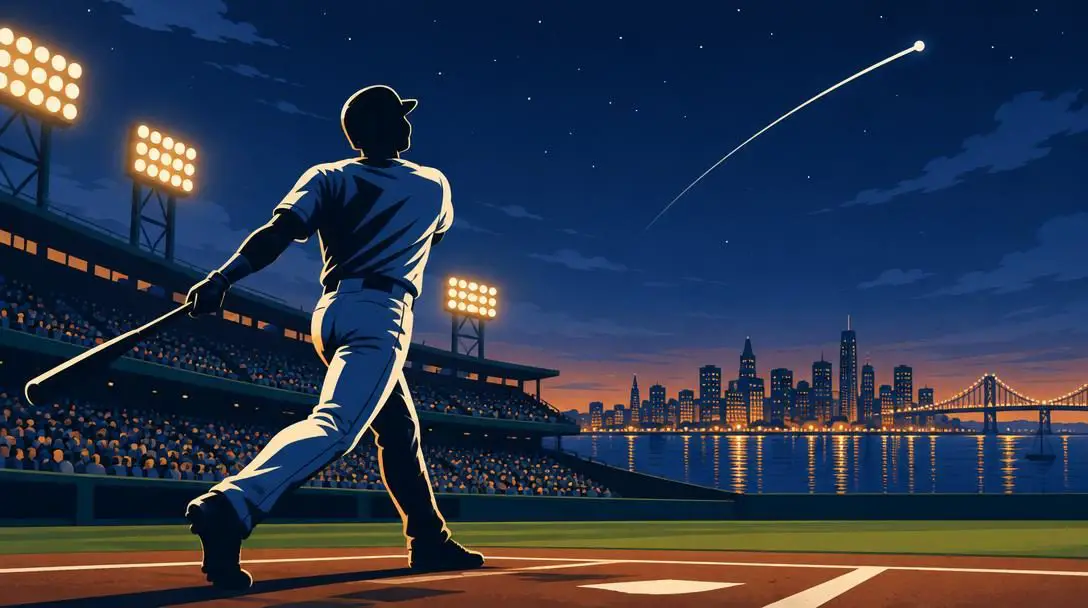
Barry Bonds established himself as the sport's premier all-around position player during a prolific seven-season run with the Pittsburgh Pirates, capturing the National League MVP Award in both 1990 and 1992. When Pittsburgh declined to meet his financial requirements on a long-term pact, the reigning MVP entered open market bidding ahead of the 1993 season. The San Francisco Giants finalized a massive six-year, $43.7 million deal, making Bonds the highest-paid player in baseball.

Bonds did not merely fulfill the expectations of the record-breaking pact; he completely shattered them. Bonds remained with the Giants for 15 seasons, batting .312 while blasting 586 home runs by the Bay. His offensive production sustained San Francisco's competitiveness across multiple competitive cycles, transforming the franchise's commercial standing and leaving an indelible mark on baseball's record books.
Greg Maddux
- Signing team: Atlanta Braves
- Original contract: 5 years, $28 million
- Braves record: 194-88
- Braves earned run average: 2.63 ERA
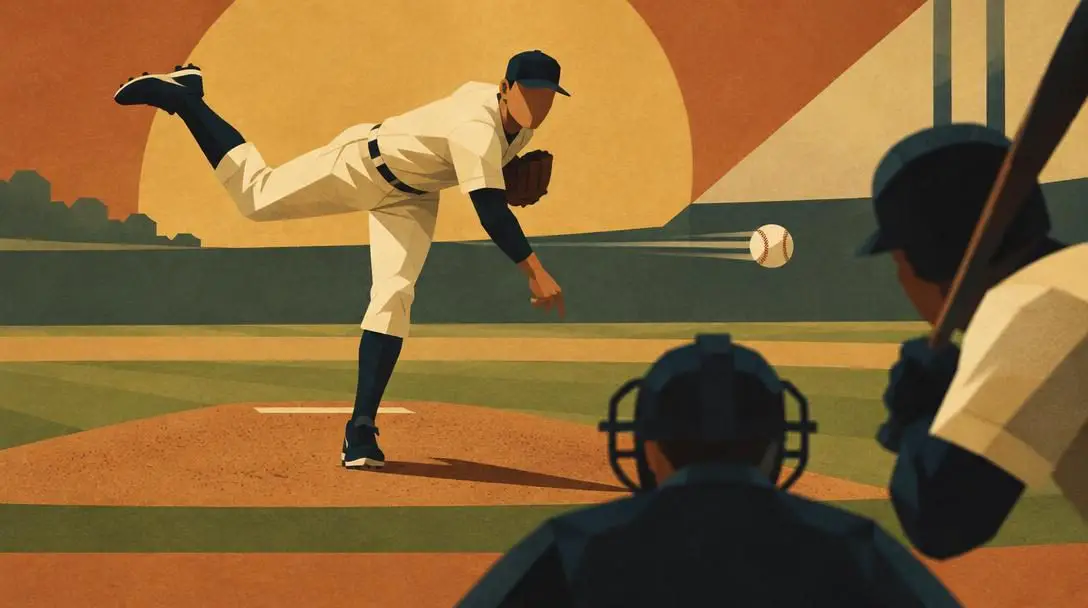
Selected in the second round by the Chicago Cubs, Greg Maddux reached the big leagues in 1986 at just 20 years old. Over his early seasons in Chicago, the cerebral right-hander captured two All-Star bids and claimed the National League Cy Young Award. When the Cubs surprisingly allowed their generational ace to reach the open market following the 1992 season, suitors lined up across the league, with the New York Yankees extending a lucrative $34 million proposal.
Maddux chose instead to accept a five-year, $28 million contract from the Atlanta Braves, sacrificing total dollars to join an already formidable rotation. Maddux delivered historic pitching mastery, spending 11 seasons with Atlanta while compiling an astonishing 194-88 win-loss record and a microscopic 2.63 ERA. His supreme durability, pinpoint control, and postseason leadership solidified his Hall of Fame credentials and established Atlanta's rotation as one of the finest collections of pitching talent ever assembled.
How modern front offices evaluate free agent contracts
Committing tens of millions of dollars to an external athlete demands an exhaustive evaluation process. Major league front offices deploy systematic approaches to minimize financial and on-field downside before extending an offer.
- Conduct aging curve modeling: Analysts map the expected trajectory of an athlete's bat speed, plate discipline, sprint velocity, or pitch spin rates over the full life of the agreement.
- Complete intensive medical reviews: Team medical staffs comb through imaging, surgical histories, and delivery biomechanics to identify structural risks before finalizing agreements.
- Measure positional scarcity: Front offices determine whether the current roster deficiency can be addressed internally through the farm system, via low-cost trades, or only on the open market.
- Map long-term financial flexibility: Roster architects model out prospective payroll commitments across a five-year horizon to ensure marquee spending does not jeopardize future homegrown extensions.
- Evaluate clubhouse alignment: Leadership groups assess an athlete's personal habits, tactical adaptability, and clubhouse temperament to verify they fit within the organizational environment.
Costly mistakes teams make on the open market
While the signings of Jackson, Walker, Johnson, Bonds, and Maddux represent franchise-defining triumphs, open market history is filled with cautionary tales. Organizations regularly stumble by repeating familiar analytical miscalculations:
- Paying for past achievements: Front offices frequently reward an athlete for previous production on a different club rather than projecting realistic output over the forthcoming contract term.
- Granting excessive term length: Intense bidding wars often compel teams to add surplus years to an offer, tying up payroll well into a player's physical decline.
- Chasing platform season anomalies: Signing an athlete who enjoyed an uncharacteristically stellar final season before hitting the market regularly leads to swift buyer's remorse.
- Disregarding home park dimensions: Failing to model how a hitter's batted-ball profile or a pitcher's pitch-mix translates to their new home stadium can compromise on-field production.
- Depleting roster depth: Allocating an overwhelming percentage of an organization's overall payroll to a single individual leaves the roster vulnerable to a single season-ending injury.
Frequently asked questions
Why did Greg Maddux take less money to sign with the Atlanta Braves?
Greg Maddux turned down a larger five-year, $34 million offer from the New York Yankees to sign a $28 million deal with Atlanta. The Braves presented him with an ideal pitching environment, a dominant starting rotation, and an established championship contender.
How many years of service time are needed to enter MLB free agency?
Under Major League Baseball's collective bargaining framework, an athlete typically needs to accrue six full seasons of major league service time before securing the legal right to become an unrestricted free agent.
Are MLB contracts fully guaranteed if a player gets injured?
Yes. Major League Baseball contracts are fully guaranteed for skill, performance, and injury. Once an agreement is finalized, the team remains legally required to pay out the entire financial terms of the pact.
How long did Barry Bonds stay with the San Francisco Giants?
Although his introductory agreement in 1993 was a six-year, $43.7 million contract, Barry Bonds remained with the San Francisco Giants for 15 seasons, batting .312 and hitting 586 home runs with the club.
The bottom line
Navigating the open market in Major League Baseball will always represent an uneasy balance between high financial risk and transformative reward. Because every contract is completely guaranteed, committing long-term resources to veteran talent tests the projection capabilities of modern front offices. Yet, as the historical impacts of Greg Maddux, Barry Bonds, Randy Johnson, Larry Walker, and Reggie Jackson demonstrate, securing the right generational talent at the perfect moment can redefine a franchise's destiny and create unforgettable moments that echo for generations.