5 Best Players Not in the Baseball Hall of Fame
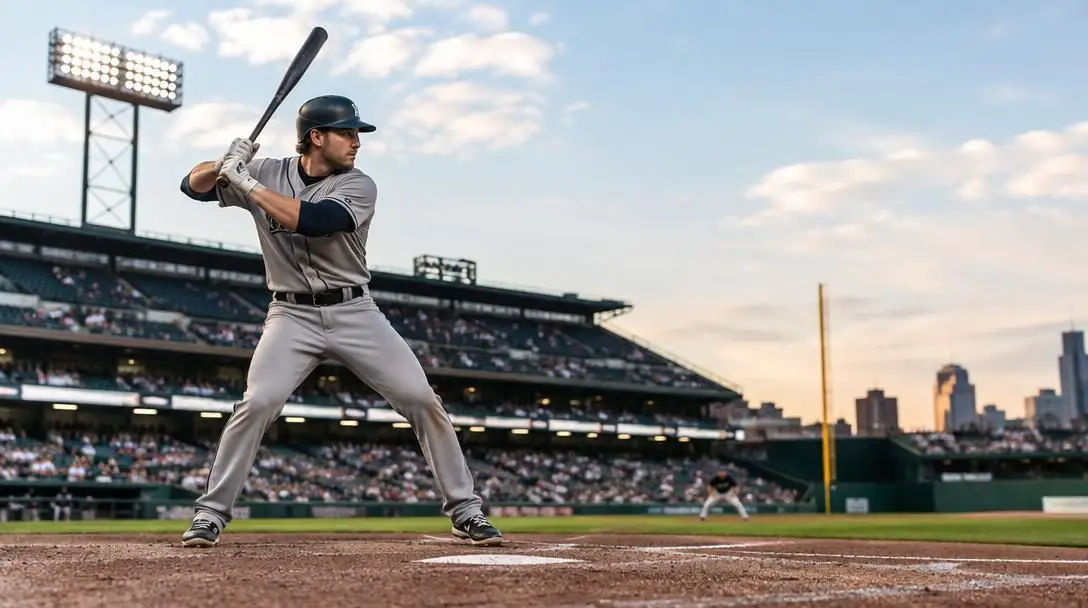
Every major sport across North America maintains a dedicated institution to honor its historic icons, but none carries a reputation for sheer exclusivity quite like the National Baseball Hall of Fame in Cooperstown, New York. While institutions such as the Basketball Hall of Fame routinely welcome larger induction classes—sometimes enshrining players celebrated primarily for niche roles like winning a Sixth Man of the Year Award—baseball demands an extraordinary level of peak dominance sustained over decades. Each winter, eligible members of the Baseball Writers' Association of America (BBWAA) review a crowded ballot, yet the strict voting standards frequently result in only one or two legends gaining entry, leaving numerous generational talents on the outside looking in.
Because the threshold for entry is so exacting, exceptional on-field milestones do not always guarantee a bronze plaque. A complicated mix of official league disciplinary bans, congressional investigations, performance-enhancing drug (PED) scrutiny, and strained media relationships has blocked several of the game's greatest statistical titans. Before examining the premier players shut out of Cooperstown, it is worth acknowledging other transcendent names left in historical limbo, including Joe Jackson, Curt Schilling, Manny Ramirez, and Mark McGwire. Above all others, however, five iconic figures embody the ultimate clash between absolute baseball brilliance and institutional exclusion.
Key takeaways
- The National Baseball Hall of Fame maintains the most rigorous induction threshold in major professional sports, resulting in historically small induction classes.
- All-time record holders, including the career leaders in hits and home runs, remain barred due to sports betting infractions and PED controversies.
- Official league bans permanently strip writers of the right to vote on a player, while the Hall's character clause empowers voters to penalize suspected rule-breakers.
- Legal exoneration and dropped charges have not shielded superstar candidates from the enduring court of public and journalistic opinion.
At a glance: 5 legendary candidates outside Cooperstown
| Player | Primary Positions & Teams | Signature Career Milestones | Primary Barrier to Induction |
|---|---|---|---|
| Barry Bonds | Outfielder (Pirates, Giants) | 762 HR (All-time record), .444 OBP, 14-time All-Star, 12 Silver Sluggers | BALCO scandal links and contentious relations with BBWAA voters |
| Roger Clemens | Starting Pitcher (Red Sox, Yankees, others) | 354 Wins, 4,672 Strikeouts, 7 Cy Young Awards, 1 MVP | Lingering PED allegations and congressional perjury scrutiny |
| Sammy Sosa | Outfielder (Cubs, others) | 609 HR, 1,667 RBI, 1998 HR chase, 1 MVP, 6 Silver Sluggers | Appearance before U.S. Congress regarding suspected PED use |
| Pete Rose | Infielder/Outfielder (Reds, others) | 4,256 Hits (All-time record), 3 Batting Titles, 17-time All-Star, 1 MVP | Permanent lifetime ban from Major League Baseball for sports gambling |
| Alex Rodriguez | Shortstop / Third Baseman (Mariners, Rangers, Yankees) | Near 700 HR, .295 Batting Average, 22-year career | Official disciplinary suspension resulting from confirmed PED violations |
The 5 best players left out of Cooperstown
The following five athletes compiled statistical records that rank among the most formidable in the history of Major League Baseball. Under traditional numerical standards, each candidate would have sailed through enshrinement on their first ballot. Instead, their legacies remain tethered to the most contentious debates in sports history.
Alex Rodriguez

- Career Longevity: 22 seasons in Major League Baseball
- Signature Milestones: Finished just shy of 700 home runs with a .295 career batting average
- Position Mastery: Elite offensive production as a premier shortstop and infielder
From an unvarnished statistical perspective, Alex Rodriguez established himself as one of the most prolific offensive shortstops the game has ever seen. Across an extensive 22-season career spanning multiple franchises, Rodriguez cleared virtually every quantitative benchmark associated with first-ballot enshrinement. He hovered near the elusive 700-home-run plateau while protecting a career .295 batting average, demonstrating rare power combined with high-contact hitting at an elite defensive position.
His absence from Cooperstown stems directly from confirmed disciplinary action: Rodriguez stands among the rare group of modern superstars who served an official suspension for using performance-enhancing drugs. For many voting writers, a formal infraction represents an unforgivable breach of the game's competitive integrity, establishing a permanent barrier that will likely keep him shut out of the museum indefinitely.
Pete Rose
- All-Time Milestone: Major League Baseball's all-time career hit leader
- Accolades: 17 All-Star selections, 3 World Series rings, 3 batting titles, 1 MVP, 2 Gold Gloves
- Playing Tenure: Sustained greatness as an active player and player/manager
No player in the history of organized baseball has reached base safely via a hit more times than Pete Rose. The sheer weight of that accomplishment alone traditionally represents an undisputed ticket to immortality. In addition to securing the all-time hit crown, Rose earned 17 All-Star nods across multiple infield and outfield positions, claimed three separate league batting titles, collected two Gold Gloves, won Rookie of the Year, secured an MVP Award, and played an instrumental role in winning three World Series championships.

Yet Rose does not appear on any ballot because he accepted a permanent lifetime ban from Major League Baseball after an investigation determined he had bet on baseball games while serving as an active player and manager. Following the league's ban, the Hall of Fame's Board of Directors passed a rule confirming that any individual on baseball's permanently ineligible list cannot be considered by either the BBWAA or Era Committees.
Sammy Sosa
- Power Output: 609 career home runs and 1,667 runs batted in
- Key Achievements: 1998 NL MVP, 7-time All-Star, 6-time Silver Slugger
- Cultural Impact: Historic 1998 home run duel that rejuvenated national interest in baseball
During the historic summer of 1998, Sammy Sosa joined Mark McGwire in a seismic single-season home run chase that captivated millions of viewers and revived public enthusiasm for professional baseball in the wake of the devastating 1994–1995 strike. Suiting up primarily as the offensive engine of the Chicago Cubs, Sosa took home the National League MVP Award and closed out his career with an astonishing 609 home runs and 1,667 RBIs, supplemented by seven All-Star nods and six Silver Sluggers.
Sosa's candidacy fell apart during the federal investigations of the 2000s, which culminated in his appearance before the United States Congress alongside other marquee sluggers. Although Sosa insisted on his innocence and denied utilizing banned substances, baseball writers remained deeply unconvinced of his statistical purity, continually denying him the necessary support during his decade on the BBWAA ballot.
Roger Clemens
- Pitching Dominance: 354 career wins and 4,672 strikeouts
- Trophy Case: 7 Cy Young Awards, 1 MVP Award, 2 World Series titles
- Career Span: 24 seasons, highlighted by tenures with the Red Sox and Yankees
Dominating opposing batters across nearly a quarter of a century, Roger Clemens fashioned a pitching resume that arguably surpasses any arm of the live-ball era. Spending major segments of his 24 seasons leading rotations for the Boston Red Sox and New York Yankees, Clemens compiled 354 wins alongside 4,672 strikeouts. His seven Cy Young Awards represent an all-time record, captured across both leagues and complemented by an MVP award and two World Series rings.
Despite his singular accomplishments on the mound, Clemens became deeply entangled in the PED investigations of the late 2000s. He testified under oath before a congressional committee that he had never used illegal substances. Even though a federal court later found him not guilty of perjury charges, a critical mass of baseball writers withheld their votes, concluding that clouding suspicions disqualified him under the museum's sportsmanship and character criteria.
In baseball, an athlete must do a tremendous amount over a sustained period simply to be considered, and exceptional on-field milestones are sometimes not enough.
Barry Bonds

- All-Time Record: 762 career home runs, the highest mark in Major League history
- Unprecedented Numbers: .444 career on-base percentage and .298 career batting average
- Individual Accolades: 14 All-Star selections and 12 Silver Slugger Awards
Statistically, Barry Bonds is widely regarded as the most devastating hitter to ever step into a batter's box. Dividing his historic tenure between the Pittsburgh Pirates and the San Francisco Giants, Bonds redefined offensive production by launching 762 home runs, batting .298, and assembling an incomprehensible .444 career on-base percentage. Pitchers routinely bypassed him altogether via intentional walks, acknowledging that facing him represented the greatest individual hazard in sports.

Bonds's path to Cooperstown was ultimately blocked by the high-profile BALCO scandal. While initial federal charges of perjury and obstruction of justice stemming from the investigation were eventually dropped, the evidence detailed in public hearings eroded his standing among BBWAA voters. Compounded by a notoriously adversarial relationship with the press corps throughout his playing career, Bonds was consistently denied the requisite 75 percent supermajority across his full ten-year ballot eligibility.
How the Baseball Hall of Fame voting system operates
Understanding the continued exclusion of these five legends requires examining the formal, multi-tiered framework governing Cooperstown voting. The process operates under several strict regulations:
- The BBWAA Ballot: Former players must be retired for five consecutive seasons before becoming eligible for evaluation by voting members of the Baseball Writers' Association of America who possess at least ten consecutive years of beat coverage experience.
- The 75 Percent Threshold: An athlete must receive an affirmative vote on at least 75 percent of all submitted ballots during a given cycle to earn enshrinement. Falling short by even a single vote delays induction for another year.
- The 5 Percent Minimum: Candidates must register at least 5 percent of the vote share to remain on the ballot for the subsequent year; falling below this floor immediately disqualifies the player from future BBWAA ballots.
- Ten-Year Term Limits: Candidates are permitted a maximum of ten consecutive years on the standard writers' ballot to achieve the 75 percent benchmark.
- Historical Era Committees: Players who exhaust their standard ten-year BBWAA eligibility or who played in earlier eras are periodically reviewed by specialized committees composed of living Hall of Famers, executives, and veteran historians.
- The Character and Integrity Clause: The Hall's official voting guidelines expressly mandate that voters weigh an athlete's integrity, character, and sportsmanship alongside pure metrics and playing ability.
A framework for evaluating controversial Hall of Fame candidates
Discussions regarding excluded superstars frequently devolve into emotional shouting matches. Sports historians, voters, and fans can navigate these thorny debates using an objective, structured evaluation process:
- Audit baseline numerical milestones: Verify whether the candidate attained undeniable career numbers—such as 3,000 hits, 500 home runs, 300 pitching wins, or multiple league MVP and Cy Young awards.
- Measure era-adjusted production: Assess how the candidate performed relative to contemporary competition, identifying whether their output was merely a reflection of high-offense playing conditions or truly peerless dominance.
- Categorize disciplinary evidence: Distinguish between hard evidence—such as formal league suspensions or lifetime bans—and secondary indicators like congressional testimony, hearsay, or dropped legal charges.
- Contrast absolute peak with career durability: Weigh whether the candidate's core case rests on an explosive four-year peak or reflects a two-decade grind of sustained elite performance.
- Examine established museum precedents: Compare the candidate's controversies against the moral track records of historical players already enshrined from early eras to determine if double standards exist.
Common mistakes in Hall of Fame debates
When assessing whether controversial icons deserve enshrinement, observers often fall into predictable analytical missteps:
- Confusing public celebrity with Cooperstown merit: Assuming that widespread fame, television market visibility, or commercial stardom automatically equates to the historical excellence required for enshrinement.
- Misattributing Pete Rose's exclusion to the writers: Blaming the BBWAA for denying Rose a plaque, ignoring that baseball's permanent ineligibility ban deprives voters of the legal ability to cast a ballot for him.
- Treating all PED accusations identically: Lumping together players who failed official league drug tests under modern collectively bargained programs with players whose links rely strictly on speculation or congressional subpoenas.
- Ignoring era-specific statistical inflation: Comparing raw home run and strikeout counts from the late 1990s directly against early-twentieth-century totals without adjusting for environmental realities like altered ballparks and evolving athletic training.
- Disregarding the mandatory character criteria: Treating the Hall of Fame's integrity guidelines as an optional recommendation rather than an explicit directive encoded in the voting rules.
Frequently asked questions
Why is Pete Rose barred from appearing on Hall of Fame ballots?
Pete Rose was placed on Major League Baseball's permanent ineligible list in 1989 after an investigation revealed he had bet on games while serving as a player and manager. Shortly after, the Hall of Fame voted to mirror MLB's rule, preventing anyone on the ineligible list from appearing on Cooperstown ballots.
What percentage of the vote does a player need to enter the Hall of Fame?
A candidate must appear on a minimum of 75 percent of all valid ballots submitted by eligible BBWAA voters or specialized Era Committees during a given voting cycle.
Can Barry Bonds and Roger Clemens still enter Cooperstown?
Yes. Although both exhausted their maximum ten-year eligibility windows on the standard BBWAA writers' ballot without reaching the 75 percent threshold, their cases can still be considered by the Hall of Fame's Era Committees in future cycles.
Why is Alex Rodriguez treated differently than earlier steroid-era sluggers?
Unlike stars whose suspected PED usage occurred prior to mandatory testing penalties, Alex Rodriguez received an official league suspension for violating baseball's collectively bargained Joint Drug Prevention and Treatment Program, presenting a concrete disciplinary record to voters.
What other notable players remain outside Cooperstown?
Beyond the top five, other prominent historical figures left outside the Hall of Fame include Joe Jackson, Curt Schilling, Manny Ramirez, and Mark McGwire.
The bottom line
The National Baseball Hall of Fame remains North America's most revered athletic sanctuary precisely because its gates are so vigorously defended. The exclusion of Barry Bonds, Roger Clemens, Sammy Sosa, Pete Rose, and Alex Rodriguez underscores that in Cooperstown, immortality is not awarded purely on raw statistical volume. As long as character clauses, integrity standards, and lifetime bans remain embedded in baseball's governance, these five titans will stand as powerful symbols of an era where unparalleled on-field greatness collided with the sport's ethical boundaries.