5 Best Motocross Video Games Ever
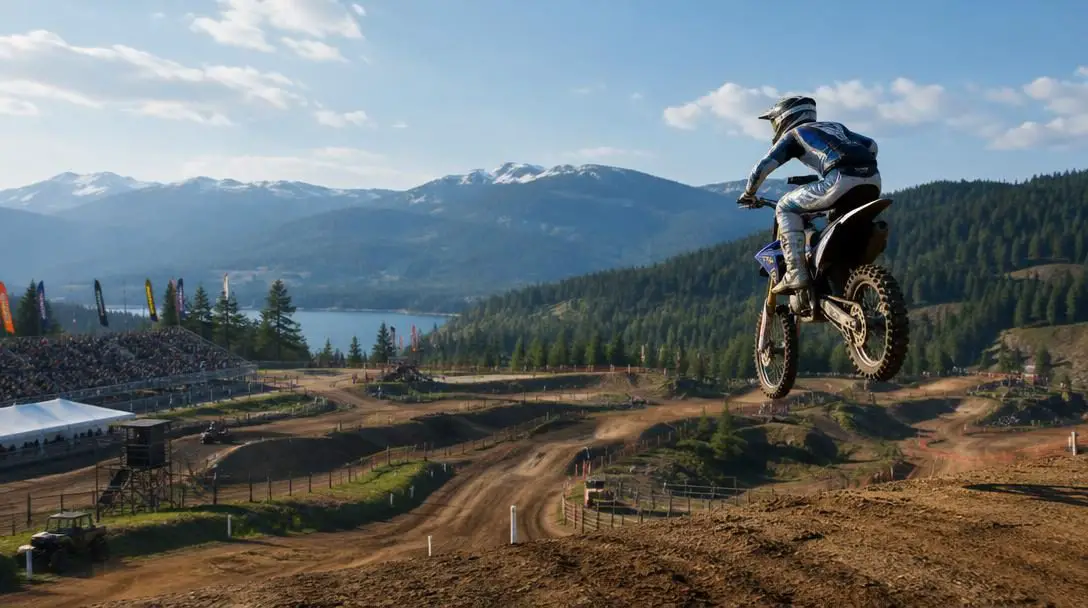
Not all motorsport fans have the open acreage, mechanical skills, or budget required to park a high-displacement dirt bike in their garage. For millions of enthusiasts, the adrenaline of roaring engines, towering vertical leaps, and knife-edge cornering lives entirely on home gaming consoles. Dirt bike racing possesses a unique visual and kinetic appeal that software developers have spent over four decades trying to capture, translating bone-jarring whoop sections and slippery mud tracks into interactive entertainment.
The genre encompasses a wide spectrum of interactive experiences. Some titles favor accessible, arcade-style physics where players can pull off death-defying backflips without worrying about realistic inertia, while others pursue uncompromising simulation by calculating tire bite, suspension compression, and subtle shifts in rider posture. Across generations of hardware, certain titles redefined how virtual dirt feels beneath digital tires, creating lasting legacies that continue to influence racing game design today.
Key takeaways
- Virtual motocross has evolved from 8-bit side-scrolling obstacle courses into intricate physics simulations with dynamic track deformation.
- Nintendo's 1984 release Excitebike established the core timing and jump-angle concepts that still govern off-road game design.
- THQ dominated the 2000s off-road racing landscape through its celebrated MX trilogy and subsequent MX vs. ATV series.
- Milestone brought official licensing and sophisticated rider artificial intelligence to the forefront with the simulation-oriented MXGP3.
The five best motocross video games of all time
Selecting the greatest off-road racing titles means looking at breakthrough mechanics, enduring replay value, and the indelible mark each game left on the genre. The following five releases represent the gold standard of virtual dirt bike racing across different gaming eras.
| Game | Publisher / Developer | Initial Release | Primary Platforms |
|---|---|---|---|
| Excitebike | Nintendo | 1984 | NES / Famicom |
| MX Superfly | THQ | 2002 | PlayStation 2, Xbox, GameCube |
| MX Unleashed | THQ | 2004 | PlayStation 2, Xbox |
| MX vs. ATV Reflex | THQ | 2009 | PlayStation 3, Xbox 360 |
| MXGP3 | Milestone | 2017 | PlayStation 4, Xbox One, PC |
Excitebike
- Release Year: 1984
- Original Platform: Famicom / Nintendo Entertainment System
- Format: 2D side-scrolling racer
- Notable Sequels: Excitebike 64, Excitebike: World Rally
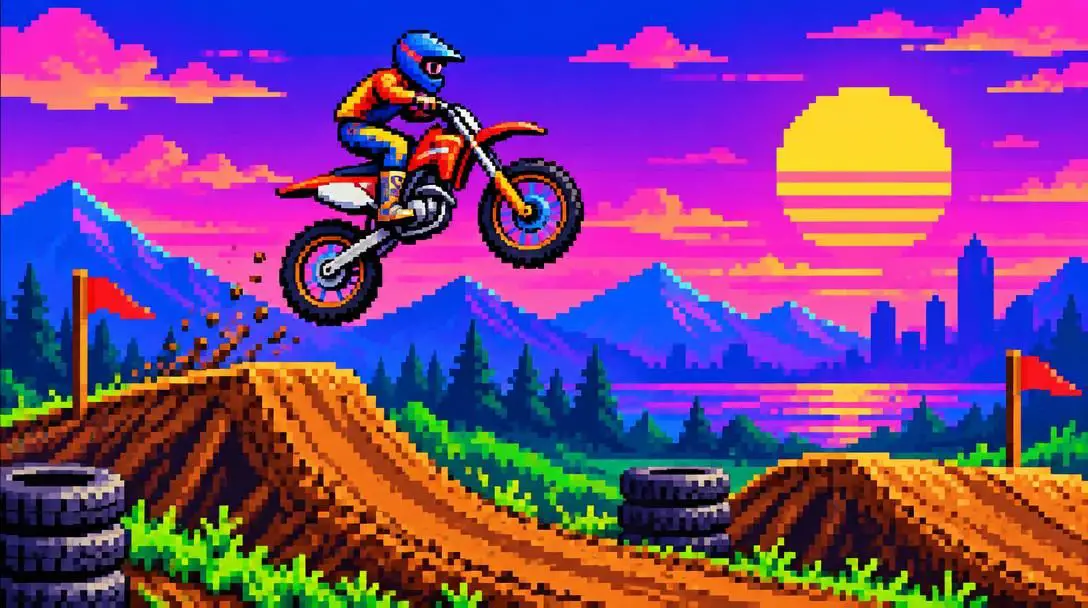
You cannot talk about the history of off-road motorcycle gaming without paying respect to the title that started it all. Released in 1984 for the Famicom and Nintendo Entertainment System, Excitebike introduced players to the fundamental mechanics of virtual dirt racing. Designed as an 8-bit side-scroller, the game tasked players with finding the exact right approach speed and pitch angle to conquer jumps, hurdles, and muddy track obstacles without overheating their engine.
While retro enthusiasts remain divided on how the original mechanics hold up today, its historical importance is indisputable. Excitebike introduced an entire generation of youngsters to off-road competition, proved that motorcycle physics could work on home consoles, and established a beloved franchise that paved the way for sequels like Excitebike 64 and Excitebike: World Rally.
MX Superfly
- Release Window: Summer 2002
- Platforms: PlayStation 2, Xbox, Nintendo GameCube
- Series Predecessor: MX 2002 featuring Ricky Carmichael
- Featured Modes: Outdoor racing, supercross, and stunt challenge
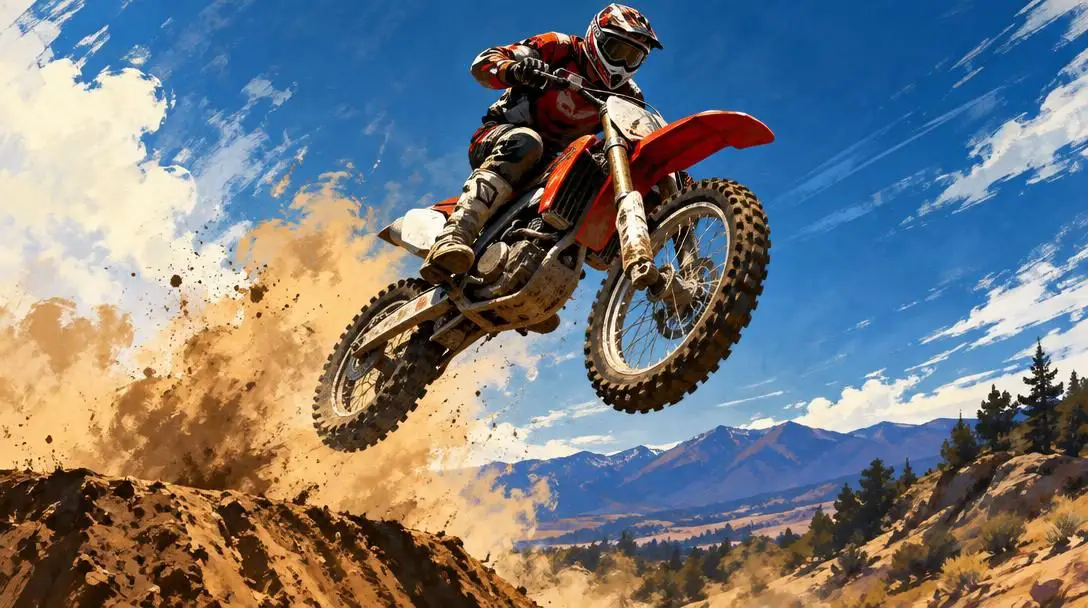
Arriving in the summer of 2002, MX Superfly was the direct sequel to MX 2002 featuring Ricky Carmichael and represented a critical midpoint in console gaming history. Released in an era when competitive online play was not yet standard, the game stood out by offering downloadable content that expanded its soundtrack and racer roster. It delivered a comprehensive experience that bridged the gap between pure arcade action and authentic motorsport handling.
For its era, MX Superfly was widely regarded as the first title to approach a true motocross simulation feel. The game earned positive reviews across the PlayStation 2, Xbox, and GameCube thanks to its versatile suite of game modes, which included wide-open outdoor nationals, tight stadium supercross events, and an imaginative stunt challenge mode. Dedicated off-road fans still revisit this release to appreciate the roots of modern dirt physics.
MX Unleashed

- Release Date: February 2004
- Original Platforms: PlayStation 2, Xbox
- Series Placement: Final chapter of THQ's initial MX trilogy
- Modern Availability: Mobile ports and Xbox Games with Gold
Serving as the triumphant finale to THQ's celebrated dirt bike trilogy, MX Unleashed launched in February 2004 for the PlayStation 2 and Xbox. While Nintendo GameCube owners were surprisingly left out of the release, players on the supported systems received one of the finest balance points between high-flying arcade thrills and rewarding physics in gaming history.
The developers refined the foundation established by MX Superfly, smoothing out rider animations, enhancing airborne maneuverability, and expanding freestyle stunt environments. While its visual presentation is distinctly tied to the sixth console generation, its core vehicle handling withstands the test of time. The title proved so beloved that it later found second life on mobile devices and earned a coveted spot in Microsoft's Xbox Games with Gold backward-compatibility program.

A great motocross game captures the delicate balance between staying glued to the dirt for acceleration and taking flight to clear technical obstacles.
MX vs. ATV Reflex

- Franchise Origin: Launched in 2005 with MX vs. ATV Unleashed
- Peak Platforms: PlayStation 3, Xbox 360
- Handheld Editions: Nintendo DS, PlayStation Portable
- Key Innovation: Dual-stick control scheme separating rider from machine
Following the massive success of their standalone bike trilogy, publisher THQ expanded the scope of their off-road racing universe in 2005 by introducing all-terrain vehicles into the mix. Among the numerous sequels that followed, MX vs. ATV Reflex emerged as the undisputed high-water mark for the franchise. The game shifted the genre away from traditional control layouts by requiring players to coordinate independent inputs for bike direction and rider body weight.
The console versions on the Xbox 360 and PlayStation 3 earned acclaim for their fluid sense of rhythm and responsive handling, although portable versions on the Nintendo DS and PlayStation Portable struggled to recreate the same dynamic feel. Mastering the dual-stick controls demanded patience from longtime fans of the earlier trilogy, but the resulting precision through rutted turns and whoop sections made the learning curve exceptionally rewarding.
MXGP3
- Developer / Publisher: Milestone
- Franchise Inception: 2014
- Distinction: Official FIM Motocross World Championship video game
- Standout Feature: Advanced artificial intelligence and authentic bike whips
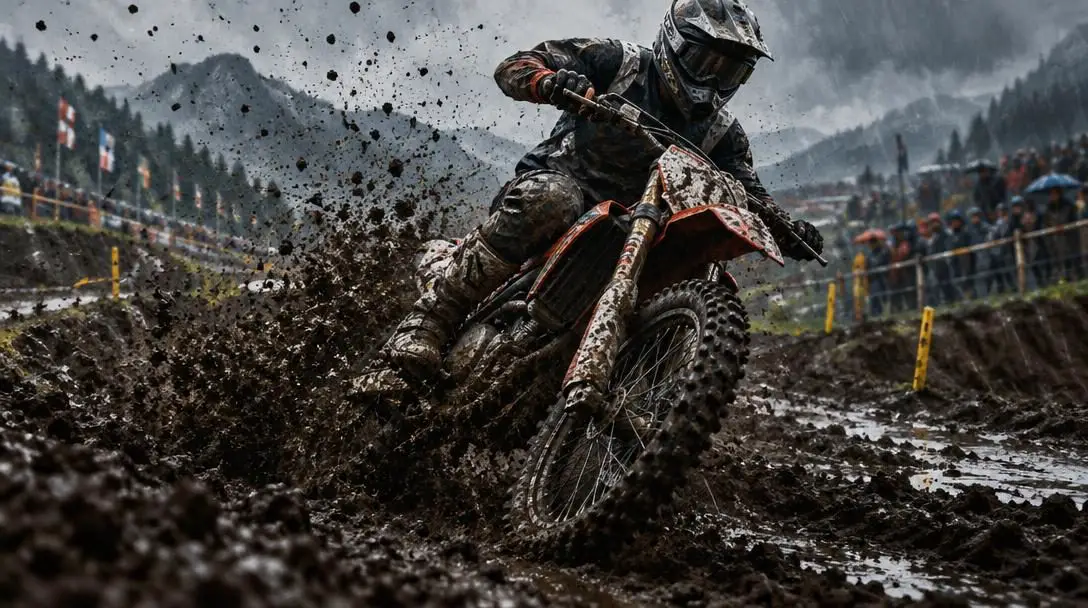
Stepping away from THQ's American-style arena dominance, Italian developer Milestone brought European grand prix off-road racing into the spotlight. Milestone launched the series in 2014 across the PlayStation 3, PlayStation 4, and Xbox 360, but it was MXGP3 that perfected the formula. As the official video game of the championship, the title placed uncompromising realism and authentic track replication above casual spectacle.
Where earlier arcade-leaning titles focused on solo stunt runs and massive fantasy ramps, MXGP3 simulated the visceral chaos of bar-to-bar competition against more than a dozen aggressive competitors. The computer-controlled riders were programmed with deep race craft, dynamically reading track contours and executing mid-air whips over jump crests to shave precious fractions of a second off their lap times. The game received critical praise and cemented Milestone as the premier developer of modern simulation motocross.
How motocross mechanics work in video games
Unlike conventional racing games where vehicles remain planted on asphalt, virtual motocross demands that the game engine calculate constant elevation changes, airborne momentum, and unstable racing surfaces. A proper understanding of these technical mechanics explains why the genre requires a unique set of controller skills.
Rider weight and dual-stick steering form the foundation of realistic bike behavior. Turning a dirt bike at speed is not merely about pointing the front wheel toward the inside of a corner. The rider must throw their physical weight into the turn to drive the knobby tires deep into the soil. Titles like MX vs. ATV Reflex revolutionized this interaction by splitting duties across the controller, dedicating the left analog stick to steering the chassis and the right stick to shifting the rider's center of mass.
Preloading the suspension is the essential technique for clearing tall obstacles. As a racer approaches the base of a ramp, pushing downward compresses the bike's front and rear suspension springs. Snapping the controls upward at the exact lip of the jump uncoils that stored kinetic energy, launching the machine significantly higher and farther than forward momentum alone could achieve.
Throttle control and traction management dictate corner exits. Modern dirt simulations model loose loam, slick mud, and hard-packed clay. Pinning the accelerator wide open while leaning through a tight corner breaks rear-wheel traction, causing the rear end to wash out or kicking the front wheel into an uncontrollable wheelie. Smooth, progressive throttle modulation is necessary to maintain forward drive.
The art of the scrub and whip represents an advanced aerodynamic skill. In high-level racing, excessive airtime hurts lap times because a motorcycle cannot accelerate while suspended in mid-air. By scrubbing—turning the bike nearly horizontal right as it leaves the ramp face—racers keep their overall trajectory low to the ground. This returns the tires to the dirt faster, allowing the rider to get back on the gas immediately.
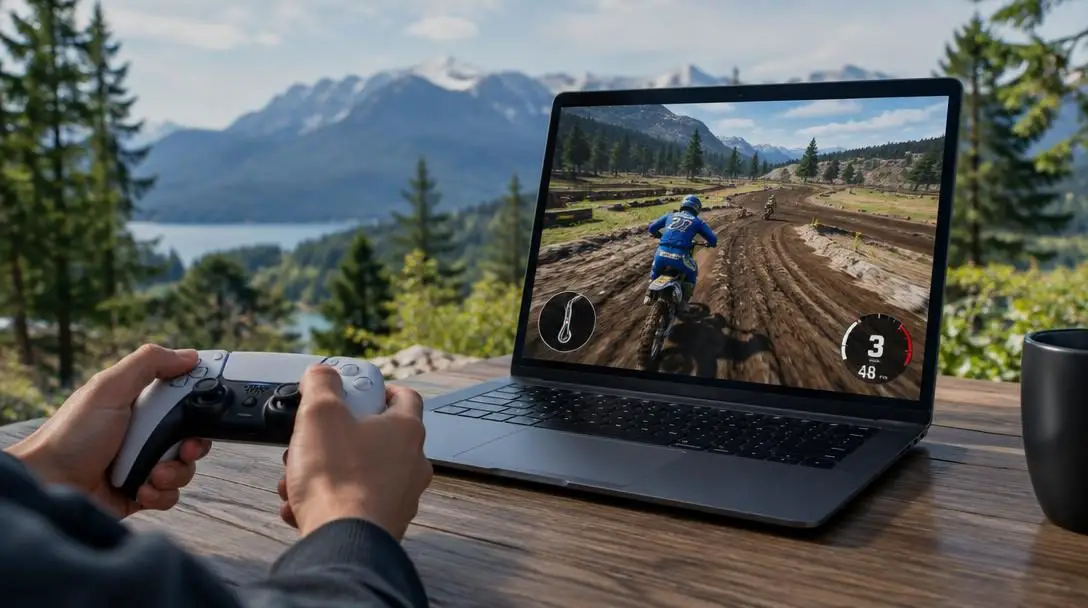
Supercross rhythm sections challenge a player's spatial awareness. Stadium courses feature relentless sequences of doubles, triples, and whoop mounds. Hitting an opening jump with the correct speed and angle ensures the bike lands cleanly on the downward slope of the receiving mound. Nailing this transition preserves momentum, while landing flat on an obstacle saps speed and throws the rider out of rhythm.
Practical steps to master virtual dirt racing
Conquering the physics systems of off-road racing games requires a methodical approach to track management and bike control. Follow these progressive steps to turn erratic laps into podium finishes.
- Learn the course layout without competition: Enter time-trial or free-ride modes to explore the circuit completely solo. Focus on memorizing blind jump crests, identifying high-speed berms, and spotting the sharpest turns before dealing with defensive computer opponents.
- Dial in jump timing and smooth landings: Target the transition downslopes on every jump complex. Landing smoothly on an angled ramp absorbs impact energy and propels the bike forward, whereas over-jumping onto flat ground rattles the suspension and scrubs away your forward speed.
- Get comfortable with dynamic weight shifting: If your game utilizes dual-stick inputs, practice shifting weight intentionally throughout every lap. Lean backward to keep the front wheel light over braking bumps, and lean forward while powering up steep hill climbs to stop the bike from flipping over backward.
- Master brake tucking and rut navigation: Begin braking early before the entrance of a turn rather than sliding wildly through the middle. Drop the front tire inside a carved rut, lean the bike securely into the dirt berm, and roll on the throttle progressively toward the exit.
- Advance to full-gate competition: Once your solo laps are consistent, join competitive races against computer-controlled fields. Focus on maintaining track position off the start gate, holding clean defensive lines through chicanes, and avoiding mid-air collisions over high-traffic tabletop jumps.
Common mistakes to avoid on the track
Riders transitioning from standard road racing games often struggle because dirt tracks penalize aggressive driving habits. Avoid these common operational errors to immediately improve your lap times:
- Holding full throttle at all times: Treating the throttle like an on-off switch leads to rear-wheel spin, pushes the bike wide in turns, and causes you to overshoot critical landing ramps.
- Ignoring track ruts and supported berms: Bypassing established lines in favor of flat soil forfeits the natural banking that prevents tires from sliding out under acceleration.
- Attempting tricks during competitive races: Freestyle stunts generate style points in dedicated trick modes, but throwing tricks during a race ruins mid-air balance and frequently causes catastrophic wipeouts.
- Over-jumping track obstacles: Launching as far as possible might look impressive, but landing on flat terrain damages suspension stability and loses valuable seconds compared to landing cleanly on downslopes.
- Bypassing designated braking zones: Trying to navigate sharp turns using steering inputs alone causes the bike to push past the apex, forcing you off the racing line.
Choosing the right motocross game for your style
Because off-road video games span multiple hardware eras and gameplay philosophies, selecting the right title depends on what you value most during your virtual track sessions.
Arcade accessibility versus hardcore simulation: Decide whether your ideal gaming session involves performing massive backflips across open freestyle arenas or navigating hyper-technical grand prix circuits. If you prefer forgiving physics and approachable handling, classic titles like MX Unleashed offer pure enjoyment. If you crave unforgiving realism, dynamic tire grip calculations, and authentic competition, MXGP3 provides the deepest simulation.
Hardware and platform availability: Consider the gaming hardware you currently own. Vintage titles like Excitebike require retro hardware or classic virtual console services, while the THQ classic era—including MX Superfly and MX Unleashed—thrives on sixth-generation systems like the PS2 and original Xbox, alongside selective modern backward-compatibility programs. Modern simulation titles run natively on current and previous-generation platforms such as the PlayStation 4, Xbox One, and PC.
Vehicle and track variety: Determine what kind of machinery you want to pilot. While pure motocross releases concentrate entirely on two-stroke and four-stroke dirt bikes, expanded releases like MX vs. ATV Reflex let you battle against quads, buggies, and off-road trucks across open desert expanses. Similarly, make sure your preferred game features the environments you love, whether you prefer sweeping natural-terrain outdoor nationals or compact stadium supercross layouts.
Frequently asked questions
Which motocross game is best for beginners?
Titles from THQ's middle era, particularly MX Unleashed, are ideal for newcomers. They feature responsive jump physics, approachable cornering mechanics, and forgiving landings that make learning the rhythm of off-road racing fun without requiring complex throttle modulation.
Why did MX vs. ATV Reflex change the controller layout?
MX vs. ATV Reflex introduced a dual-stick control scheme to separate the steering of the motorcycle from the physical lean of the rider. This change allowed players to shift rider weight independently, mirroring real-life riding techniques required to navigate ruts and absorb harsh bumps.
Can I play older games like MX Unleashed on modern consoles?
Yes, select classic titles have been preserved on modern hardware. MX Unleashed was adapted for mobile devices and was made backward-compatible on modern Xbox systems through programs like Games with Gold, allowing players to enjoy the classic with improved performance.
What makes MXGP3 different from the THQ motocross games?
While THQ titles lean toward fast-paced, arcade-style racing and freestyle stunts, MXGP3 is an official simulation produced by Milestone. It focuses strictly on the FIM Motocross World Championship, featuring licensed riders, realistic mud deformation, and intelligent computer opponents that perform tactical maneuvers like whips.
Why is scrubbing jumps so important in motocross games?
Scrubbing flattens the flight path of the motorcycle over jump faces, keeping the bike low to the ground. Because a bike can only accelerate when its rear wheel is in direct contact with the track, returning to the dirt sooner yields faster lap times than floating high through the air.
The bottom line
From the rudimentary 8-bit ramps of Excitebike to the high-definition mud and sophisticated physics of MXGP3, motocross gaming has continually pushed the boundaries of virtual motorsport. Whether you want to relive the golden era of mid-2000s console racers or master the delicate art of dual-stick weight distribution, these standout titles capture the pure excitement of off-road racing without the scraped knees and muddy boots.