A Brief History of DnD
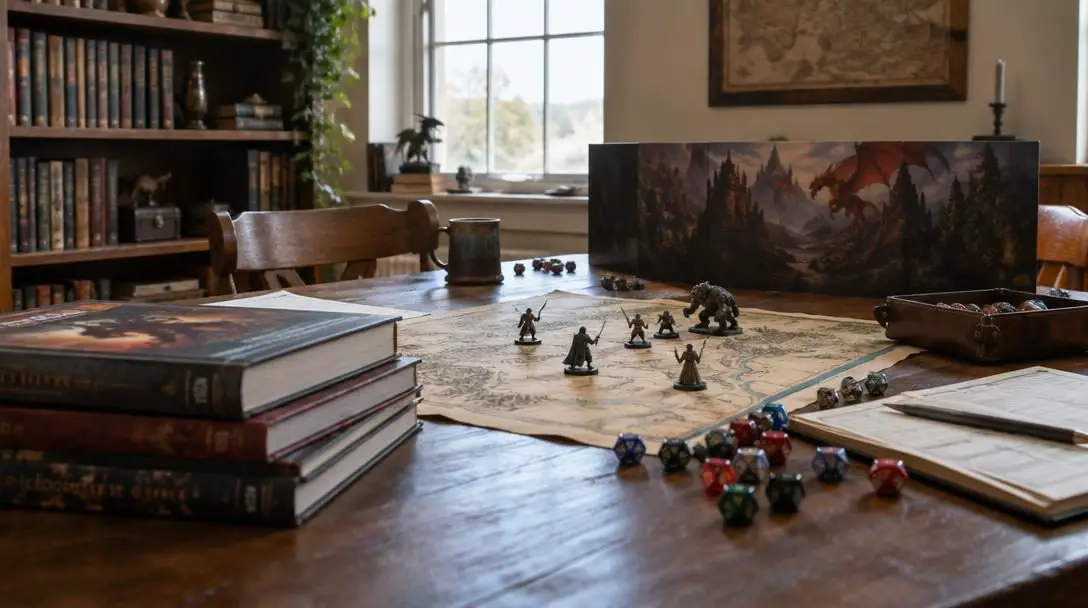
From dimly lit midwestern basements to global live streams watched by tens of thousands of simultaneous viewers, Dungeons & Dragons has evolved into a worldwide cultural phenomenon. What originated in the early 1970s as an experimental offshoot of historical wargaming now boasts an active global player base exceeding 13 million people, welcoming hobbyists, casual gamers, and mainstream celebrities alike.
Understanding how tabletop roleplaying transformed modern entertainment requires examining the collaborative experiments, grassroots publishing struggles, and radical design shifts that turned military miniature simulations into shared fantasy storytelling. Here is the full history of how Dungeons & Dragons was built, how it works, and how to embark on your own campaign.
Key takeaways
- Dungeons & Dragons developed from medieval miniature wargaming rules, specifically Henry Bodenstedt's Siege of Bodenburg and Gary Gygax and Jeff Perren's Chainmail.
- Co-creators Gary Gygax and Dave Arneson merged tactical combat with individual character progression, releasing the first boxed set in 1974.
- Early commercial viability was secured through personal investments from Don Kaye and Brian Blume after established publishers proved unable or unwilling to print it.
- Acquired by Wizards of the Coast in 1997, the game transitioned from a niche hobby into an entertainment staple driven by digital platforms and streaming communities.
The roots of roleplaying: from wargames to dungeon delves
Before fantasy roleplaying existed as a distinct genre, tabletop gaming was anchored in historical military simulations. During the mid-twentieth century, dedicated hobbyists recreated historical conflicts on large tabletops using hundreds of miniature soldiers, measuring tape, and dense rulebooks filled with complex mathematical formulas to calculate troop morale, formation discipline, and terrain bonuses. The focus remained squarely on detached, bird's-eye management of entire armies rather than the personal exploits of individual combatants.
The earliest direct ancestor of D&D was Siege of Bodenburg, a medieval siege wargame designed by Henry Bodenstedt in 1967 and published in Strategy & Tactics magazine. The title quickly became a favorite of the Lake Geneva Tactical Studies Association (LGTSA) in Wisconsin. LGTSA member Jeff Perren drafted his own streamlined rules for medieval tactical combat, which fellow member Gary Gygax expanded by incorporating fantasy elements like wizards, monsters, and magical weaponry. This collaborative work culminated in the 1971 release of Chainmail.
Around the same period, game designers Dave Wesley and Dave Arneson were developing their own wargame scenarios in the Twin Cities area, utilizing Chainmail rules as a mechanical foundation. Arneson took the crucial design leap: instead of assigning a player an entire contingent of infantry, he placed each participant in control of a single adventurer exploring a subterranean fortress. When Arneson and Gygax connected to combine their concepts, the framework of modern roleplaying was born.
Key architects of the original game
The creation and survival of Dungeons & Dragons depended on a small, dedicated circle of designers and early investors who took significant personal financial risks to bring the system to market.
Gary Gygax
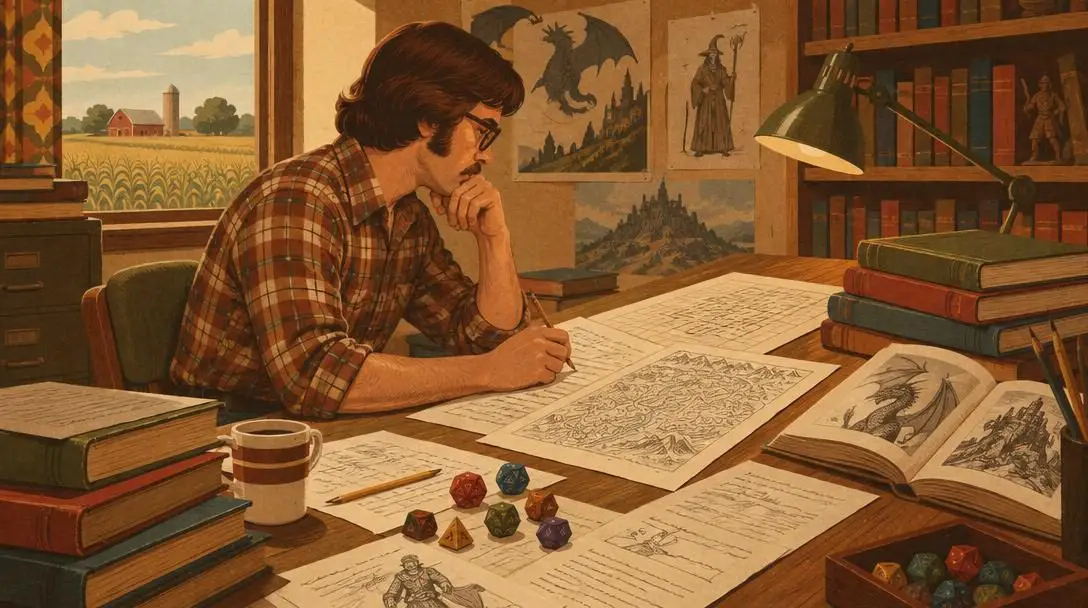
- Role: Co-creator and lead rules designer
- Associated organizations: Lake Geneva Tactical Studies Association, Guidon Games, TSR
- Key publications: Chainmail (1971), Dungeons & Dragons (1974)
Working out of Lake Geneva, Wisconsin, Gary Gygax refined the rule set through endless hours of playtesting with local enthusiasts. His goal was to craft a system that was accessible, player-friendly, and open to imaginative improvisation. Gygax drew heavily upon fantasy literature, science fiction, and classic mythology to populate the system with fantastical creatures, magical spells, and labyrinthine dungeons. When his employer, Guidon Games, proved too modest in scale to handle the physical manufacturing the project demanded, Gygax resolved to produce the game independently.
Dave Arneson
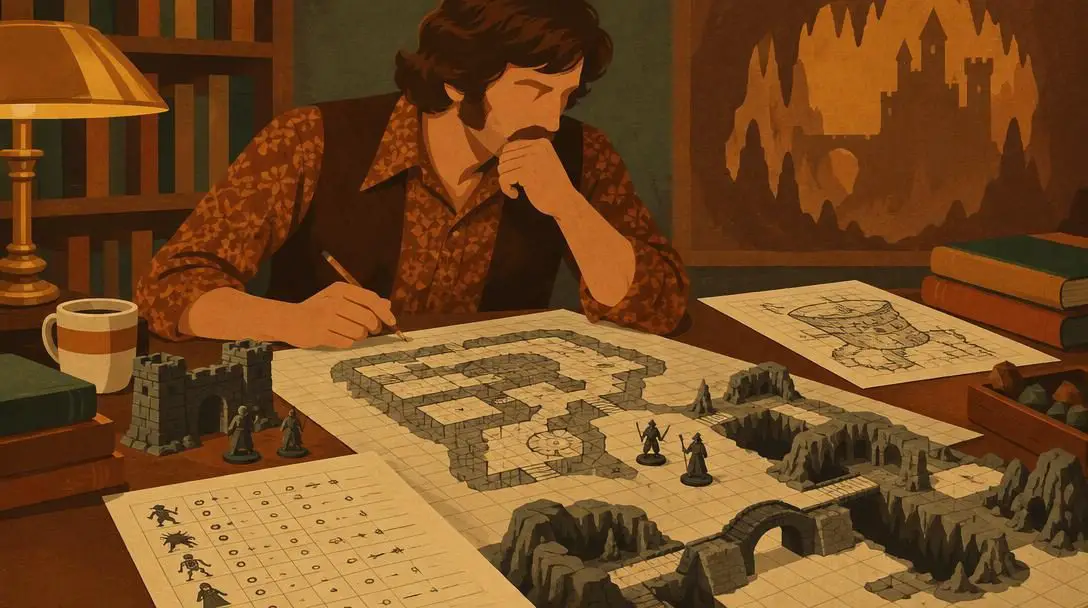
- Role: Co-creator and scenario pioneer
- Primary contribution: Adapting wargame rules into individual character exploration
- Collaborators: Dave Wesley, Gary Gygax
Dave Arneson provided the conceptual foundation that differentiated roleplaying from traditional board games. By experimenting with individual character roles, referee-driven scenarios, and open-ended exploration beneath the surface of his fantasy world, Arneson proved that players found deep engagement in inhabiting a specific hero rather than overseeing a faceless battalion. His collaboration with Gygax married tactical structure with dynamic collaborative storytelling.
Don Kaye
- Role: Co-founder and initial financial partner
- Key contribution: Financed initial manufacturing efforts
- Passing: Late 1970s
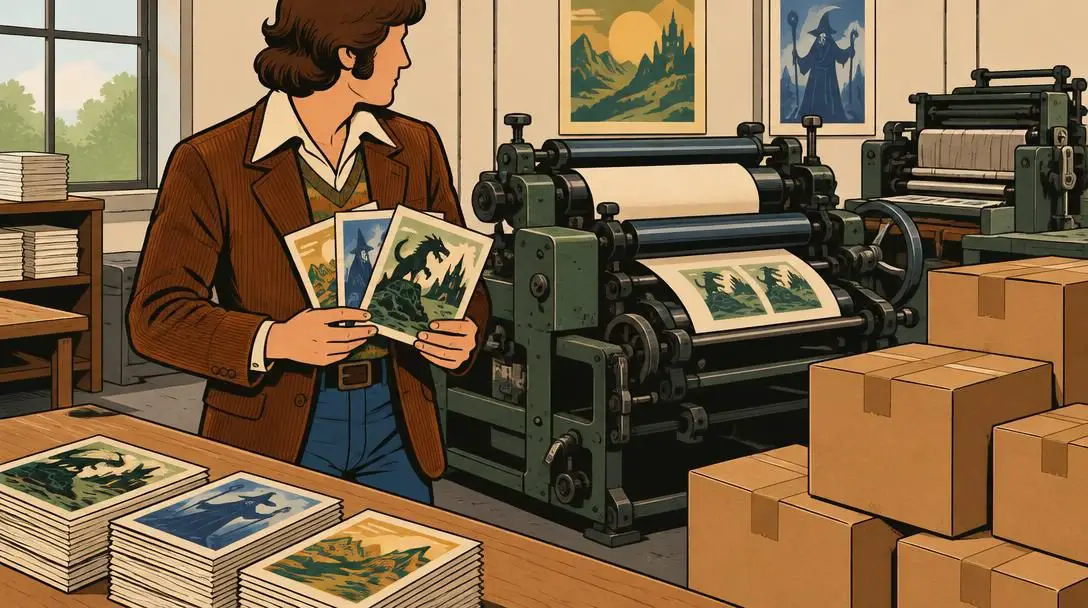
Understanding that large publishers would not take a chance on an untested concept, Gygax partnered with childhood friend Don Kaye. Together, they pooled their personal savings to establish their own publishing company. An initial attempt to raise capital by publishing a separate miniature wargame produced negligible sales, exhausting their available funds and putting the future of the venture in immediate danger. Kaye remained a vital operational partner until his sudden death in the late 1970s, an event that threw the company's organizational ownership into question.
Brian Blume

- Role: Equity investor and publishing partner
- Investment term: Acquired one-third ownership in exchange for capital
- Corporate transition: Consolidated company shares with Gygax following Kaye's death
Facing empty bank accounts and impending production bills, Gygax and Kaye turned to Brian Blume to save the enterprise. Blume agreed to supply the necessary financing on the condition that he receive a one-third ownership stake in the publishing rights. With Blume's capital in place, the original Dungeons & Dragons boxed set was finally printed and delivered to the public in 1974. Following Don Kaye's death, Blume and Gygax consolidated the remaining shares and relocated operations to expanded headquarters to accommodate soaring product demand.
Dungeons & Dragons replaced the bird's-eye management of historical armies with the personal adventures of single heroes.
Early evolutionary milestones
The progression from experimental miniature rules to an internationally distributed commercial hit occurred across several pivotal product launches between 1967 and 1974.
| Title | Release Year | Primary Creators | Significance in Gaming History |
|---|---|---|---|
| Siege of Bodenburg | 1967 | Henry Bodenstedt | Popularized medieval miniature siege combat among midwestern wargaming clubs. |
| Chainmail | 1971 | Gary Gygax, Jeff Perren | Introduced a medieval rules framework along with a dedicated fantasy combat supplement. |
| Dungeons & Dragons | 1974 | Gary Gygax, Dave Arneson | The first commercial fantasy tabletop roleplaying game, released as a 1,000-copy boxed set. |
The initial 1,000-copy run of the 1974 boxed set sold out rapidly through word of mouth, surprising even its creators. While Gary Gygax initially assumed the game would appeal only to dedicated military wargamers and science-fiction fans, by 1976 it became evident that its open-ended storytelling possessed a universal appeal that crossed cultural boundaries. Throughout the 1980s and 1990s, the system expanded through modular sourcebooks, campaign settings, and mechanical revisions, before being acquired in 1997 by Wizards of the Coast.
How the tabletop system works
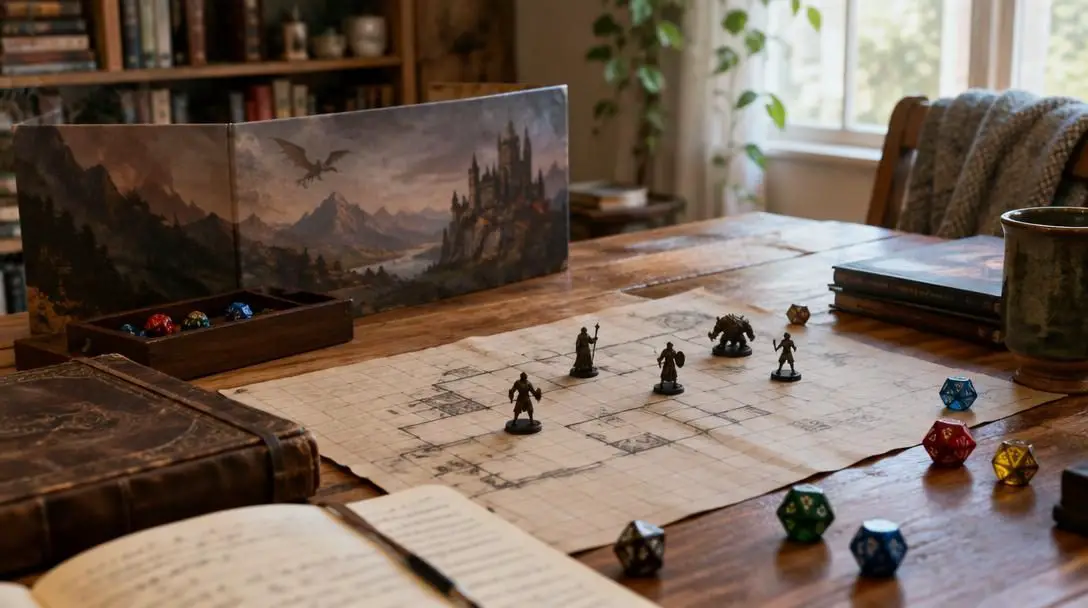
At its core, Dungeons & Dragons is an ongoing, guided dialogue between participants that uses dice and mechanical guidelines to adjudicate uncertainty. The game dispenses with a traditional game board and winning conditions, organizing play into structured, repeating interactions.
- Distinct table roles: One participant acts as the referee and storyteller (frequently termed the Dungeon Master or Game Master), narrating the surroundings, portraying incidental characters, and orchestrating opposition. The remaining participants each create and control a single protagonist within the fictional world.
- The core conversational loop: The narrator describes the current scenario and environment; the players articulate what their adventurers want to do; and the narrator explains the consequences of those decisions based on logic and the rules.
- Resolving outcomes with dice: When a character attempts an action with a reasonable chance of failure—such as breaking down a reinforced gate or dodging an ambush—polyhedral dice are rolled. Character attributes and skill proficiencies apply numeric modifiers that increase or decrease the final total against a target difficulty.
- Progression and character growth: As adventurers navigate hazards, overcome adversaries, and complete narrative milestones, they accrue experience and equipment, unlocking new capabilities, heightened resilience, and access to greater magical or martial power.
How to organize and launch your first game
Starting a campaign can appear intimidating because of the sheer breadth of reference materials available, but launching a game requires only a few structured, sequential steps.
- Assemble your playgroup: Gather three to six players. Select one person who is willing to act as the narrator and coordinate the rules, while the others participate as player characters.
- Acquire introductory reference materials: Avoid purchasing every available expansion immediately. Obtain a basic rule set or starter guide that outlines fundamental rules for movement, social interaction, and combat resolution.
- Gather essential supplies: Ensure each participant has access to a standard set of polyhedral dice (including four-, six-, eight-, ten-, twelve-, and twenty-sided dice), character sheets, and note-taking materials.
- Build player characters: Guide each player through character creation, choosing their adventurer's heritage, class, abilities, gear, and personal motivations according to the basic rules.
- Select an introductory adventure: Run a prewritten starter adventure for the first few sessions. Premade modules provide balanced encounters, ready-to-use maps, and clear narrative objectives, freeing the narrator to focus on mechanics.
- Establish a regular calendar: Long-term campaigns depend on operational rhythm. Set a recurring day and time to preserve narrative continuity, deepen system familiarity, and maintain group enthusiasm.
Common mistakes to avoid at the table
New gaming groups often run into avoidable points of friction when learning the hobby. Staying mindful of these common traps keeps your sessions focused and enjoyable.
- Prioritizing exhaustive rule checks over table pacing: Halting the action for ten minutes to consult an obscure ruling kills narrative momentum. Make an equitable ruling on the spot, keep the story moving, and research the official rule after the session concludes.
- Adopting an adversarial mindset: The narrator is not playing against the group, and players should not view the referee as an adversary. The objective is mutual storytelling where both triumph and danger carry genuine emotional weight.
- Designing uncooperative characters: Adventurers need a compelling internal reason to stay together and assist one another. Lone-wolf characters who refuse to cooperate create immediate tension that can disrupt table dynamics.
- Over-preparing narrative plotlines: Narrators who script entire campaigns like novels inevitably feel frustrated when unpredictable player choices derail their plans. Prepare situations, locations, and villainous motives rather than predetermined outcomes.
- Skipping expectations and boundaries: Failing to hold a preliminary discussion regarding preferred campaign tone, themes, and personal boundaries can result in mismatched expectations between players.
Expanding your campaign
Once a group understands the foundational rules and has completed an introductory story arc, there are several straightforward avenues for expanding the tabletop experience:
- Homebrewing custom settings: Move beyond published sourcebooks by designing custom continents, unique pantheons, distinct factions, and regional mysteries tailored directly to your party's interests.
- Incorporating visual and tactical aids: Introduce gridded battle mats, dry-erase terrain markers, three-dimensional scenery, and painted miniatures to bring tactical combat encounters to life.
- Connecting with the global community: Share campaign ideas, character concepts, and homebrew mechanics by engaging with local game store leagues, digital discussion boards, and live-streamed actual-play broadcasts.
Frequently asked questions
Who invented Dungeons & Dragons?
Dungeons & Dragons was co-created by Gary Gygax and Dave Arneson, who combined miniature wargaming combat mechanics with personalized character exploration to produce the original game system.
When was the original game published?
The original Dungeons & Dragons boxed set was released in 1974 with an initial print run of 1,000 copies, which sold out entirely through grassroots enthusiasm and word of mouth.
What games directly led to the development of D&D?
The system was built directly upon Henry Bodenstedt's 1967 medieval game Siege of Bodenburg and Gary Gygax and Jeff Perren's 1971 tactical miniatures ruleset Chainmail, which Dave Arneson adapted for dungeon exploration.
Who currently owns Dungeons & Dragons?
Wizards of the Coast acquired Dungeons & Dragons in 1997 and has published and managed the brand's rulebooks, expansions, and organized play programs ever since.
Do you need special equipment to play?
You only need basic reference rules, a standard set of polyhedral dice, paper, and pencils. Miniatures, battle mats, and digital tools are optional enhancements rather than strict requirements.
The bottom line
Dungeons & Dragons succeeded because it answered a creative desire that traditional board games and military simulations left unfulfilled: the chance to inhabit an individual protagonist in a dynamic, unpredictable world. By transitioning from the rigid battle lines of Siege of Bodenburg and Chainmail to open-ended cooperative adventures, Gygax, Arneson, and their early collaborators invented an entire artistic medium. Today, powered by digital platforms, streaming broadcasts, and a global community of more than 13 million players, the game remains what it was on its 1974 release—an invitation to sit with friends, roll dice, and tell an unforgettable story together.