5 Best Players In Bayern Munich History
Bayern Munich stands unchallenged as the most successful club in German football history, setting the benchmark for domestic supremacy and European contention across multiple eras. From the formative years of the modern Bundesliga through to relentless triumphs on the continental stage, the Bavarian powerhouse has maintained its elite standing by cultivating and attracting generational footballers who redefined their respective roles on the pitch.
Identifying the absolute greatest figures in Bayern Munich's rich history requires balancing sheer longevity and leadership against individual accolades, tactical revolution, and era-defining silverware. While hundreds of exceptional athletes have pulled on the famous jersey, five iconic figures represent the pinnacle of individual achievement and collective glory in Munich.
Key takeaways
- Gerd Müller holds the top spot as Bayern Munich's undisputed goalscoring titan with an astonishing 563 club goals.
- Franz Beckenbauer revolutionized defensive play, winning multiple Ballon d'Or awards and trophies as both an active player and head manager.
- Modern icons Thomas Müller and Bastian Schweinsteiger anchored dominant eras that brought sustained domestic hegemony and Champions League glory.
- Goalkeeping titan Oliver Kahn combined unmatched intensity with elite shot-stopping across 632 matches before serving as club CEO.
Honorable mentions: Legends who shaped Bayern's legacy
Narrowing down decades of unparalleled footballing success to just five individuals leaves out several titans who would comfortably headline the all-time lists of almost any other club in world football. Before examining the top five, five foundational figures warrant special recognition for their transformative contributions to Bayern Munich's historic trophy cabinet:
- Klaus Augenthaler: A defensive bedrock who anchored the backline for an extended era, renowned for uncompromising leadership and physical resilience.
- Philipp Lahm: One of the most intelligent and versatile full-backs the sport has ever seen, captaining the side to historic domestic dominance and continental silverware.
- Sepp Maier: The agile, acrobatic, and durable goalkeeper who served as the last line of defense during Bayern's groundbreaking European triumphs in the 1970s.
- Stefan Effenberg: An unapologetic midfield general whose fierce temperament, vision, and iron will propelled Bayern through high-stakes European campaigns.
- Franck Ribéry: A dynamic and technically dazzling winger whose attacking flair and relentless competitive drive helped launch Bayern's modern era of dominance.
At a glance: The top five Bayern legends compared
Evaluating players across different generations requires looking at match volumes, trophy records, and major individual accolades achieved while representing the club.
| Player | Primary Era | Club Appearances | Key Accolades |
|---|---|---|---|
| Oliver Kahn | 1994–2008 | 632 matches (3rd all-time) | 8 Bundesliga titles, 2001 Champions League, 7-time league goalkeeper of the year |
| Bastian Schweinsteiger | 2002–2015 | 500 matches (10th all-time) | 8 Bundesliga titles, 2013 Champions League, Bayern Hall of Fame inductee |
| Franz Beckenbauer | 1964–1977 | 582 matches (5th all-time) | 4 Bundesliga titles (player), 1 title (manager), 2 Ballon d'Or wins (1972, 1976) |
| Thomas Müller | 2008–Present | Near top in appearances | 10+ Bundesliga titles, 2 Champions League titles, 3rd in all-time club goals |
| Gerd Müller | 1964–1979 | 15 seasons | 563 club goals (all-time record), 4 Bundesliga titles, 3 European Cups, 1970 Ballon d'Or |
The 5 best players in Bayern Munich history
Oliver Kahn
- Tenure: 1994–2008
- All-Time Appearances: 632 matches
- Bundesliga Titles: 8
- Major Individual Honors: 7-time top league goalkeeper, two-time Ballon d'Or top-three finisher
Born in Karlsruhe in 1969, Oliver Kahn began his professional journey with Karlsruher SC in 1990 before transferring to Bayern Munich in 1994. Over the following 14 seasons, Kahn anchored the Bavarian goal with an intimidating aura, lightning-fast reflexes, and an unyielding will to win that came to define Bayern's competitive identity throughout the late 1990s and early 2000s.
Kahn accumulated 632 competitive appearances for Bayern Munich, placing him third on the club's all-time appearance list. His defining triumph arrived in the 2001 UEFA Champions League final, where his match-winning heroics ended a quarter-century continental title drought for the club. In addition to securing eight Bundesliga crowns, Kahn earned domestic recognition as Germany's top goalkeeper seven times and made the Ballon d'Or podium on two occasions. Kahn extended his influence beyond his playing retirement in 2008 by joining the club's executive management, eventually serving as Bayern's CEO starting in 2021.
Bastian Schweinsteiger

- Tenure: 2002–2015
- All-Time Appearances: 500 matches
- Bundesliga Titles: 8
- Club Recognition: Inducted into the Bayern Munich Hall of Fame (2018)
Widely regarded as one of the most complete and adaptable central midfielders of his generation, Bastian Schweinsteiger joined Bayern Munich's youth ranks in 1998 at age 13. Breaking into the senior team in 2002, he initially operated as an energetic winger before transitioning inside to become the tactically brilliant engine room of Bayern's midfield for more than a decade.
Schweinsteiger reached an exact milestone of 500 appearances for the club, placing him tenth overall in club history. During his 13-year stay in the senior squad, he lifted eight Bundesliga trophies and served as the emotional and tactical heartbeat of the 2013 treble-winning side that captured the UEFA Champions League. Following later playing chapters with Manchester United and the Chicago Fire, Schweinsteiger's legacy in Bavaria was permanently cemented in 2018 when he was officially inducted into the Bayern Munich Hall of Fame.
Franz Beckenbauer
- Tenure: 1964–1977
- All-Time Appearances: 582 matches
- Bundesliga Titles: 4 as a player, 1 as a manager
- Major Individual Honors: Ballon d'Or winner (1972, 1976), top-three finisher in three other seasons
Munich-born Franz Beckenbauer stands as one of the most influential figures to ever grace a football pitch. Joining Bayern Munich as a youth player in 1959, he made his senior debut in 1964 and spent 13 seasons anchoring the club's rise to international prominence before later spells with the New York Cosmos and Hamburger SV, eventually concluding his active career in 1983.
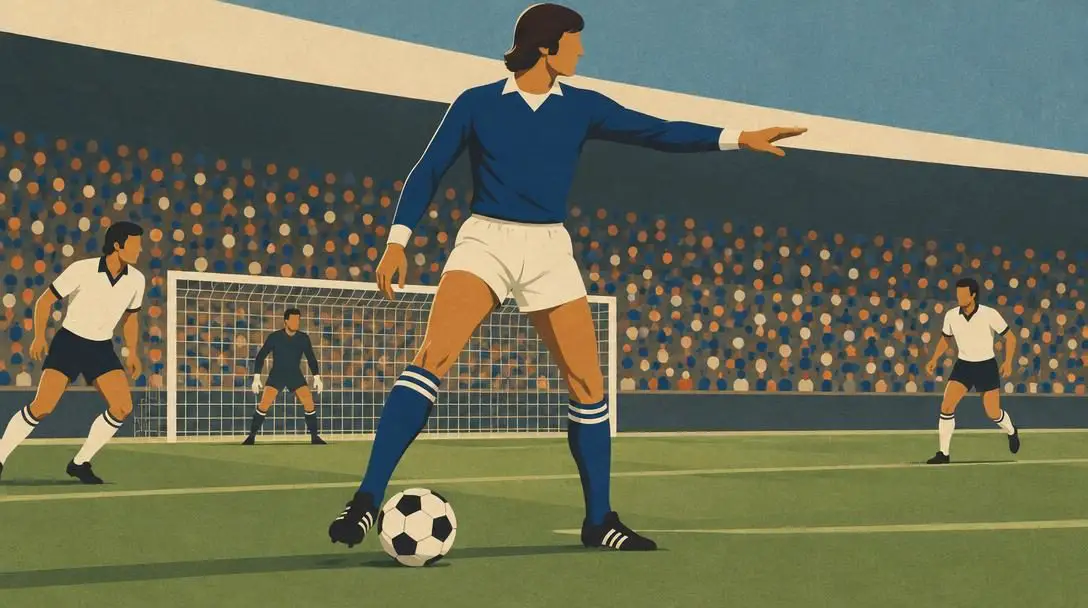
Beckenbauer revolutionized the sport by perfecting the role of the modern attacking sweeper, transitioning seamlessly from midfield into deep defense to dictate the tempo of matches. He sits fifth on Bayern's all-time appearance list with 582 games played. "Der Kaiser" won four Bundesliga titles as a player and later returned to guide the team to another league title from the dugout across two managerial tenures. Crucially, Beckenbauer remains the only player in Bayern history to capture multiple Ballon d'Or trophies, claiming world football's highest individual honor in both 1972 and 1976 while finishing among the top three on three additional occasions.
Beckenbauer revolutionized the game from the backline, turning the sweeper position into a launchpad for fluid attacking play and unmatched continental triumph.
Thomas Müller

- Tenure: 2008–Present
- Goalscoring Rank: 3rd all-time in Bayern history
- Bundesliga Titles: More than 10
- International Club Trophies: 2 UEFA Champions Leagues, 2 FIFA Club World Cups
Born in Weilheim in Oberbayern in 1989, Thomas Müller joined Bayern Munich's academy at just ten years of age. Since earning his first-team promotion in 2008, Müller has evolved into the quintessential modern club legend, defined by extraordinary durability, selflessness, and an unconventional positional style that disrupts opposing defenses across the continent.
Known for operating across any attacking or midfield role required by his managers, Müller has contributed directly to an unprecedented sustained era of domestic and European dominance. He has captured more than ten Bundesliga titles, along with two UEFA Champions League trophies and two FIFA Club World Cups. Müller currently ranks near the very top of Bayern's all-time appearances and sits third overall in club goalscoring, pairing longevity with relentless production.
Gerd Müller
- Tenure: 1964–1979
- Total Club Goals: 563 goals (all-time club record)
- Major Titles: 4 Bundesliga titles, 3 European Cups
- Individual Honors: 1970 Ballon d'Or winner, 2007 Golden Foot legend recipient
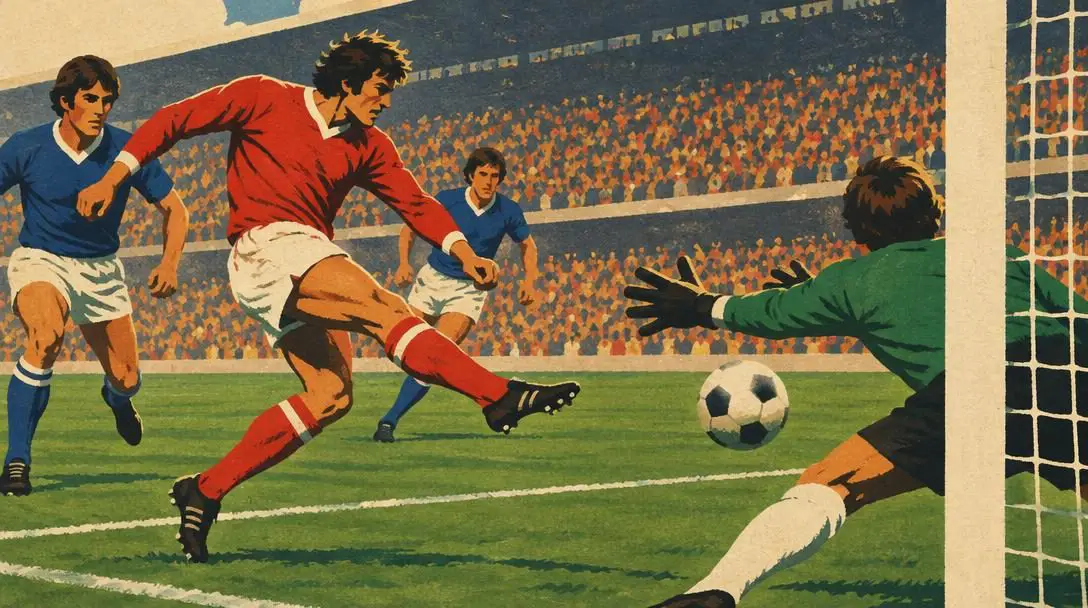
Standing at the summit of Bayern Munich history is Gerd Müller, universally revered as "Der Bomber." After taking his initial professional steps with 1861 Nördlingen in 1963, Müller joined Bayern Munich in 1964. For the subsequent 15 years, he operated as the most clinical and instincts-driven penalty-box striker the sport has ever witnessed, concluding his storied playing career in the United States in 1981.
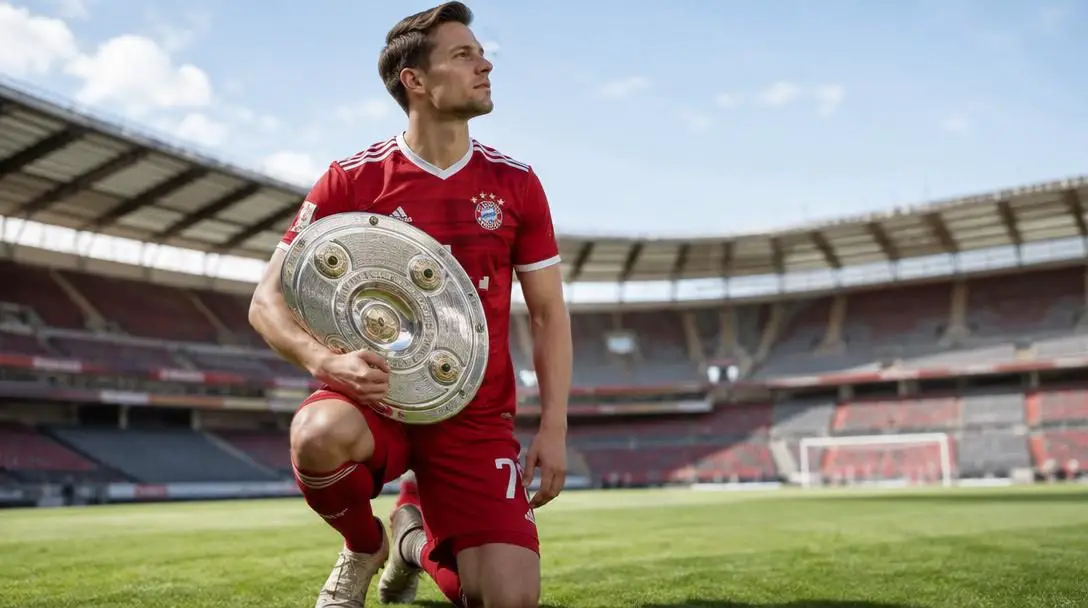
Müller's staggering offensive firepower powered Bayern to four Bundesliga championships and three consecutive European Cup triumphs during the 1970s. In 1970, he became Bayern's first-ever Ballon d'Or recipient, alongside three other top-three finishes in voting for the prize, and earned the prestigious Golden Foot award in 2007 as an all-time legend. His historical standing is cemented by an incomprehensible tally of 563 goals for Bayern Munich—an all-time scoring record that stands more than 200 goals clear of any other player in the club's century-long history.
How historical player evaluation works
Determining which figures belong at the top of an all-time club ranking requires a balanced framework that accounts for tactical changes and generational differences across decades of competition:
- Trophy accumulation: Measuring contributions toward major domestic silverware like the Bundesliga and paramount international trophies such as the European Cup, Champions League, and FIFA Club World Cup.
- Longevity and durability: Evaluating total matches played over extended tenures, reflected in the massive appearance milestones set by Kahn, Beckenbauer, Schweinsteiger, and Thomas Müller.
- Statistical benchmarks: Analyzing undeniable raw outputs, exemplified by Gerd Müller's unreachable record of 563 club goals.
- Individual accolades: Accounting for elite contemporary honors, including Ballon d'Or podiums, domestic seasonal awards, and official Hall of Fame inclusions.
- Positional evolution: Crediting players who fundamentally changed tactical roles, such as Beckenbauer's reimagining of the sweeper or Kahn's commanding standard for modern goalkeepers.
Practical steps for researching historical footballers
If you want to construct your own informed historical player rankings across past club eras, follow these sequential analytical steps:
- Define the research boundaries by deciding whether your evaluation covers all competitive fixtures or strictly league and continental matches.
- Gather verified historical records from official archives, tracking appearances, clean sheets, goals, and total seasons of active service.
- Map each candidate into their distinct footballing era to identify the tactical contexts, squad dynamics, and tournament structures of their day.
- Cross-reference the player's match participation with team silverware to verify whether they served as primary drivers or complementary pieces in title runs.
- Review contemporary awards and media votes, such as the Ballon d'Or and domestic player-of-the-year honors, to assess how peers viewed them in their prime.
- Synthesize quantitative outputs alongside qualitative factors like leadership, tactical adaptability, and legacy to finalize your player tiers.
Common mistakes when ranking club legends
Debating historical sports hierarchies frequently introduces analytical biases. Avoiding these common mistakes produces fairer and more objective assessments:
- Overvaluing modern players due to high-definition video access while neglecting foundational stars like Beckenbauer and Gerd Müller who built the club's status.
- Comparing defenders, goalkeepers, and defensive midfielders using offensive metrics such as goals and assists rather than positional benchmarks.
- Overlooking tactical flexibility, which penalizes selfless contributors like Thomas Müller and Bastian Schweinsteiger who frequently adapted their roles for squad balance.
- Assigning credit for team trophies to peripheral squad members without checking their individual match contributions and tactical importance during those runs.
- Failing to consider post-playing contributions, ignoring how icons like Beckenbauer and Kahn guided the organization through management and executive roles.
What to consider next
Deepening your perspective on Bayern Munich's historical dominance opens several fascinating historical and analytical avenues:
- Track ongoing record chases as active veterans like Thomas Müller continue to climb all-time club appearance and goal charts.
- Compare tactical transitions across different eras, contrasting the fluid total football of the 1970s with the high-pressing, possession-heavy systems of the 2010s.
- Assess how Bayern's top five legends compare against the historical icon groups of other European giants such as Real Madrid, AC Milan, and Liverpool.
- Examine the club's unique organizational model, where former legends consistently step directly into coaching and executive leadership positions.
Frequently asked questions
Who is the all-time top goalscorer in Bayern Munich history?
Gerd Müller holds the all-time scoring record with 563 competitive goals for Bayern Munich, standing more than 200 goals ahead of every other player in club history.
Which Bayern Munich player has won the most Ballon d'Or awards?
Franz Beckenbauer is the only Bayern Munich player to win the Ballon d'Or more than once, taking the award in both 1972 and 1976 while also finishing in the top three on three other occasions.
Are Thomas Müller and Gerd Müller related?
No, despite sharing the same surname and occupying top positions in club history, Thomas Müller and Gerd Müller have no family relation and played in completely different eras.
How many competitive matches did Oliver Kahn play for Bayern Munich?
Oliver Kahn made 632 competitive appearances over his 14-year career at Bayern Munich, which ranks him third on the club's all-time appearance leaderboard.
When was Bastian Schweinsteiger inducted into the Bayern Munich Hall of Fame?
Bastian Schweinsteiger was officially inducted into the Bayern Munich Hall of Fame in 2018 in recognition of his 500 club appearances, eight Bundesliga titles, and 2013 Champions League triumph.
The bottom line
The history of Bayern Munich is written through the exploits of extraordinary athletes who transformed a regional club into a dominant force in world football. While Gerd Müller provided unmatched finishing and Franz Beckenbauer revolutionized defensive strategy, figures like Oliver Kahn, Bastian Schweinsteiger, and Thomas Müller ensured that winning remained a continuous culture across successive generations. These five legends represent the standard of excellence by which all future Bayern Munich players will inevitably be measured.