Ultimate Football Gear Review Guide
Football is a fast, high-impact collision sport that requires players to balance maximum physical safety with unhindered mobility. Modern equipment engineering has moved far beyond simple foam and hard plastic, evolving into an ecosystem of responsive impact dampening, biomechanical foot support, and position-specific protection. Whether an athlete is preparing for youth leagues, high school competition, or collegiate play, making informed gear selections directly influences durability, comfort, and performance.
From the shell geometry of safety-certified helmets to the specialized stud patterns beneath your cleats, each component of a football kit addresses unique physical stresses on the gridiron. Navigating the sheer volume of equipment brands and technical specifications can be overwhelming. Understanding how independent safety ratings, ergonomic padding configurations, and advanced synthetic fabrics function ensures that every player steps onto the field protected and prepared.
Key takeaways
- Safety certifications from independent organizations like NOCSAE and the Virginia Tech Helmet Ratings are vital metrics when selecting head protection.
- Shoulder pads must be selected based on field position, shoulder width, and the specific balance between impact dispersal and arm mobility.
- Cleat selection hinges on field surface compatibility, with molded studs serving beginners and detachable studs offering adaptive traction for advanced players.
- Football gloves are specialized tools, ranging from high-friction silicone palms for receivers to heavily padded exoskeletons for interior linemen.
Evaluating football helmets and impact technology
The helmet remains the most critical defensive barrier against severe head trauma on the gridiron, engineered to absorb impact during violent tackles, blindside blocks, and ground strikes. Modern headgear must combat both linear impacts—direct hits that lead to skull fractures and focal bruises—and rotational forces that twist the brain inside the skull, contributing heavily to concussions. Manufacturers deploy a mixture of traditional hard-shell exteriors, deformable outer shells, and responsive internal padding made of specialized foams, inflatable air bladders, and dynamic shock-absorbing cells.
Beyond structural safety, day-to-day usability relies on thermal regulation and clear field awareness. Strategic shell ventilation channels airflow across the scalp to evacuate heat during intense drives. Simultaneously, faceguard designs vary from open, two-bar configurations that preserve wide peripheral vision for skill players to dense, multi-bar cages engineered to keep opposing fingers away from the eyes of linemen.
Independent safety ratings provide an objective baseline for comparing helmet models. The Virginia Tech Helmet Ratings system subjects helmets to rigorous laboratory impact testing, assigning star ratings based on their ability to reduce concussion risk. Pairing these independent ratings with proper fit protocols ensures that the helmet sits snugly across the brow without shifting during hard contact.
Riddell Helmets
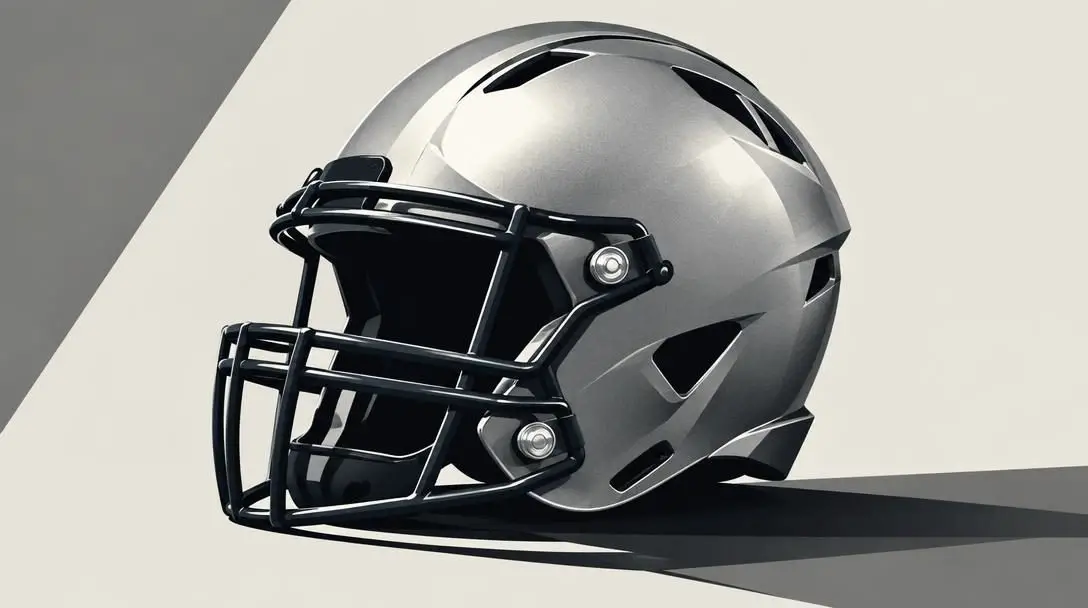
- Design focus: Force dissipation and shell architecture
- Target user: Professional and amateur athletes
- Key features: Durable faceguards, custom interior padding
Riddell has stood as an industry benchmark across collegiate and professional football for decades. The brand focuses heavily on helmet architecture that absorbs and deflects localized force through engineered flex panels and customizable internal padding systems. Their assemblies accommodate diverse player preferences through variable air-fit bladders, precision faceguard alignments, and high-impact exterior shells designed to maintain structural integrity across repeated impacts.
Schutt Helmets
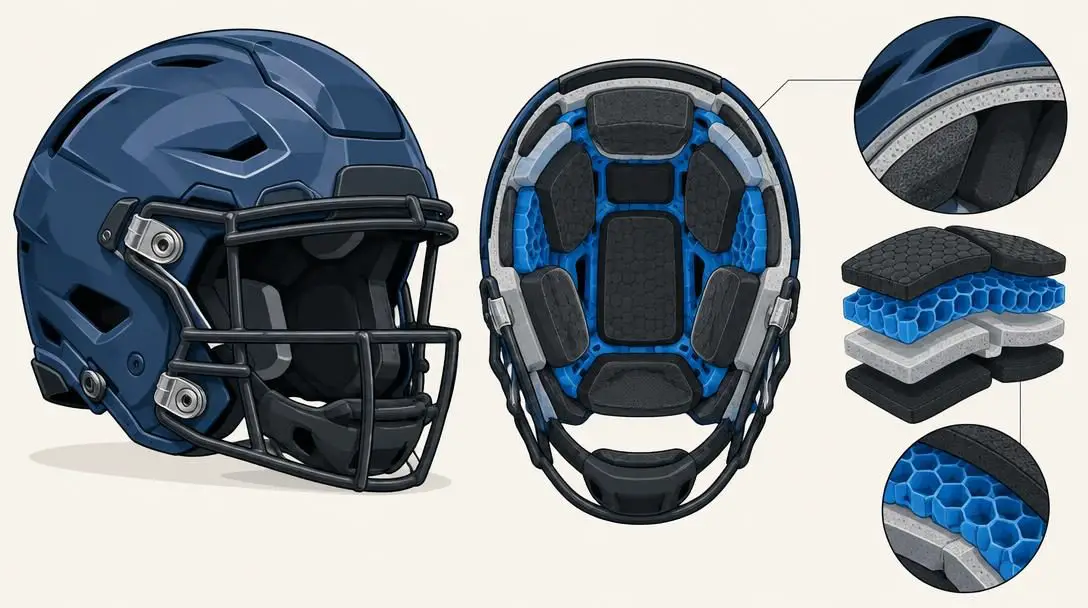
- Design focus: Rugged exterior shells and cushioning systems
- Safety track record: High marks in independent safety testing
- Key features: Advanced internal impact absorption
Schutt has built an enduring reputation for delivering exceptionally sturdy and reliable protective headgear. Known for scoring near the top of independent laboratory assessments, Schutt utilizes advanced cushioning structures designed to disperse the heavy blunt-force shocks common along the line of scrimmage. Their helmets incorporate rugged shells built to resist cracking under temperature extremes alongside dependable interior padding that retains its protective shape over grueling seasons.
Xenith Helmets
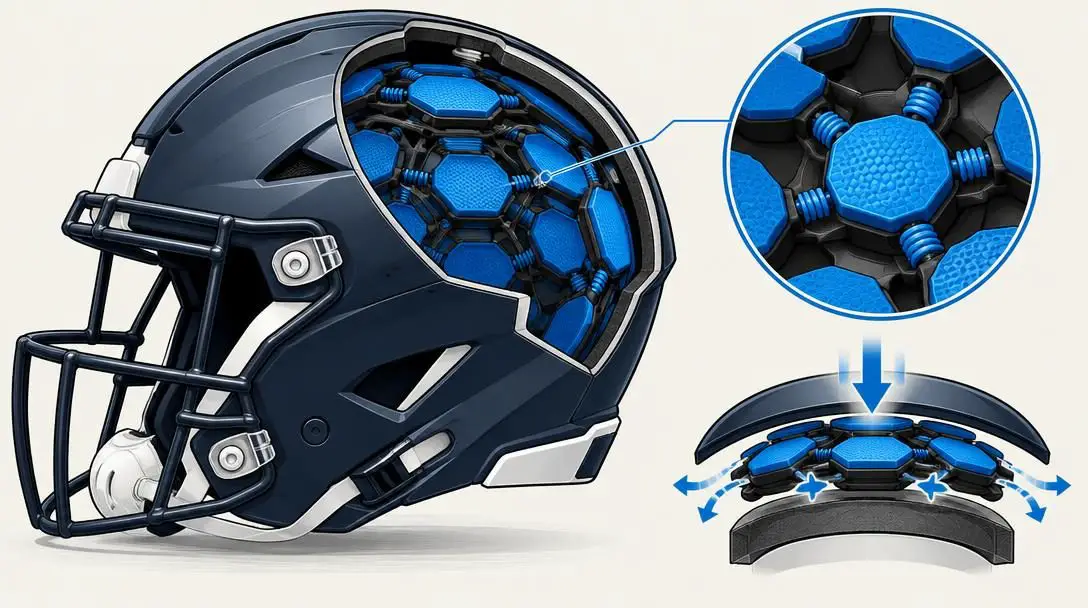
- Design focus: Rotational force mitigation
- Technology: Adaptive shock-absorber systems
- Key features: Independent internal suspension
Xenith took a distinct engineering path by targeting the rotational acceleration that frequently triggers brain injury. Rather than depending exclusively on static foam glued to an outer shell, Xenith designs incorporate adaptive shock absorbers that collapse three-dimensionally during an impact. This independent internal suspension system lets the outer shell move separately from the player's head, mitigating the twisting rotational forces generated by off-center collisions.
Vicis Zero1
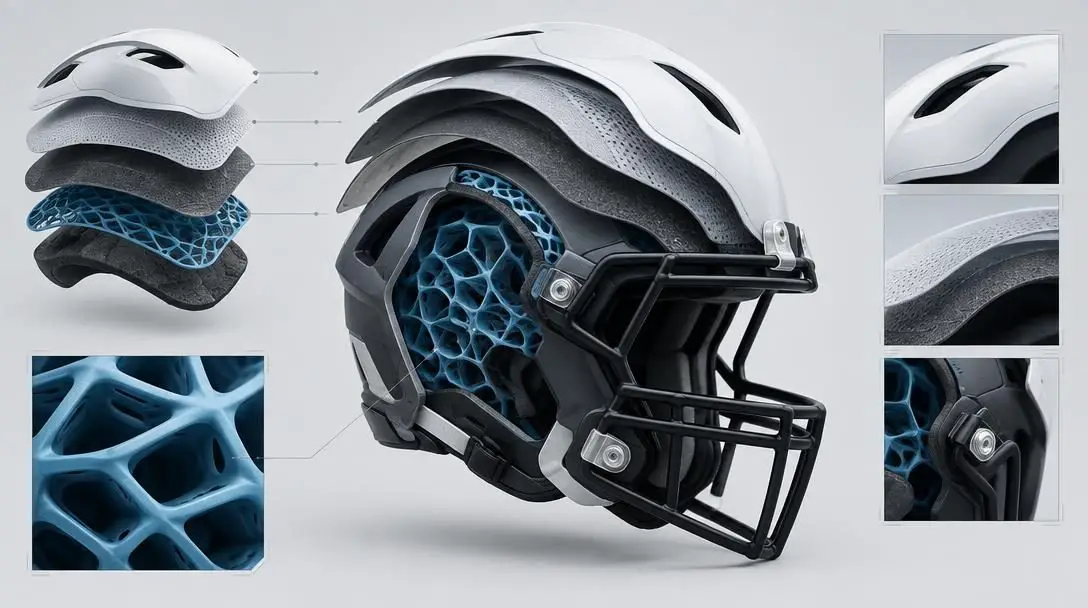
- Design focus: Yielding multi-layer impact reduction
- Market tier: Premium protective equipment
- Safety rating: Consistently top-ranked in testing
The Vicis Zero1 revolutionized football helmet construction by abandoning the rock-hard exterior shell in favor of a deformable outer layer. Much like an automobile bumper, the outer shell yields upon contact, actively slowing collision forces before they reach the inner structural column layer and the athlete's skull. This multi-stage mitigation system earned the Zero1 top placements in laboratory safety evaluations and widespread adoption among elite athletes seeking specialized protection.
Shoulder pads: fit, protection, and sizing
Shoulder pads are an athlete's primary torso defense, shielding the clavicles, sternum, ribs, and upper spine from heavy contact. Modern pads distribute force across a wider surface area by combining high-impact plastic arches with layered foam cushioning. Selecting the correct shoulder pad involves finding an optimal balance between collision protection and positional freedom of movement; quarterbacks and wide receivers require open arches for unrestricted throwing and reaching, whereas fullbacks and linebackers need broader cantilever arches and reinforced plates to withstand constant hits.
A correct anatomical fit is critical. If shoulder pads are too loose, the collar opening can shift against the neck or expose the delicate acromioclavicular (AC) joint to direct trauma. Conversely, overly tight gear constricts the ribcage, restricts deep breathing, and chafes the armpits.
To establish the right base size before purchasing, athletes should execute a systematic measuring procedure:
- Stand upright with your arms relaxed at your sides and shoulders square.
- Use a flexible fabric tailor's tape to measure the flat distance along your upper back from the tip of the left humeral bone to the tip of the right humeral bone.
- Wrap the tape around the fullest part of your chest, directly beneath the armpits, to record your chest circumference.
- Compare these two measurements against the manufacturer's specific sizing chart, adjusting upward if your weight or positional needs require extra arch padding.
A good fit ensures that the pads do not shift during play, providing reliable protection without inhibiting an athlete's natural range of motion.
Football cleats: traction, cut, and stud configuration
Your cleats dictate how effectively power transfers from your legs into the turf, governing cutting speed, linear acceleration, and structural ankle stability. Cleat choice centers around two major mechanical categories: molded cleats and detachable cleats. Molded cleats feature permanent rubber or hard plastic studs integrated into the outsole. They deliver reliable, low-maintenance traction on hard, dry surfaces and artificial turf, making them an affordable and popular option for youth, developmental, and casual players. Detachable cleats utilize threaded studs that can be swapped out based on turf conditions, allowing players to insert longer studs for soft, wet grass or shorter studs for compact turf.
The upper construction of the shoe impacts ball touch, foot support, and overall longevity. Traditional leather cuts, including supple calfskin or kangaroo leather, mold directly to the unique contours of the athlete's foot over time, delivering unparalleled comfort and a customized feel. Modern synthetics, however, excel in wet environments because they resist water absorption, remain exceptionally lightweight, and require virtually zero break-in period.
Upper cut profiles also match specific physical needs on the field. Low-top cleats provide maximum freedom around the ankle joint to facilitate blistering cuts and top-end sprinting, favored by defensive backs and receivers. Mid-top designs strike an equilibrium, offering moderate joint support for running backs and linebackers. High-top cleats wrap up past the ankle, providing rigid bracing and lateral stability essential for trench warfare along the offensive and defensive lines.
| Cleat Line | Primary Cut Profile | Target Position | Key Traction Advantage |
|---|---|---|---|
| Nike Mercurial Series | Low-top / Streamlined | Wide Receivers, Defensive Backs | Lightweight plate with sharp cutting edges |
| Adidas Predator Line | Mid-cut / Precision Upper | Quarterbacks, Kickers | Stable ground plant with textured surface zones |
| Under Armour Highlight | High-top / Extended Collar | Offensive & Defensive Linemen | Exceptional lateral support and joint stability |
Nike Mercurial Series
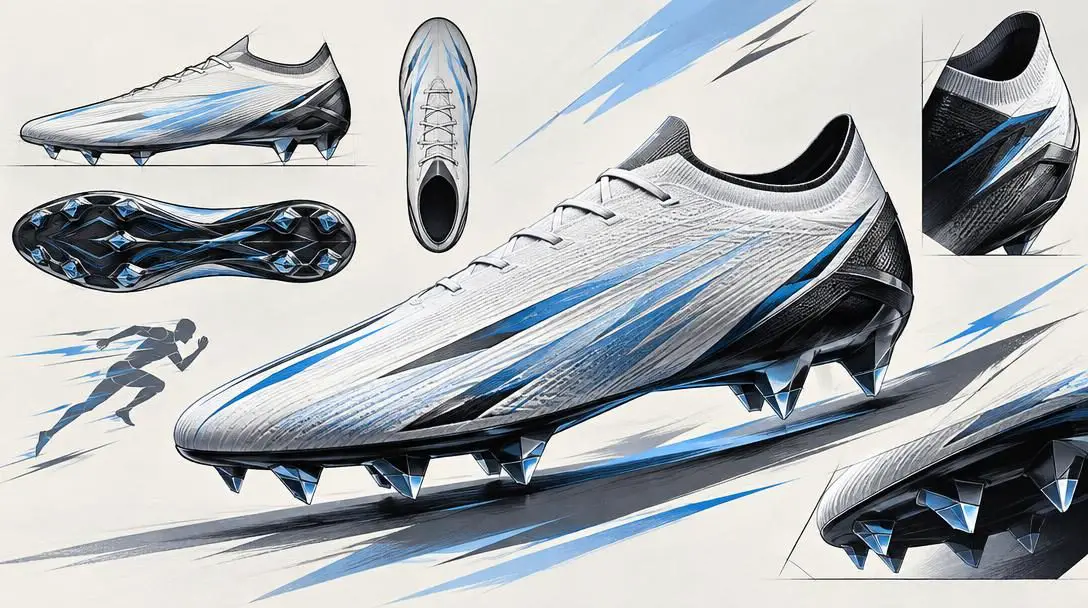
- Design build: Featherweight aerodynamic silhouette
- Ideal for: Speed and skill positions
- Outsole traits: Explosive acceleration plates
Engineered for high velocity, the Nike Mercurial series brings track-inspired lightness directly to the football field. Designed with an ultra-streamlined profile, these cleats strip away extraneous weight to maximize raw sprint mechanics. The responsive traction plates feature aggressive stud placements that bite deeply into the turf, allowing explosive skill-position players to execute sudden cuts, separate from coverage, and sprint without energy loss.
Adidas Predator Line
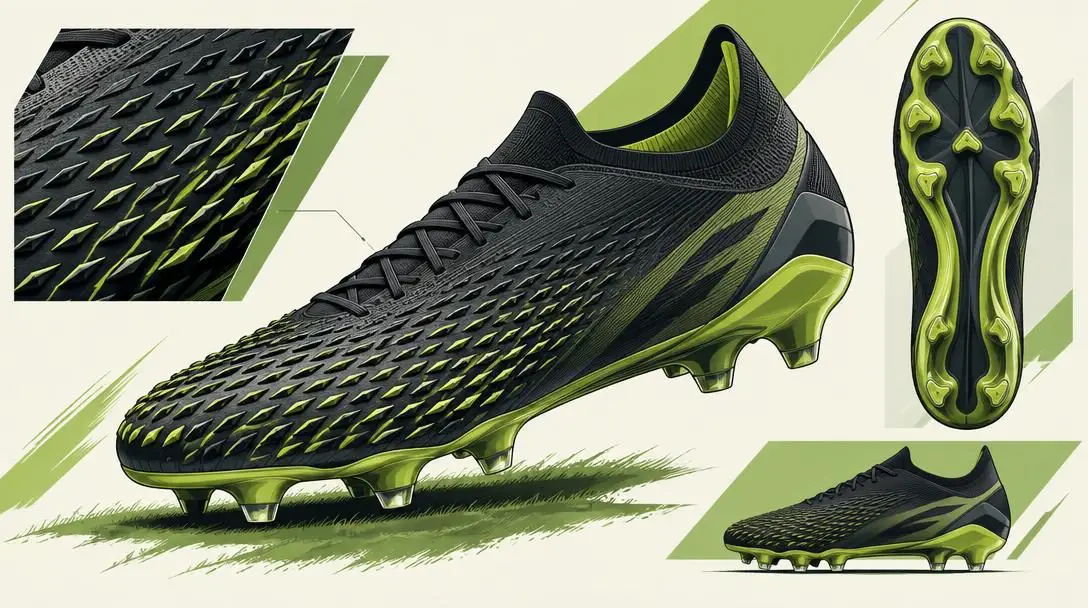
- Design build: Engineered upper with stable chassis
- Ideal for: Quarterbacks and kickers
- Outsole traits: Balanced firm-ground plant support
The Adidas Predator line focuses on rotational stability, footing security, and technical precision. Outfitted with structural elements along the upper, these cleats help kickers and throwing quarterbacks plant their lead foot with absolute confidence. The outsole geometry disperses plant pressure evenly across the foot bed, offering sustained torque transfer through throwing motions and high-power kicks on firm ground surfaces.
Under Armour Highlight Series
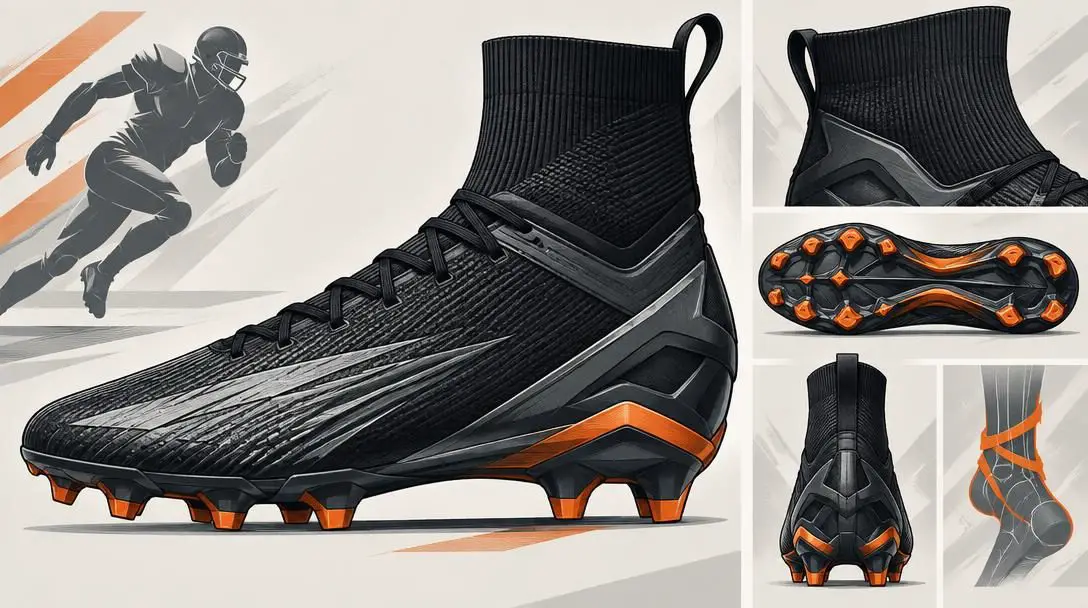
- Design build: High-top extended ankle collar
- Ideal for: Interior linemen and trench players
- Outsole traits: Heavy-impact structural reinforcement
The Under Armour Highlight series addresses the heavy physical demands faced by interior offensive and defensive linemen. Featuring an unmistakable high-top collar that wraps tightly around the ankle joint, this cleat acts like a protective second skin that stabilizes ligaments during violent scrums. The reinforced chassis resists lateral torsion, safeguarding the foot against rolled ankles during tight-quarter blocks and goal-line stands.
Football gloves: grip, flexibility, and positional demands
Modern football gloves are specialized performance tools that augment catching ability, protect hands from fractures, and improve ball security. The foundational construction typically merges synthetic leather on the palm with flexible mesh and spandex across the back of the hand to ensure breathability and uninhibited finger articulation.
Receiver gloves rely on ultra-tacky silicone or proprietary composite palms that dramatically increase friction against the pebbled leather of a football. This stickiness assists in hauling in errant passes, securing one-handed receptions, and maintaining ball security in rainy weather. Conversely, lineman gloves resemble armored gauntlets, featuring thick high-density foam padding over the knuckles, palm heels, and fingers to absorb heavy strikes, resist hyperextension, and shield delicate bones from cleat stamps.
To determine your correct glove size, execute these steps:
- Extend your dominant hand flat with your fingers straight and palm facing up.
- Place a ruler at the base of your palm, right where your wrist creates a natural crease.
- Measure straight up the centerline to the very tip of your middle finger.
- Match that linear length to the manufacturer chart; gloves should fit like a second skin without bunched fabric at the fingertips or restrictive tightness across the knuckles.
Auxiliary protective gear: mouthguards and specialized pads
While helmets and shoulder pads absorb the headlines, supplemental protection preserves athlete health in vulnerable anatomical areas. Football players absorb repeated low- and mid-level impacts across the face, jaw, ribs, and lower extremities. Incorporating purpose-built mouthguards and targeted padding configurations significantly mitigates the cumulative physical toll exacted across a long season.
Shock Doctor Gel Max Mouthguard
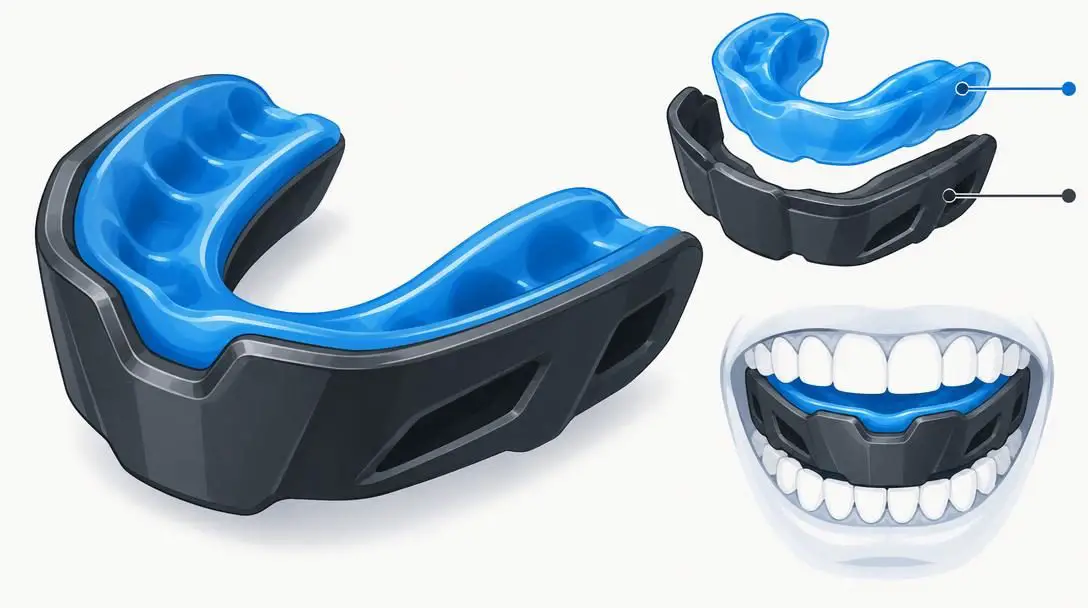
- Protection system: Multi-layer impact absorption
- Interior: Custom moldable gel-fit liner
- Primary utility: Jaw stabilization and dental protection
The Shock Doctor Gel Max is a staple across every tier of competitive football. Built using a heavy-duty rubber exoskeleton framework paired with a pliable gel interior, this mouthguard provides dependable shock attenuation. Players boil and bite the liner to achieve a tight, customized fit that locks securely across the upper teeth, dissipating jarring impacts away from the delicate dental arch and jaw joints.
Sisu Aero NextGen Mouthguard
- Protection system: Ultra-thin non-compressible polymer
- Profile: Minimalist low-profile design
- Primary utility: Unobstructed breathing and clear vocal communication
The Sisu Aero NextGen represents a major leap in minimalist protective technology. Engineered from a specialized, high-tensile polymer that is significantly thinner than traditional boil-and-bite mouthpieces, it redistributes impact forces through engineered perforations. This ultra-low-profile structure allows quarterbacks, middle linebackers, and safeties to bark out audibles, call audibles clearly, and hydrate without removing the mouthguard.
Battle Oxygen Lip Protector
- Protection system: Integrated shield with oversized airflow channel
- Target user: Skill and contact players without dental braces
- Primary utility: Maximum oxygenation and outer lip defense
The Battle Oxygen Lip Protector focuses on aerobic recovery and exterior soft-tissue safety. Featuring a massive central intake channel, this device facilitates maximum airflow directly into the lungs even while the jaw is fully clenched. The attached exterior shield extends over the upper and lower lips, shielding the delicate mouth interior from sudden face-mask hits and violent impact fragments.
Riddell Power SPK+ Shoulder Pads
- Competition level: High school varsity and collegiate
- Key features: Strategic breastplate defense, biothane belts
- Design priority: Dynamic range of motion for elite hitters
The Riddell Power SPK+ series is built to withstand high-velocity varsity and collegiate collisions. Incorporating low-profile plastic arches, specialized biothane belts, and targeted breastplate defense, these pads sit close to the chest to preserve arm clearance. This low-profile design permits quarterbacks and defensive backs to reach, backpedal, and throw without the pad arches riding up into the helmet line.
Schutt Sports Varsity Air Maxx Flex 2.0
- Competition level: Elite varsity athletics
- Padding technology: Open-cell foam with air management
- Design priority: Deep impact dispersion and arch protection
The Schutt Sports Varsity Air Maxx Flex 2.0 uses proprietary open-cell foam cushioning coupled with an active air-management chamber. By distributing localized impact energy across the entire arch structure, the system shields the athlete's shoulders from stinging direct hits. The flexible arch design moves naturally with torso rotation, making it a reliable option for hard-tackling defenders and agile ball carriers.
TAG ALT II 844 Youth Shoulder Pad
- Competition level: Developmental and youth football
- Padding technology: Layered multi-density foam
- Design priority: Proper anatomical scaling for young athletes
The TAG ALT II 844 is configured specifically to address the physical biomechanics of growing youth athletes. Rather than simply shrinking an adult pad, TAG utilizes lightweight multi-density foam packets scaled to the narrow shoulder frames and delicate clavicles of younger players. This design ensures that developing athletes get proper structural protection without carrying unnecessary weight that degrades fundamental tackling form.
Frequently asked questions
How often should a football helmet be recertified or replaced?
Helmets used in competitive play should be inspected, cleaned, and reconditioned regularly according to manufacturer guidelines, usually every one to two years. Under NOCSAE standards, a football helmet has a maximum allowable lifespan of 10 years from its manufacturing date, after which it must be permanently retired from contact play.
What is the difference between molded and detachable cleats?
Molded cleats feature non-removable rubber or plastic studs molded directly onto the bottom of the shoe, making them durable, affordable, and ideal for firm grass or turf. Detachable cleats feature threaded studs that can be unscrewed and replaced with different lengths or materials to adapt to changing weather conditions and soft, muddy fields.
Why do skill position players wear different gloves than linemen?
Wide receivers, defensive backs, and running backs wear lightweight gloves with sticky silicone palms designed to maximize friction for catching and controlling the football. Linemen require heavy-duty gloves built with dense padding across the backhand, fingers, and palms to absorb direct blows, stabilize fingers, and resist hyperextension during line play.
How can you tell if a shoulder pad fits properly?
A properly fitted shoulder pad should extend approximately one-half to one inch beyond the tip of the shoulder bone (deltoid). The neck opening must allow comfortable head rotation without pinching the neck, the internal arches should rest completely flush against the clavicles, and the chest plates should cover the sternum down to the lower ribcage.
Do modern mouthguards protect against concussions?
While mouthguards are essential for preventing chipped teeth, dental fractures, lip lacerations, and jaw dislocations, scientific consensus emphasizes that their primary function is oral-facial protection. They cushion jaw impacts, but an athlete must rely on a properly fitted, certified helmet and safe tackling techniques as their main defenses against brain trauma.
The bottom line
Constructing a complete football equipment kit requires evaluating protective efficacy, positional demands, and player comfort. Investing in certified safety gear—such as five-star rated helmets and structurally sound shoulder pads—protects long-term physical health, while selecting the right cleats, gloves, and mouthguards unlocks competitive agility and confidence between the whistles.
Every athlete should prioritize trying gear on in person whenever possible to verify proper sizing and anatomical coverage. Well-fitted, high-performance equipment provides the physical armor needed to withstand the collisions of gridiron play, allowing players to focus entirely on execution, technique, and teamwork.