5 Best Selling Retro Games
Long before digital distribution platforms, automatic patches, and day-one updates defined the interactive entertainment landscape, the video game industry operated under entirely different rules. Players could not consult instantaneous walkthroughs, join online community forums, or download hotfixes when they encountered an obstacle or software bug. Success depended on printed strategy guides, word-of-mouth discoveries on schoolyards, and sheer mechanical practice.
Because titles had to be complete, polished, and compelling straight out of the box, early releases cultivated an intense level of player dedication. Whether driving arcade crowds to pump quarters into glowing cabinets or keeping households glued to cathode-ray televisions, the most successful releases became cultural fixtures. Among the countless titles that defined the era before 2000, five standout games achieved record-breaking sales and shaped the future of modern gaming.
Key takeaways
- The five best-selling retro games released before 2000 established design foundations that continue to influence game development today.
- Technical constraints on arcade boards and home cartridges forced developers to focus on finely tuned, repeatable game loops.
- Iconic gameplay features, such as Mario riding Yoshi, often required waiting for generational hardware leaps like the Super Nintendo Entertainment System.
- Beyond pure entertainment, vintage titles like Tetris have demonstrated documented cognitive and clinical benefits in research studies.
- Collecting and playing retro titles today requires careful attention to internal cartridge battery health, display compatibility, and hardware preservation.
At a Glance: The Pre-2000 Commercial Giants
The top-selling retro games span home consoles, arcade venues, and portable platforms. Each achieved monumental sales figures without the assistance of modern digital marketing or internet connectivity.
| Game Title | Initial Release Year | Original Platform | Key Milestone or Feature |
|---|---|---|---|
| Super Mario Bros. | 1985 | Famicom / NES | Standardized side-scrolling platformer mechanics |
| Pac-Man | 1980 | Arcade | Broke shooter dominance with character maze play |
| Tetris | 1984 | Electronika 60 / Multi-platform | Universal spatial puzzle appeal and cognitive benefits |
| Super Mario World | 1990 | Super Nintendo (SNES) | Introduced Yoshi using 16-bit processing power |
| Pokémon Red, Green, and Blue | 1996 | Game Boy | Pioneered multi-version handheld social trading |
The Top Five Best-Selling Retro Games Released Before 2000
These five titles dominated sales charts through ingenious game design, iconic character branding, and broad demographic appeal. Each title delivered an experience that transcended standard entertainment to become a global milestone.
Super Mario Bros.
- Initial Release: 1985 (Japan)
- Platform: Famicom / Nintendo Entertainment System (NES)
- Developer: Nintendo
- Predecessor: Mario Bros. (1983 arcade)
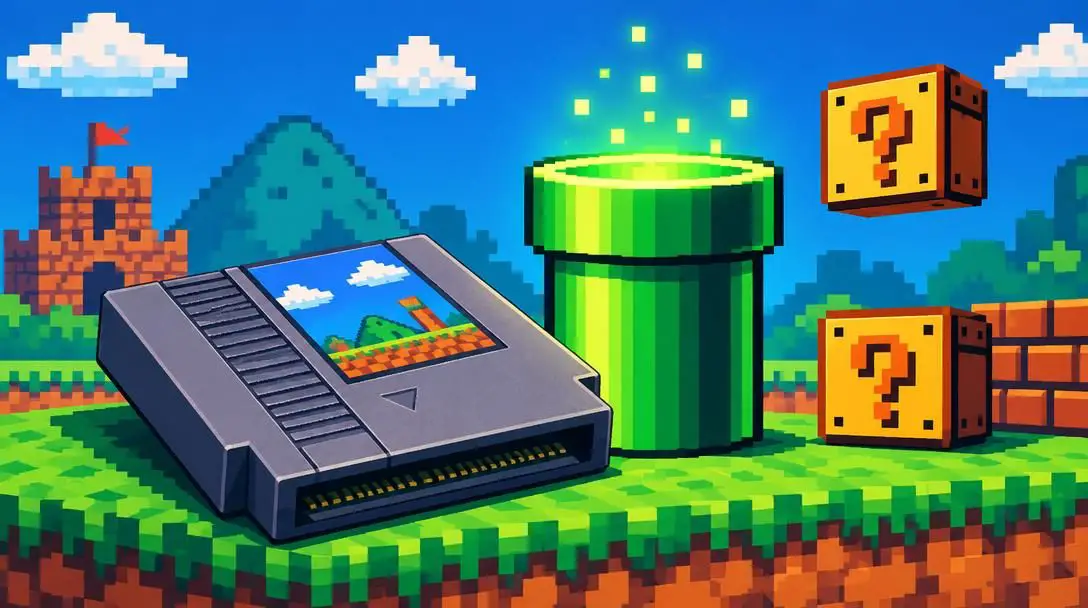
In 1985, Nintendo released Super Mario Bros. for the Family Computer (Famicom) in Japan, following the success of the 1983 Mario Bros. arcade release. Shortly thereafter, the game arrived in North America for the Nintendo Entertainment System. It quickly revitalized the home video game market, transforming home console entertainment and cementing Nintendo as an international powerhouse.
The game stood out by offering expansive side-scrolling levels, precise jumping physics, hidden warp zones, and power-enhancing mushrooms. Accompanied by unforgettable music composed to match the on-screen action, the title became a worldwide phenomenon. The release spawned a massive media empire that includes toys, merchandise, animated series, and a major animated feature film set for release in the Spring of 2023.
Pac-Man
- Initial Release: July 1980 (Japan)
- Original Names: Pukkuman / Puck Man
- Publisher: Namco (Japan) / Midway Manufacturing (Worldwide)
- Notable Spin-Off: Ms. Pac-Man
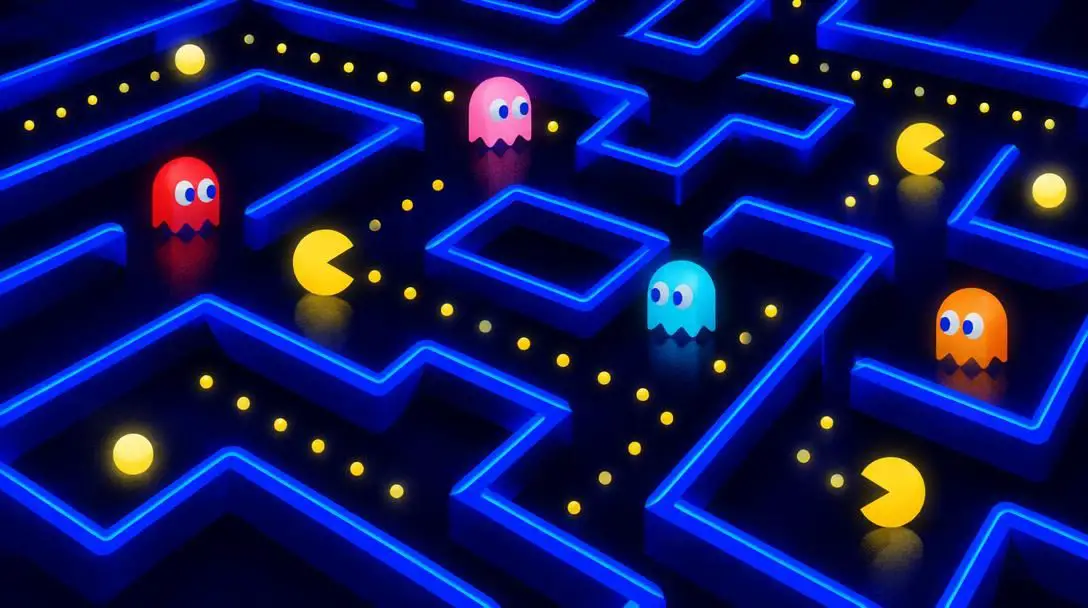
Originally introduced in Japan as Pukkuman and later known as Puck Man across Japan and Europe, Pac-Man arrived in arcades in July 1980 courtesy of Namco. Later that year, Midway Manufacturing distributed the title internationally. The game deviated sharply from the intense, military-themed space shooters that flooded arcades at the time, opting instead for a bright, non-violent maze environment centered on eating pellets and dodging colorful ghosts.
The title became an unprecedented cultural sensation, attracting players of all backgrounds. Recognizing a surging interest among female gamers, developers followed up with Ms. Pac-Man, introducing a charming, bow-wearing protagonist and dynamic maze layouts. Together, Pac-Man and Ms. Pac-Man became two of the highest-earning arcade games in North American history, demonstrating that video games held universal, mainstream appeal.
Tetris

- Created By: Alexey Pajitnov
- Creation Year: 1984
- Western Release: 1987 (Europe) / 1988 (North America)
- Core Gameplay: Falling tetromino puzzle management
Conceived in 1984 by Russian software engineer Alexey Pajitnov, Tetris emerged as one of the purest and most enduring puzzle games ever created. After reaching European audiences in 1987 and North American players in 1988, the geometric phenomenon found its way onto personal computers, home entertainment systems, and portable devices across the globe.
The core concept—arranging descending geometric shapes to clear solid horizontal lines—proved universally addictive. Beyond its staggering commercial figures, Tetris caught the attention of scientific researchers. Studies conducted by researcher Richard Haier revealed that regular gameplay can improve cognitive efficiency and critical thinking. Additionally, medical research highlighted the game's clinical value in treating older children diagnosed with lazy eye (amblyopia) by training binocular visual focus through rapid visual puzzle processing.
When a game cartridge or arcade cabinet hit the market, it had to deliver complete, polished, and compelling entertainment from the first moment of play.
Super Mario World
- Initial Release: 1990 (Japan)
- Western Debut: 1991 (North America) / 1992 (Australia)
- Hardware: Super Nintendo Entertainment System (SNES)
- Key Character Debut: Yoshi
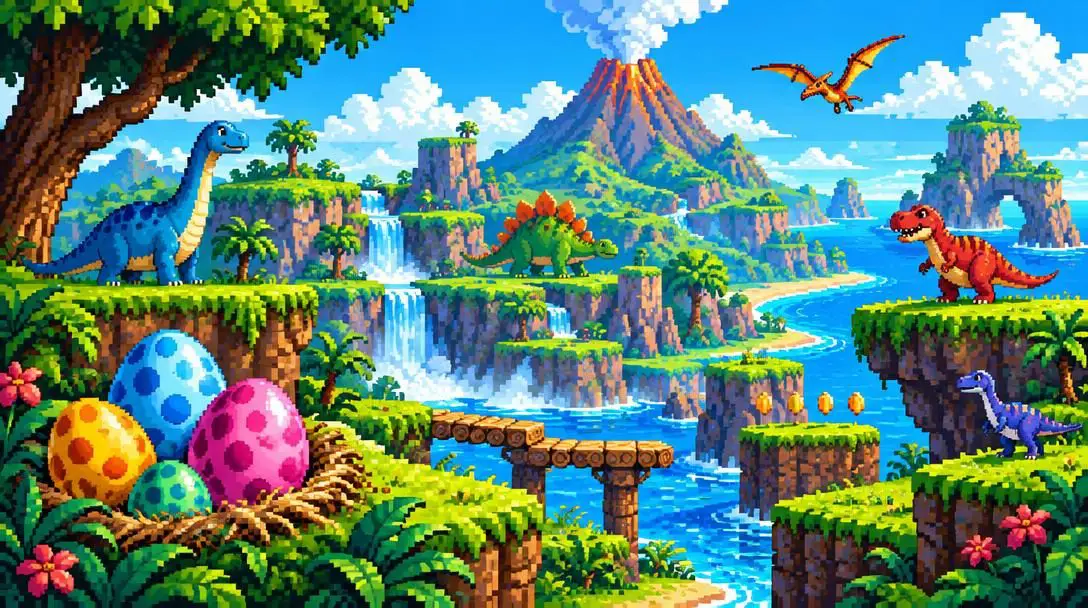
Serving as the fourth principal installment in the Super Mario Bros. lineage, Super Mario World launched in Japan in 1990 before arriving in North America in 1991 and Australia in 1992. Designed to showcase the capabilities of the Super Nintendo Entertainment System, the title elevated the platforming genre through sprawling map screens, secret stage exits, and vibrant 16-bit audio-visual design.
A crowning achievement of the release was the introduction of Yoshi, the friendly dinosaur companion. Nintendo designers had envisioned Mario riding a dinosaur companion during the 8-bit generation, but hardware restrictions on earlier consoles prevented its technical implementation. With the advanced processing power of the SNES, Yoshi finally made his debut, complete with enemy-eating abilities and multi-colored variants. The game earned universal critical acclaim and became the best-selling release of its console generation.
Pokémon Red, Green, and Blue
- Initial Release: 1996 (Japan as Pocket Monsters Red and Green)
- International Launch: 1998 (North America/Australia) / 1999 (Europe)
- Platform: Nintendo Game Boy
- Follow-Up Edition: Pokémon Blue (1999 international)
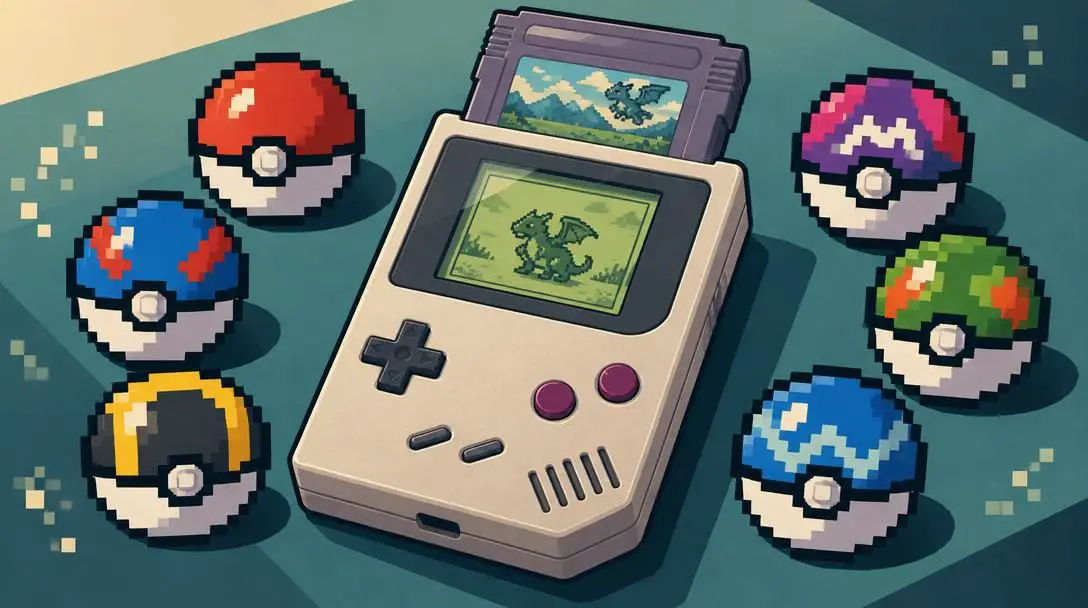
The global phenomenon of creature collecting began in 1996 with the Japanese release of Pocket Monsters Red and Green on Nintendo's monochrome Game Boy. In 1998, North America and Australia received adapted versions titled Pokémon Red and Blue, followed by European territories in 1999. A distinct international release of Pokémon Blue expanded the monster roster and refined game elements.
By splitting the monster collection across paired versions, the developers transformed a solitary handheld RPG into an active social exchange. Players utilized the Game Boy Link Cable to trade version-exclusive creatures and battle their teams in real time. Decades later, despite countless sequels, remakes, and mechanical innovations across successive hardware generations, Pokémon Red, Green, and Blue remain the highest-earning releases in franchise history.
Technical Architecture: How Early Best-Selling Games Worked
Achieving commercial dominance prior to the internet required a radically different approach to technical engineering, hardware budgeting, and user testing. Without the ability to issue patches, developers engineered titles within razor-thin margins of hardware performance.
Memory limitations served as both a bottleneck and a catalyst for creative engineering. Early console cartridges and coin-operated printed circuit boards possessed tiny fractions of the data capacity seen in modern gaming systems. Programmers created sophisticated routines to reuse visual sprite sheets, invert tile graphics to generate symmetrical level geometry, and compose looping chiptune soundtracks using restricted audio sound channels.
Furthermore, core game loops had to carry the entire experience. Titles like Pac-Man and Tetris offered no cinematic storylines, character customization trees, or downloadable content packs. They relied strictly on immediate responsiveness, escalating algorithmic difficulty, and intuitive feedback loops that rewarded hand-eye coordination and spatial reasoning.
Handheld development introduced an additional layer of technical refinement. Creating games for the original Game Boy required developers to account for limited battery life, small liquid-crystal displays without backlights, and restricted contrast levels. The success of early portable bestsellers proved that tight, engaging game design easily surpassed high-end graphical processing in the eyes of consumers.
Practical Steps for Playing and Collecting Vintage Titles
Preserving and experiencing these milestone releases today requires careful hardware preparation and maintenance. To enjoy these pre-2000 hits authentically, follow these foundational steps:
- Select your target hardware platform: Decide whether you intend to experience these games on original vintage systems like an authentic NES, SNES, and Game Boy, or through officially licensed modern legacy compilations and modern digital storefronts.
- Inspect cartridge battery health: Cartridge-based games with internal save functions—most notably Pokémon Red, Green, and Blue—utilize small internal batteries to preserve save data. Verify if the internal battery still holds a charge before committing hours to a playthrough.
- Configure appropriate display hardware: Classic games designed for home consoles were engineered specifically around cathode-ray tube (CRT) display characteristics. If connecting vintage hardware to a modern flat-panel screen, utilize dedicated upscalers or CRT scanline filters to display accurate aspect ratios and prevent input latency.
- Acquire original reference materials: Seek out scans or authentic copies of original instruction manuals and period-accurate strategy guides. Because vintage games omitted modern tutorial levels, reading original booklets provides crucial context, control layouts, and essential lore.
- Master fundamental game loops: Approach vintage titles with patience. Without modern quality-of-life adjustments like generous checkpoint systems or difficulty sliders, mastering early games requires learning movement patterns and understanding mechanical limits.
Pitfalls and Common Mistakes in Retro Gaming
Encountering vintage games for the first time can bring unexpected hurdles. Avoiding these common mistakes will save time, resources, and hardware from accidental damage:
- Assuming simple graphics equal simple difficulty: Many newcomers mistakenly equate pixelated visuals with casual gameplay. Classic titles like the original Super Mario Bros. and arcade Pac-Man feature unforgiving physics and strict life counters that demand precise timing.
- Overlooking counterfeit game cartridges: High-profile retro titles, particularly original Pokémon releases, are heavily targeted by bootleggers. Inspect cartridge plastic quality, circuit board label serials, and factory stamp impressions before purchasing physical carts on secondary markets.
- Blowing directly into cartridge connectors: A common childhood habit was blowing moisture into game cartridges to clean dirty pins. In reality, human breath introduces microscopic moisture that corrodes metallic contact points over time. Clean dirty pins using appropriate isopropyl alcohol solutions and cotton swabs instead.
- Using degraded power supplies: Operating vintage consoles with worn, uncertified third-party power adapters risks sending improper voltage spikes into sensitive vintage microchips, potentially destroying rare hardware.
The Enduring Impact and Modern Value of Classic Titles
The cultural footprint left by these five best-selling games extends well beyond nostalgic appreciation. The design frameworks engineered by their creators serve as the grammar of modern game development.
Side-scrolling level construction, environmental secrets, and escalating stage difficulty can all trace their lineage back to the precise layout of World 1-1 in Super Mario Bros. Similarly, the multi-version release structure and monster trading mechanics pioneered by Pokémon Red, Green, and Blue established an interactive social blueprint that current multiplayer titles continue to adapt.
Furthermore, classic titles hold real-world utility beyond traditional media criticism. The documented neurological research examining Tetris illustrates that focused spatial gameplay offers tangible therapeutic and educational value. Whether viewed as historical artifacts, cultural icons, or cognitive training tools, these foundational titles remain just as relevant today as they were when they first captured the world's imagination.
Frequently asked questions
Why did Yoshi not appear in the original Super Mario Bros. on the NES?
Nintendo designers originally wanted Mario to ride a companion creature during the NES era, but the 8-bit console had severe processing and memory limitations. Yoshi was delayed until the arrival of the 16-bit Super Nintendo Entertainment System, which had the necessary hardware capabilities to bring the character to life in Super Mario World.
What was Pac-Man called before its international release?
The game was initially named Pukkuman and Puck Man when released in Japan and Europe by Namco. It was renamed Pac-Man for its broader international release by Midway Manufacturing later in 1980.
How does playing Tetris benefit brain function and health?
Research conducted by Richard Haier demonstrated that playing Tetris can enhance brain efficiency, particularly in areas associated with critical thinking. Additionally, medical research found that playing Tetris helps treat older children with lazy eyes by forcing both eyes to work together to process falling puzzle shapes.
Which Pokémon titles are the best-selling in the franchise's history?
Despite numerous modern sequels, remakes, and hardware transitions, the original generation—comprising Pokémon Red, Green, and Blue—remains the highest-earning and best-selling set of releases in the history of the Pokémon franchise.
Why do save files disappear on original Pokémon Game Boy cartridges?
Original Game Boy cartridges like Pokémon Red, Blue, and Green rely on an internal battery inside the cartridge to maintain saved data in static RAM. Once that internal battery exhausts its power after decades of use, the cartridge can no longer preserve save data until the battery is physically replaced.
The bottom line
The remarkable commercial success of early video game bestsellers was forged through strict technical discipline, unmatched gameplay polish, and immediately engaging core mechanics. Without the crutch of digital patches or online communities, titles like Super Mario Bros., Pac-Man, Tetris, Super Mario World, and Pokémon Red, Green, and Blue had to capture players purely through stellar design. Decades later, their influence remains embedded in the DNA of the modern interactive entertainment industry.