5 Celebrities That Were Charged With Murder
Murder trials inherently draw intense public scrutiny, commanding national headlines and captivating audiences through every stage of the legal process. When the individual standing in the dock is a globally recognized celebrity from the worlds of music, cinema, or professional athletics, that fascination multiplies exponentially. The intersection of enormous wealth, dedicated fanbases, high-profile defense teams, and severe criminal allegations creates an extraordinary spectacle inside and outside the courtroom.
Modern legal history features several defining moments where prominent entertainers faced homicide charges. Examining these trials reveals how the justice system operates under the intense glare of the media spotlight, the crucial differences between criminal proceedings and civil litigation, and the lasting consequences that follow a defendant long after a jury delivers its verdict.
Key takeaways
- Celebrity homicide cases traverse the same statutory procedures as standard criminal trials, but the intense media presence complicates jury selection and evidence presentation.
- An acquittal in criminal court does not shield a defendant from civil wrongful death liability, where the required burden of proof is substantially lower.
- Procedural missteps, mishandled physical evidence, and self-defense arguments have played decisive roles in securing acquittals in high-profile homicide trials.
- Convictions such as Phil Spector's demonstrate that fame and substantial financial resources cannot guarantee immunity from life imprisonment.
At a glance: High-profile celebrity homicide cases
The following table summarizes the five prominent celebrity homicide trials, highlighting the key allegations, timelines, and ultimate legal outcomes.
| Celebrity | Field | Allegation / Incident Date | Criminal Trial Verdict | Subsequent Legal Fallout |
|---|---|---|---|---|
| Snoop Dogg | Hip-Hop / Music | Shooting of Philip Woldermariam (Summer 1993) | Acquitted (1996) | No subsequent criminal convictions related to the case |
| O.J. Simpson | Football / Film | Stabbings of Nicole Brown Simpson and Ronald Goldman (1994) | Acquitted (1995) | Liable for over $33 million in civil court; later served 9 years for Nevada robbery |
| Sid Vicious | Punk Rock | Stabbing death of Nancy Spungen (October 1978) | Died before trial (February 1979) | Charged with assault while out on bail; case unresolved |
| Phil Spector | Music Production | Fatal shooting of Lana Clarkson (February 2003) | Convicted of murder (2009) | Sentenced to 19 years to life; died in prison in 2021 |
| Robert Blake | Television / Film | Fatal shooting of Bonny Lee Bakley (May 2001) | Acquitted (March 2005) | Found liable for $30 million in civil court, resulting in bankruptcy |
5 Celebrities who faced murder charges
Snoop Dogg
- Allegation: First-degree murder
- Incident date: Summer 1993
- Verdict: Acquitted in 1996
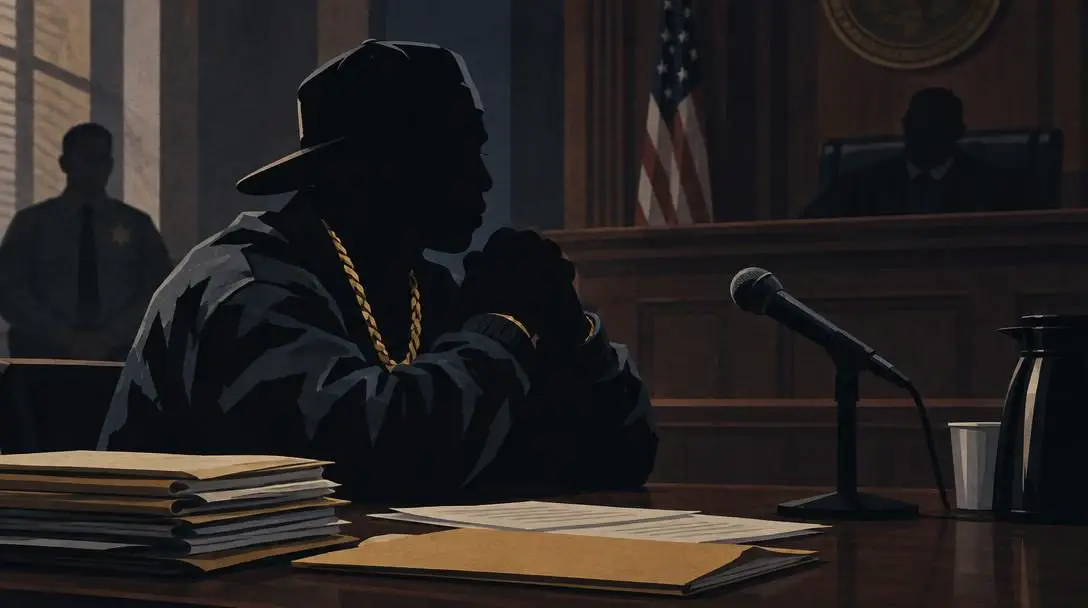
In the summer of 1993, hip-hop star Snoop Dogg found himself at the center of a major homicide investigation in West Los Angeles. Philip Woldermariam, a member of a rival gang, was shot and killed outside the apartment building where the rapper was living. Following the shooting, both Snoop Dogg and his personal bodyguard, McKinley Lee, fled the area, which led prosecutors to file first-degree murder charges against both men.
The criminal proceedings spanned several years as the defense team methodically challenged the state's narrative. Throughout the trial, Snoop maintained that he never fired a weapon and asserted that McKinley Lee had fired strictly in self-defense. The defense also targeted serious procedural missteps by law enforcement, highlighting that the Los Angeles Police Department had reportedly fumbled key evidence during the investigation. In 1996, the jury returned not guilty verdicts for both defendants, and no one was ultimately convicted for the death of Woldermariam.
O.J. Simpson

- Allegation: Double murder (first-degree)
- Victims: Nicole Brown Simpson and Ronald Goldman
- Verdict: Acquitted in criminal court; liable in civil court
Perhaps the most heavily publicized legal case in American history centered on former NFL star and actor O.J. Simpson. Following the brutal stabbing deaths of his ex-wife, Nicole Brown Simpson, and her friend Ronald Goldman outside her Los Angeles home, Simpson became the prime suspect. When authorities sought his surrender, Simpson initiated a slow-speed pursuit in a white Ford Bronco that was broadcast live to millions of television viewers across the nation.
The ensuing criminal trial dominated news cycles for months, dissecting forensic evidence, chain-of-custody protocols, and contentious police conduct. Simpson's defense team succeeded in raising reasonable doubt, securing a complete criminal acquittal. However, the legal consequences were far from over. The victims' families filed a wrongful death civil lawsuit, where a jury found Simpson responsible and ordered him to pay more than $33 million in restitution. Years later, Simpson was arrested in Nevada for robbery, receiving a sentence of nine years before his release in October 2017.

A criminal acquittal provides freedom from prison, but it cannot prevent civil courts from imposing devastating financial accountability.
Sid Vicious
- Band: Sex Pistols
- Incident date: October 1978
- Case status: Unresolved due to defendant's death (February 1979)
Sid Vicious, lead singer of the groundbreaking British punk group the Sex Pistols, lived a turbulent life defined by substance abuse and volatile relationships. In October 1978, while staying at the Hotel Chelsea in New York City with his girlfriend Nancy Spungen, a late-night gathering spiraled out of control. While Vicious was reportedly sleeping through much of the evening, Spungen was fatally wounded, and her body was discovered the next morning in the hotel room's bathroom with a single stab wound.
Vicious initially admitted to the stabbing during police questioning, but he rapidly retracted the statement, claiming he had no memory of the night's events due to severe intoxication. Released on bail while awaiting trial on murder charges, Vicious became embroiled in further legal trouble just months later following an assault on Todd Smith. Before his murder trial could commence, Vicious died from a drug overdose in February 1979 at age 21, leaving the definitive facts surrounding Spungen's death permanently unresolved.
Phil Spector

- Profession: Record producer
- Incident date: February 2003
- Sentence: 19 years to life (convicted in 2009)
Renowned for revolutionizing pop and rock music production throughout the 1960s and 1970s, Phil Spector remained an influential entertainment figure well into the 2000s. In February 2003, actress Lana Clarkson was found fatally shot in the foyer of Spector's California mansion. Spector insisted that Clarkson had died by an accidental suicide, but prosecutors presented a contrasting narrative alleging intentional homicide.
The legal battle stretched across several years and included an initial mistrial before a second jury convicted Spector of second-degree murder in 2009. The judge handed down a prison sentence of 19 years to life. Spector filed numerous appeals challenging procedural aspects of the trial, but appellate courts upheld the conviction. He remained incarcerated until his death from COVID-19 in January 2021, just three years before his first scheduled parole eligibility hearing.
Robert Blake

- Notable work: Baretta, In Cold Blood
- Incident date: May 4, 2001
- Civil penalty: $30 million judgment
Robert Blake built a decades-long career as an actor, beginning as a child performer and earning critical acclaim in films such as In Cold Blood and the television series Baretta. In 2000, Blake married Bonny Lee Bakley. On the evening of May 4, 2001, following a dinner at an Italian restaurant, Bakley was discovered fatally shot in the head inside a vehicle parked behind a dumpster nearby.
An intense, nearly year-long investigation led to Blake's arrest on murder charges in April 2002. The trial concluded in March 2005 with the jury acquitting Blake of all charges, prompting the Los Angeles District Attorney to publicly express outrage and call the jury "stupid." Despite avoiding prison, Blake was immediately targeted in civil court by Bakley's children. The civil jury deemed Blake responsible for her wrongful death and entered a $30 million judgment against him, a crushing liability that forced the former actor directly into bankruptcy.
How celebrity homicide trials operate within the legal system
While the celebrity status of a defendant inevitably transforms a trial into a media circus, the statutory mechanics governing the courtroom remain identical to those in any other homicide prosecution.
Every case begins with an investigation that establishes probable cause, resulting in formal charges filed via a prosecutor's information or a grand jury indictment. Because homicide represents the most severe class of felony, bail is typically set at astronomical sums or denied entirely to prevent flight risks. Defense attorneys file extensive pre-trial motions seeking to suppress evidence, challenge search warrants, or request a change of venue to mitigate the impact of inflammatory pre-trial publicity.
During the criminal phase, the prosecution carries the rigorous obligation of proving every element of the crime beyond a reasonable doubt. Unanimity among all twelve jurors is mandatory; a single holdout results in a hung jury and a mistrial. In contrast, civil wrongful death claims operate under the much lower standard of a preponderance of the evidence, requiring the plaintiff to show only that it is more likely than not that the defendant caused the harm. This fundamental distinction explains why defendants like O.J. Simpson and Robert Blake were acquitted of criminal charges yet found liable for millions of dollars in subsequent civil actions.
How to objectively follow a high-profile legal case
Public reporting on celebrity trials frequently emphasizes sensational narratives rather than legal substance. Following these steps helps observers separate verified courtroom facts from media speculation:
- Review primary source filings: Instead of relying on commentary, read the original charging documents, indictments, written judicial rulings, and filed defense motions available through court registries.
- Distinguish legal jurisdictions: Keep criminal proceedings separate from civil actions, noting that liability judgments do not contradict criminal acquittals due to differing standards of proof.
- Track judicial evidentiary rulings: Pay close attention to pre-trial hearings where judges decide what evidence the jury can hear, as constitutional protections or chain-of-custody errors frequently lead to excluded material.
- Isolate sworn testimony from press releases: Discount public relations claims made outside the courthouse, focusing solely on witness testimony delivered under oath and subjected to cross-examination.
- Follow the post-trial appellate path: Monitor post-conviction appeals, writ petitions, and parole board hearings, which reveal whether higher courts identify procedural errors in the initial verdict.
Common mistakes when evaluating celebrity murder trials
Misconceptions regarding legal terminology and judicial procedure often lead the public to draw incorrect conclusions about high-profile verdicts:
- Confusing an acquittal with innocence: A verdict of not guilty indicates strictly that the government failed to eliminate all reasonable doubt, not that the defendant was proved innocent.
- Assuming high-priced defense teams always prevail: Although resources allow for extensive forensic analysis and expert witnesses, prominent figures like Phil Spector still faced conviction and life sentences.
- Overlooking law enforcement errors: The state's case depends entirely on lawful investigative procedures; mishandling physical evidence or contaminating crime scenes can irreparably undermine a prosecution, as seen in the Snoop Dogg trial.
- Underestimating post-trial civil consequences: Criminal acquittals do not end legal vulnerability; wrongful death judgments can completely deplete a celebrity's wealth and force them into financial ruin.
Frequently asked questions
Why can a celebrity be acquitted in criminal court but found liable in civil court?
Criminal courts demand proof beyond a reasonable doubt, the highest evidentiary threshold in the legal system, where all twelve jurors must agree. Civil courts operate under a preponderance of the evidence standard, requiring only that the allegation is more likely true than not, often with non-unanimous jury rules.
Did Snoop Dogg pull the trigger in the 1993 shooting of Philip Woldermariam?
No. Snoop Dogg maintained throughout his legal proceedings that he did not fire the weapon. The defense proved that his bodyguard, McKinley Lee, fired the shots while acting in self-defense, leading to acquittals for both men in 1996.
Why did Phil Spector have two separate trials for the death of Lana Clarkson?
Spector's first criminal trial in 2007 ended in a deadlocked jury, resulting in a mistrial. Under legal procedure, prosecutors were permitted to retry the case with a new jury, which convicted him of second-degree murder in 2009.
Was Sid Vicious ever convicted of killing Nancy Spungen?
No. Sid Vicious was charged with murder and released on bail, but he died from a drug overdose in February 1979 at age 21 before his criminal trial could begin, leaving the legal case permanently unresolved.
How did Robert Blake end up in bankruptcy after being acquitted?
Although the criminal jury found Blake not guilty of murder in March 2005, a civil jury subsequently determined he was liable for the wrongful death of Bonny Lee Bakley and ordered him to pay $30 million to her children, precipitating his bankruptcy filing.
The bottom line
Celebrity murder trials reveal the complex realities of the justice system under an intense cultural microscope. While enormous wealth enables defendants to retain elite legal counsel, assemble private forensic teams, and thoroughly scrutinize investigative missteps, it provides no absolute guarantee against conviction or lasting financial ruin. As these historic cases illustrate, the final outcome of any homicide case ultimately depends on physical evidence, the strict rules of procedure, and the distinct legal boundaries separating criminal guilt from civil liability.